What’s Ahead? 2024 Design Trends

In the ever-evolving world of design, the 2023 Australian Good Design Awards stood as a testament to innovation and purpose-driven creativity. From socially-impactful designs that sought to make a meaningful difference, to sustainable design practices championing conscious solutions, design in 2023 brought necessary change to global challenges. 

Reflecting on a fantastic year of good design fills us with anticipation for the exciting prospects that await us in the coming year. What’s ahead? We can never be sure, but we’re kicking off the year with some deliberation and predictions for the design space in 2024. 

What is Pantone 13-1023 Peach Fuzz and why does it matter? Will this affect the way we create? Minimalism or maximalism? Will AI deliver on the hype? Stay tuned to find out alongside Good Design Australia.  


Artificial intelligence and machine learning technology

The integration of artificial intelligence (AI) and machine learning technology is becoming more prevalent in the design process, integrating projects with data-driven insights. These systems are analysing data to inform design decisions, automating tasks and testing designs. From afar, AI seems to offer the potential to enhance the efficiency and creativity of design work significantly.

Ken McBryde, Design Director at Gensler and 2023 Australia Good Design Awards Juror, weighs in: “I would suggest that AI is an incredibly powerful tool, probably one of the most powerful tools we’ve seen since the conception of building information modelling in three dimensions.

“But at the end of the day, a design is about judgement, human connection and human experience. So I don’t feel a tiny bit threatened by AI, I feel excited by it, because it allows me to make judgement from a wider set of opportunities.”

As designers navigate this evolving relationship in 2024, the industry will likely grapple with finding the delicate balance between embracing technological innovation and preserving the essential human touch in design. 

An AI-generated image of an architect using AI to supplement their craft. Image: DALL·E

Meaningful functionality 


Pantone’s Colour of the Year has become a trendsetting phenomenon in the design world – an accolade that captures the essence of the times in a single, influential hue. This year, this award went to Peach Fuzz: 13-1023. 

Pantone explains the pick as a “warm and cosy shade highlighting our desire for togetherness with others or for enjoying a moment of stillness and the feeling of sanctuary this creates… a fresh approach to a new softness.” This may suggest a hope for more meaningful consumption in 2024, prioritising functionality and authenticity in design.

Artist and public speaker Yiying Lu tells Pantone, “To me, it’s a humane colour; it hugs you, gently smiles at you, and puts you at ease. It’s nostalgic and yet modern, simple yet complex, but always welcoming, loving, and kind.” We may see designs this year aiming to achieve this very feeling. Textiles and apparel designer, Tsia Carson, responds to the Colour of the Year with, “Colours don’t do well in isolation, just like people. Kindness, openness and empathy are true strengths. I’m ready to explore this softer colour and emotional vibe in 2024.” 

Julien Sebban of French studio – Uchroniatells dezeen magazine, “People need an antidote to digital, they need to feel the physical world.” We believe Pantone’s colour pick of the year will set the tone of a softer society and shift of consumerism in the year ahead, naturally inspiring designers and artists alike to create more human-esque designs. Society appears to be shifting into a space of consuming thoughtfully and for the good of others. We are looking forward to discovering the fruition of this in 2024. 

Will 13-1023 be numbers to remember in 2024? Image: Pantone

Biomorphic design 

The embrace of biomorphic design is set to make a significant impact in 2024. Rooted in the inherent human inclination to seek connection with nature, this form of design strives to integrate elements of the natural world into the built environment. 

Experts say that as our societal awareness of the impact of nature on our wellness grows, designers will increasingly incorporate these principles into their work. It might see society taking more and more digital detoxes and encourage designers to create places, spaces and things that are not only organic in aesthetics, but also foster a sense of wellness, harmony with others and integration with nature. If 2023 was the year of biohacking, then perhaps 2024 will be all about harmony and longevity?

Keli Hogsett, founder of fine art marketplace – CoCollecttold Mansion Global, “Artists will look to nature for inspiration as the world becomes more mindful of environmental issues.” She explains, “Nature-inspired art will explore themes of sustainability, climate change, and the delicate balance between humanity and the natural world.”

This may see nature-related colours such as green, blue and brown come to the forefront, and organic shapes and textures be prioritised. In the home, floor-to-ceiling windows, skylights and strategically-placed mirrors to maximise the natural rhythms of the sun could become standard. We can anticipate more green spaces to meet on and open air concepts in community areas, encouraging organic interactions. 

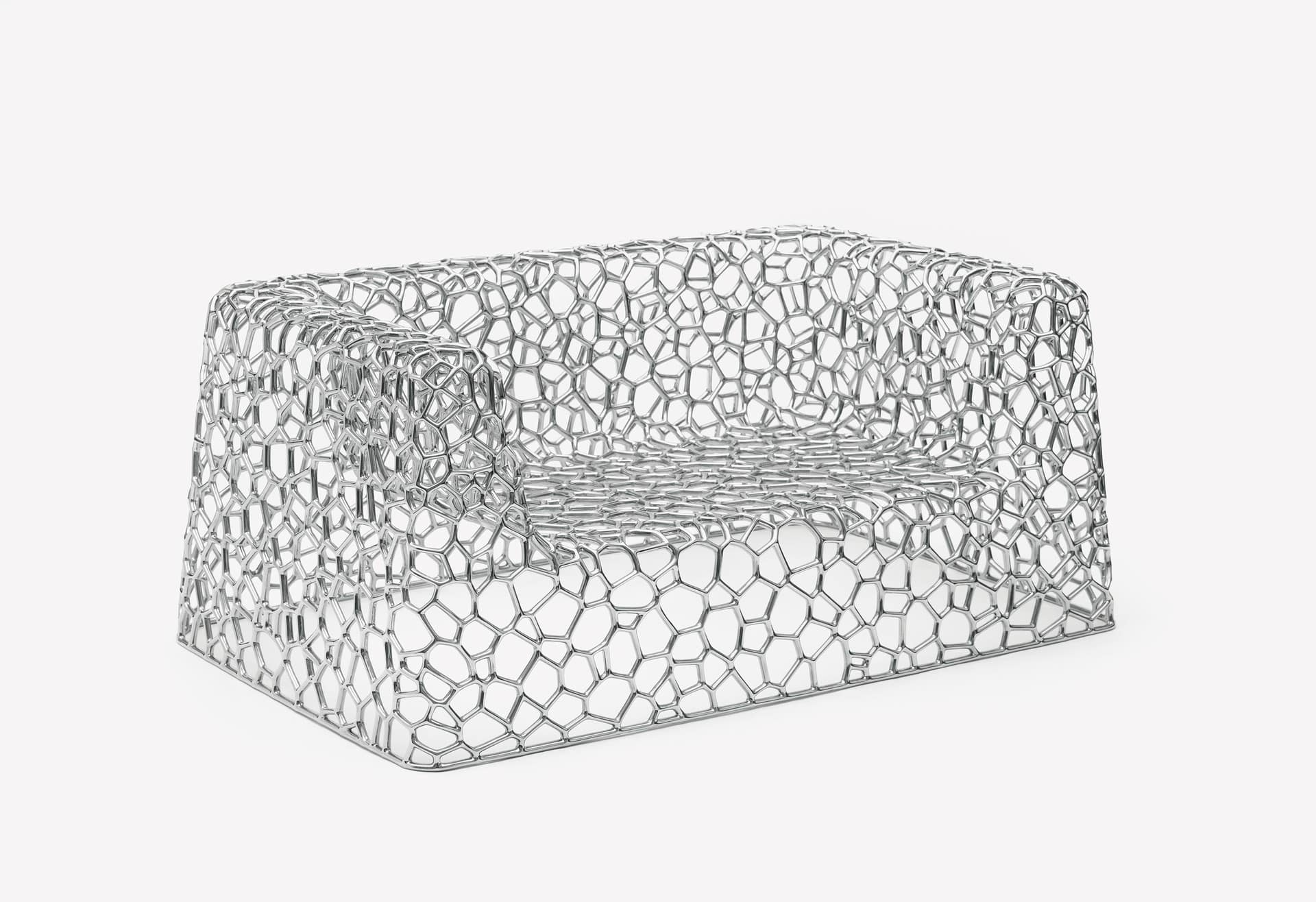
“Random Pak Twin” from 2023 Australian Design Prize recipient – Marc Newson. Image: Marc Newson LTD.

Middleism?

A battle as old as time itself, the minimalism/maximalism debate wages on, yet the totalist side of the coin has shot noticeably ahead in recent years. Peter Spalding, co-founder and CCO of Daniel House Club, reflects on the design phase as “a lot of fun, but one grows tired of the party and wants to cool down a bit.” So, back to the bare minimum? Not quite – we anticipate a balance to be restored in 2024. 

This fusion approach will reflect a cleaner, more tailored look as people crave comfort and familiar style in these trying times. However, there’ll be an individualistic twist – one that encourages personal expression through the integration of vibrant colours, patterns and shapes. The best designs will skilfully achieve a sense of equilibrium even within its more opulent elements, inspiring audiences to take a second look, even if things seemed unassuming at first glance. This exploration of a timeless crossroads could capture the thin line between simplicity and extravagance. 

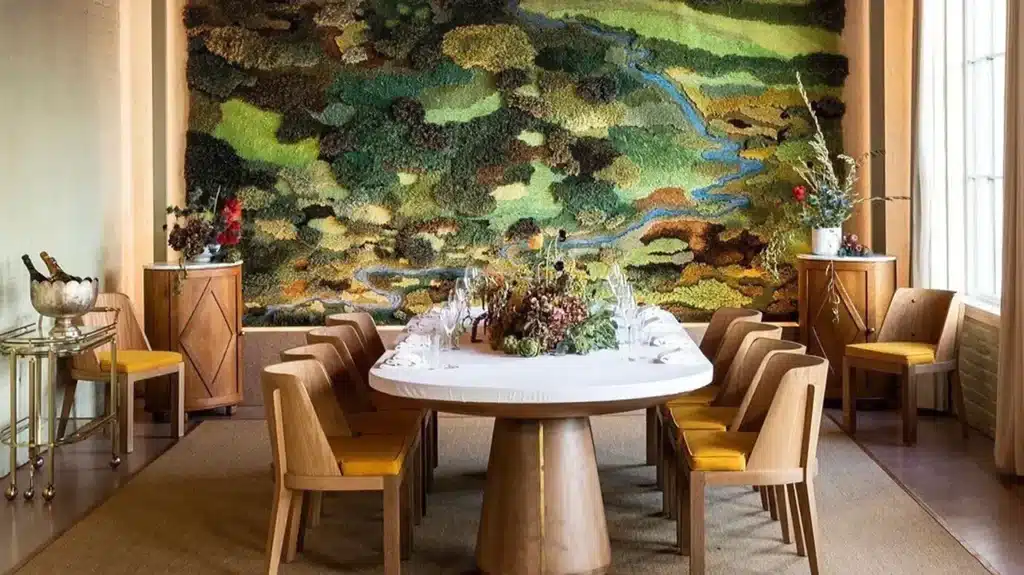
Thematically chaotic – a woven feature wall by Argentinian artist Alexandra Kehayoglou. Image: Julie Soefer.

Designing from the fruits of reflection

Our foresight into design trends for 2024 revolves around the theme of societal harmony. It challenges the chaos in the world and designs of yesteryear with a more nuanced, understanding approach. This may see the combination of nature, aesthetics, individuality, diversity and togetherness. Concurrently, we remain vigilant regarding the evolving role of AI in the design realm, actively seeking collaborative approaches to navigate this dynamic space collectively.


2024 Australian Good Design Awards update

Entries for the 2024 Good Design Australia Awards will be opening in late February. Will our predictions come to fruition? Or, will our ever-changing world of design continue to throw us curveballs? Sign up to the Good Design Australia email newsletter from our home page to be the first to know when our submissions go live. 

Rewarding Design Evolution

To design is to push away from stagnation – to dig deep, discover, learn, listen, think, iterate, adapt and evolve. It’s why, within the ever-evolving landscape of design, innovation remains at the forefront of creative exploration. It sees each passing year bring with it a wave of fresh ideas that push the boundaries of what’s possible, even within spaces and around products that were seemingly tried and true.

In other words, to design is to rally against the common cliché of; if it ain’t broke, don’t fix it. It’s to take action to make good things better, as much as it is to push boundaries in unforeseen ways in unlikely places. While the Australian Good Design Awards recognises both, this article explores projects and products that have been rewarded time and time again as they progress.

These designs have embraced change, adapted to new challenges and redefined their nuanced spaces with each iteration. Delve into the fascinating realm of design evolution as we follow the iterative journeys of two incredible products.

Iteration is an integral part of the design process. Image: Generated with AI after multiple prompt iterations

XBOX

Microsoft Device Design Team

First introduced to the gaming world in 2001, the Xbox encompasses a renowned line of video game consoles and associated gaming services developed by Microsoft. Over the past 20-odd years, multiple generations of consoles have come and gone, including the Xbox, Xbox 360, Xbox One, and the latest Xbox Series X and Series S.

Microsoft has leant on a rich history of innovation and a strong focus on both hardware and software with every Xbox iteration. Normalising built-in hard drives, embracing online multiplayer, integrating multimedia experiences and offering 4K console gaming experiences are all innovations that have helped shape the way millions of gamers around the world enjoy interactive entertainment.

Xbox One S 

2017 Good Design Award Gold Winner

Xbox One S. Image: Microsoft

The Xbox One S was the first gaming console of Microsoft’s to be entered into the Australian Good Design Awards. Marked as the “ultimate gaming and entertainment system” in the eighth generation of gaming consoles, the Xbox One S was capable of 4K HD Blu-ray and video streaming, High Dynamic Range and was 40% smaller than the original Xbox One.

Through an innovative design approach and a complex injection moulding process, the primary housing enclosure was moulded out of one seamless, unibody part. This not only reduced product cost, it also reduced assembly time, increased product quality by removing part breaks and created an iconic, beautiful design. The Xbox One S and Wireless controller have been designed for years of reliable, maintenance free use. In addition, at end of life, all components are labelled for recycling.

Learn more

Xbox Series X

2021 Good Design Award Gold Winner

Xbox Series X. Image: Microsoft

The Xbox Series X was dubbed by Microsoft as the “most powerful next-generation [ninth] console” that empowers developers to deliver on their creative visions and dreams. Implementing a processor that was far more powerful than anything the team had worked on previously, the Series X delivered a new level of fidelity, immediacy, precision and accuracy never before seen in console gaming.

Its nuanced form is a direct result of collaboration between design and engineering minds, architecting the internal components “from the inside out”. It saw the team split the motherboard and orient it vertically under a single axial fan to cool both sides at once. This decision radically reshaped the device – instead of the flat, set-top box look of most modern consoles, it birthed an upright system with a massive exhaust at the top. 

Learn more

Xbox Series S

2021 Good Design Award Winner

The disc-less Xbox Series S. Image: Microsoft

The Xbox Series S is the second console the Microsoft team designed in the ninth console generation. Whereas the goal of the flagship Xbox Series X was to be the ultimate showcase for power and high fidelity in video games, the goal of the Series S was to bring all the other benefits of the new chipset in a compact, modern factor and with an affordable price tag. 

The console conforms to the fact that most gamers download their content, so the decision to make the console all-digital, with no optical disc drive, was a natural one. Removing that component let the design and engineering teams reshape the architecture of the console dramatically. With that freedom, the team made the choice to shrink the depth of the console from front to back, reducing its depth by three inches from its predecessor, the Xbox One S. This results in a console that can go more places in your home, has easier to access cables and can be more easily transported.

Learn more


Blackmagic Studio Camera

Blackmagic Design

Since 2002, Port Melbourne’s Blackmagic Design Pty Ltd. has grown to become a worldwide leader in creative video technology. Its founders lean on a fabled history within the post-production editing and engineering space, uplifting a real passion for perfection in their innovative range of broadcast and cinema hardware, video editing software, network storage devices and graphics accelerators. The Blackmagic Design team took out the 2021 Good Design Team of the Year Award and have received countless Australian Good Design Awards over the last two decades.

The Blackmagic Studio Camera is one of Blackmagic Design’s flagship innovations. Designed for live production and broadcast workflows, it’s become a beneficial studio and live event tool. These ultra-portable cameras offer professional results at a fraction of the cost and are now used all over the world.

Blackmagic Studio Camera

2015 Good Design Award – Best in Class

The 2014 Blackmagic Studio Camera. Image: Blackmagic Design

A major challenge of live broadcast productions is the incredibly high cost of equipment and cabling for large multi-camera shoots. Cumbersome and complex, typical broadcast cameras can weigh over 20kg and cost up to $50,000. Blackmagic Design sought to challenge the status quo with the Blackmagic Studio Camera in 2014 – the world’s smallest broadcast camera with the world’s largest viewfinder and all the functionality of a high-end broadcast camera for one-tenth of the price.

Controlled remotely via a Blackmagic ATEM live production switcher, users have full lens control, and the ability to simultaneously colour balance multiple cameras in real-time with Blackmagic’s free colour correction software. This ensures high quality, consistent footage across an entire live production.

Learn more

Blackmagic Studio Camera (2021)

2022 Good Design Award Gold Winner

The 2021 Blackmagic Studio Camera. Image: Blackmagic Design

The 2021 variation of the Blackmagic Studio Camera follows in the footsteps of its predecessor, presenting the world’s most advanced, self-contained broadcast camera at a price under $2000. Its tech was upgraded to match the highest modern specs, including a 4K cinematic image sensor. While the camera was still designed specifically for live concerts, sporting events and television, the new iteration was developed in-line with the podcast times, offering a compact, high-quality live recording solution to those sharing ideas in basements, warehouses, bedrooms and offices all over the world.

For less than the cost of a mid-range DSLR, the 2021 Blackmagic Studio Camera integrates professional image quality, cutting edge professional broadcast technology into an ultra-compact, durable, all-in-one design. Made from just three major parts, its advanced Carbon Fiber Polycarbonate composite body is 50% lighter than die-cast metal, possessing comparable strength, rigidity and finish for a fraction of the cost.

Learn more

Blackmagic Studio Camera 6K Pro

2023 Good Design Award Winner

The 2023 Blackmagic Studio Camera. Image: Blackmagic Design

The Blackmagic Studio Camera 6K Pro steps Studio Camera family up an incredible notch, offering a more powerful cinematography solution that features an EF lens mount, a larger 6K sensor for improved colorimetry and fine detail handling, ND filters and built-in live streaming via Ethernet or mobile data. It shares the same compact design as the 2021 variant with a lightweight carbon fibre reinforced polycarbonate body, large integrated 7″ HDR viewfinder and powerful broadcast connections.

Innovating even further alongside the modern live streaming space, the 6K Pro allows operators to use the camera remotely from anywhere in the world and generate a H.264 HD live stream that is sent over the internet back to the studio. 

Learn more


Explore past and present Good Design Award Winners in the Good Design Index

Dive into the Good Design Index to be inspired by innovative projects from 2015 until now.