TAC Internal Communications Strategy & Implementation

good-design-award_winner_rgb_blk_logo
  • 2026

  • Design Strategy

Designed By:

Commissioned By:

TAC

Designed In:

Australia

An internal communications (IC) strategy and capability-building program for the Transport Accident Commission (TAC). Developed through research with 70+ stakeholders and delivered via a coaching-led implementation model, it transforms IC from a reactive service into a strategic capability that enables TAC’s mission of preventing road trauma and supporting injured Victorians.
view website

2.jpg
Paper Giant / TAC
3.jpg
Paper Giant / TAC
4.jpg
Paper Giant / TAC
5.jpg
Paper Giant / TAC
6.jpg
Paper Giant / TAC
7.jpg
Paper Giant / TAC
  • CHALLENGE
  • SOLUTION
  • IMPACT
  • MORE
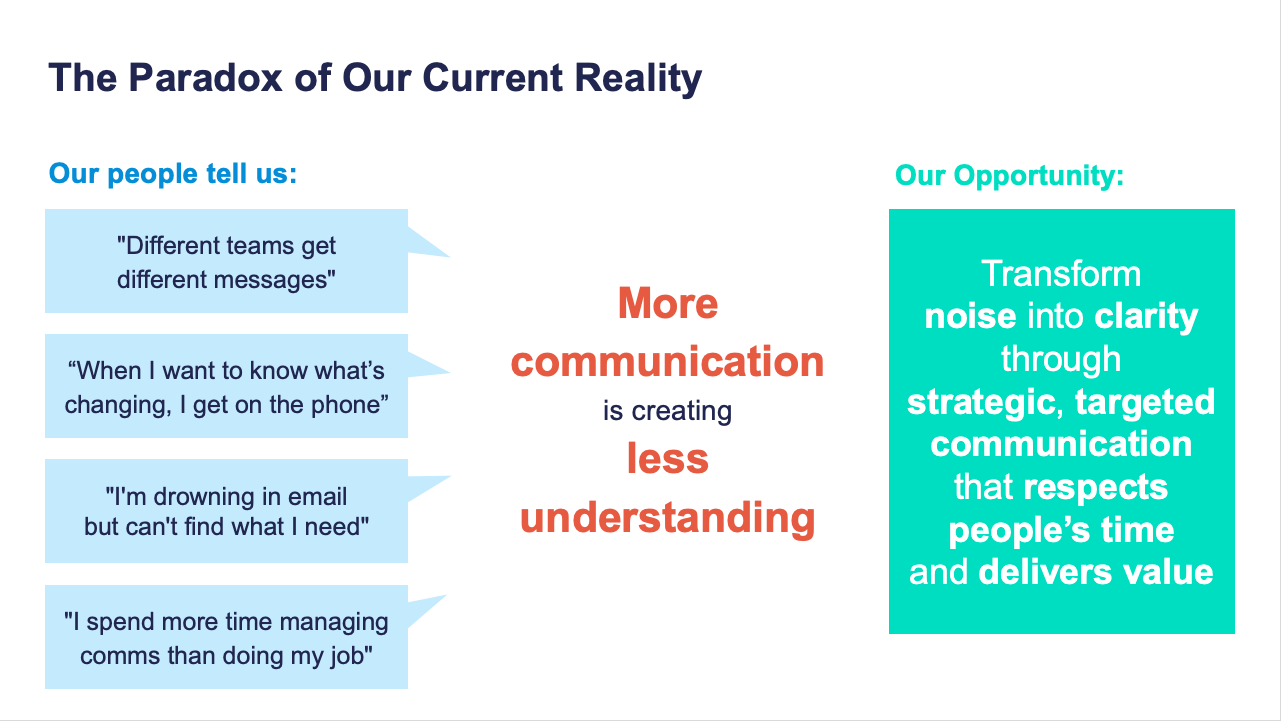
  • TAC was embarking on major strategic transformation, but its internal communications couldn't keep pace. Staff were overwhelmed but under-informed—drowning in emails yet spending 30+ minutes hunting for basic information across outdated, siloed systems. Different divisions received inconsistent messages with no single source of truth, and last-minute requests dominated a reactive IC function. This was a strategic risk: without effective internal communications, TAC's transformation initiatives—and ultimately its mission of preventing road trauma and supporting injured Victorians—were at risk of failure. The challenge was to reshape how information moves through a 1,200+ person organisation during significant change.

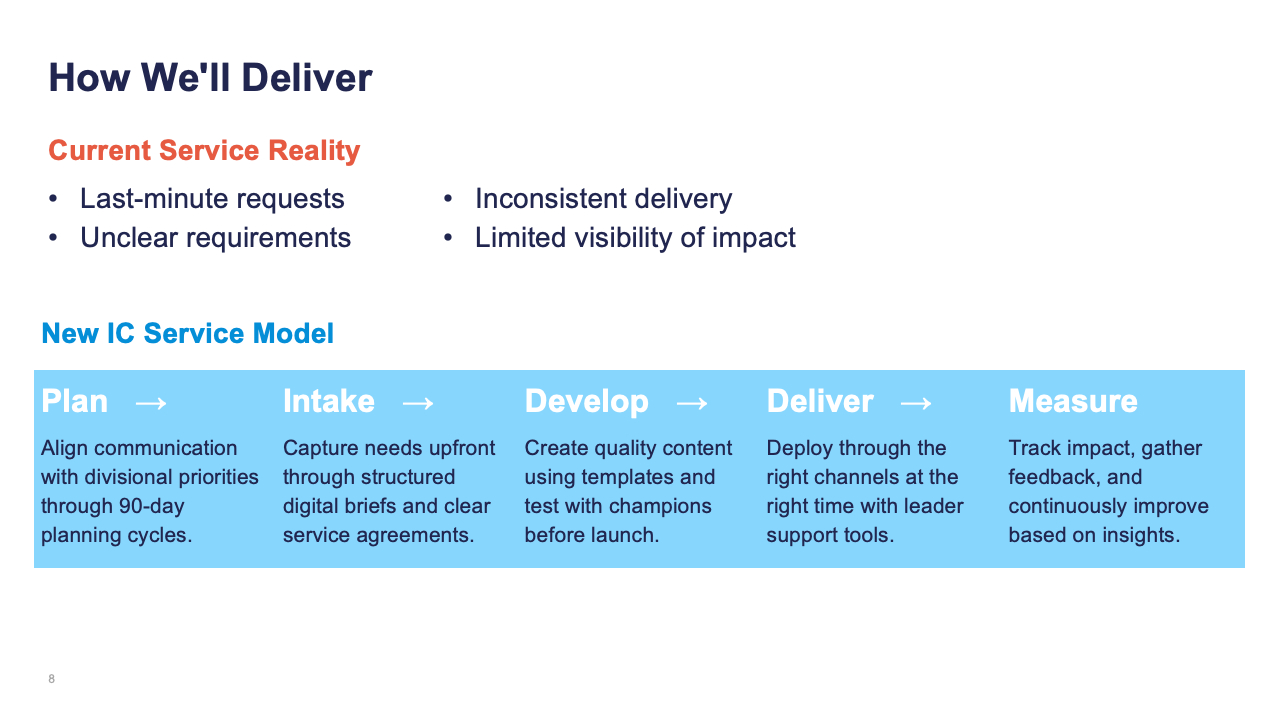
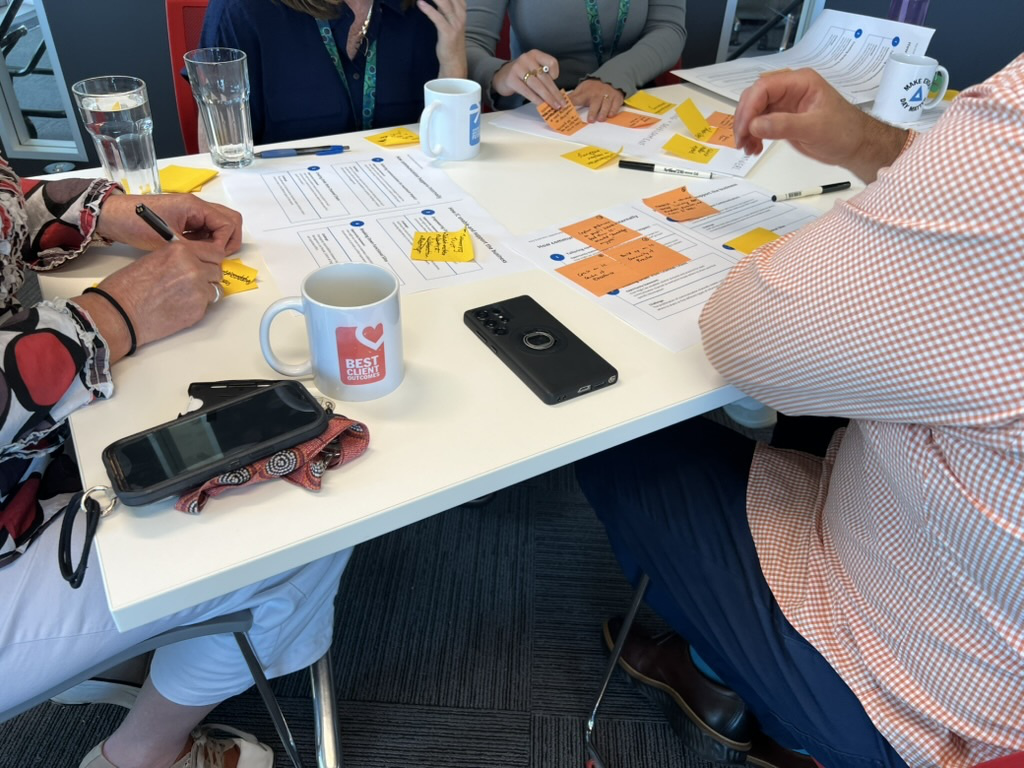
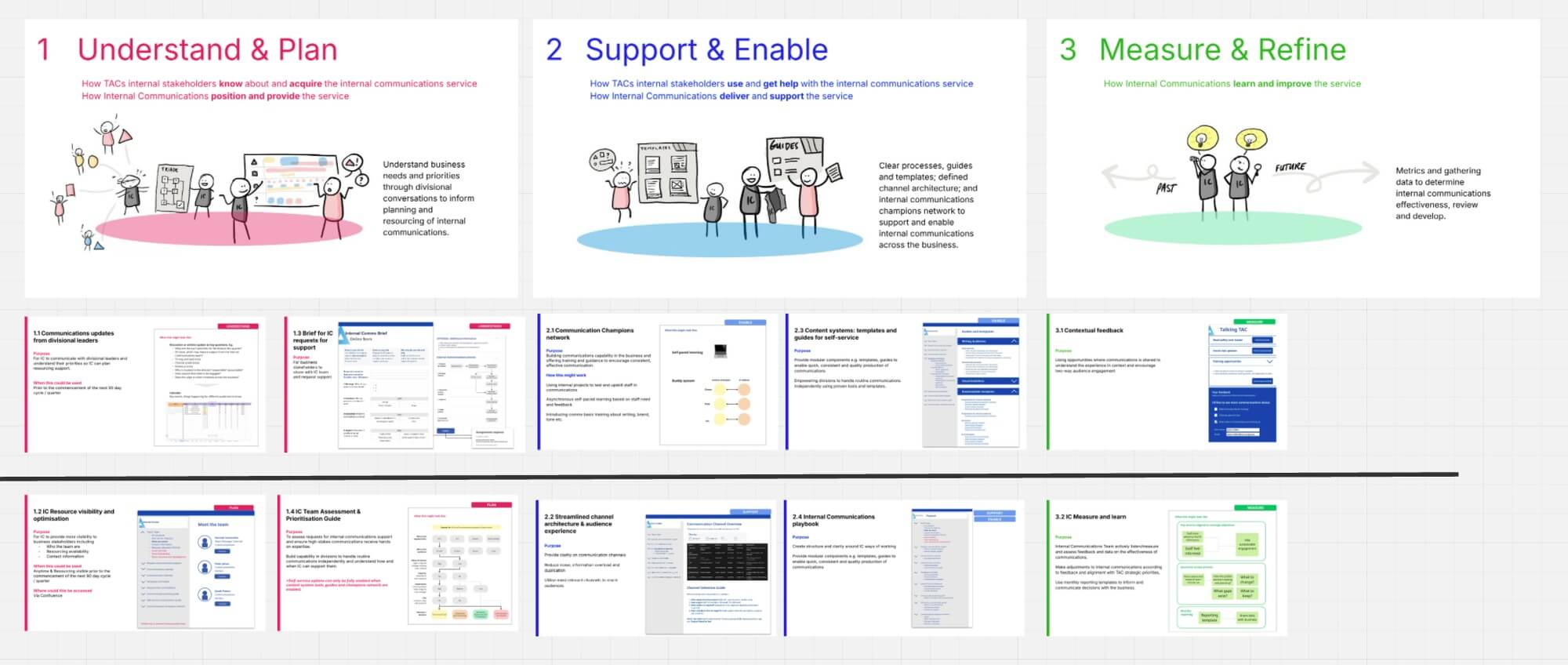
  • Paper Giant delivered a dual-phase design response. First, a human-centred research phase with 70+ stakeholders across all divisions surfaced how information actually flows—revealing that the same person plays different communication roles in different contexts. This produced a role-based architecture (Strategic Owners, Information Drivers, Sharers, Action Takers, Seekers) and three shifts: control to coordination, push to pull, reactive to proactive. Second, rather than handing over a document, we embedded capability through masterclass-style coaching across three parallel workstreams: a Leader Communications Program, Playbook implementation, and Digital Request Management. Weekly structured reflection converted experience into durable team capability.

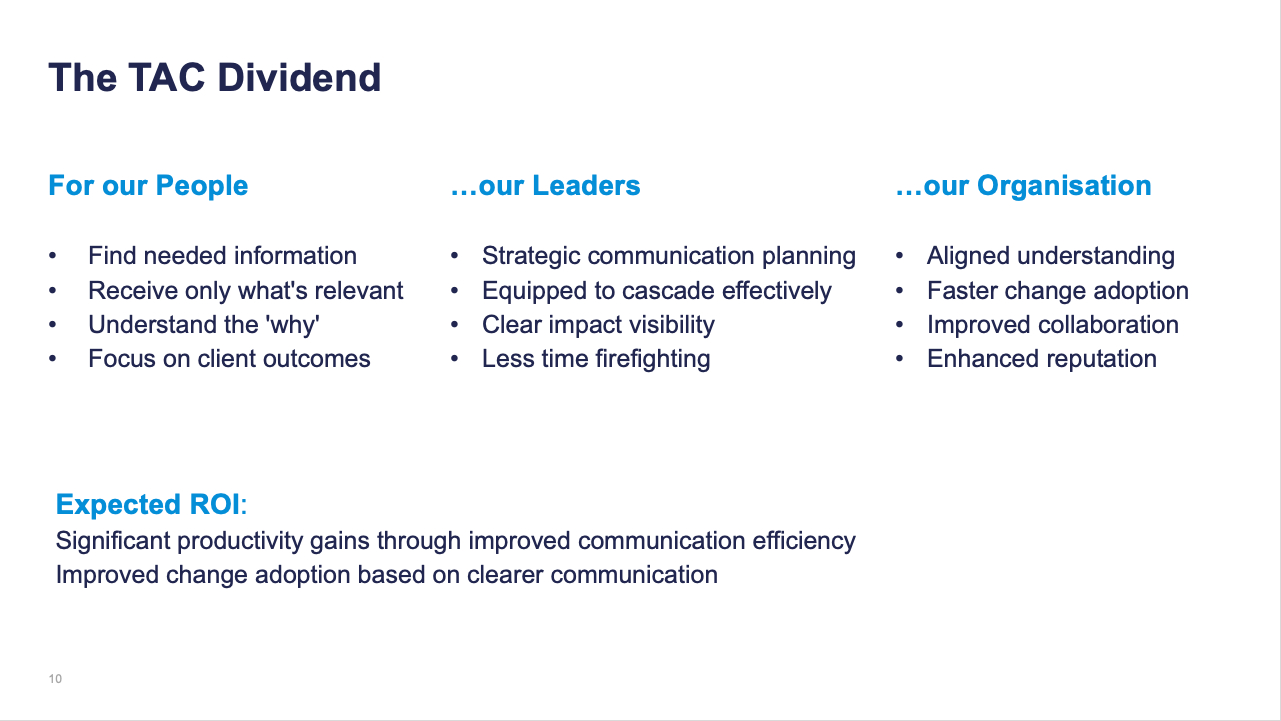
  • The IC function has shifted from reactive service to trusted strategic advisor, with ELT endorsement to curate and funnel communications requests across the organisation. Operational systems are in place: a digital request system making IC work visible, a 90-day planning rhythm, a leader hub, and a monthly push email. Team capability has fundamentally changed—planning and reflection are now non-negotiable, not nice-to-haves. Most importantly, clearer internal communications enables faster adoption of strategic initiatives, frees frontline staff to focus on injured Victorians rather than hunting for information, and strengthens organisational agility in delivering TAC's road safety and recovery mission.

  • Dual-phase design model. Strategy development and capability building were treated as two halves of the same design challenge. The strategy document was designed to be used, not shelved—structured around horizon deliverables that keep the team accountable and have practically reshaped how IC is organised, plans, and paces its cadence.Role-based communication architecture. Rather than segmenting by department or hierarchy, research revealed the same person plays different roles in different contexts. A five-role framework—Strategic Owners, Information Drivers, Information Sharers, Action Takers, Information Seekers—enables more precise, relevant communication design.Three strategic shifts. From control to coordination (IC as air traffic control, not gatekeepers); from push to pull (information available when needed, not just when sent); from reactive to proactive (planning aligned with 90-day strategic cycles).Coaching as design practice. Prototyping working rhythms rather than deliverables, testing with real work rather than simulations, and iterating on capability rather than content. Weekly "What? So What? Now What?" reflection sessions built transferable knowledge.Three parallel implementation workstreams. A Leader Communications Program, Playbook implementation converting strategy into team-owned tools, and a Digital Request Management system making IC work visible, measurable, and defensible to the business.