Ikuntji Designs – 2026 Indigenous Design Award
- Published on: 27 October 2026
Share
THE INDIGENOUS DESIGN AWARD RECOGNISES AND CELEBRATES THE IMPORTANT CONTRIBUTION THAT AUSTRALIA’S ABORIGINAL AND TORRES STRAIT ISLANDER DESIGNERS MAKE ACROSS THE SPECTRUM OF AUSTRALIAN DESIGN.
“I walk into a room wearing an Ikuntji piece and I no longer talk about the weather.”
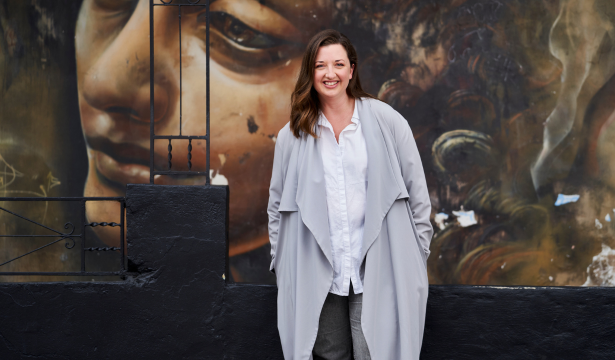
For Dr Chrischona Schmidt, Manager of Ikuntji Artists, it happens every time she wears something from the art centre’s fashion label, Ikuntji Designs. The small talk stops, and people want to know the story behind it: where it’s from, how it was made and how the artists get paid. For a label built on stories, that conversation is the point.
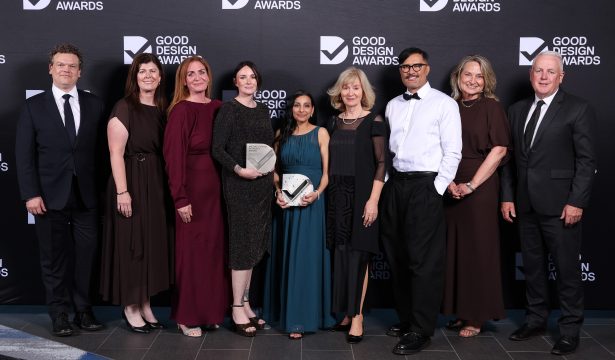
Ikuntji Designs is the recipient of the 2026 Indigenous Design Award presented by Good Design Australia in collaboration with RMIT University. No art centre had established its own clothing label built around authentic cultural stories. Ikuntji Artists did, with artists holding creative authority, receiving direct royalties and sharing in every commercial decision.
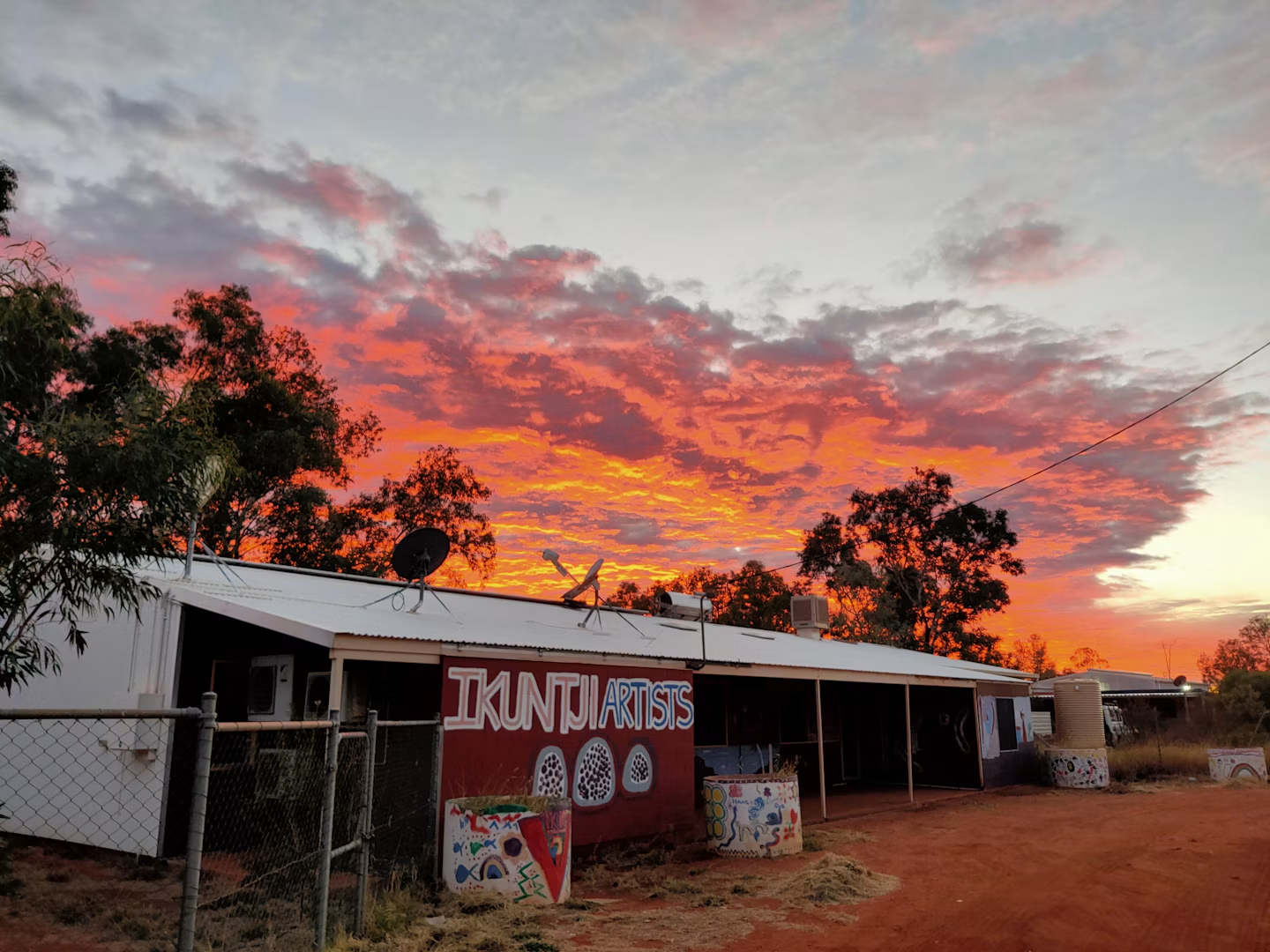
Its home, Ikuntji Artists, is a remote Aboriginal art centre in Haasts Bluff, NT, a community of around 150 people in the Western Desert. Founded in 1992, it was the first art centre established by women in the Western Desert Art Movement. It now supports more than 50 artists, and fashion and textiles make up two-thirds of its revenue.
Ikuntji Designs have walked runways in Darwin, Sydney, Paris and even New York. They’ve been worn by some of Australia’s best-known faces, including Jessica Mauboy, Celeste Barber and Barkaa.
We spoke with Dr Schmidt about how two $5,000 workshops grew into a label printing 10,000 metres of fabric a year, how a Dreaming story becomes wearable art, and how Haasts Bluff is showing the fashion industry a different way to make and wear clothes.
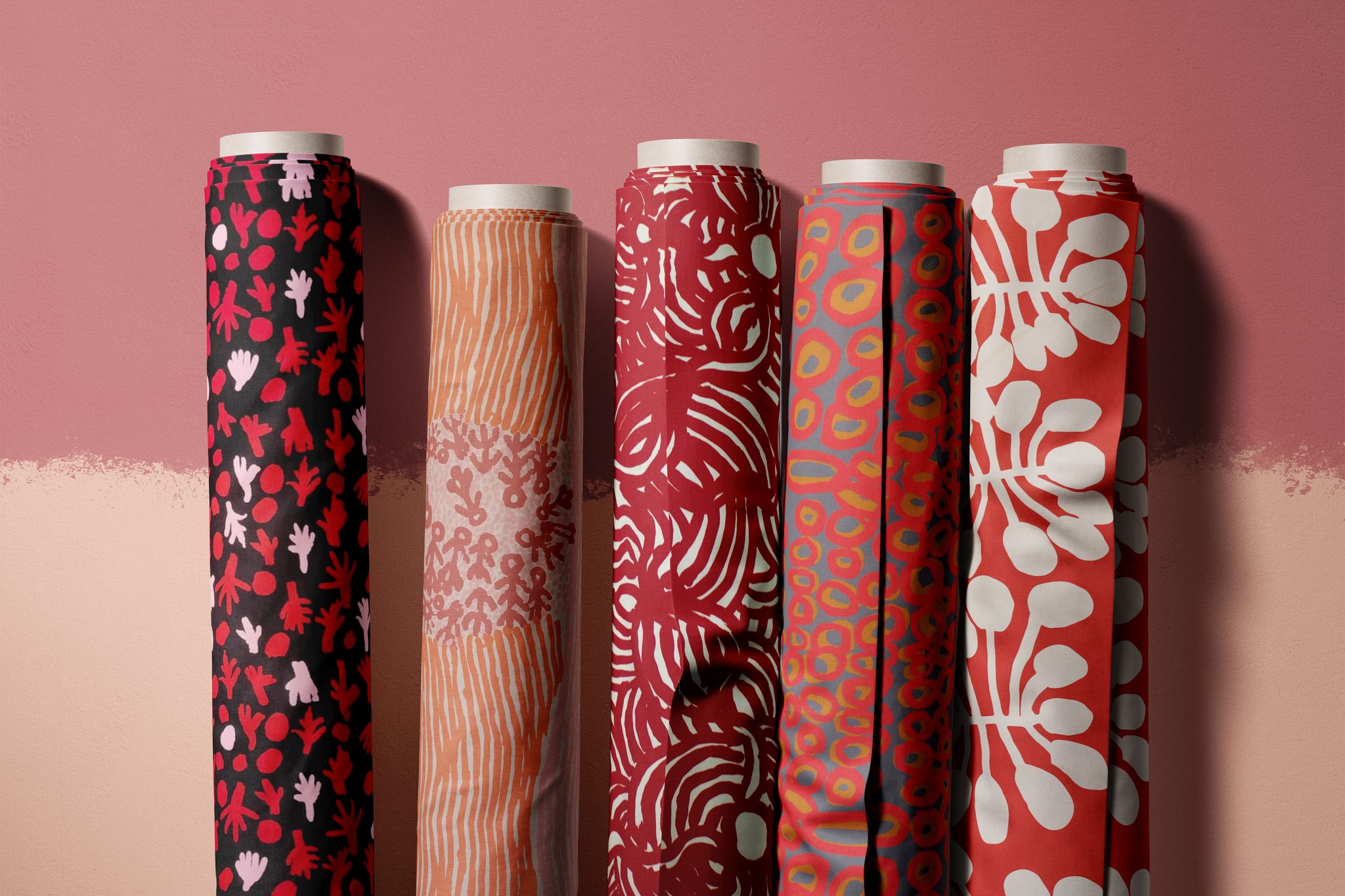
Ikuntji Designs, Winner of the 2026 Indigenous Design Award
Two workshops and $5,000
Screenprinting was part of Ikuntji Artists from the start, but over time painting took over. When Dr Schmidt joined in 2012, the women who had founded the art centre 20 years earlier asked to bring it back.
She learned the process alongside them. A $5,000 grant funded a two-week T-shirt printing workshop, followed by a second workshop the next year on the same budget. Every Ikuntji design since has grown from those two workshops.
“When you look at it from the perspective of return on investment, it’s actually incredible,” said Dr Schmidt. “That’s the basis of all the designs, those two two-week workshops.”
The T-shirts sold out almost immediately at the Darwin Aboriginal Art Fair. Magpie Goose soon approached the art centre about a fashion collaboration, and the artists, most of them women in their 70s and 80s, said yes. That collection sold out four times.
The second workshop taught repeat patterns, taking designs from a single image on a T-shirt to fabric by the metre. More collaborations followed, and then an invitation to show at Australian Fashion Week.
“At that point, it was still the assumption that we’re experimenting,” Dr Schmidt explained. “All the artists just experimenting, having a go, having fun.”
From experiment to label
By 2025, it was clear the work had outgrown that. Ikuntji Designs still sits within the art centre, but it now operates as a label in its own right.
“Making it pretty clear it is a label was a significant step,” said Chrischona. “What we’ve encountered in the last three years is that we cannot meet demand at all.”
Until then, the focus had been on fabric. Early one-off pieces were printed in community, on screens built to fit the art centre’s tables, and sold through exhibitions like paintings. As a label, Ikuntji Designs now develops its own garment patterns and plans its work as collections.
Production has since moved from community to hand screen printers in Sydney, then to specialist ethical producers in Delhi, India. The label now prints around 10,000 metres of fabric a year on natural fibres including cotton/linen, linen, Tencel and silk.
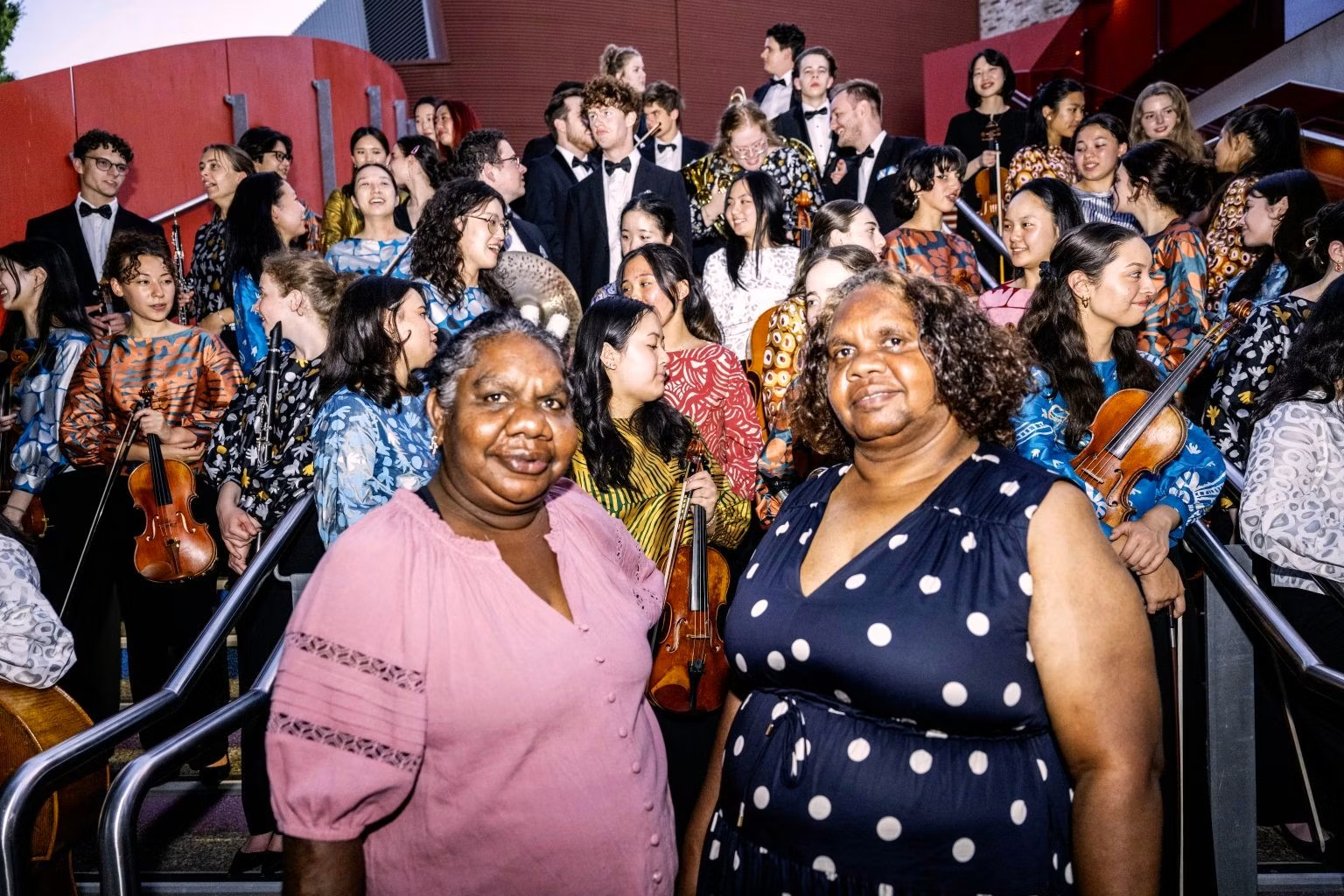
Ikuntji Designs, Winner of the 2026 Indigenous Design Award
A long conversation in the room
Every design begins with an artist and their Country. Some carry Tjukurrpa, the Dreaming stories passed down through generations. Others hold knowledge of plants, water and sky.
Joyce Dixon’s Bush Foods design records the bush foods the old ladies taught her as a young woman: what they look like, where they grow and their names in language.
In the early workshops, the women talked each other through what they wanted to make. One of the label’s best-loved designs, Women’s Business by Kumuntjai Marks, came out of those conversations.
The artist’s own Dreaming is a fine dot painting that wouldn’t translate to fabric, so the design draws instead on stories traced in the sand with an index finger. It shows how women travel together, go hunting and share joyful times together.
“Each design is a long conversation between everybody in the room,” said Chrischona. “It’s actually thinking through what is going to happen in two, three, six months with that particular piece of fabric.”
A painting is shown whole. A length of fabric might be cut up, upholstered or turned into a pillowcase. So the artists decide, from the start, what is appropriate to share and how it might be worn.
Some artists start out wanting to translate a painting straight onto fabric. “I would talk to them about, look, didn’t you say that was this part of the story? Are you happy for that to be cut up? Because it will happen,” said Dr Schmidt. “They go, ‘Oh no, we need to rejig this.’ And then they go home and think about it.”
The aim is a design that “doesn’t reveal anything that is secret sacred”. As former director and artist Hayley Dodd put it, “Ikuntji Designs, it’s for everyone.”
A board of five Aboriginal directors, all living and working locally, sets the label’s direction. Every reproduction requires informed consent.
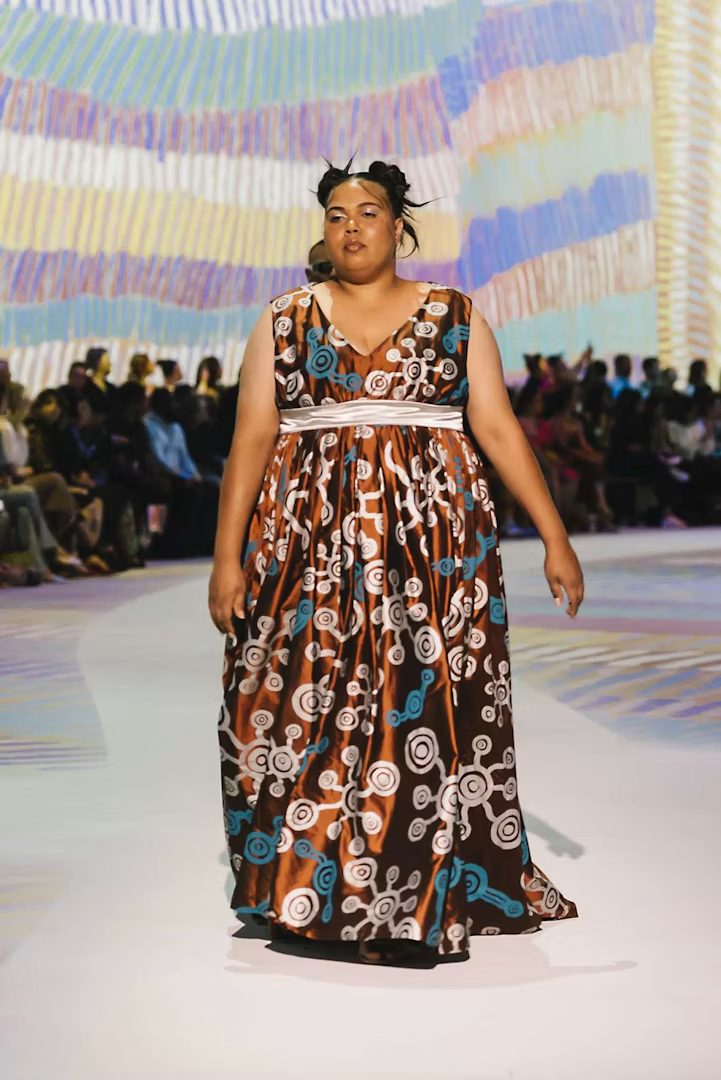
Ikuntji Designs, Winner of the 2026 Indigenous Design Award: Hayley Dodd walks Melbourne Fashion Week
Wearing Country
As wearable art, an Ikuntji piece carries a story off the wall and onto the body.
“I think it’s a vehicle in a lot of ways,” said Dr Schmidt. “The process of hand screen printing those works is actually part of how they are embodying Country.”
For the artists, Ikuntji Designs has always been about people wearing Country and feeling empowered through that story.
“When you wear the Women’s Business design, the artists believe that you think about the times you share with your girlfriends, or your mother and your grandmother and your sisters, being somewhere you love being,” Dr Schmidt explained. “So that’s your story then, that holds you in the same way as it would hold someone else.”
“Every time I put something on, I can feel how it shifts my energy,” she added.
“One garment can tell an incredible social story and empowerment story for women out of the desert,” said Chrischona.
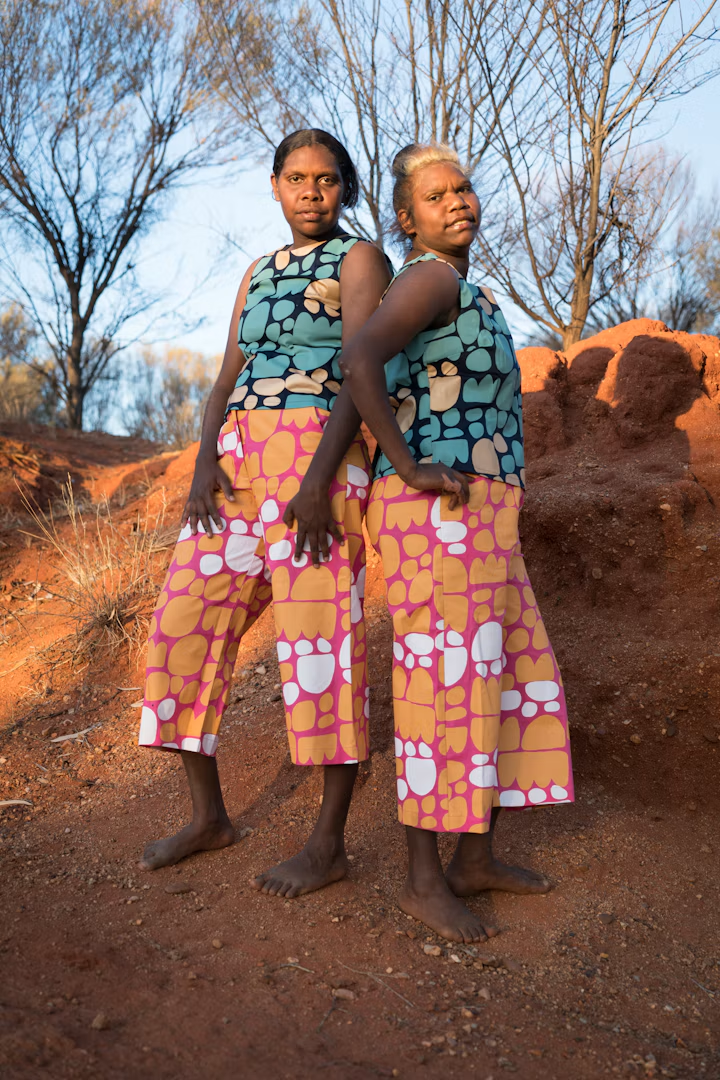
Ikuntji Designs, Winner of the 2026 Indigenous Design Award Rita Djana and Sheraldeen Apati Marshall
Indigenous creative leadership
The appointment of Gomeroi woman Anastasia Keshan as Creative Director was a turning point. She was brought on to create a collection for Australian Fashion Week in 2023, taking one-off garments to an international standard.
“She brought in incredible wisdom and experience in this space, but also all her networks,” said Dr Schmidt,
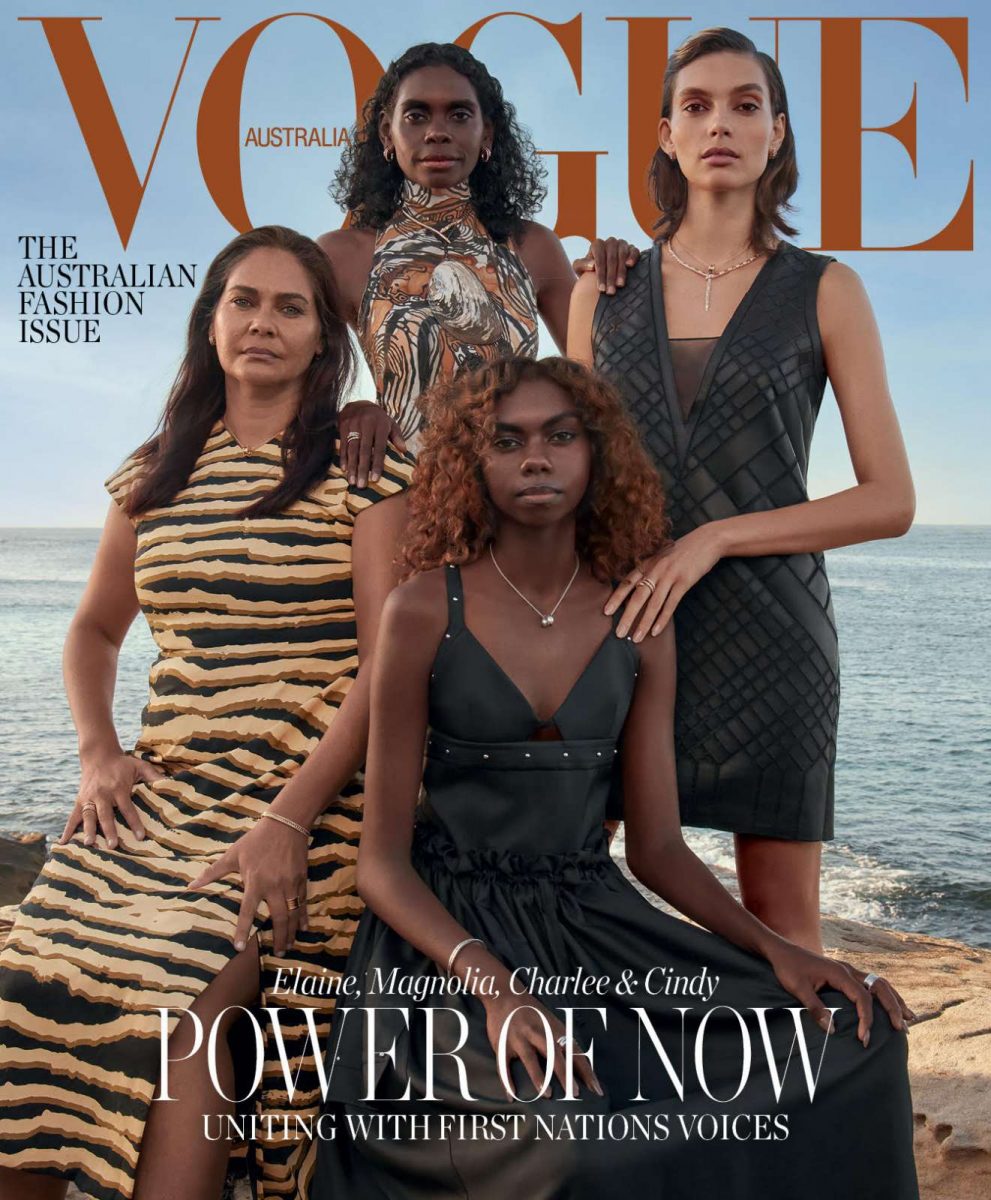
That runway also changed things for the artists: Hayley Dodd walked in her own design and told Vogue she felt young, blak and deadly.
“Some of the other artists, when they came back, were shaking and crying,” said Dr Schmidt. “This moment, these 12 minutes, they shifted something.”
Vogue Australia reported a standing ovation. “What better fashion than that which tailors a story to the body,” wrote Gladys Lai.
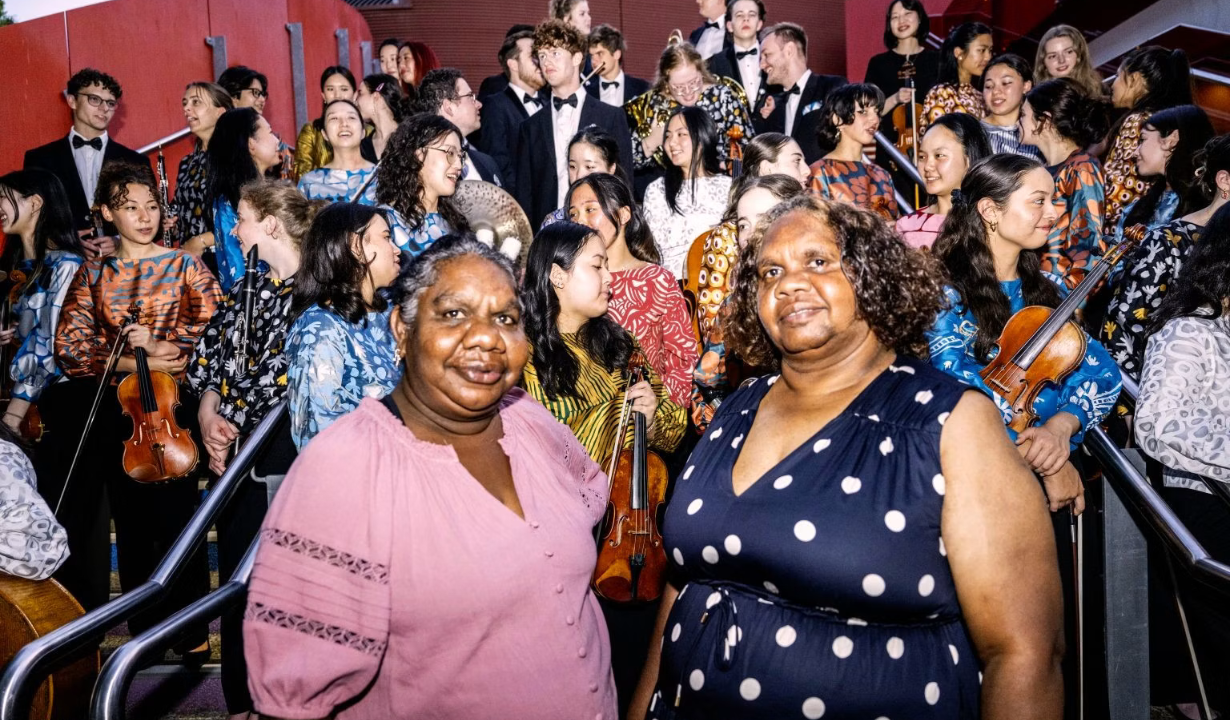
Since then, Ikuntji’s work has appeared in the film Kangaroo and travelled with the Australian Youth Orchestra on its international tour. “Finally we’re seeing that a remote Aboriginal art centre can create a brand that has become nationally and internationally recognisable,” said Dr Schmidt.
Ikuntji Designs, Winner of the 2026 Indigenous Design Award
Fall in love with it again and again
Chrischona believes Ikuntji has changed the wider fashion industry, and much of that comes down to how it thinks about consumption. Instead of chasing new collections, the label wants people to fall in love with a piece and keep wearing it for years. It works with around 38 designs, some in up to eight colourways.
“We don’t need everything every three months,” said Dr Schmidt. “We don’t actually need more. We need to wear that same garment more and more. We need people to fall in love with it.”
In her view, the industry has come to see handmade as second best, trusting machines so much that craftsmanship has been lost along the way.
“Fast fashion needs to learn that because it’s handmade, it’s actually not lesser,” she said. “Each piece is valuable as a story and as the garment that it is.”
A ripple effect
It isn’t only Dr Schmidt who gets asked. Wear an Ikuntji piece in public and people start asking about it. Those conversations lead to bigger questions: what an Aboriginal art centre is, what it means to have one in community, and what becomes possible when artists’ work travels.
The saying goes that people need to see someone like them succeed before they can picture it for themselves. As Dr Schmidt sees it, Ikuntji’s garments turn that around: the artists’ own work goes out into the world first and becomes the example.
“We hear so often, you can only be what you can see,” she explained. “Those garments, I think, are the reverse. They show you what others have done and where they can go.”
For the artists, it’s also about being seen, something Dr Schmidt says that they often feel as if they are not:. “It’s something that I’ve heard on and on from the artists,” she added. “It’s about the fact that they feel seen … in a different way than a painting could ever do.”
Ikuntji Designs, Winner of the 2026 Indigenous Design Award – Art Centre
In line with Hyundai and BMW
When the 2026 winners were announced on social media the day after the awards night, Chrischona found Ikuntji’s name alongside some of the world’s biggest brands.
“I had tears in my eyes seeing, ‘Oh my god, we’re on the line with Hyundai and BMW,’” she said. She shared the news with the artists and the board straight away. They simply could not believe that an art centre from remote Central Australia was listed as winners alongside big international brands. Chairperson Roseranna Larry said: ‘I am so proud of our little art centre and how we are all working together to share our stories and our grandparents’ stories. People now know our art centre and our stories and they love them.’
The jury commended Ikuntji Designs for “demonstrating exceptional Indigenous design ownership and commercial success while maintaining full cultural sovereignty”.
Good Design Australia congratulates Ikuntji Designs and the artists of Haasts Bluff, whose stories of Country are now worn around the world.