DFV Learning Network – 2026 Michael Bryce Patron’s Award
- Published on: 20 October 2026
Share
THE MICHAEL BRYCE PATRON’S AWARD IS PRESENTED ANNUALLY BY THE PATRON OF GOOD DESIGN AUSTRALIA.
IT RECOGNISES AND CELEBRATES THE BEST AUSTRALIAN-DESIGNED PRODUCT, SERVICE OR PROJECT IN THE ANNUAL AUSTRALIAN GOOD DESIGN AWARDS WITH THE POTENTIAL TO SHAPE THE FUTURE ECONOMIC, SOCIAL, CULTURAL AND ENVIRONMENTAL ASPECTS OF OUR PLANET.
Domestic and family violence (DFV) is a complex and entrenched challenge across Australia. Specialist services work every day to support people with diverse and often intersecting needs, from migrant and refugee women to children and young people, LGBTQIA+ Australians and people living in regional and remote communities.
Yet the organisations closest to these challenges are often disconnected from one another and have limited influence over the funding and policy decisions that shape their work.
Commissioned by the Paul Ramsay Foundation, the DFV Learning Network by ThirdStory brought together 31 specialist services to share knowledge, identify common challenges and develop recommendations for systemic change.
Recognised with the 2026 Michael Bryce Patron’s Award, the project demonstrates how research design can strengthen a fragmented sector and turn frontline expertise into action. We spoke with ThirdStory’s Chief Executive Keren Caple and Senior Project Leads Emma Scott and Tally Daphu about the thinking behind the initiative and its impact.
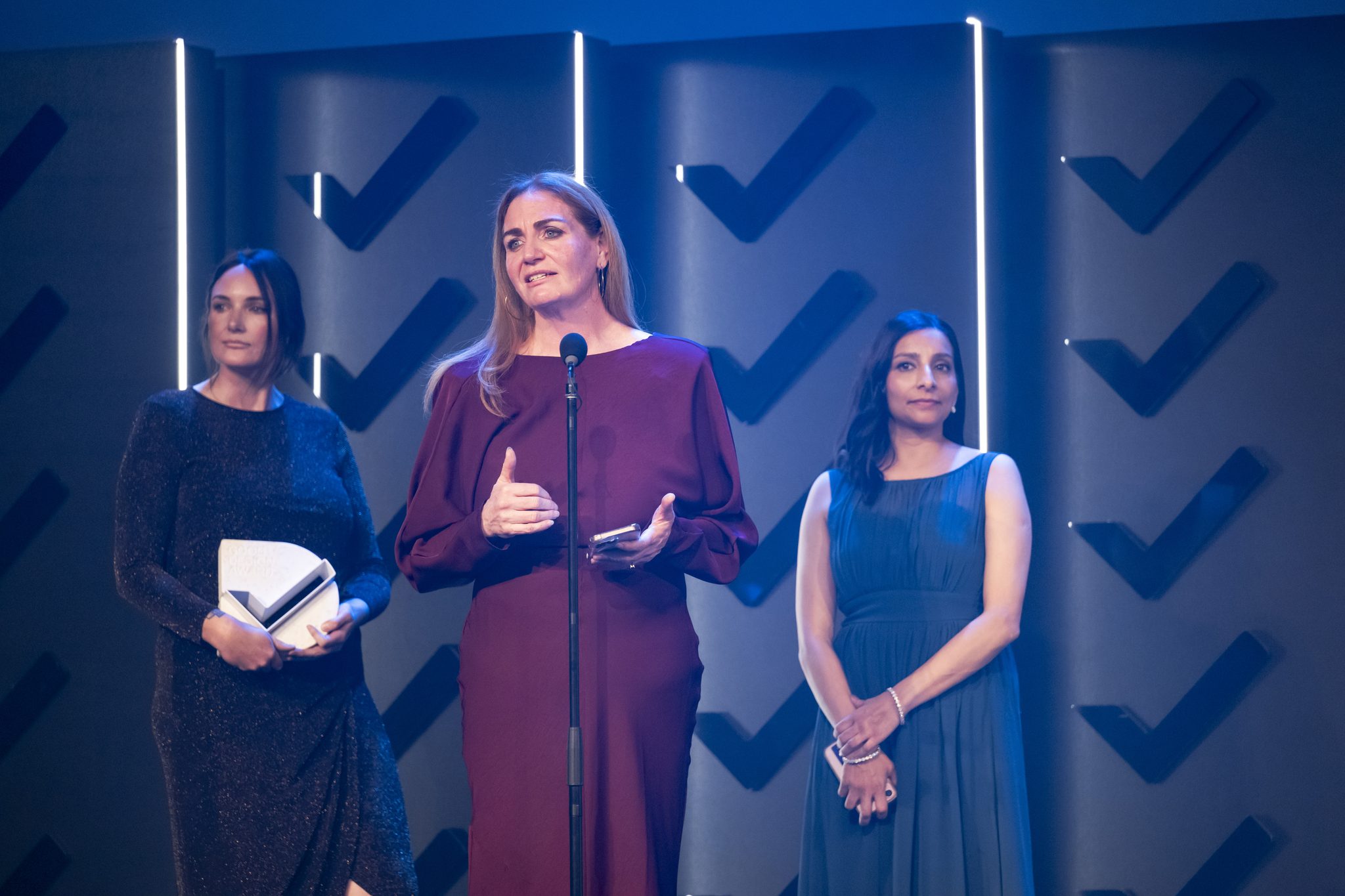
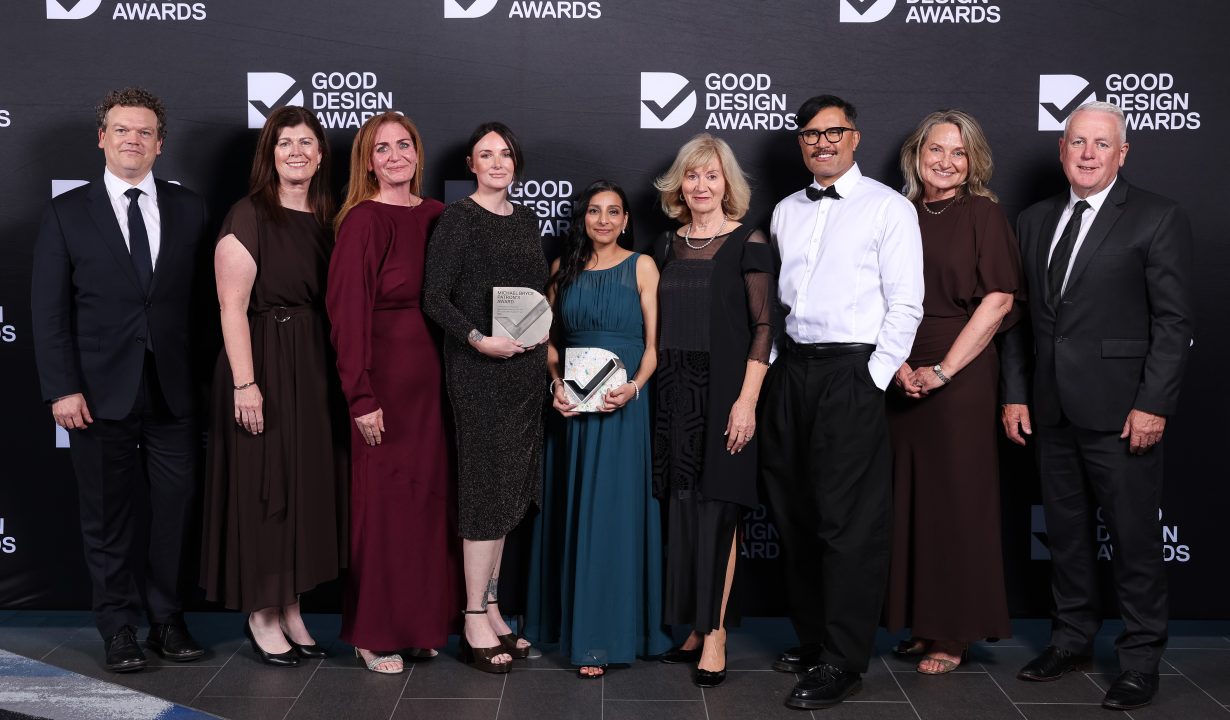
Third Story at the Good Design Australia 2026 Award Ceremony. Image: GDA
Designing the conditions for change
Launched in 2023, the DFV Learning Network grew from the Paul Ramsay Foundation’s interest in understanding the challenges facing specialist services and what would help them strengthen their work.
ThirdStory was given the freedom to shape the research, identifying an opportunity to build connections across the sector through the process itself.
“We wanted to design a process that was really participatory and that saw research as a mobilisation strategy as well,” the team explained.
Interviews across 31 services were followed by workshops, cohort-based learning and collaborative analysis. Rather than waiting until the research was complete to share findings, participants helped identify common challenges and the changes they wanted funders and policymakers to make.
“We didn’t go into this research with a clear view of what might come out of it. We were really guided by the sector and the field, and they told us what they wanted to see.”
The research revealed a sector rich in specialist knowledge and resourcefulness, but lacking the infrastructure to share effective practices. Services often supported the same communities without collaborating, while smaller organisations had limited capacity to document their work or evaluate what was effective.
Funding structures could also encourage competition rather than cooperation.
“The way that funding is deployed and what that funding incentivises is just as important as the amount of funding that is required by the field.”
The research also highlighted how poorly service systems can reflect people’s lived experiences. Domestic and family violence often intersects with housing insecurity, legal challenges and the needs of children and young people, yet funding and policy tend to separate these issues.
“People who are experiencing this kind of vulnerability and complexity don’t experience these things in the siloed policy areas that we like to think of them in,” the team explained. “If we’re going to put people first in this, and these are supposed to be human services, then we would stop thinking about them the way that systems orientate themselves and start thinking more about the way that people experience them.”
Making space for trust
Because domestic and family violence is deeply personal, the research required careful attention to safety, cultural considerations and the experiences of those involved. The team wanted participants to have a meaningful role in shaping the findings, rather than simply contributing information.
“We know that a lot of research can feel really extractive. People gather insights from services and they never hear anything back about where that has gone,” the team said. “We wanted to make sure that those who were giving their time to participate had a role in shaping the insights, themes and recommendations emerging from the work.”
Ethics approval, informed consent, cultural safety protocols and trauma-informed methods were built into the process. Participants could contribute through interviews and workshops, with opportunities to step away from difficult discussions and access support.
Cultural self-determination was also central. Independent First Nations research agency ResearchCrowd convened a separate network of First Nations-led services, working alongside ThirdStory to develop research frameworks and review emerging findings while maintaining each network’s independence.
“We think that research and policy and programme design and system design work should all be paying attention to the principles of allyship,” the team said.
This commitment extended to how research was commissioned, who held decision-making power and how participants could shape the outcomes.
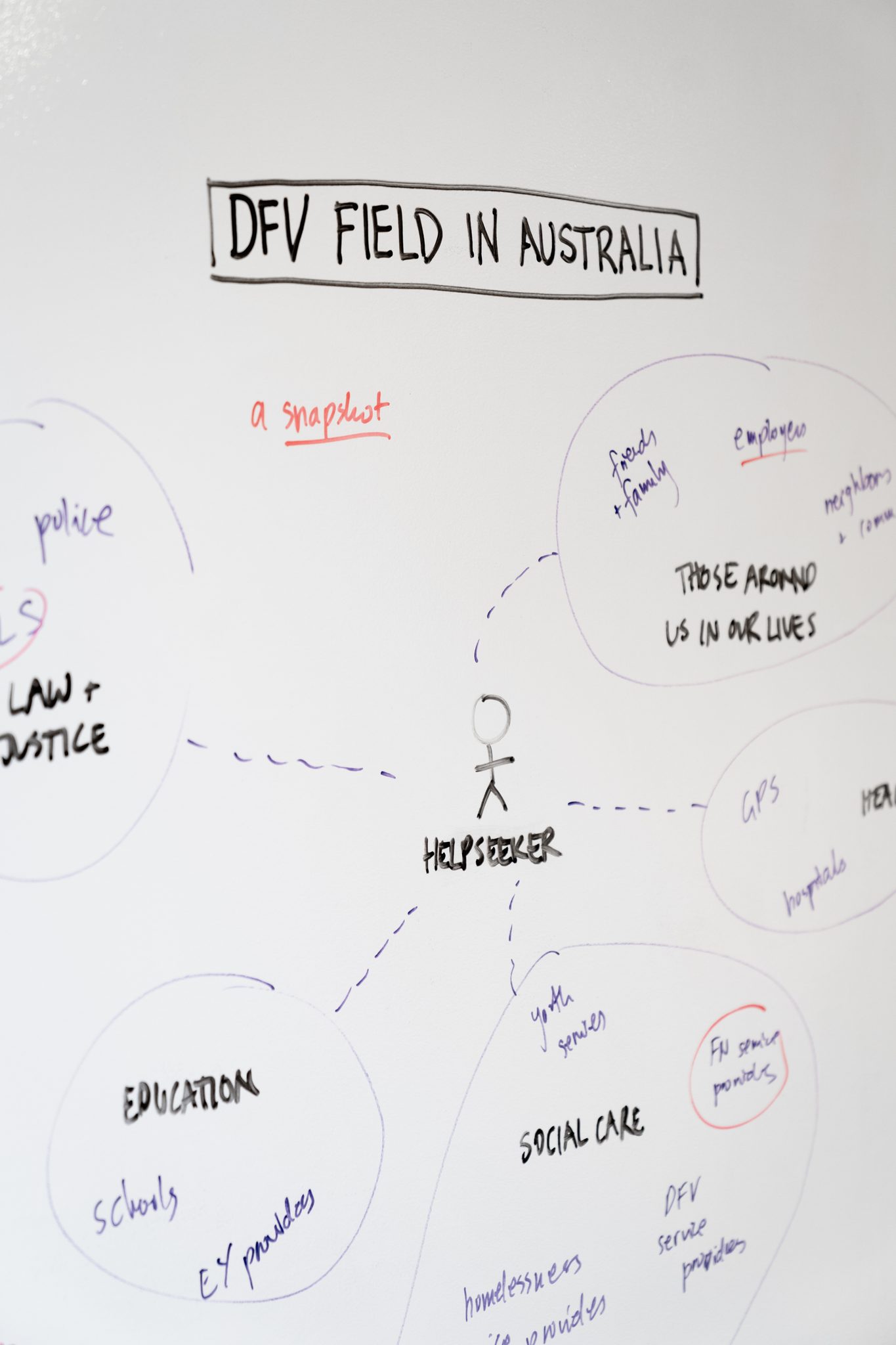
A sneak peek of the thinking behind the DFV Learning Network – 2026 Michael Bryce Patron’s Award. Image: Supplied
Turning frontline knowledge into evidence
Rather than analysing interviews behind closed doors, the team returned emerging themes to participants to test their accuracy, identify gaps and challenge assumptions.
“The traditional way in research is to speak to people, take all those insights away and have a few people sit in a room and work something out,” the team explained. “What we did instead was take those key messages and themes back to participants to ask whether they were representative of their experiences, what we were missing and what we had got wrong.”
The Strong Field Framework helped organise insights around the sector’s collective identity, knowledge sharing and capacity to influence policy. Combining research evidence with practitioners’ experience helped turn individual observations into shared priorities.
“Evidence from the literature is incredibly important, but so is putting alongside it the lived experience, the expertise and the wisdom of practice. When those knowledge forms are combined, we end up with insights that can genuinely make a difference for a profession and a field, and ultimately improve outcomes for people.”
The resulting learning papers mapped the sector, outlined ten steps towards transformation and set out recommendations for funders and policymakers. They also gave services evidence to support their own advocacy and articulate what they needed to work effectively.
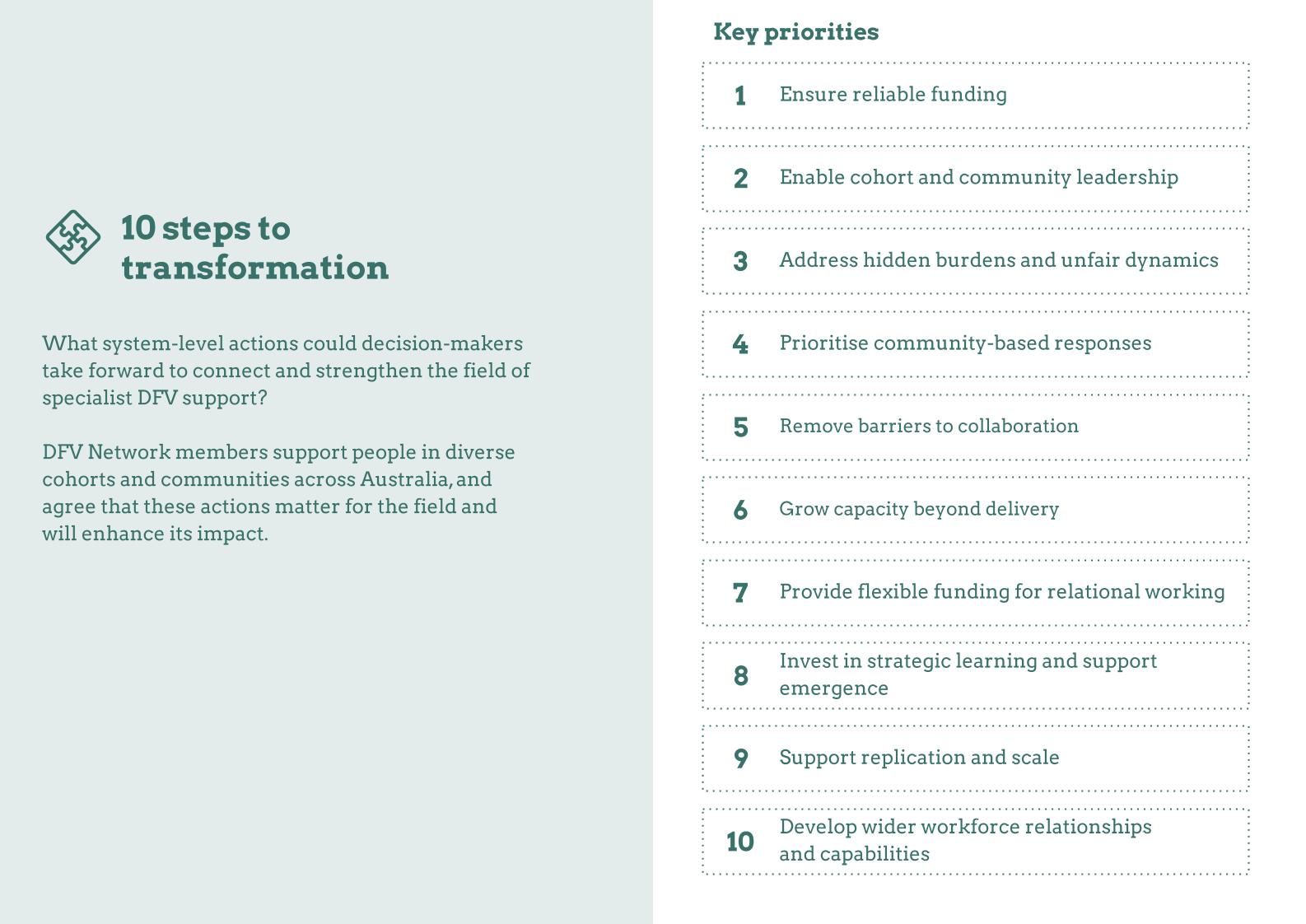
Key priorities of the DFV Learning Network – 2026 Michael Bryce Patron’s Award. Image: Supplied
When evidence moves funding
In 2025, the Paul Ramsay Foundation introduced a $10.2 million grant round supporting 17 cross-sector collaborations, publicly attributing the investment to recommendations from the DFV Learning Network.
The funding model reflected priorities identified through the research, including reliable multi-year funding, fewer barriers to collaboration, flexible support for relationship-based work and greater investment in learning.
The Foundation later introduced another grant programme focused on early intervention with fathers. Meanwhile, the network’s learning papers were published by the Australian Policy Observatory, shared with practitioners through Queensland social sector peak body QCOSS and used to inform conversations with the Office of the Domestic, Family and Sexual Violence Commissioner.
For the team, the funding response demonstrated what can happen when research is connected to a partner willing to act on its findings.
“What’s really exciting about this work is that, in a really short space of time, we’ve been able to see a funder mobilise really quickly on the basis of these insights and make real, tangible changes,” the team said.
The team also emphasised the importance of flexibility from the outset.
“We can’t underestimate the importance of having a trusting funding partner that does this kind of work and thinks about outcomes and not outputs.”
The approach is now informing other projects, including work with ANROWS through the Brian M. Davis Charitable Foundation’s Good Design Grant Round, exploring how systems can better support vulnerable children and young people.
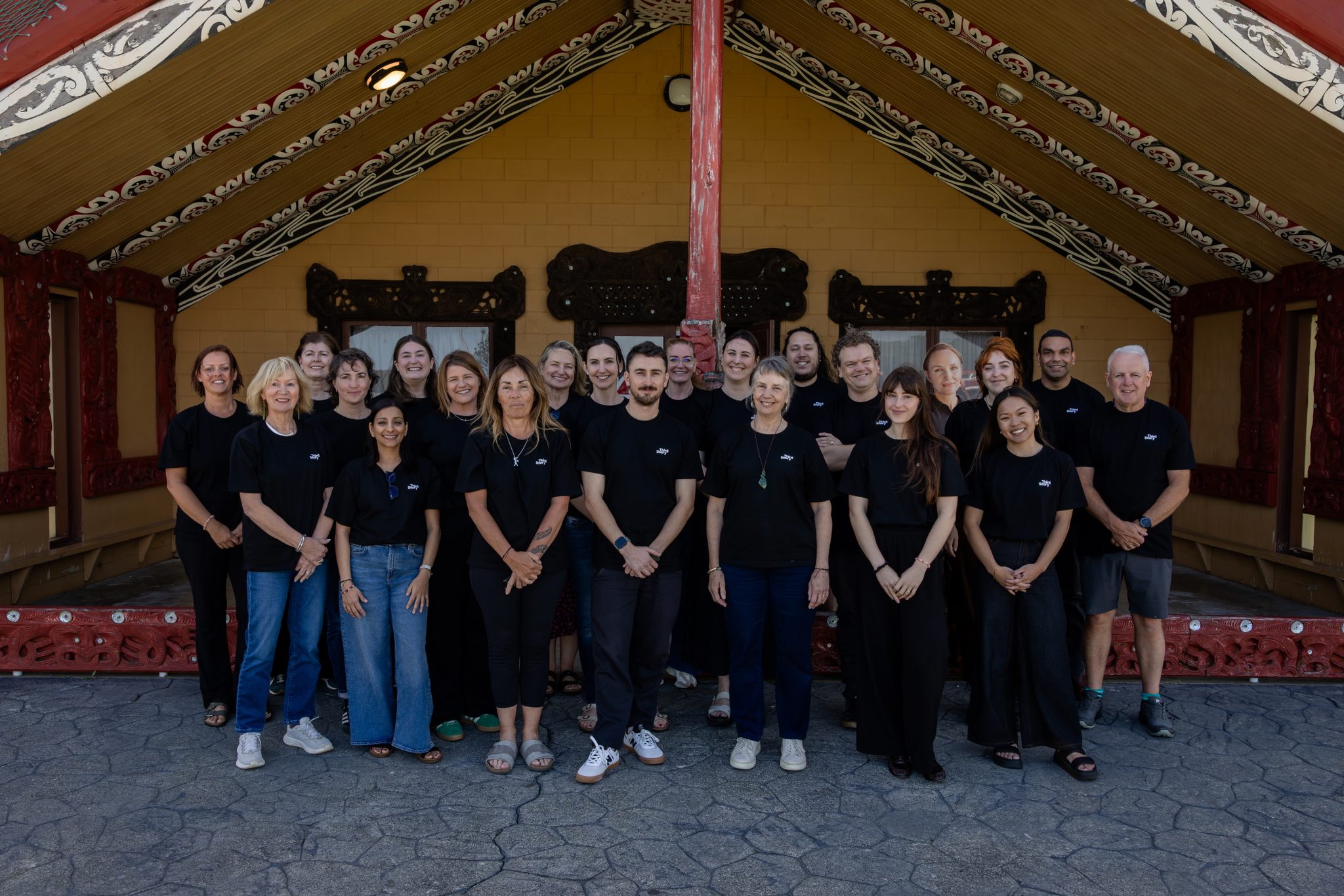
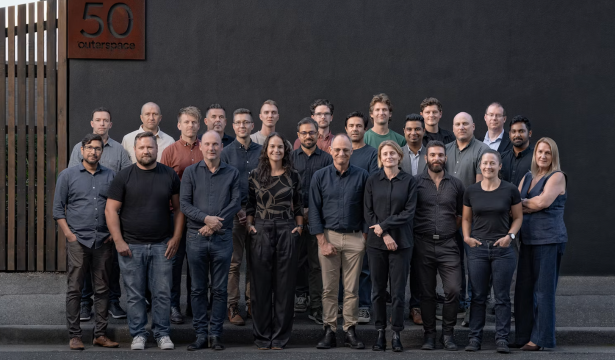
The team at ThirdStory. Image: Supplied
Building the foundations for lasting change
The approach is now informing other projects, including work with ANROWS through the Brian M. Davis Charitable Foundation’s Good Design Grant Round to explore how systems can better support vulnerable children and young people.
The DFV Learning Network also demonstrated the importance of having funding partners willing to let research evolve in response to what participants share. That flexibility gave the project room to uncover insights that could not have been fully anticipated at the outset.
Strengthening Australia’s response to domestic and family violence means supporting the specialist field itself, giving organisations the connections, resources and collective voice to influence the systems around them.
“Our current national plan to end violence against women and children is very comprehensive. But one of the things it doesn’t talk about is field building,” the team said. “How can we better support the field, particularly those supporting people with really specific and holistic needs, to thrive and become a force of their own that can advocate for policy changes with a shared voice?”
By bringing 31 services together to shape recommendations and influence funding decisions, the DFV Learning Network demonstrates how design research can drive meaningful change across a complex social system, with lasting implications for the organisations and communities it serves.
Good Design Australia congratulates ThirdStory, the Paul Ramsay Foundation, ResearchCrowd and the participating specialist services on this important work.