Understanding and Improving Novice Driver Safety in Western Australia

good-design-award_winner_rgb_blk_logo
  • 2026

  • Design Research

Commissioned By:

RAC Western Australia

Designed In:

Australia

RAC CoLAB and RAC’s Social and Community Impact team conducted a design research project to understand the behaviours, risks, and needs of young novice drivers in Western Australia. We identified key safety gaps and informed four concept directions aimed at improving driver capability, reducing risk-taking behaviours, and supporting safer outcomes.
view website

2.jpg
3.jpg
4.jpg
5.jpg
7.jpg
8.jpg
9.jpg
Team.jpg
  • CHALLENGE
  • SOLUTION
  • IMPACT
  • MORE
  • In 2023, 17–19-year-olds had the highest rate of being killed or seriously injured on WA roads. This shows how risky the early stage of independent driving is.Current road safety efforts focus on rules and awareness but miss real behaviour, environment, and social influence. RAC CoLAB, with RAC’s Social and Community Impact team, set out to understand how young people actually drive across metro and regional areas, find gaps in the system, and identify what’s missing to prepare them for real-world driving.

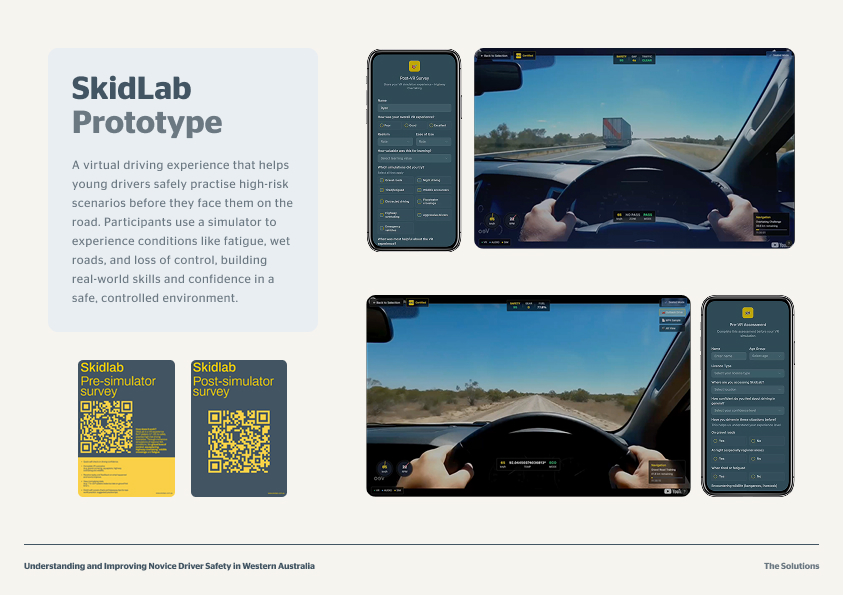
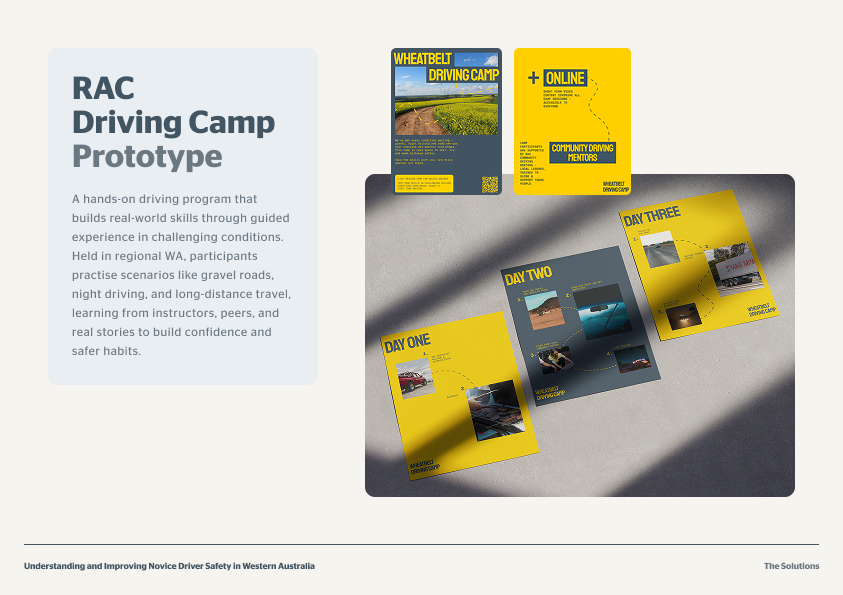
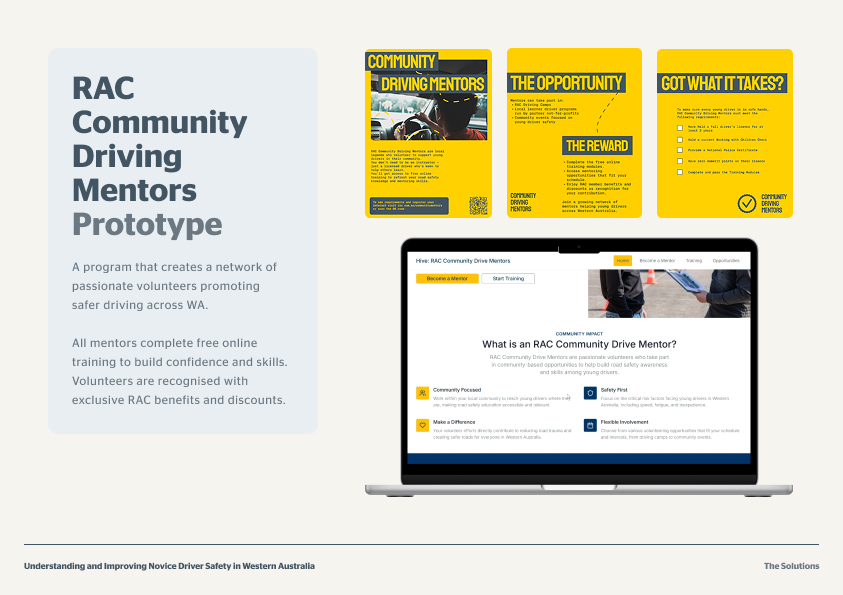
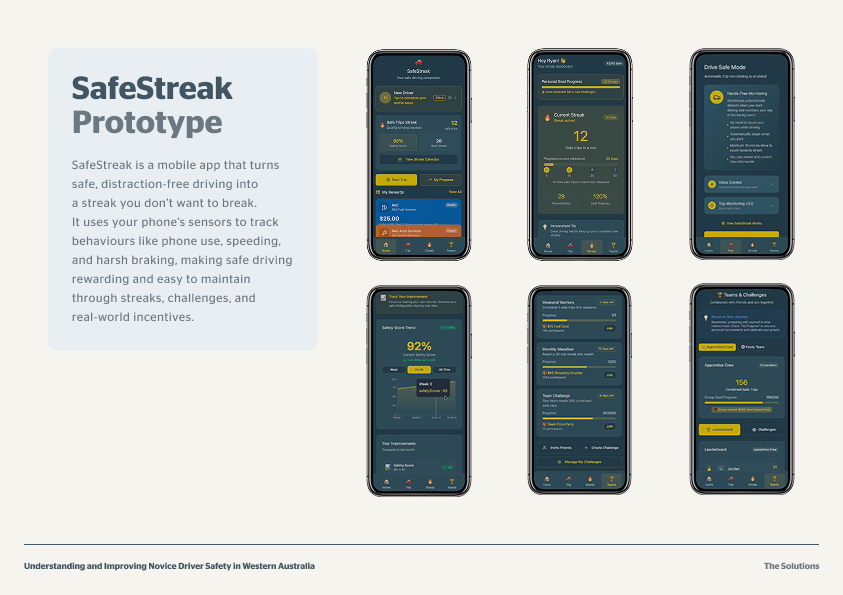
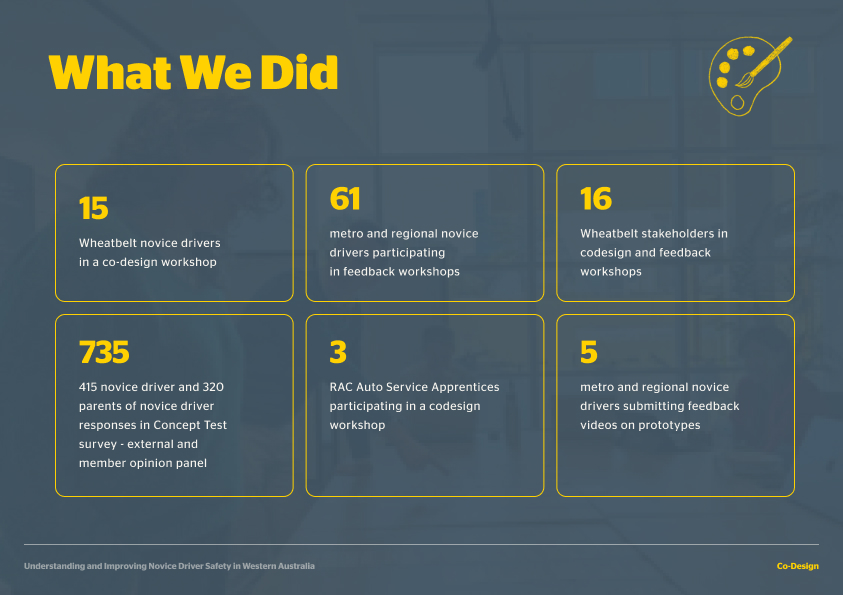
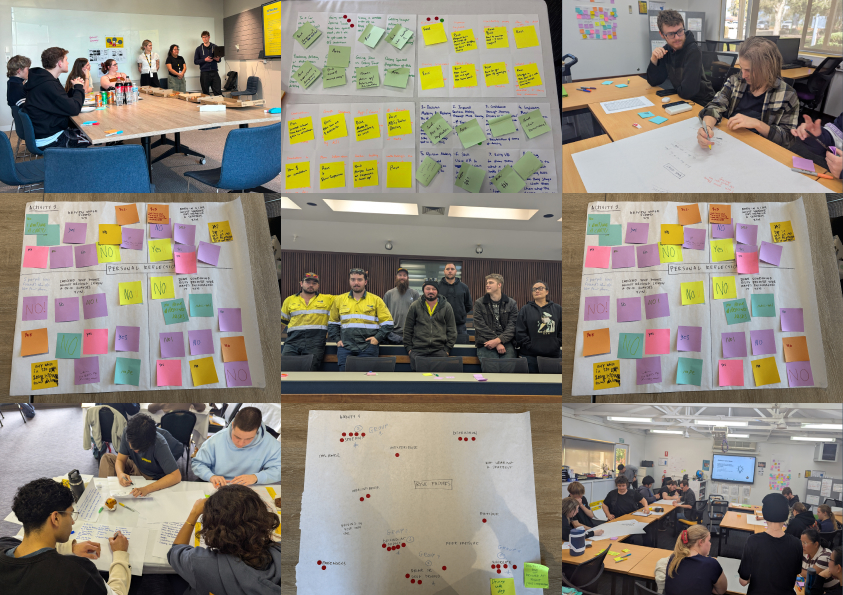
  • RAC CoLAB and RAC’s Social and Community Impact team delivered a comprehensive design research project combining large-scale surveying, in-depth interviews, co-design workshops, and regional fieldwork across metro and Wheatbelt communities. A key moment was extending the research beyond metro areas to capture real-world driving conditions often overlooked in traditional approaches. Insights were translated into clear opportunity areas and tested through concept development and validation, resulting in four complementary concept directions: SkidLab, SafeStreak, Wheatbelt Driving Camp, and RAC Community Driving Mentors.

  • This research provides a clear, evidence-based understanding of the factors contributing to road risk among young novice drivers in Western Australia. By capturing real experiences across metro and regional communities, it highlights gaps in how drivers are currently prepared for real-world conditions. The findings informed four concept directions: SkidLab, SafeStreak, Wheatbelt Driving Camp, and RAC Community Driving Mentors, addressing behaviour, skills, environment, and community support. These were validated through large-scale concept testing, showing strong appeal and perceived safety impact among novice drivers and parents, and providing a clear foundation for future road safety investment and intervention.

  • A defining feature of this project is its strong connection to real-world driving contexts, particularly through regional engagement in the Wheatbelt. This brought forward conditions often overlooked in metro-focused approaches, including long-distance travel, mixed road surfaces, limited access to instructors, and strong local driving cultures.The research takes a whole-of-system view, bringing together perspectives from young drivers, parents, apprentices, educators, and local institutions. This broader lens highlights how behaviour is shaped not just by individuals, but by environment, access, and social influence.Another key feature is the translation of insight into four complementary concept directions, each addressing a different aspect of novice driver safety. These include immersive skills training (SkidLab), behaviour-based interventions (SafeStreak), place-based learning programs (Wheatbelt Driving Camp), and community-led support models (RAC Community Driving Mentors).This ensures the research moves beyond a single solution, providing practical and scalable pathways to improve safety outcomes for young novice drivers.