Collaborative Research, Learning and Action with the DFV Specialist Support Field

good-design-award_best-in-class_rgb_blk_logo
  • 2026

  • Design Research

Designed By:

Commissioned By:

Paul Ramsay Foundation

Designed In:

Australia

Specialist domestic and family violence services doing the most crucial and complex work are often the most isolated and least heard. The DFV Learning Network set out to change that, using design to convene 31 services, build collective knowledge, and grow a shared voice to influence funders and policymaker decisions.
view website

2.jpg
3.jpg
4.jpg
  • CHALLENGE
  • SOLUTION
  • IMPACT
  • MORE
  • Domestic and family violence is an entrenched problem across Australia, with some groups experiencing it with greater prevalence and harm. The specialist support field is creative, dynamic and diverse, with services demonstrating powerful practice with particular cohorts. Yet without the right conditions, that practice stays invisible. Short-term, siloed, program-based funding favours larger mainstream providers, does not match the complex nature of specialist work, and is not designed to enable collaborative or preventative solutions. No shared infrastructure existed for the field to learn together or influence change, and people closest to the problem had the least power to shape its response.

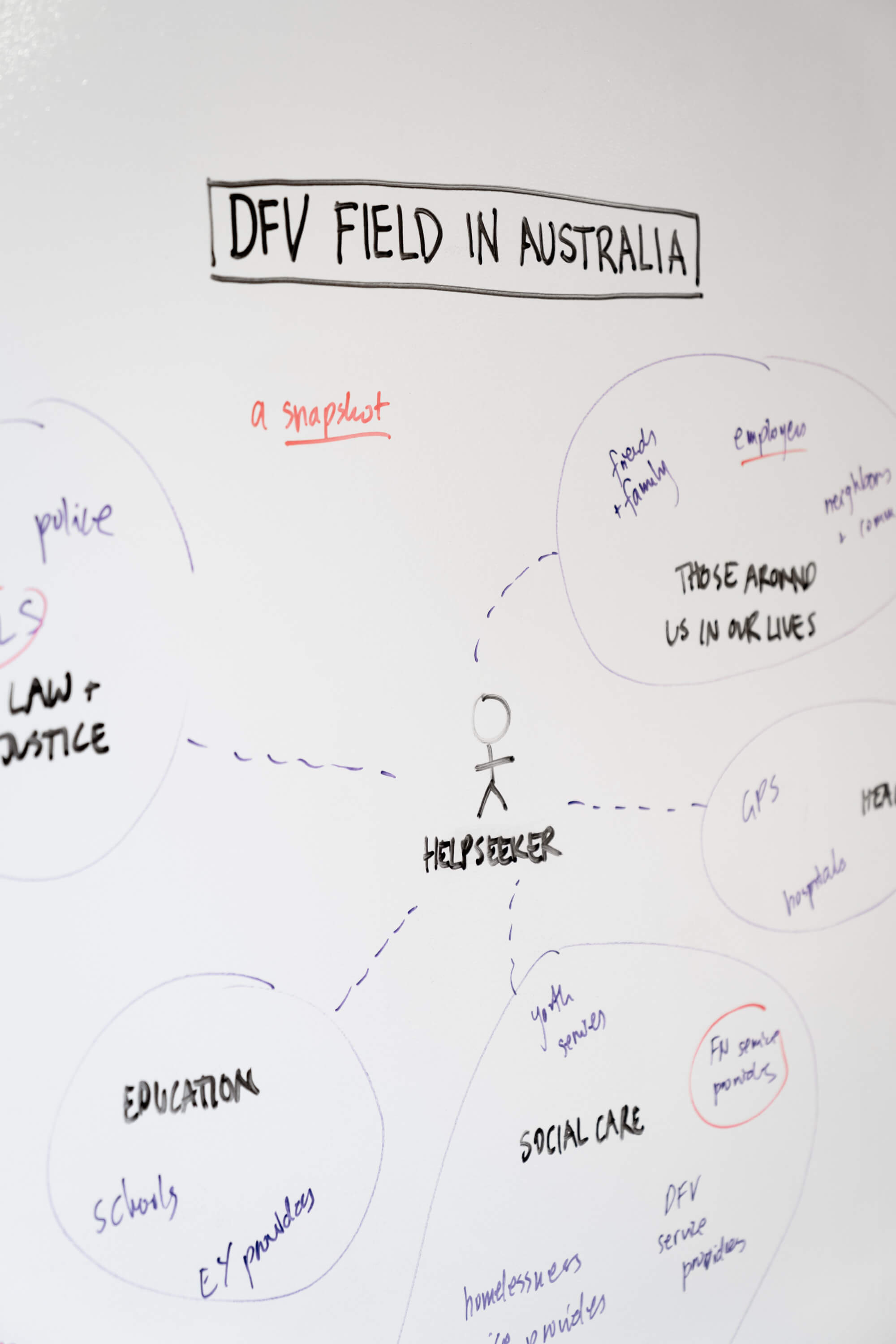
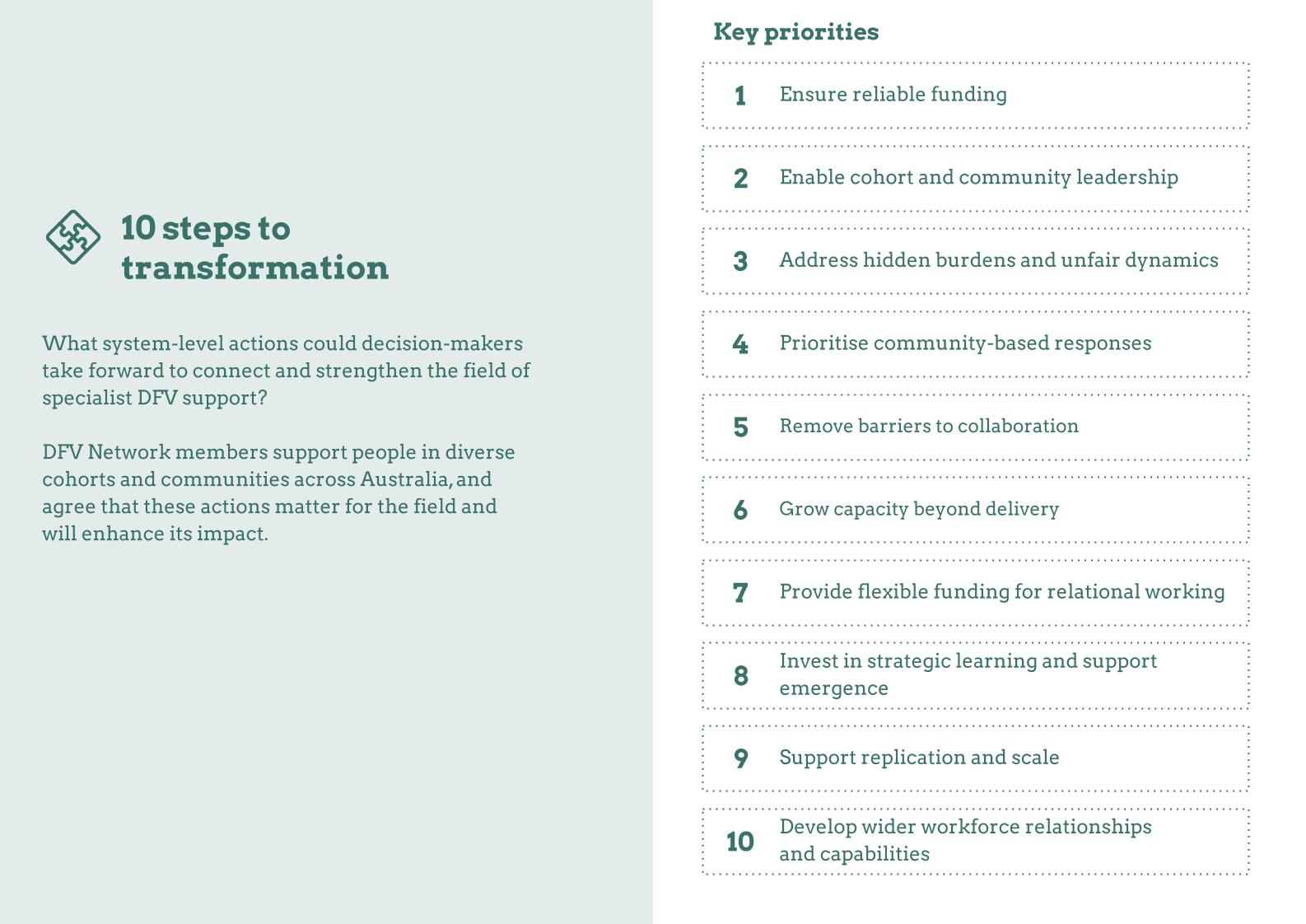
  • The design of this project was the intervention, creating the conditions for the field to generate and own its knowledge collectively and build momentum for systems change.Every choice was deliberate. Safety protocols were co-developed before engagement began. A range of trauma-informed methods created different ways for people to participate. Cohort-based groups generated insights through shared experience and collaborative synthesis, meaning the network owned what emerged.Two learning papers followed, mapping the field, naming ten steps to transformation, articulating powerful practice features, and setting out priority actions. These have influenced the investment decisions of the project’s funder, Paul Ramsay Foundation.

  • When given the right conditions, this fragmented field found its collective voice and used it to influence funder investments.PRF's Strengthening Family-Centred Collaborations Grant Round, a $10.2 million investment across 17 cross-sector collaborations, was publicly attributed to the network's recommendations. Its learning architecture reflects the model this project developed.The learning papers reached the Australian Policy Observatory, a peak body practitioner webinar, and the Office of the Domestic, Family and Sexual Violence Commissioner, informing national dialogue beyond the network.The approach now underpins ThirdStory's work across other sectors, shaping how we design learning, convene collaboration, and translate insight into influence.

  • This project was designed around two parallel but connected networks. While we convened 31 non-First Nations-led services, an independent First Nations research agency (ResearchCrowd) convened 27 First Nations-led services in their own sovereign space. Regular points of connection meant shared insights could travel without collapsing the distinction between them. This was a principled design choice that honoured self-determination while building shared field-level knowledge.Many professionals working in the field have lived experience of DFV. Rather than treating this as a risk to manage, the design treated it as knowledge to honour. HREC ethics approval, cultural safety protocols, trauma-informed methods, and consent processes built around participant choice were embedded from the outset. Trust as a core design principle shaped how the work was held and experienced.The Strong Field Framework (Bridgespan, 2009) was the analytical spine that held these choices together. It shifted the focus from individual organisations to field-level, making visible shared gaps in identity, knowledge infrastructure, practice sharing and policy influence, invisible to any single service. This enabled the network to move from describing their individual experiences to developing collective recommendations that funders and policymakers could act on. Together, these design decisions built the conditions for collective action.