Slips, Trips and Falls on Trains and at Railway Stations

good-design-award_winner_rgb_blk_logo

This study examines the causes of slips, trips, and falls on trains and at railway stations. Focusing on passenger behaviour, station environments, and information layout, it draws on observations and interviews with regular and higher-risk passengers to identify key risk factors and recommend practical improvements to safety and wayfinding.
Picture 2a.jpg
Picture 3.jpg
Picture 4.jpg
Picture 5.jpg
Picture 6.jpg
  • CHALLENGE
  • SOLUTION
  • IMPACT
  • MORE
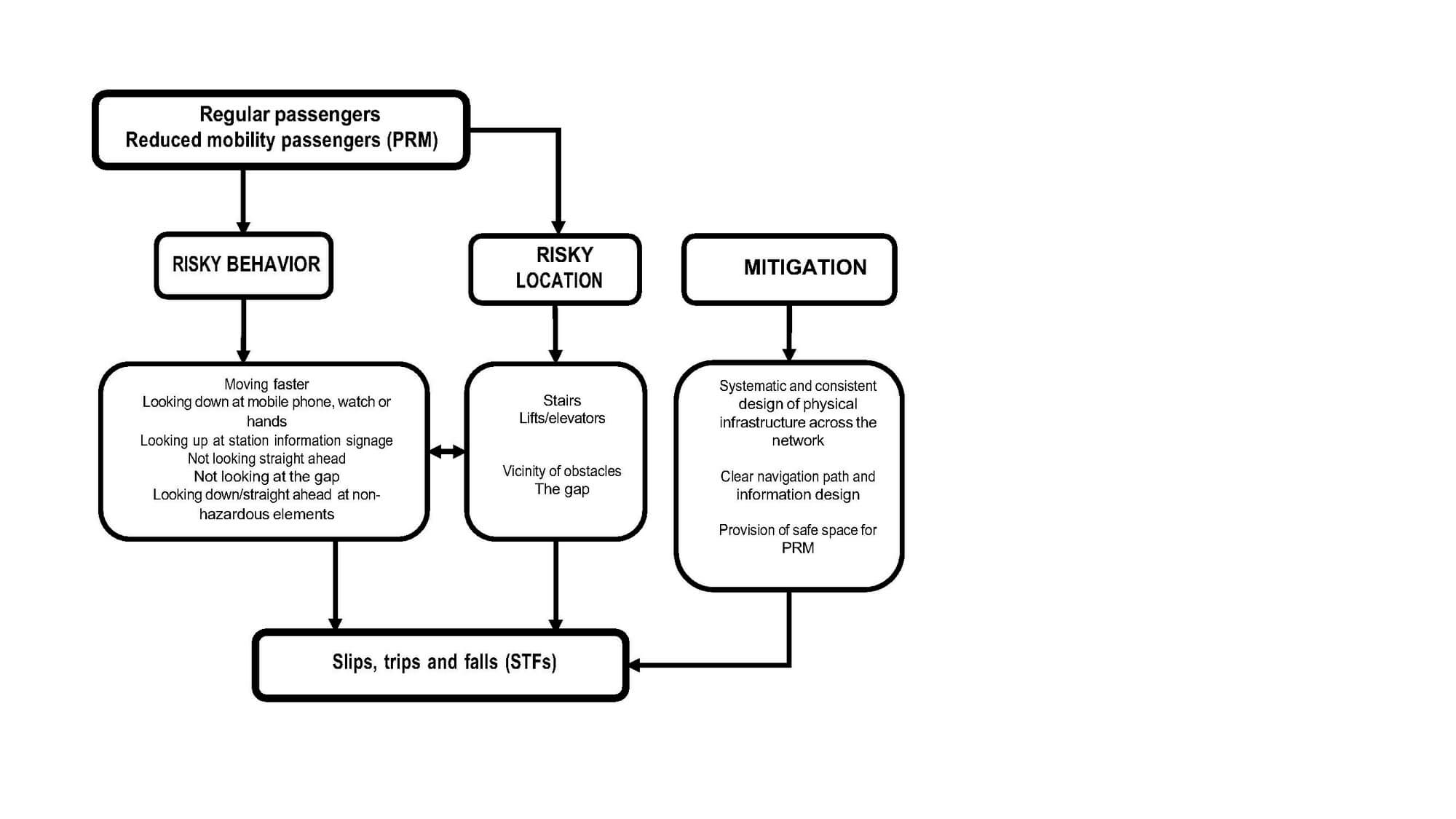
  • The project addresses the persistent challenge of slips, trips and falls on trains and at railway stations, which remain a major rail safety issue despite existing engineering controls and safety measures. The research addresses a clear gap in current, in-depth evidence explaining why these incidents continue to occur. Rather than treating them as simple results of passenger carelessness, the study examines how behaviour, station design, information layout, environmental conditions and interactions with other people combine to create risk. A central challenge is understanding how complex navigation demands and poor wayfinding increase visual workload, distraction and unsafe movement during rail journeys.

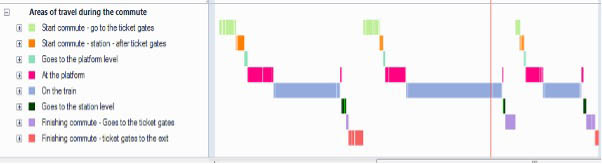
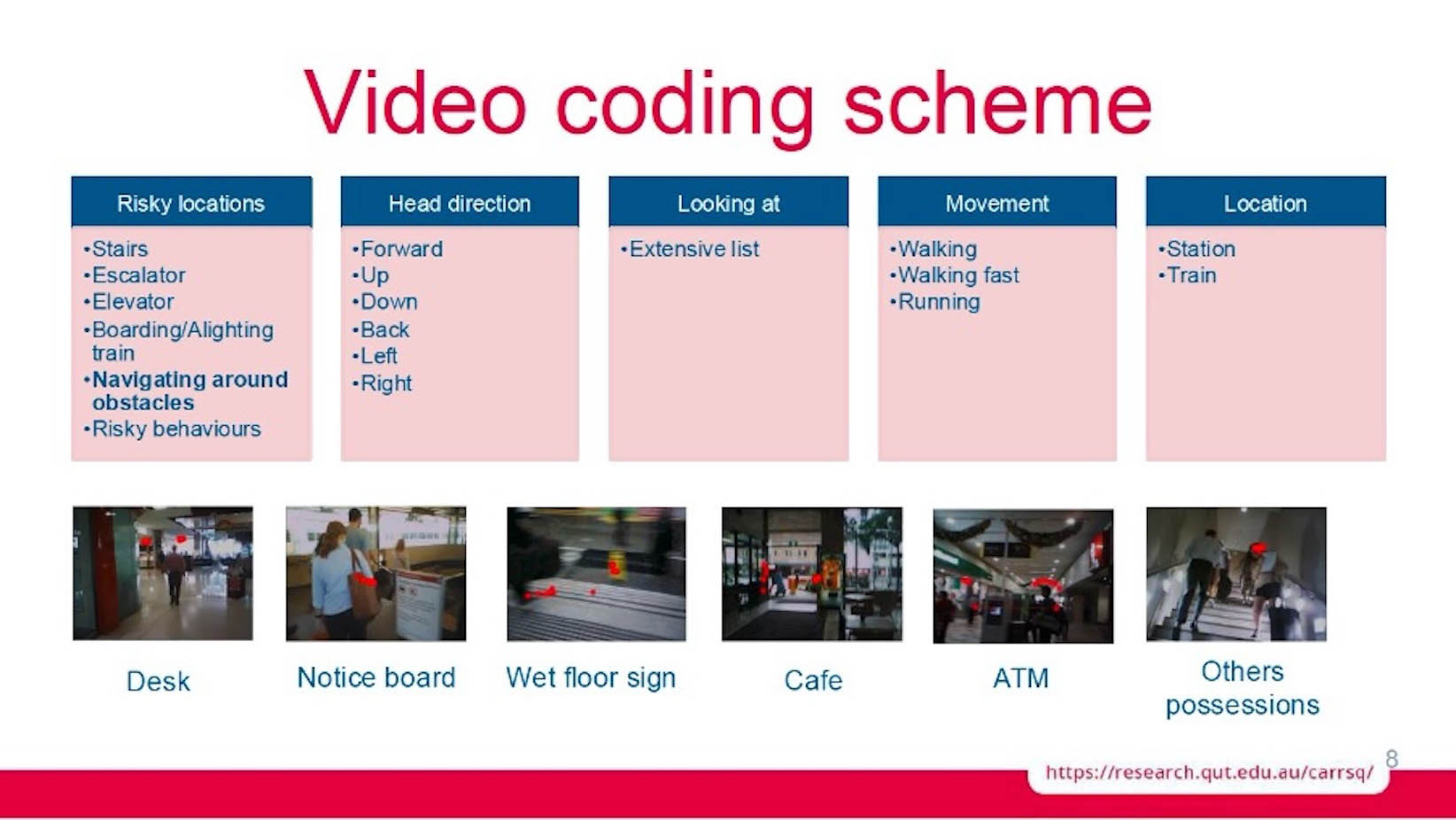
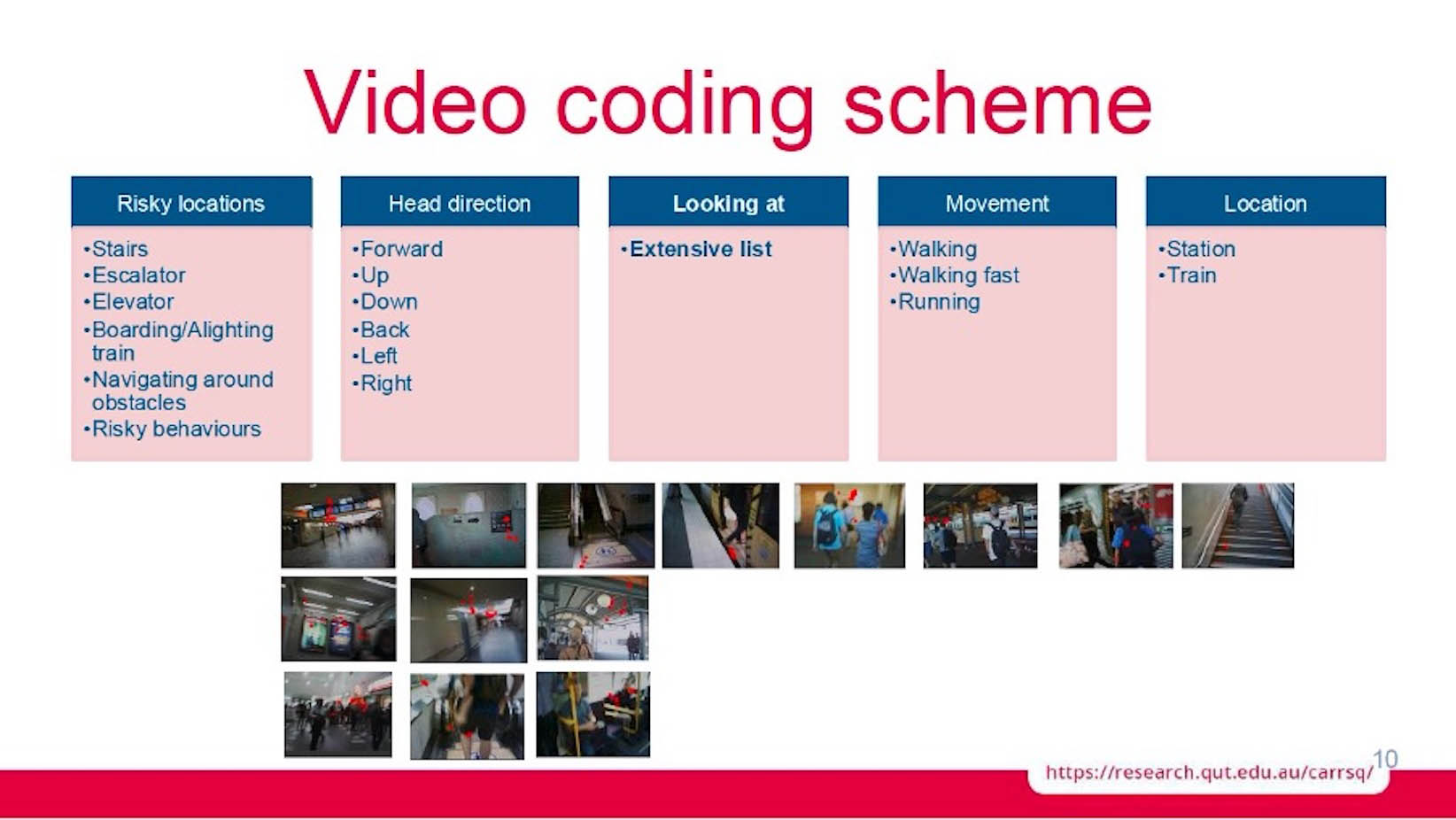
  • The project addressed the problem through a three-stage mixed-methods research design. It first reviewed existing literature and incident records to identify knowledge gaps and likely contributing factors. It then observed regular and high-risk passengers navigating selected railway stations and trains, using eye-tracking technology, video coding and retrospective interviews. This approach revealed how risky behaviours, station features and information demands interact during journeys. Rather than proposing only physical safety fixes, the research identified improved information organisation, clearer wayfinding, better signage integration and greater network consistency as the most effective solutions for reducing distraction, unsafe movement and slip, trip and fall risks.

  • This research has significant design implications, showing that slips, trips and falls on trains and at railway stations are influenced not only by passenger behaviour but also by poor wayfinding, fragmented information, environmental conditions and high visual workload. Its findings offer practical guidance for improving signage, information layout, station navigation and overall network consistency, helping create safer, more accessible rail environments. The study is particularly valuable for higher-risk passengers, including older people and those travelling with luggage, prams or mobility aids. It demonstrates how design research can improve public safety, passenger confidence and transport system performance.

  • This research is distinguished by its mixed-methods design, combining quantitative and qualitative approaches to investigate slips, trips and falls on trains and at railway stations. A key feature is its three-stage structure: an initial literature and incident review, followed by observational studies of regular passengers, then high-risk passengers, including elderly users, passengers with luggage, prams, and mobility aids. Another important feature was the use of eye-tracking technology, which captured where passengers looked as they moved through stations and trains. This was supported by video coding, statistical analysis and retrospective interviews, allowing the researchers to examine both visible behaviour and the reasons behind it. The study also examined interactions among passenger behaviour, physical station environments, obstacles, time pressure, and information systems. Rather than assuming incidents were caused solely by unsafe behaviour, the research identified the roles of high visual workload, poor signage, fragmented information, and inconsistent wayfinding. A further key feature is its practical value. The findings produced clear recommendations to improve communication, signage integration, station layout and network consistency. The research methods were designed to be transferable to other rail stations and transport environments.