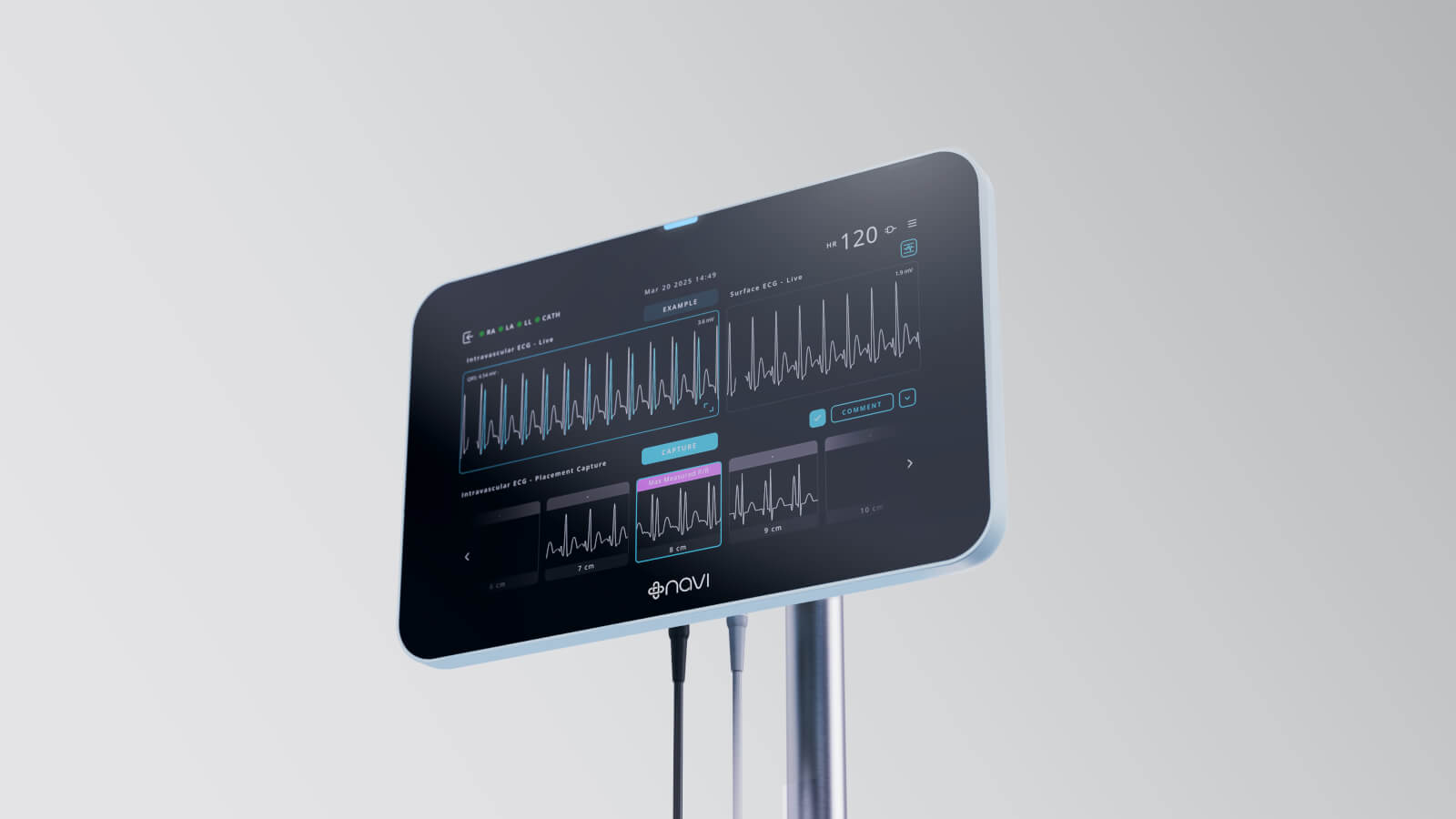
Neonav ECG Tip Location System

good-design-award_best-in-class_rgb_blk_logo
  • 2025

  • Product
    Medical and Scientific

Commissioned By:

Navi Medical Technologies

Designed In:

Australia

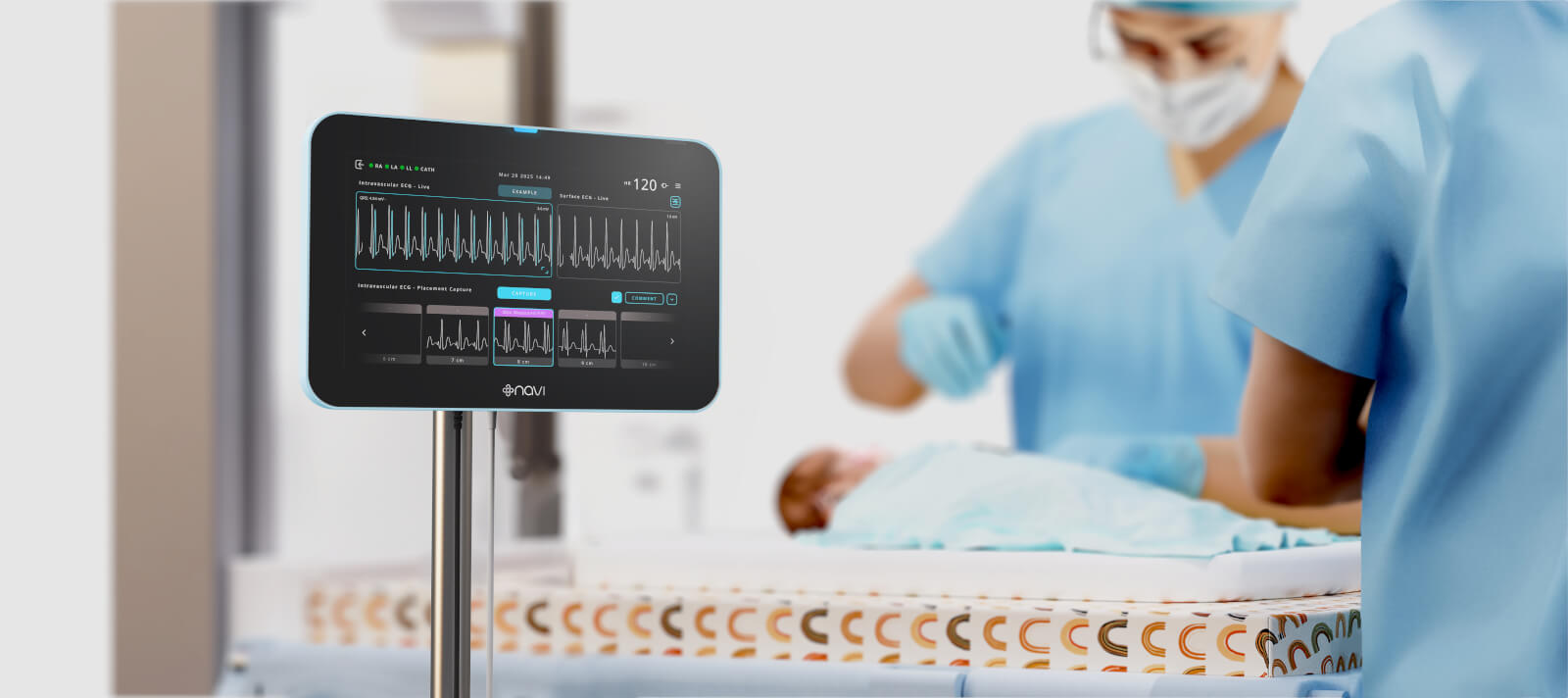
The Neonav® ECG Tip Location System is a world-first, non-invasive medical device designed to provide real-time catheter tip location for critically ill newborns and children. Developed for neonatal and paediatric intensive care, it is designed to improve safety, reduce risk, and streamline workflows for clinicians performing central venous access procedures.
view website
Buy online

1.jpg
2.jpg
3.jpg
4.jpg
5.jpg
6.jpg
  • CHALLENGE
  • SOLUTION
  • IMPACT
  • MORE
  • Critically ill newborns and children often require central catheters to deliver life-saving fluids and medicines. Yet existing methods for placing and confirming catheter tip location are often inaccurate, rely on post-procedure X-rays, and fail to detect dangerous migration. Navi Medical Technologies set out to translate a proprietary ECG surveillance solution into a safe, effective, and manufacturable world-first commercial medical device for neonatal and paediatric care. This required transforming core technology into a non-invasive, regulatory-compliant system that meets the needs of clinicians, parents, and patients in intensive care. Fewer than 2.5% of devices are approved for neonatal use, reflecting the sector’s high safety and usability demands. The device had to operate in sterile, equipment-heavy environments, integrate into clinical workflows, and reflect the realities of frontline care—while balancing durability, international compliance, and scaled production readiness.

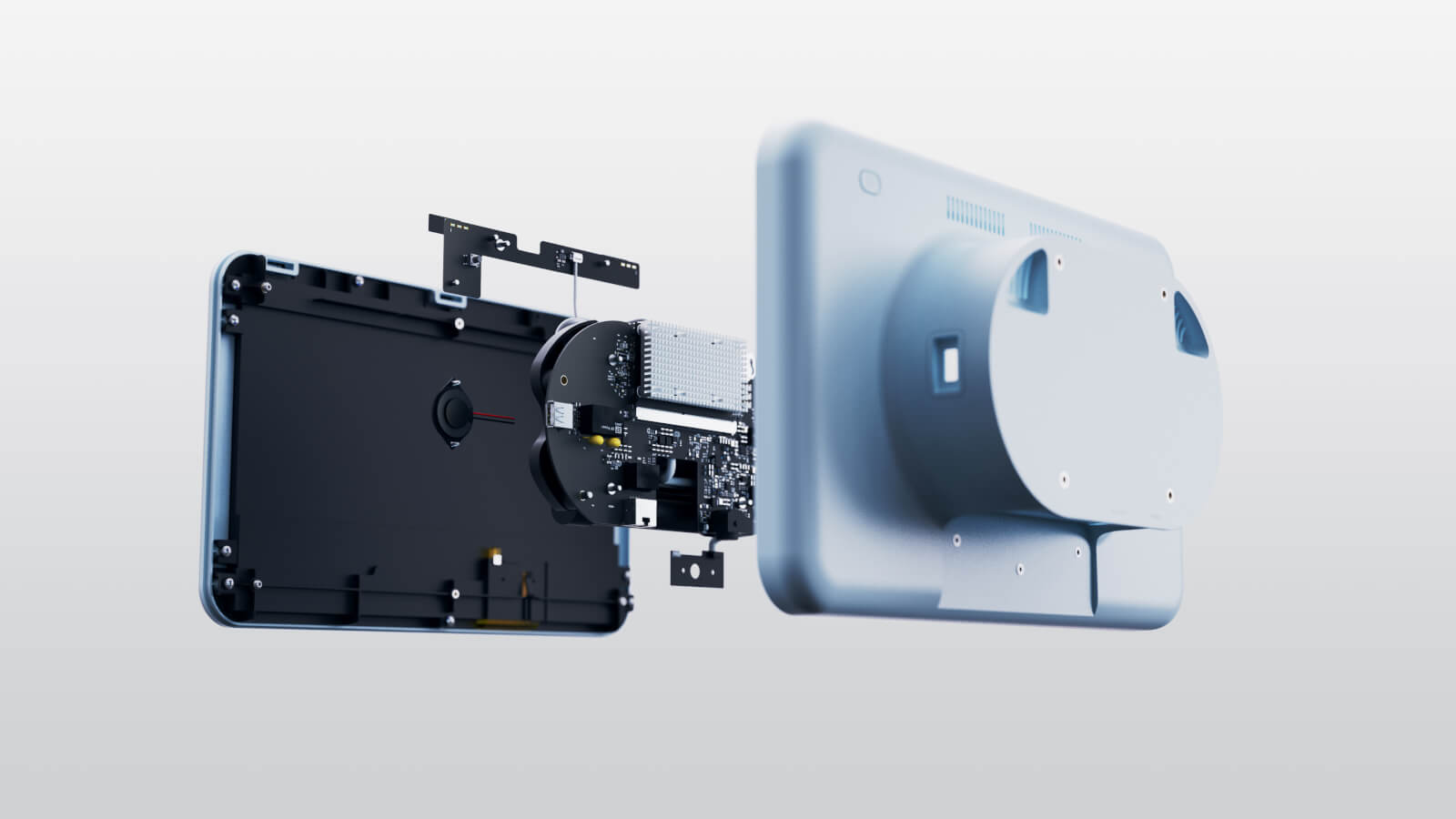
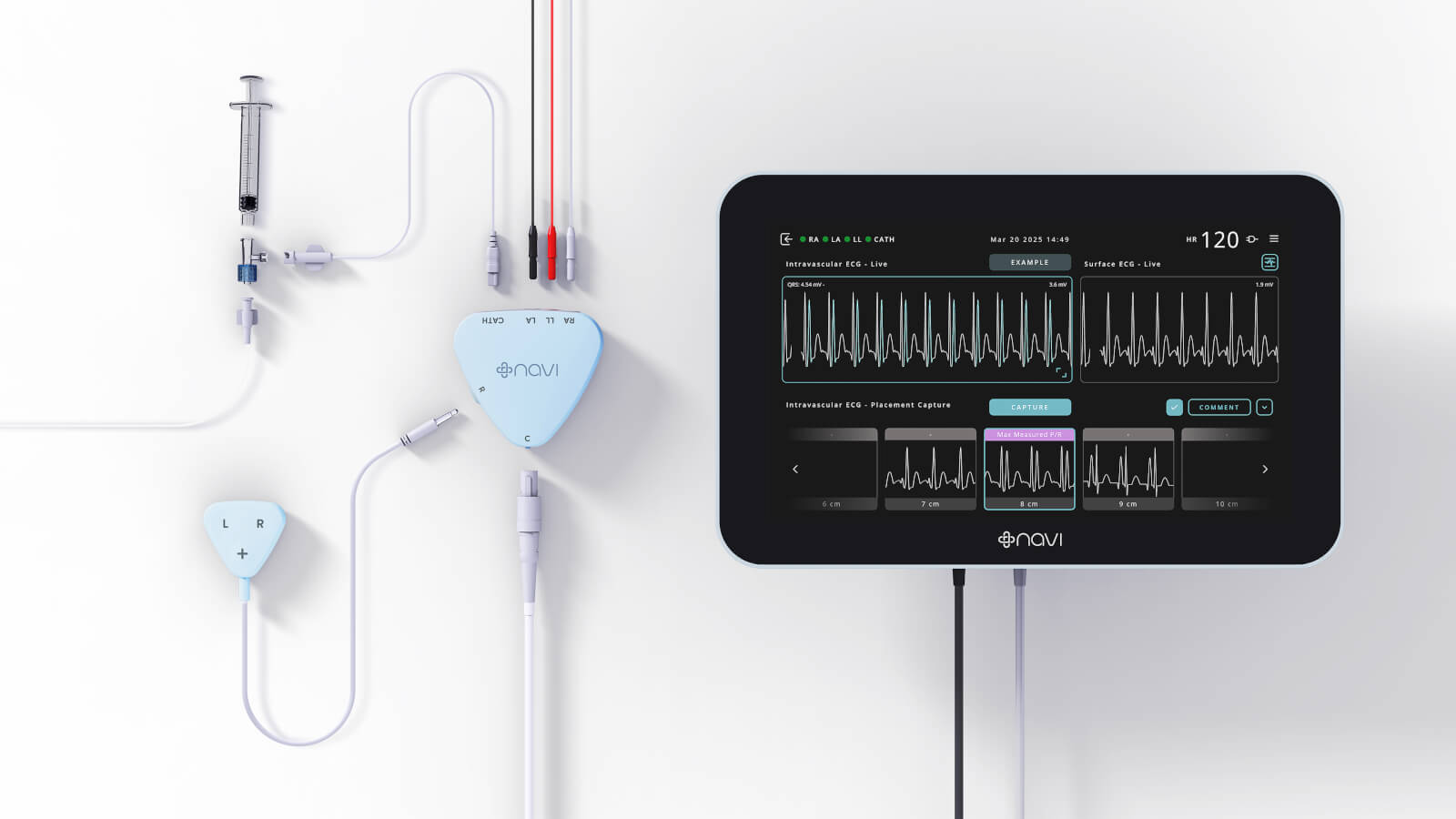
  • Understanding the human impact of medical devices, the development team focused on the needs of clinicians, parents, and service teams. Based on proprietary algorithms, Neonav interprets cardiac signals via saline-filled catheters to improve safety and accuracy. Key points in the design process included a usability study with US clinical end-users using mock prototypes and wireframes, followed by a clinical study involving 13 newborns. Real-user trials led to a complete redesign of the digital interface. The final product includes custom electronics, firmware, and software supported by a lightweight web app architecture, with a large display, glanceable GUI, and tactile, sterile-field remote.

  • Neonav® is a world-first, FDA-cleared device that applies Navi’s proprietary ECG surveillance technology to improve catheter placement and ongoing surveillance in critically ill newborns and children. It is designed to reduce complications, avoid repeated procedures, and improve healthcare outcomes. As Navi Medical Technologies’ first product, it has commercialised a validated innovation—launching the company from startup to global market entrant. Designed and developed in Australia, it forms the foundation for future growth. Environmental considerations include reduced part count, minimal adhesives, design for disassembly, and a 10-year product life. Neonav delivers real-world impact for one of medicine’s most vulnerable populations, improving safety and efficiency in neonatal and paediatric intensive care.

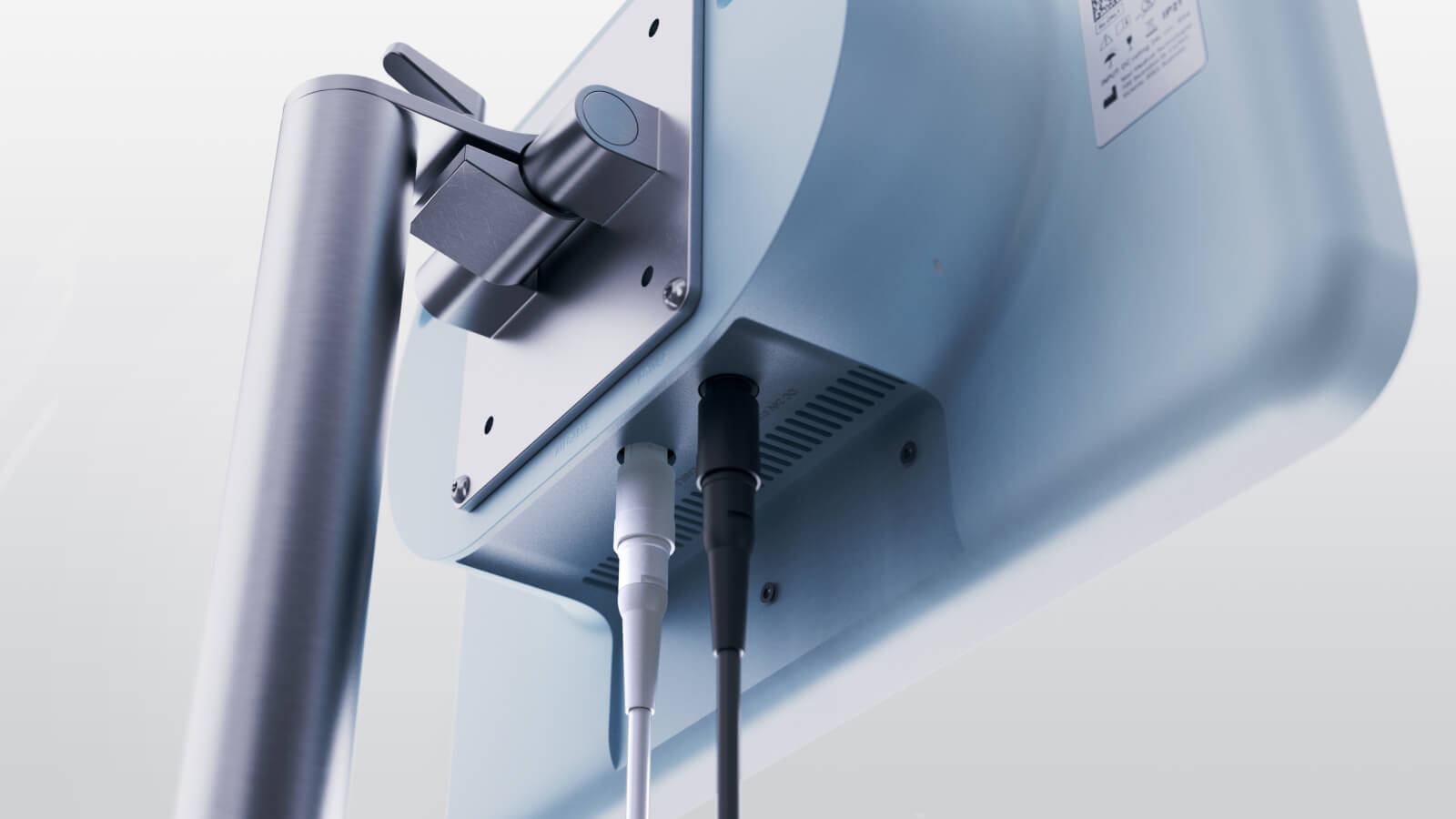
  • Designed for use with the smallest 1 Fr catheters, making Neonav® uniquely capable of serving the most premature and fragile patients. Real-time bedside surveillance enables clinicians to monitor catheter tip position throughout dwell time, allowing early detection of migration events—functionality not available in other ECG-based systems. Only system on the market cleared for catheter placements both above and below the heart, expanding its clinical utility and procedural flexibility. First-to-market with continuous catheter tip surveillance in a single device. Soft, organic form factor deliberately departs from rigid, industrial MedTech norms, creating a calm presence in high-stress ICU environments. Developed through a clinically-led design process—A/Prof. Christiane Theda provided continuous input on clinical requirements, workflows, and usability. Designed to support minimal training burden—clinicians can operate the system without major workflow disruption or retraining. Remote control engineered specifically for use within sterile fields, supporting procedural compliance and user safety during catheter insertion. Support cradle interface designed for secure mounting to ICU arms or poles, reducing risk of dislodgement in crowded, equipment-dense settings. Validated through the “ECHO” study, showing 94.6% agreement with ultrasound. Designed and developed in Victoria, supported by Breakthrough Victoria and LaunchVic investment, and forms the commercial foundation for Navi Medical Technologies’ global growth.