SiteHive Hexanodes – 2026 Australian Good Design – Powerhouse Design Award Winner
- Published on: 24 November 2026
Share
THE POWERHOUSE DESIGN AWARD RECOGNISES AUSTRALIAN DESIGN THAT SHAPES CULTURE AND IMPROVES QUALITY OF LIFE THROUGH INNOVATION, IMPACT AND ENDURING POSITIVE CHANGE.
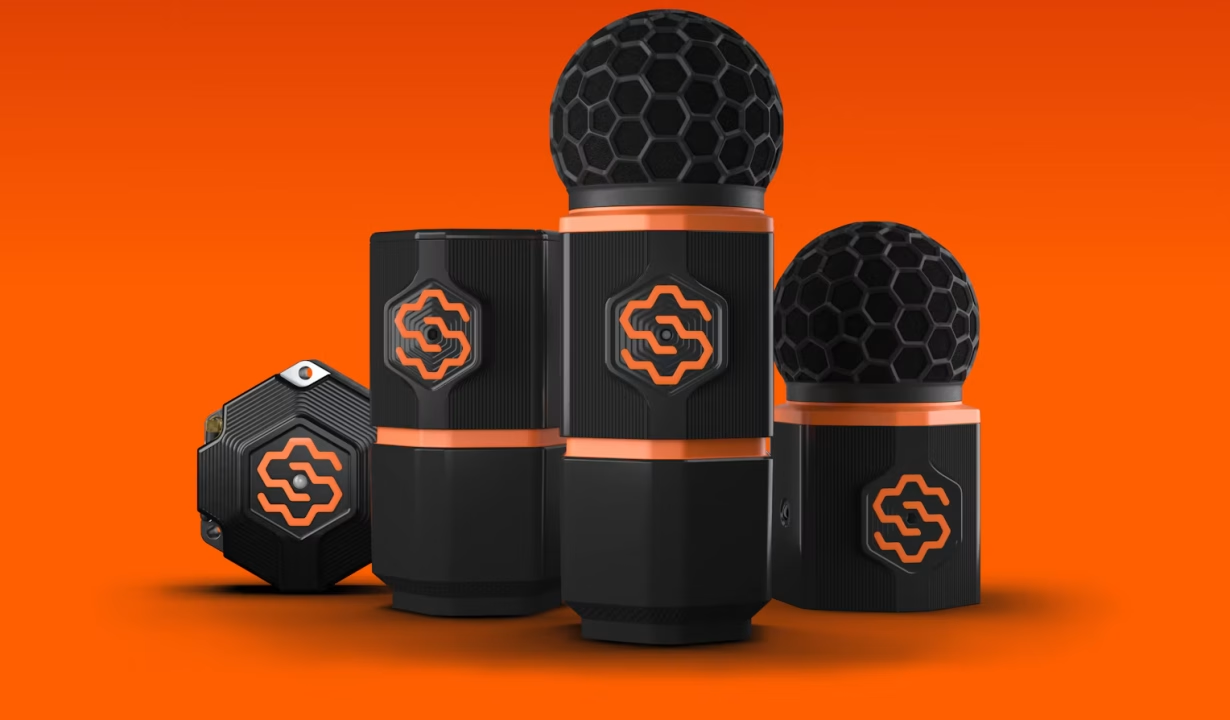
This year, SiteHive took home the Powerhouse Design Award for its next-generation Hexanodes, a connected family of environmental monitoring devices developed in collaboration with Australian design and manufacturing partners Xentronics and DeepDish. Together, the team has created a system helping construction and infrastructure projects better understand and manage their impact on the world around them.
As cities become denser and development moves closer to homes, workplaces and public spaces, monitoring noise, dust and vibration is becoming increasingly important. However, traditional monitoring equipment has often been expensive, bulky and difficult to operate, leaving much of the work involved in calibration, data extraction and analysis to the user.
SiteHive saw an opportunity to rethink the experience. By bringing together accessible hardware, intelligent software and contextual data, the Australian company is making environmental monitoring easier to use and more useful to the people who rely on it.
We spoke with co-founder Ben Cooper-Woolley and Design Lead Greg More about the thinking behind the Hexanodes, the role of design in making complex technology approachable and the local partnerships helping bring the products to life.
[SiteHive Hexanodes – 2026 Australian Good Design Powerhouse Award Winner. Image: Supplied]
Bringing environmental monitoring into a new era
SiteHive began with a problem the founders had encountered firsthand while working on major infrastructure projects. Environmental monitoring was still largely analogue, despite the growing complexity of construction and the increasing expectations of the communities living alongside it.
“The density of cities was continuing to increase. Infrastructure and development was continuing to increase. Environmental awareness in the communities and the stakeholders around that were being impacted by projects only going up, and the technology just hadn’t caught up,” the team explained.
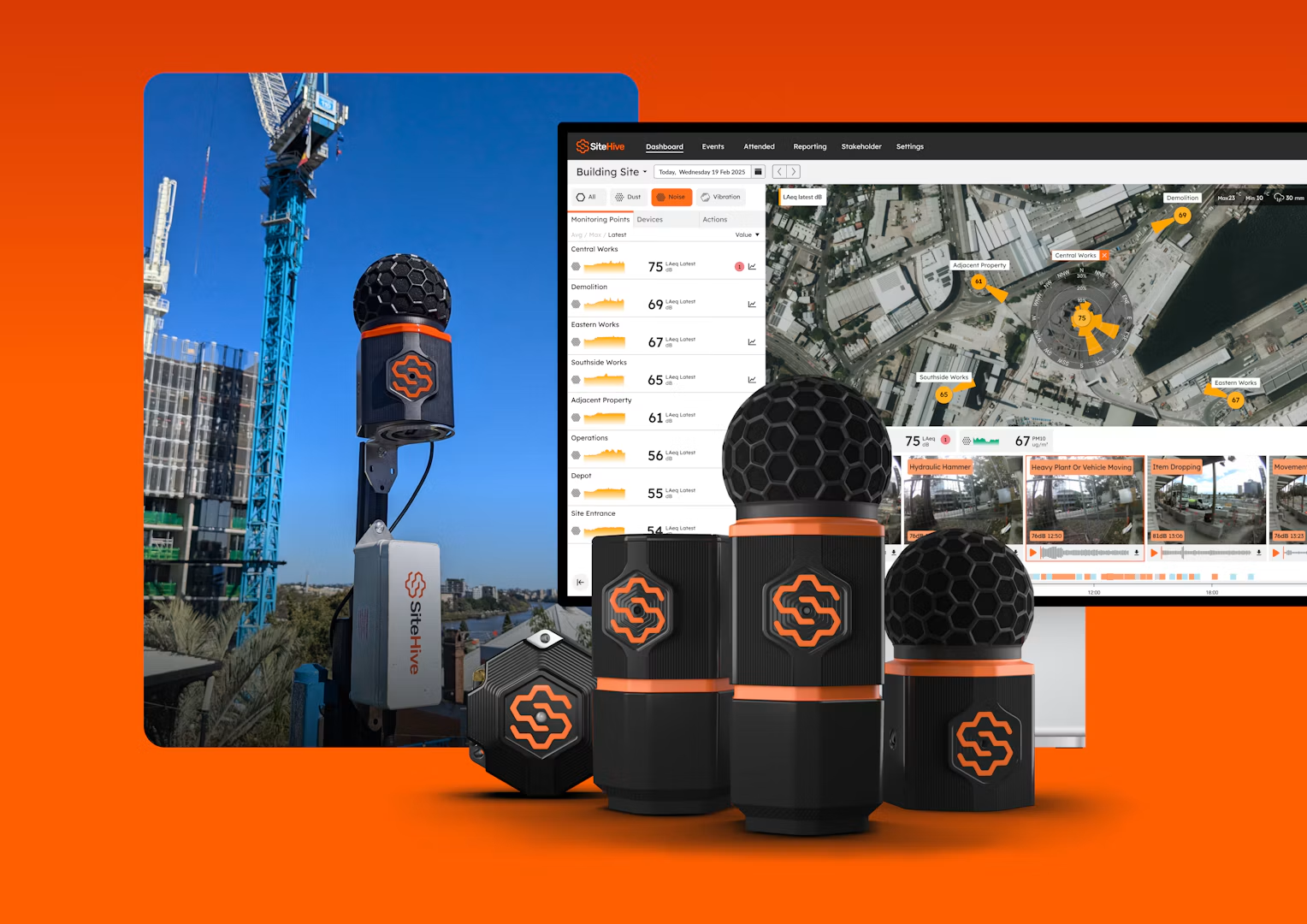
The opportunity was to bring low-cost digital sensors into the construction and built environment sectors, giving people more than a set of measurements. By pairing accurate readings with contextual information, SiteHive could help project teams understand what was happening around their sites and make decisions with greater confidence.
The idea has since shaped the company’s approach to both product and service design. Rather than asking customers to become experts in environmental instrumentation, SiteHive takes care of the technology and maintenance, giving users access to the information they need through a connected service.
Designing around the people using it
Over five years of research and development, the original prototypes, built using basic off-the-shelf electronic components, have evolved into an integrated family of monitoring devices. Throughout that process, the team kept returning to a simple question: what are customers actually trying to do?
“We’re the only device on the market that doesn’t have a screen or buttons or need to be configured on site,” they said.
It’s a deliberate decision that reflects a broader understanding of the user’s role. Construction teams aren’t looking to spend their time operating scientific equipment. They’re trying to understand whether their work is affecting the people and places around them, and what they need to do about it.
“They’re not actually trying to plug in hardware or install things or configure instruments. They’re trying to make decisions about whether their project is impacting these stakeholders. Do I need to get dust carts out? Are there work methods that are causing excess vibration that’s going to hinder my productivity?
“They’re the problems they’re trying to solve. So they’re what we’re designing for rather than how do I handle a bit of instrumentation.”
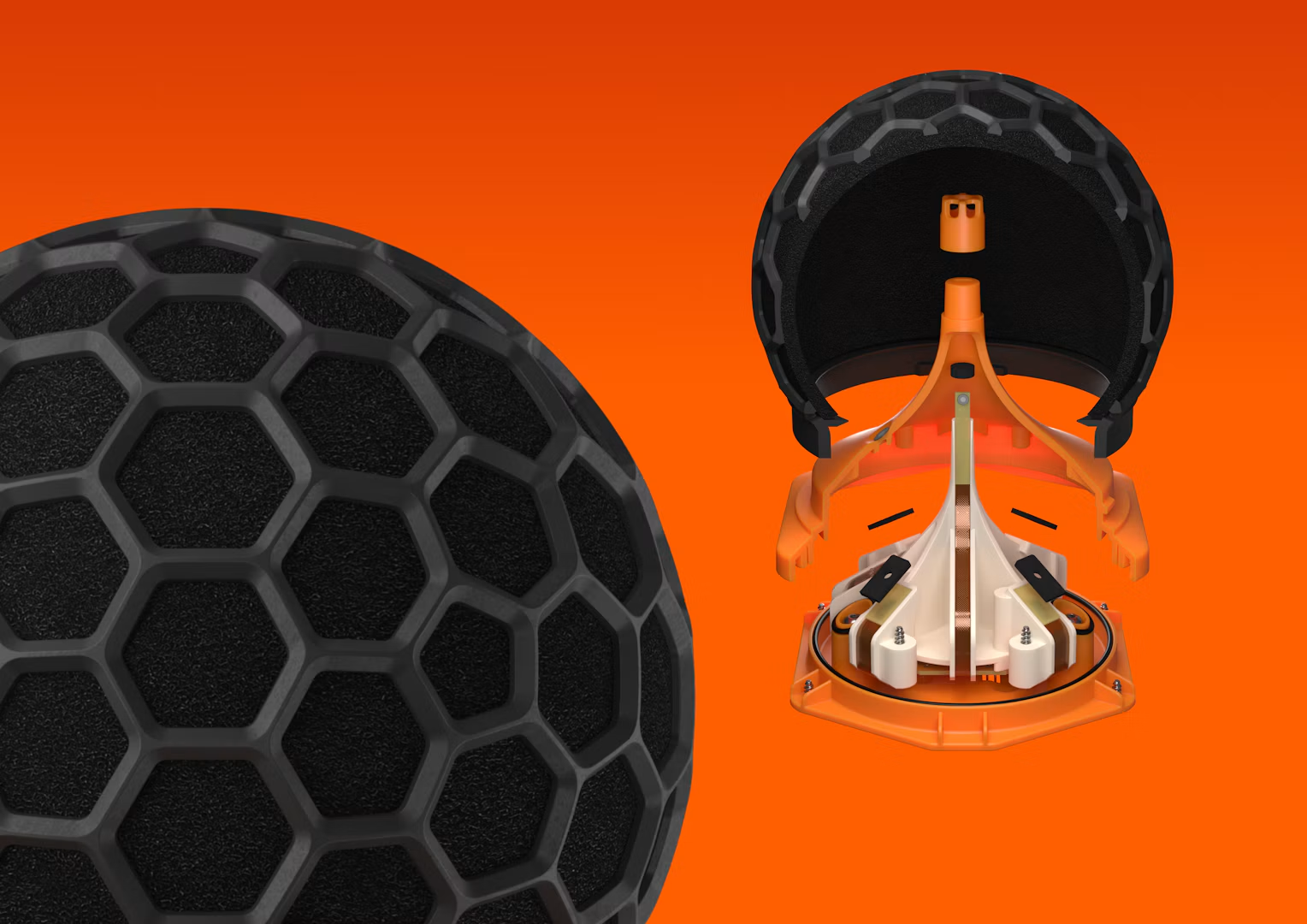
Behind that straightforward experience is a series of technical improvements. The latest devices have been developed to deliver more reliable measurements across different conditions, including a new dust monitor capable of accurate readings in high humidity, improved airflow and a noise monitor with an omnidirectional acoustic dome. The system also supports industry-standard NATA calibration in the field, reducing the need to send equipment away for servicing.
One connected family, shaped by feedback
The original ambition was to create a single device capable of measuring everything. In practice, testing revealed that different types of monitoring called for different physical configurations. A vibration sensor, for example, needs to be installed in the ground, while a noise monitor needs to sit above it.
Customer feedback helped shape what came next.
“Part of that iteration is what enabled us to then grow the family. Based on how we were able to really lead and provide new, confident decision-making experiences for our customers, a lot of their feedback and input was that, ‘If you could add a vibration device’ or ‘Have you thought about doing weather?'”
Rather than continuing to add components to one piece of hardware, SiteHive developed separate devices for different monitoring needs, designed to work together as a cohesive system. It means customers can choose the measurements relevant to their site without carrying unnecessary equipment or complexity.
“Whereas other monitoring devices tend to be big grey boxes or big boxes with things strapped on them for each separate thing, we’ve gone for a really cohesive approach where it looks like a family. They have a small form factor and, rather than strapping more things onto them, you just have these nicely designed objects that you can distribute across your site.”
The latest generation brings that thinking together in a more considered product family, with improved sensing, connectivity and durability. Global 4G capability and Wi-Fi connectivity also help the devices maintain reliable data transmission across urban, underground and remote sites.
[SiteHive Hexanodes – 2026 Australian Good Design Powerhouse Award Winner. Image: Supplied]
Making industrial design feel human
Environmental monitoring equipment has traditionally been designed to look the part: functional, utilitarian and unmistakably industrial. SiteHive took a different approach, considering where its devices would actually end up. Increasingly, that’s along the fence line of a construction site, in a backyard or beside a neighbouring workplace.
“We’ve actually made something that people are happy to have in their backyard or along the fence line. There’s a lot of character in these devices that designers have worked through to make sure they’re tangible and easy to handle, but also visually they don’t look like a piece of industrial kit. They look like something that’s approachable and has a kind of human factor to it.
“We make it easier for people who might not have as much experience in the domain of, say, noise or dust, to open up the software and get a sense of how they’re tracking.”
SiteHive has also incorporated AI to help interpret audio and raw signals, adding context to the measurements and helping users identify what is happening around a site.
“That layer of context is a real genuine innovation and differentiator. We’re able to use AI to classify audio and raw signals to tell people what’s going on with confidence, so they don’t need to waste their time investigating noises caused by ambulance sirens or background traffic.”
An Australian innovation ecosystem
The development of the Hexanodes has also been shaped by the network of Australian research, design and manufacturing partners behind them. Working closely with local specialists allows SiteHive to move between testing, prototyping and production without losing momentum.
“We have quite a unique opportunity here in Australia and in this community, whereby we have partners and facilities that allow us to do this.”
The company works with UTS, using specialist facilities including anechoic chambers for acoustic testing and vibration shakers for vibration testing. Electronics design is supported by Xentronics in Melbourne, while CNS Precision Assembly, a social enterprise in Hornsby, manufactures the printed circuit boards. Deep Dish and Bot contribute to the production of the device housings.
“That really close-knit cycle and supply chain and community around there has enabled us to apply design thinking and an iterative approach because we can cycle so quickly based on design, manufacture, prototype, feedback and iteration.”
It’s a model the team sees as central to the work being recognised by the Powerhouse Award. The achievement speaks to both the capability of Australia’s design and manufacturing industry and the broader impact the technology can have.
“To get the Powerhouse Award for the cultural impact and the impact on Australia’s environment is recognition that not only can things be made and designed successfully here locally, all the way through the PCBs into the housings, into the technology and software, but the Australian community and industry has been willing to accept and appreciate the value of that design.
“The impact we’re having in the community around reducing the environmental impact of heavy industry and construction, benefiting communities whilst driving that productivity, is really special for us this year.”
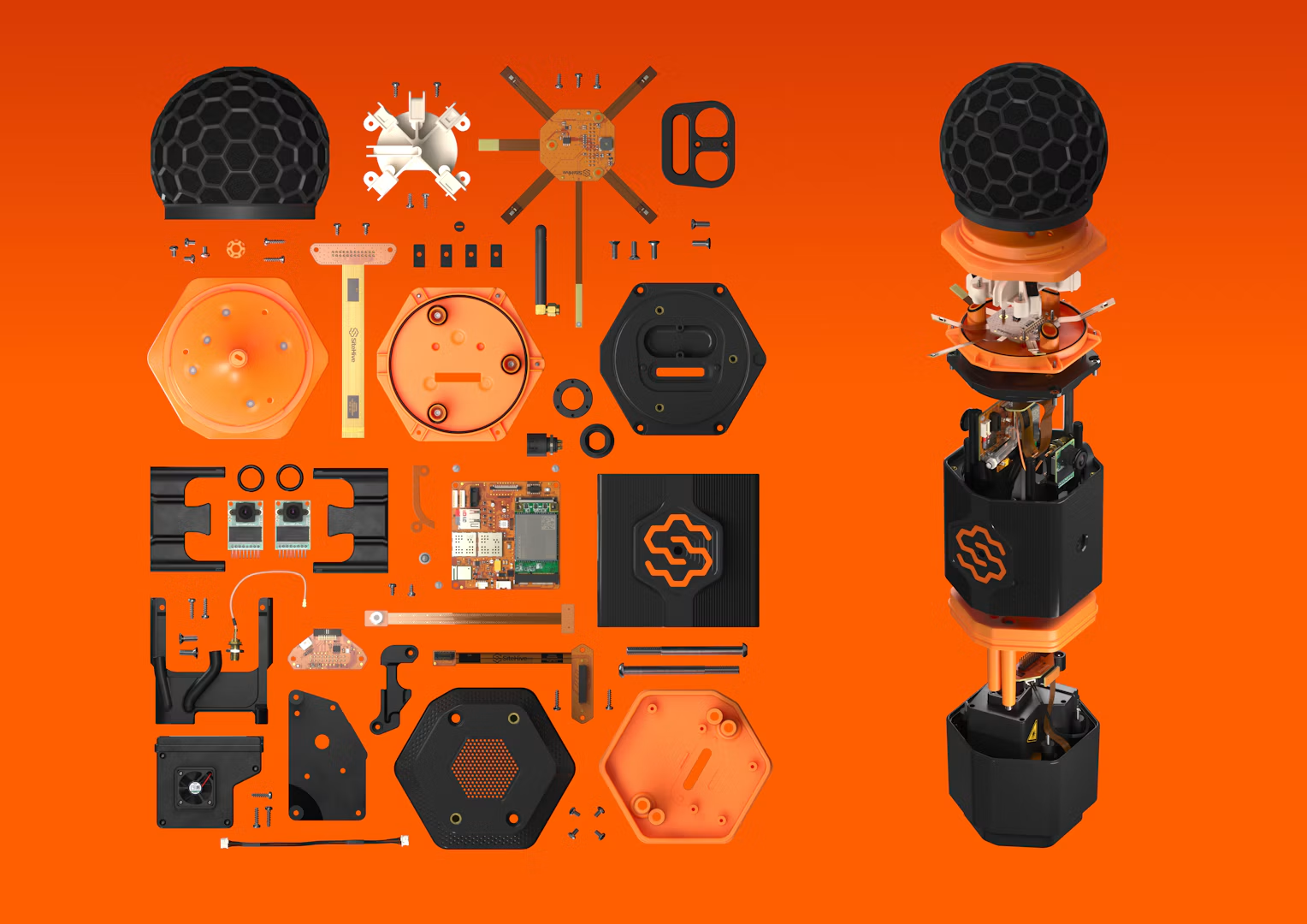
[SiteHive Hexanodes – 2026 Australian Good Design Powerhouse Award Winner. Image: Supplied]
From monitoring to meaningful change
The potential of environmental monitoring for SiteHive extends well beyond the construction site itself. As development moves closer to residential neighbourhoods, hospitals, schools and research facilities, the ability to understand what’s happening in the surrounding environment becomes increasingly valuable.
The team is already seeing the technology used in more sensitive settings, including helping research laboratories and surgical facilities understand whether nearby construction vibration is affecting their equipment. It’s another example of how better access to environmental data can support the people working and living alongside major projects.
“There’s a big push from councils for people to do proactive monitoring of their construction sites. Rather than waiting for complaints to happen, just monitor it 24/7, understand what noises are being made and when.
“They [users] say they can make quick and confident decisions from wherever they are. They say that they have eyes and ears across their site now, not just numbers and measurements.”
Making that experience simpler and more affordable has also opened the door to a wider group of users, including smaller builders, councils and others who want to better understand their environment. The Jury highlighted the commercial value of this approach, noting documented examples of environmental management costs reduced by 50%.
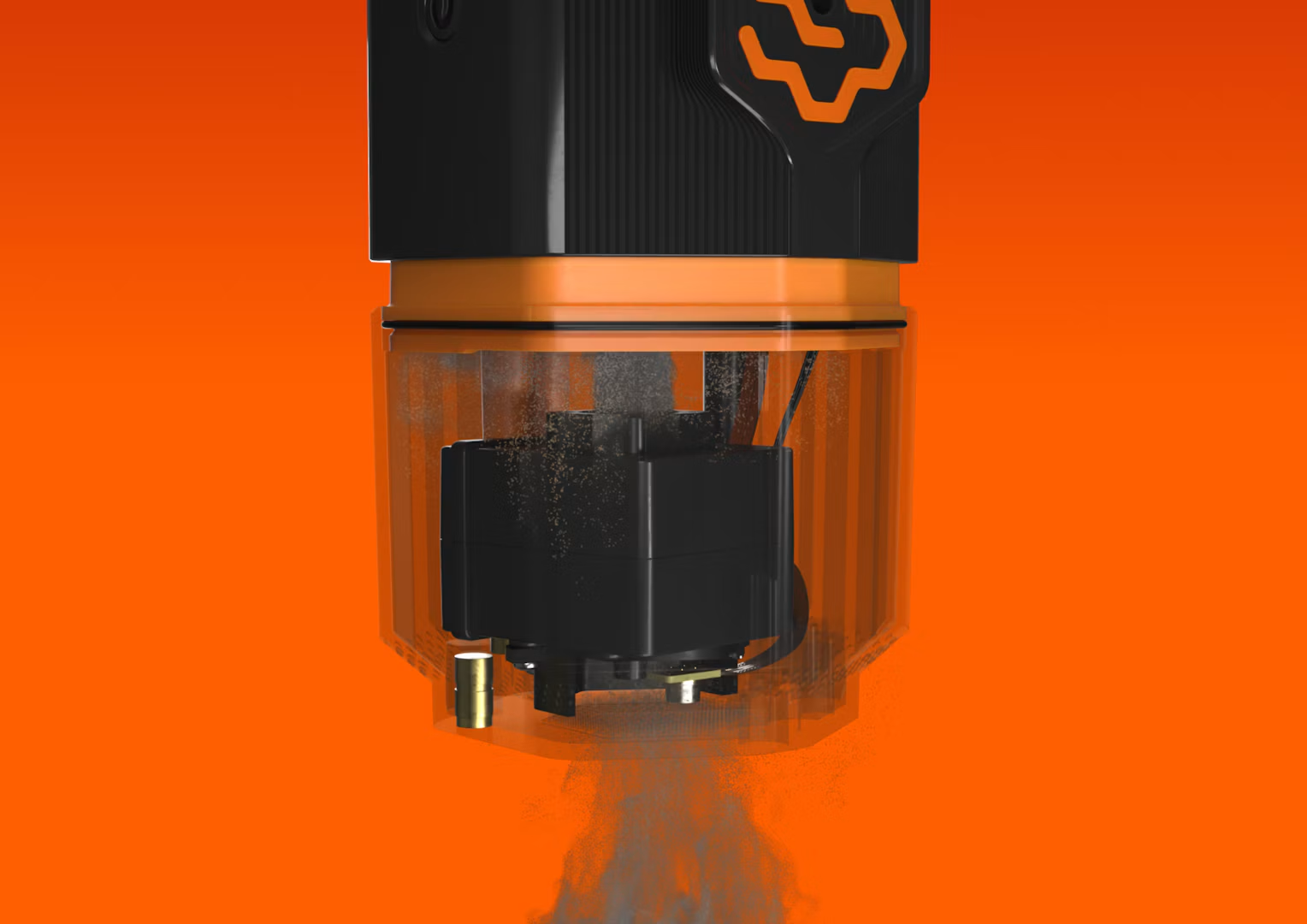
[SiteHive Hexanodes – 2026 Australian Good Design Powerhouse Award Winner. Image: Supplied]
Designing for a better relationship between development and community
SiteHive continues to build on its monitoring platform, with a weather device added to the product family in 2026 and further development focused on AI, contextual insights and helping customers make more sense of the data around them.
The broader ambition remains rooted in the problem that started the company: finding a better way for development and communities to coexist.
“We hope that the impact we create is that communities are impacted less by industrial development, that there’s harmony between development and communities, and that projects can maintain productivity and work effectively whilst minimising that impact.”
The 2026 Powerhouse Design Award recognises the significance of that ambition, and the role thoughtful design can play in making it possible. By bringing together accessible hardware, intuitive software and a strong Australian manufacturing network, SiteHive has made a traditionally specialist area of environmental management easier for more people to understand and use.
Good Design Australia congratulates SiteHive, Xentronics and DeepDish on their 2026 Powerhouse Design Award, recognising a considered approach to innovation that is helping industry work more responsibly alongside the communities it affects.
More News