Myodot – 2026 Robert Pataki Award for Healthcare Design
- Published on: 17 November 2026
Share
NAMED IN HONOUR OF ROBERT PATAKI OAM, THE ROBERT PATAKI AWARD FOR HEALTHCARE DESIGN AIMS TO INSPIRE, RECOGNISE AND SUPPORT DESIGN SOLUTIONS THAT HAVE THE POTENTIAL TO IMPROVE THE LIVES OF PEOPLE LIVING OR WORKING IN OUR HEALTHCARE SYSTEM.
Recovery from a stroke or other neurological condition doesn’t stop when a patient leaves the clinic. In fact, much of the work happens in the 23 hours between appointments, when patients are expected to continue prescribed exercises without the same level of guidance, feedback or clinical oversight.
For many, that creates a difficult gap. Patients can struggle to know whether they’re performing movements correctly or making meaningful progress, while clinicians have limited visibility into what’s happening at home.
Myodot, an Australian-designed neuromuscular rehabilitation ecosystem designed by Kanishk Aggarwal, aims to change that.
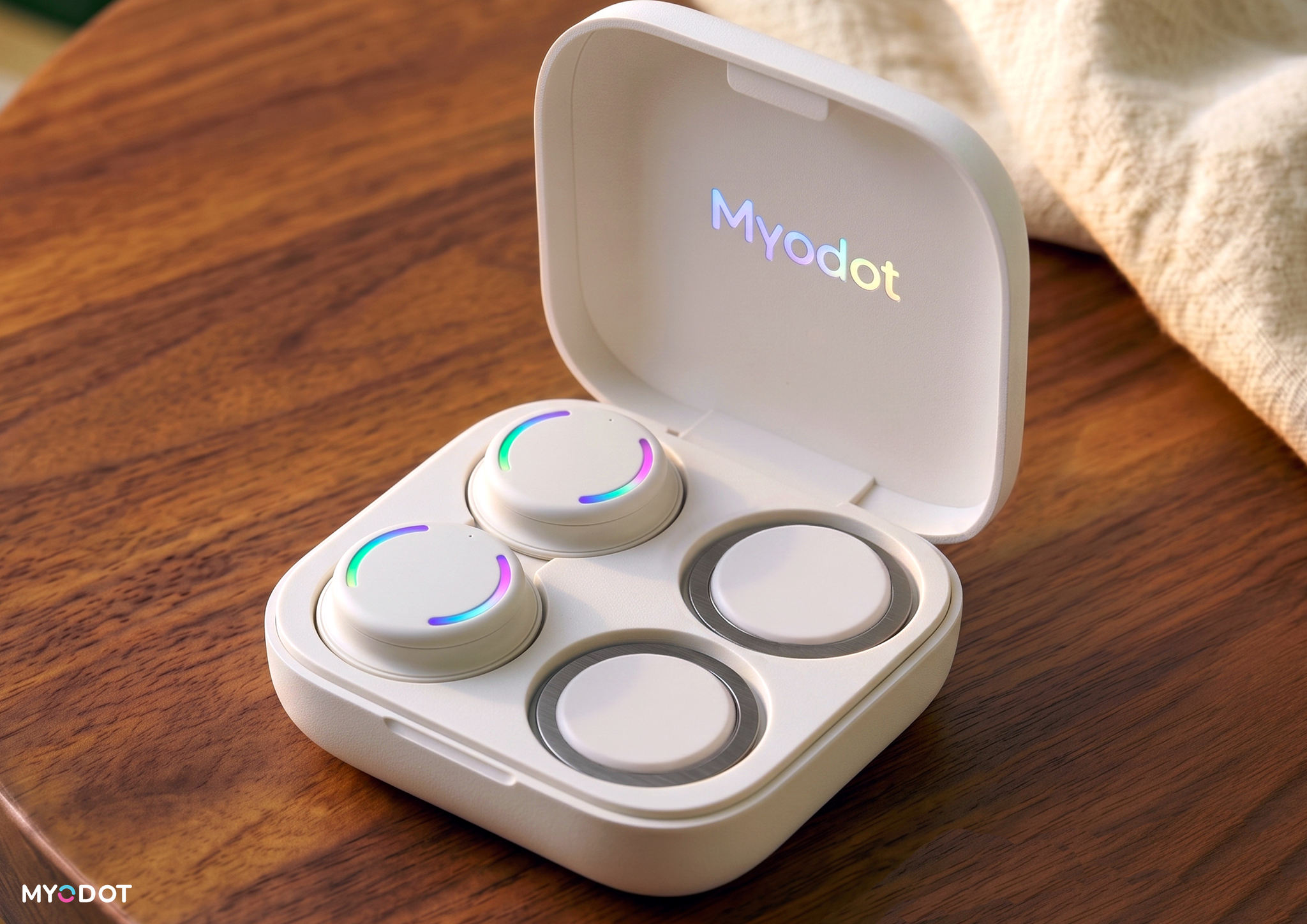
Combining a compact wearable device, a companion patient app and a clinical dashboard, Myodot provides real-time muscle biofeedback while giving clinicians access to objective data about a patient’s recovery. Its approach is designed to make rehabilitation more measurable, engaging and accessible, particularly for people navigating motor impairment.
The project has taken home the 2026 Robert Pataki Award for Healthcare Design, recognising its potential to improve the experience and delivery of rehabilitation through thoughtful medical technology.
Now in his third year of Computer Engineering at the University of New South Wales (UNSW), Kanishk has led Myodot’s engineering and product development from the outset. We spoke with him about the thinking behind the project, the challenges of designing for independent recovery and why making sophisticated technology feel simple is central to its success.
[Kanishk Aggarwal, designer of Myodot. Image: Supplied]
From passive prevention to active recovery
Myodot’s origins can be traced to an earlier project exploring ways to prevent pressure injuries in people experiencing limited mobility.
Kanishk had already spent several years developing products across health and wellbeing, including a wireless EMDR therapy device designed to support people with PTSD, a haptic device to help manage anxiety among expectant mothers and a smart bedsheet intended to address pressure injuries.
It was while working on the latter that he began thinking about the possibilities of a more proactive approach to rehabilitation.
“We were looking at how we could prevent bed sores, but I started thinking about how we could move from passive prevention to active recovery,” Kanishk explained.
That shift in thinking led him to consider the early stages of recovery following a stroke, when timely and consistent rehabilitation can play an important role in a person’s progress.
“Why are recoveries failing? Because people lack the support. There aren’t enough physios or OTs, and the touchpoints are almost non-existent. Basically, it’s one hour a week.”
For the remaining time, patients are largely responsible for completing their exercises independently. Without consistent guidance, there is little opportunity to correct movements, monitor progress or identify when someone might need additional support.
Kanishk saw an opportunity to use technology to close that gap, providing patients with immediate feedback while giving clinicians a clearer picture of what happens outside the clinic.
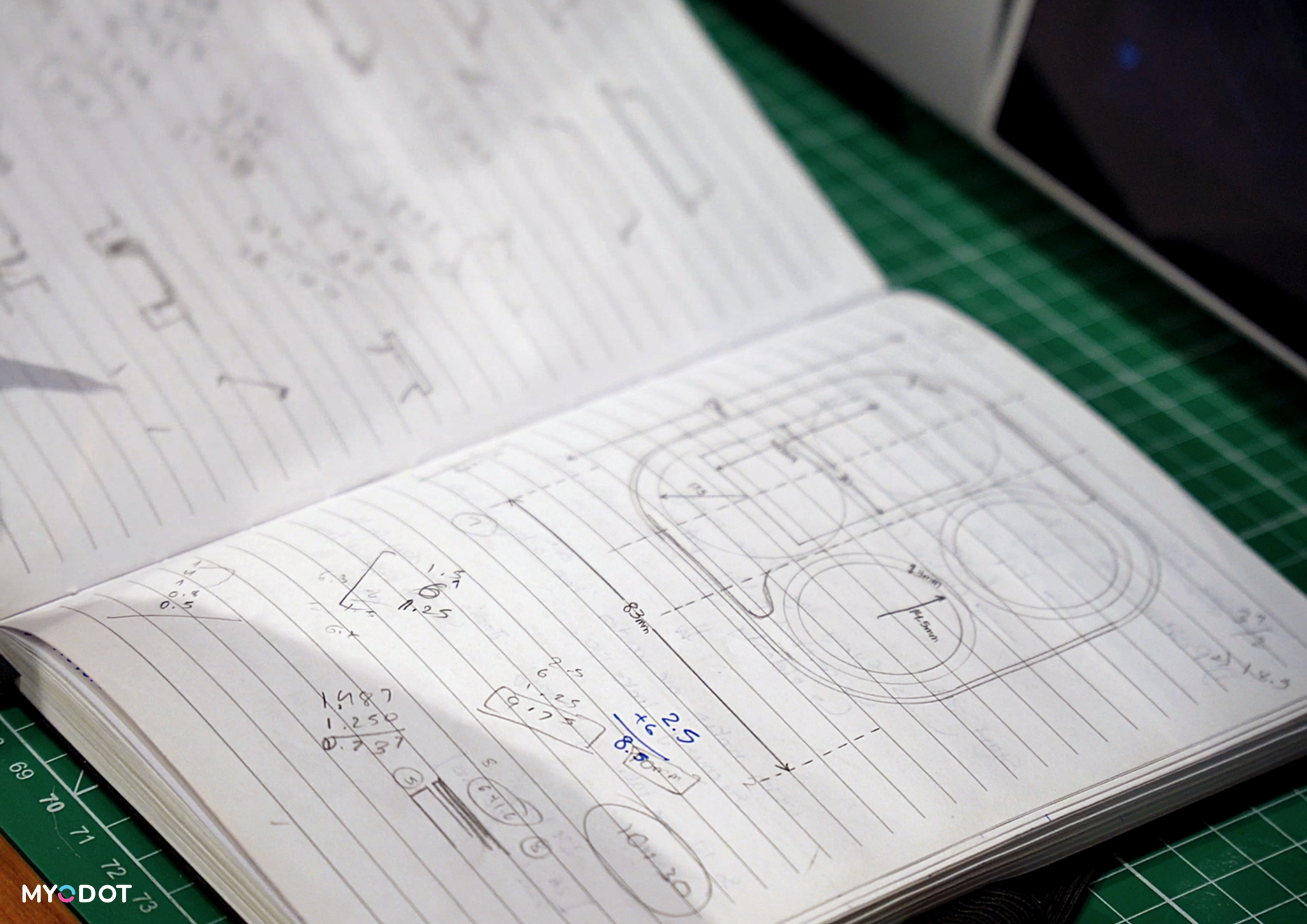
[The early stages of Myodot. Image: Supplied]
Closing the gap between appointments
Through conversations with physiotherapists and clinical leads, Kanishk mapped the patient’s journey and identified several challenges within outpatient motor rehabilitation.
One of the most significant is muscle compensation. A patient might be prescribed an exercise to raise their arm, for example, but instead recruit their shoulder to complete the movement. Without someone there to correct the technique, they can continue repeating the wrong movement at home.
“Someone might be prescribed to raise their arm 50 times, but what they’re doing is raising their shoulder. And that’s not healthy,” he said.
The problem is compounded by the limited visibility clinicians have into their patients’ activity between appointments. Without objective information about how often exercises are completed or how the body is responding, clinicians can find it difficult to assess progress.
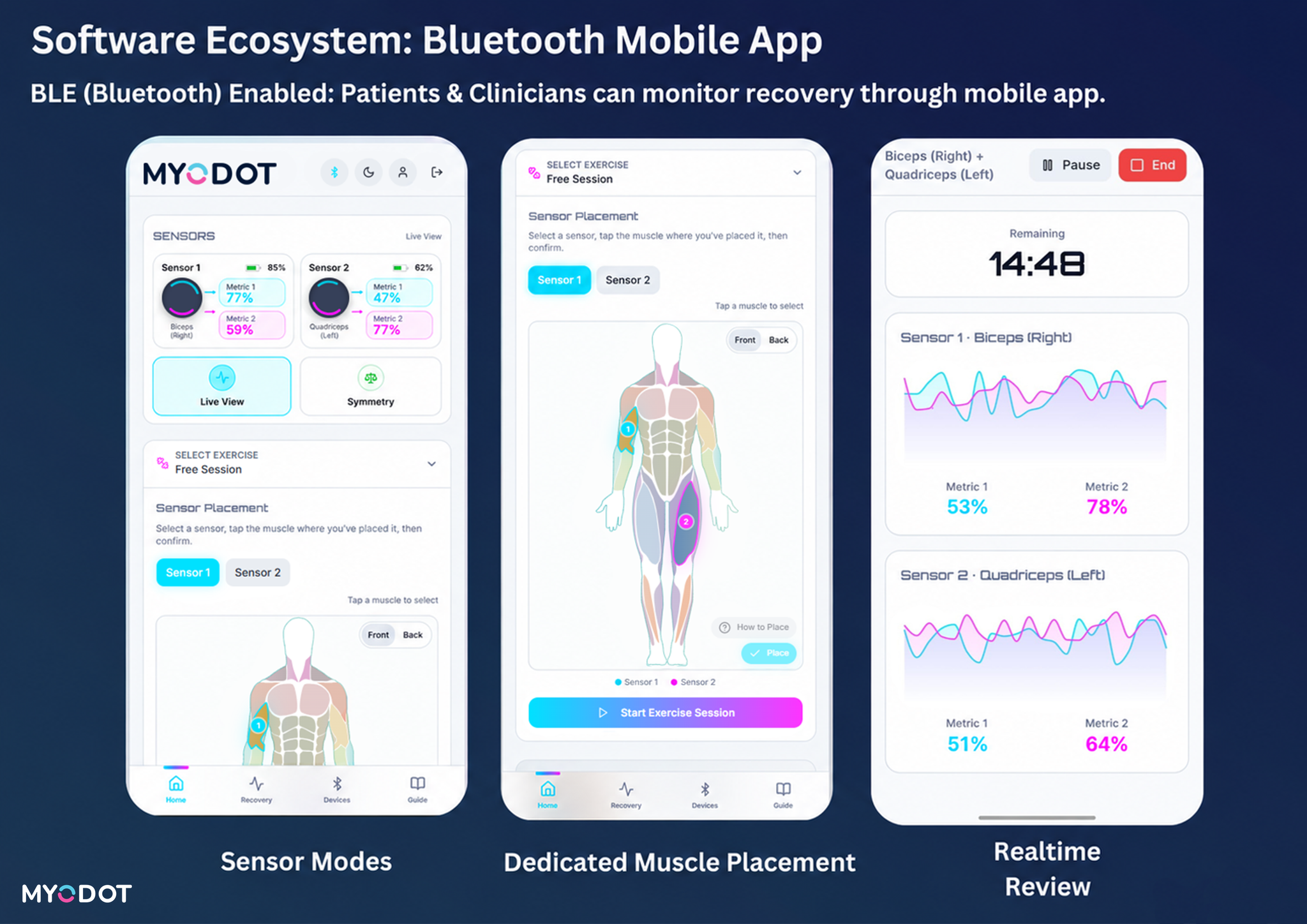
Myodot addresses these challenges through a connected system that brings together three key elements: a wearable sensor, a patient-facing application and a clinician dashboard. The wearable captures muscle-related biomarkers and processes this information to provide immediate feedback. Through Bluetooth connectivity, data is then synchronised with the companion app and clinical platform.
For patients, the app presents information in a straightforward format, translating complex measurements into accessible scores, indicators and session feedback. Clinicians can use the dashboard to manage patient profiles, prescribe exercises and monitor progress over time.
“The app is meant to provide data in a very simple, concise manner, in scores, indexes and basically yes-or-no answers. Was it a good session? Yes or no, or perhaps with a percentage score,” Kanishk explained.
Clinicians can also select which muscle groups they want to monitor and prescribe the corresponding exercises through the dashboard. These instructions then appear in the patient’s app, creating a connected experience between clinical guidance and independent rehabilitation.
[Myodot – 2026 Robert Pataki Award for Healthcare Design. Image: Supplied]
Making feedback part of the movement
A central part of Myodot’s design is the way it communicates information to the person wearing it. Rather than relying entirely on an app or requiring patients to watch themselves in a mirror, the wearable incorporates visual and haptic feedback directly into the device.
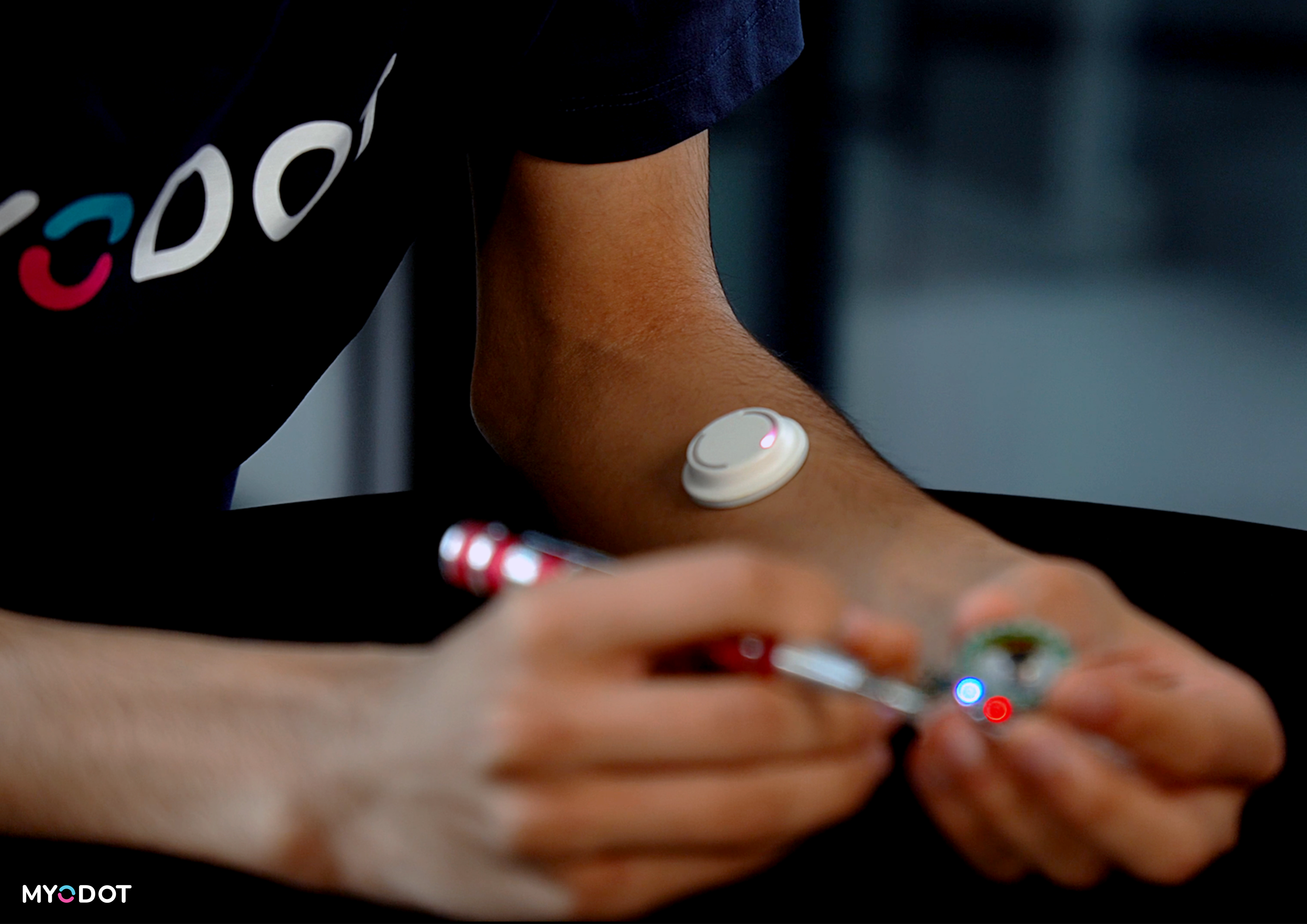
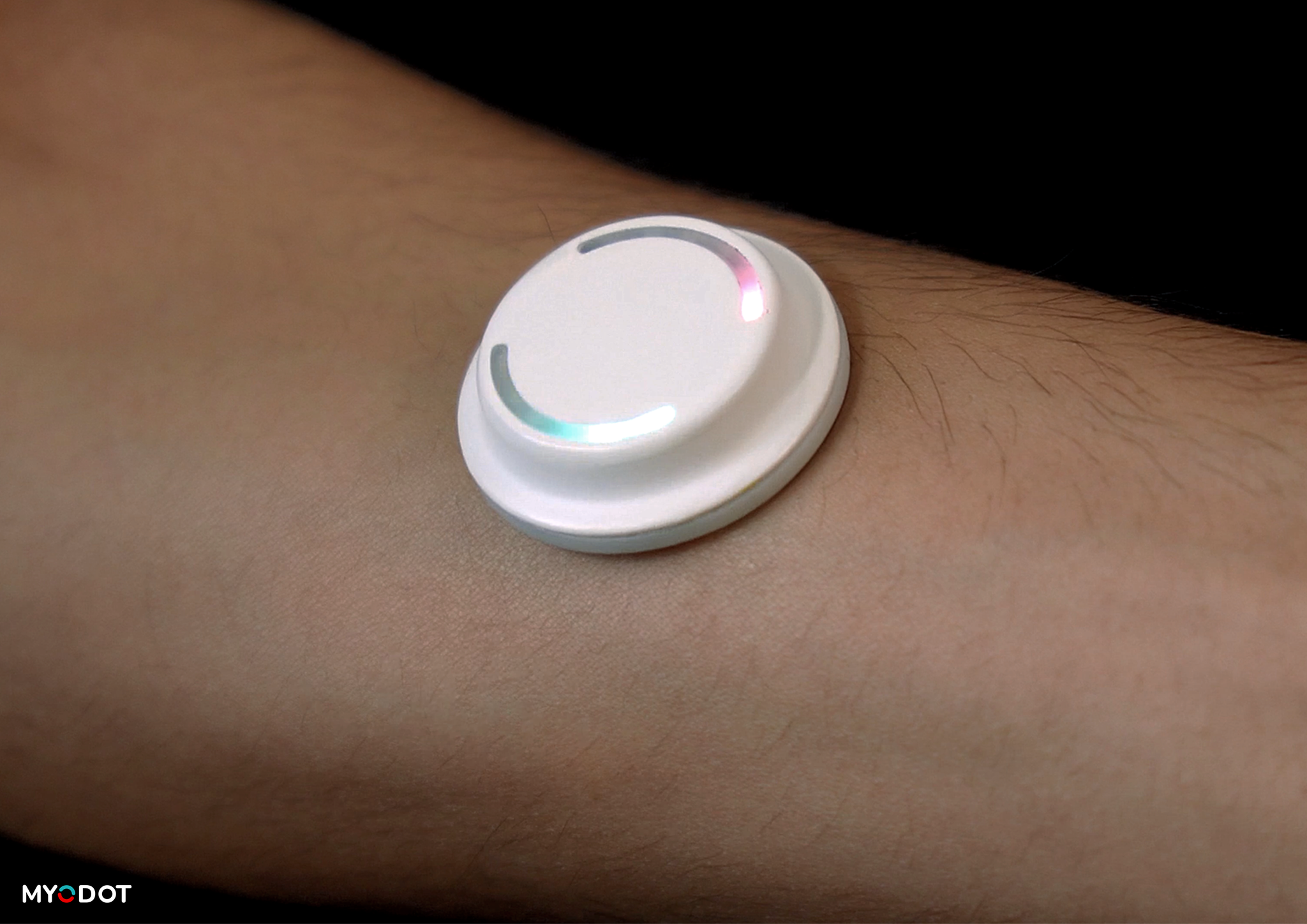
Dual LED arcs display muscle-related metrics in real time, while vibrotactile feedback provides physical alerts when programmed thresholds are reached. This allows patients to receive immediate guidance as they attempt a movement, including when visual feedback may be difficult to access.
“It has visual feedback as well as haptic feedback. We can program it to provide alerts as soon as we cross a threshold for a muscle marker, through visuals like red lights and green lights,” Kanishk said.
“You don’t even have to work out or do your prescribed exercise in front of a mirror if you can’t see the device. You can just feel the haptics.”
The approach is particularly relevant for people experiencing motor impairment, where dexterity, mobility and other physical limitations can make conventional technology difficult to use.
Myodot’s physical design considers these barriers, too. Its compact, wireless form measures approximately 36mm, allowing it to be worn comfortably across different muscle groups without the bulk and restrictions associated with larger monitoring equipment.
Kanishk identifies the device’s size as one of the aspects he is most proud of.
“If it was big, massive and bulky, that would have basically negated the potential of this solution,” he said.
“The biggest thing I’m proud of is how we were able to design so many things into a very small form factor.”
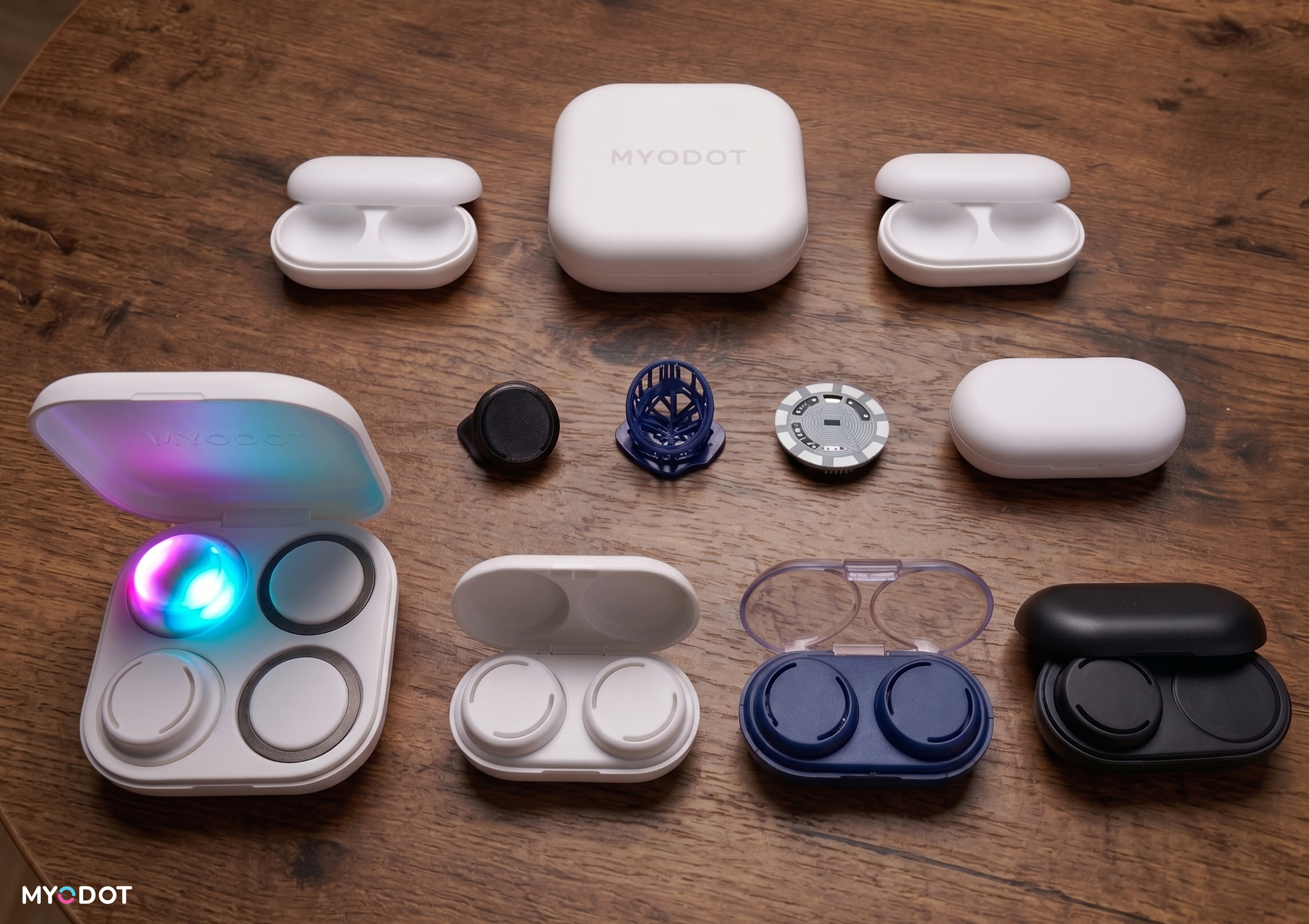
[Myodot – 2026 Robert Pataki Award for Healthcare Design. Image: Supplied]
A more considered approach to accessibility
Another important design consideration is the repeatability of sensor placement. For rehabilitation data to be useful over time, the device needs to monitor the same area consistently across multiple sessions. However, repeatedly locating the correct position can be challenging, particularly for people with limited dexterity.
Myodot addresses this through its proprietary anatomical memory interface. Magnetic stickers allow the wearable to be removed and returned to the same position between sessions, helping maintain consistency in the data being collected.
The device can also be placed in different orientations while continuing to function as intended, further reducing the complexity of everyday use. These details reflect a broader consideration within the design: the technology needs to work for people who may already be navigating significant physical challenges.
The reusable magnetic interface also replaces traditional single-use hydrogel electrodes, reducing skin irritation and medical waste while making repeated application easier. It’s an example of how seemingly small design decisions can have a meaningful effect on the overall experience of a healthcare product.
Designing for confidence and consistency
Kanishk’s intended impact of Myodot extends beyond collecting better clinical data.
He believes one of the biggest barriers to successful rehabilitation is the loss of motivation that can happen when patients struggle to recognise their own progress. Recovery can be slow, and without visible indicators that exercises are making a difference, it can become difficult to maintain a consistent routine.
“The biggest difference I want to make is that patients actually feel satisfied with their recovery. While they’re exercising and going through outpatient rehabilitation, they feel like something is progressing. They don’t lose hope,” he said.
He sees the technology as a way to give patients the feedback and encouragement they need to stay engaged throughout their rehabilitation program.
“They’re progressing slowly and recovering slowly. Hopefully, this can bring on hope and the right amount of motivation they need to go through the entire eight weeks of their plan.”
The opportunity for clinicians lies in having a more reliable understanding of how patients are progressing outside scheduled appointments. The system is also designed to automate NDIS compliance reporting, reducing administrative work and making patient information easier to manage.
Developed with the Cerebral Palsy Alliance and Remarkable Tech, Myodot is progressing through controlled user, physiotherapist and clinical feedback trials. This includes engagement with physiotherapists at Prince of Wales Hospital as the team works towards further clinical validation.
[Myodot – 2026 Robert Pataki Award for Healthcare Design. Image: Supplied]
Building before graduation
Perhaps one of the more unexpected aspects of Myodot is the stage of Kanishk’s career at which it has been developed.
Currently in his third year of a four-year Computer Engineering degree at UNSW, he has led the engineering development of the project since its beginnings in October 2025. His previous experience in health and wellbeing product development provided a foundation for moving quickly through the early engineering stages and developing the current MVP.
Kanishk thinks being a student has never been a reason to put product development on hold.
“I think students don’t need to wait for their degrees to end to design anything, to launch anything or to create impact. They can just take action.”
It’s an attitude reflected in Myodot itself: identifying a problem, engaging with the people experiencing it and applying engineering knowledge to develop a practical response.
Looking ahead, the team is focused on strengthening clinical validation, refining the user experience and progressing towards a market-ready healthcare device. Further collaboration with patients and clinicians will help shape how the technology is integrated into real-world rehabilitation environments.
[Myodot – 2026 Robert Pataki Award for Healthcare Design. Image: Supplied]
Design that gives recovery a clearer path
At its heart, Myodot is concerned with a part of healthcare that can easily go unseen. The exercises completed at home, the small improvements between appointments and the uncertainty patients experience when they cannot tell whether their efforts are working.
By bringing real-time feedback and continuous clinical insight into that space, the project offers a new way to approach motor rehabilitation. Its achievement lies in translating complex engineering into a compact, accessible product ecosystem, with each element designed around the needs of the people using it.
For Kanishk, the ambition is ultimately straightforward: to give patients greater confidence in their recovery and clinicians the information they need to support it.
The 2026 Robert Pataki Award for Healthcare Design recognises the potential of that thinking, and the importance of designing healthcare technology around the realities of everyday life.
Good Design Australia congratulates and thanks Kanishk Aggarwal for his work on Myodot and for demonstrating how emerging Australian design talent can apply engineering innovation to meaningful healthcare challenges.
More News