Founded in 2009 with a vision to amplify how people interact with the world around them, Meld Studios has since become an award-winning design company thriving at the forefront of service design. Now, with studios Australia-wide, the team of like-minded innovators are continuing to pioneer design as a strategy and advocate for inclusive, collaborative and iterative design approaches – both with clients and internally.
Meld Studios are proud recipients of numerous Australian Good Design Awards. In 2018, their human-centred design framework for the Queensland Government took home the most prestigious Award accolade – the Good Design Award of the Year – while 2020 saw the studio make room on the office mantlepiece for four new Awards celebrating their impactful and conscious work.
An unwavering dedication to design-led thinking and culture has underlined Meld Studios’ inspiring journey. It’s empowered a future-focused approach to design that deeply respects the people, places and visions they innovate for, with each project and initiative showcasing their commitment to a more equitable and connected tomorrow. In 2022 Meld Studios were recognised as the Good Design Team of the Year for their glowing emphasis on human-centred design and ongoing industry success.
Almost a year on from their win, Good Design Australia sat down with Meld Studios co-founder, Steve Baty, to talk about all things design-led thinking, contemporary collaboration and the progressive goalposts of good design.
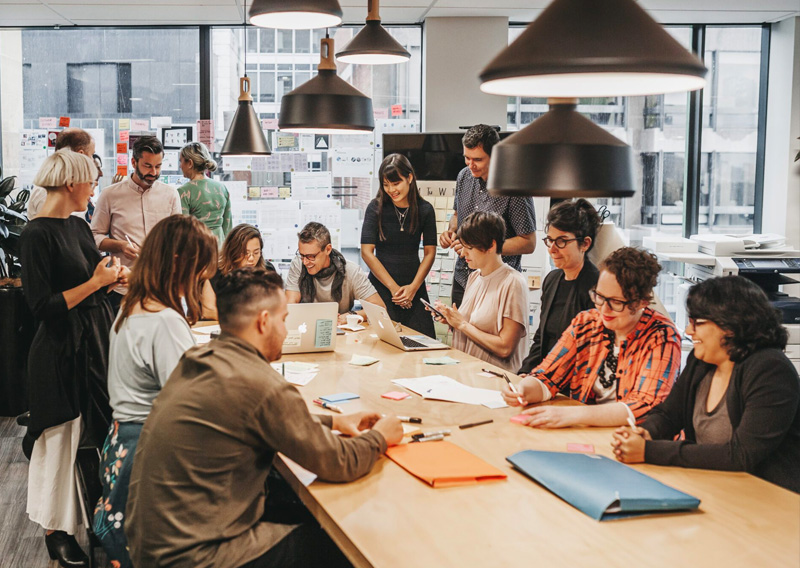
Meld in motion Image: Meld Studios
Good Design Australia: A design-led culture is synonymous with the Meld Studios vision. What does that look like in the workplace?
Steve Baty: As a design company, it’s how we go about client work in very much the same way that we go about work for ourselves. For example, Meld has recently gone on a journey of becoming an employee-owned business, and we achieved that as a designed project. So, just as we do day-to-day with our clients, we conducted research to understand how people thought about their roles, responsibilities and commitments to one another. We engaged the right people and brought together different concepts, sought feedback and put trials in place.
Meld approaches the running of the company with that same client philosophy of early engagement, deep understanding, trying multiple things, seeking feedback and then settling on a preferred model or a preferred approach. It’s how we can ensure everyone’s voices are heard, appreciated and actioned for everyone’s benefit.
GDA: It seems as if a deeply collaborative approach brings this design-led attitude to life. How does Meld come together with clients and as a team with offices in Sydney, Melbourne, Canberra and Perth?
SB: Meld has four studios where people come to work, but for the last few years we’ve had as many working locations as we’ve had homes. Since the pandemic, that’s kind of our reality. We’ve found that the key to keeping the collaboration and the engagement rolling is to become much more deliberate about when we work side-by-side or remotely. We’ve needed to decide when it’s most important to come together and understand that it could be for a whole raft of reasons – some of which have nothing to do with the project. It’s things like reconnecting with staff, the social elements of working together and the simplicity of having a coffee during a break that are important too.
There are obviously times that we’ll need to go out on-site to engage clients and stakeholders face-to-face, or collaborate together as a team. I feel as if there’s a rapport, a sense of trust, a vulnerability and a rhythm that usually works better when you’re in a room together. But, even then, all we need is a timezone and email to connect and have extremely valuable conversations.
A recent project Meld was involved in realised the perfect balance of both, where initial engagement was physical – bringing 15, 20 people together into a room – and the outcome was delivered remotely to the same people dotted around the country.
GDA: Turning back the clock to 2022, what did it mean for the Meld Studios team to be named Good Design Team of the Year?
SB: It was a big deal. It was a really big deal. Alongside my two business partners, we’ve spent a lot of time over the years trying to justify and prove the value of design in new spaces. We’ve made the argument with clients that these approaches can help you time and time again. In fact, it’s been 13 years of incrementally shifting the places and sectors in which we work, the scale of the challenges we face and the ways we help lead change in our effort to make a powerful case that says ‘we can do this’.
So to have the Australian Good Design Awards and Good Design Australia sit there, look at our body of work, look at the places that we’ve been able to get design into, and recognise that that’s some really good work – that’s special. I got quite emotional when I found out. I was just so deeply proud that Meld’s commitment to design in new spaces could be acknowledged by our industry.
GDA: The concept of ‘good design’ within Good Design Australia encompasses ideas, products, projects and services that show potential to lead to a better, safer and more prosperous future for all. How does Meld define ‘good design’?
SB: We look at design as a way of helping create a thriving Australia, so that’s always what we’re aiming for. That looks like a nation that is more sustainable, more equitable and more just. It requires design to be seen from the perspective of the people who were, are or will be impacted by a project, which means that good design is all about asking the right people the right questions. Have the people being impacted been involved? Have they had input? What would they suggest or consider? Do they consider the output to be more sustainable, more equitable and more just?
One of the things as an industry we’re grappling with at the moment, is this notion of colonialism and extractive practices – the role of capitalist organisations and markets in creating and taking advantage of natural resources, human resources, exploitation, extraction. It’s really only when we start to move away from those sorts of mindsets – that historically paternalistic colonial approach to ‘what does good look like?’ – that I really think we can realise what we mean at Meld by ‘really good contemporary design’.
GDA: What would you describe as the next frontier of good design?
SB: Deep client and stakeholder engagement. Honestly, it’s already on its way there. If you think back 10 or 15 years ago, for example, you would have never really had a serious conversation about design and its connection to Country and its people. Whereas now, it’s becoming more and more innate to design processes and frameworks.
Eventually, we’re gonna get to a point where we start asking questions like, ‘well, should we design it at all?’ We’re not quite there yet, because there’s money to be made. But, at some point, it’ll no longer be a ‘how can we? how might we?’ situation but a ‘should we?’. I think that’s actually the next frontier for good design.
Entries for the 2023 Australian Good Design Awards close 21st April
The deadline to be a part of the 2023 Award season is quickly approaching, with entries closing at midnight 21st April. If you have an idea, product, project and service ready to make its mark on the design world and our wider society, don’t delay – submit your entry today.
GOOD DESIGN AUSTRALIA DISCUSSION PAPER – THE PURPOSE OF THIS PAPER IS TO PROVOKE CONVERSATIONS AMONG THE AUSTRALIAN DESIGN COMMUNITY, AS WE TRANSFORM THE WAYS WE DESIGN THE FUTURE – FOR HUMANITY AND ALL LIFE ON EARTH TO FLOURISH.
Written by Trish Hansen, Good Design Ambassador and Commissioned by Dr. Brandon Gien, Good Design Australia.
A BETTER FUTURE IS ENTIRELY POSSIBLE – WE JUST HAVE TO IMAGINE IT, THEN FIND WAYS TO HONOUR IT IN ALL THAT WE DESIGN.
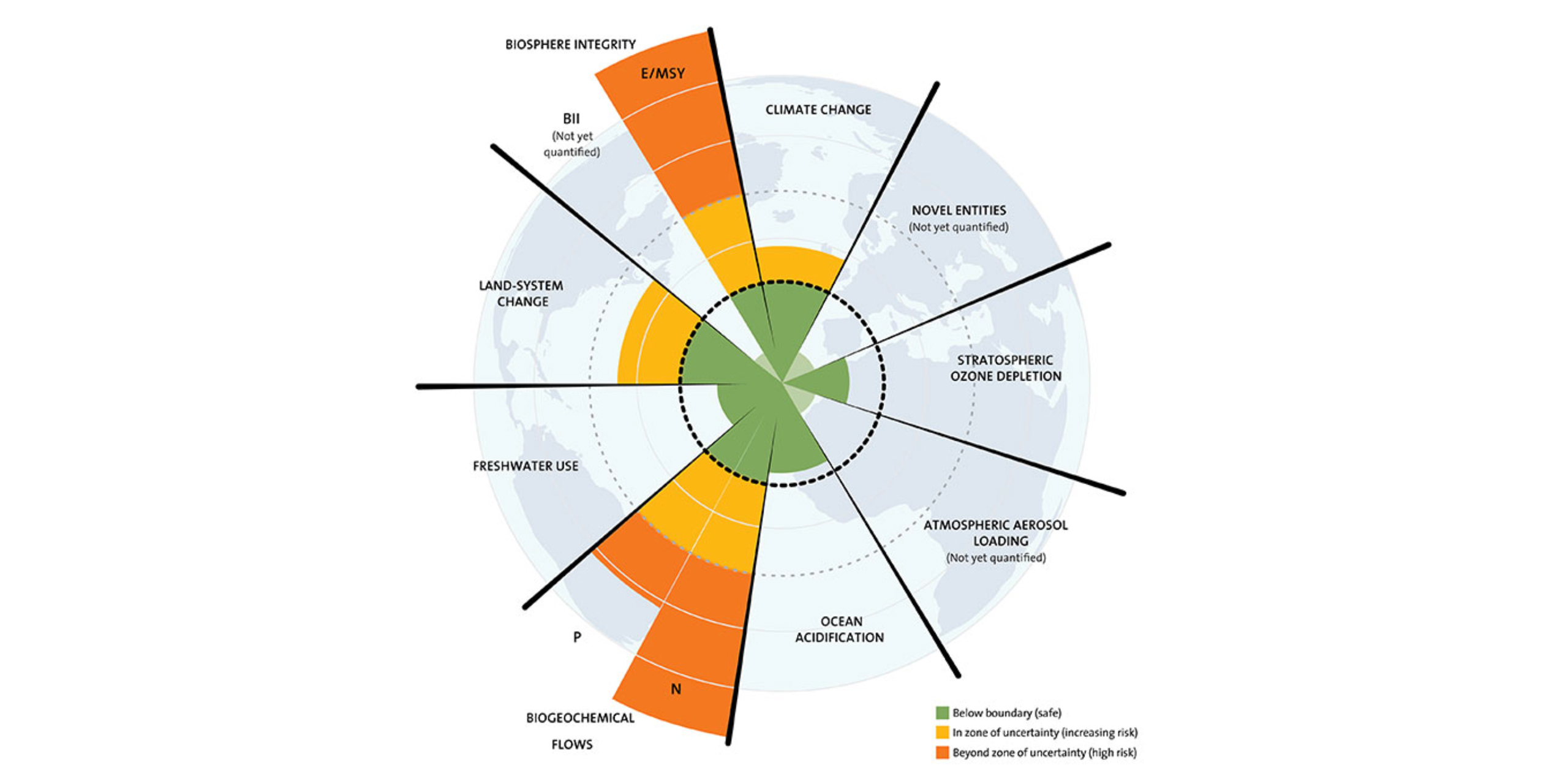
Climate change is only one of nine interdependent planetary boundaries that we have already exceeded and need to reverse, for humanity and millions of other species to survive.
Biodiversity loss, freshwater removal, land use and the pollution of soils, oceans, rivers and the air we breathe are all signalling the need for urgent transformation.
The magnitude of the challenges we face is unprecedented, which presents designers with momentous responsibility, and boundless opportunity – a momentous quest which is possibly the greatest in all of human history.
The Nine Planetary Boundaries – Stockholm Resileince Centre. Estimates of how the different control variables for seven planetary boundaries have changed from 1950 to present. The green shaded polygon represents the safe operating space. Source: Stockholm Resilience Centre.
Designing for the Sustainable Development Goals
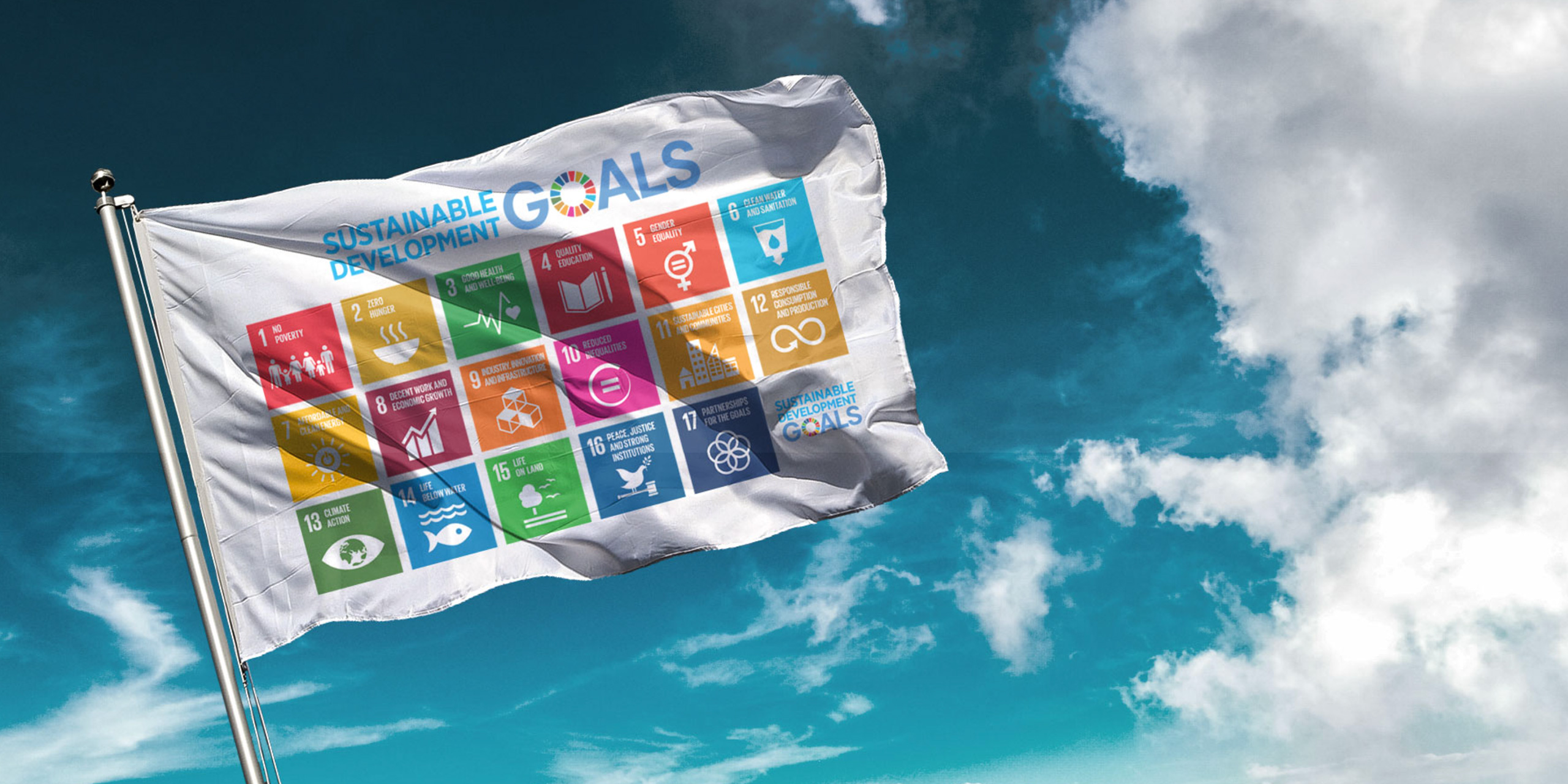
The Sustainable Development Goals (SDGs), also known as the Global Goals, were adopted by the United Nations in 2015 as a universal call to action to end poverty, protect the planet, and ensure that by 2030 all people enjoy peace and prosperity.
The 17 SDGs are integrated and recognise that action in one area will affect outcomes in others, and that development must balance social, economic and environmental sustainability.
United Nations Sustainable Development Goals (SDGs). Image: World Design Organization (WDO)
The World Design Organization (WDO), the global body for Industrial Design, has embraced the SDGs as a framework for action that has the potential to simultaneously offer positive social and environmental impact as well as financial return.
Over the next 5-10 years, our design decisions will determine whether we and many other species and ecosystems will flourish or fail.
And like any right of passage, we don’t yet know how it is going to turn out.
Design plays a critical role
How might we imagine a flourishing future for people and life on Earth and what role can design play in making this happen?
Across the diverse spectrum of practice, design shapes the ‘what and how’ of everything; policy, products and services, strategy to precincts, places, business, buildings, infrastructure, digital technology, data – to the what and how we make, mine and manufacture.
It even shapes what stories we tell ourselves and even how we tell them.
So how might we transform the way we approach design, for all humans to thrive as part of Earth’s flourishing ecosystems?
This is a question for all design leaders and practitioners, across all disciplines, at all levels of every industry and supply chain.
It is in this decade that we have the most influence and potential to mitigate catastrophic and cascading systems failure, from which recovery is impossible – than any other time in the future.
How we got ourselves here is complex, but one major factor is that one of the most powerful design drivers of the industrial era was, and in many cases still is, profit.
Over the past decade design has become more human-centric; considering the impacts of design on humans.
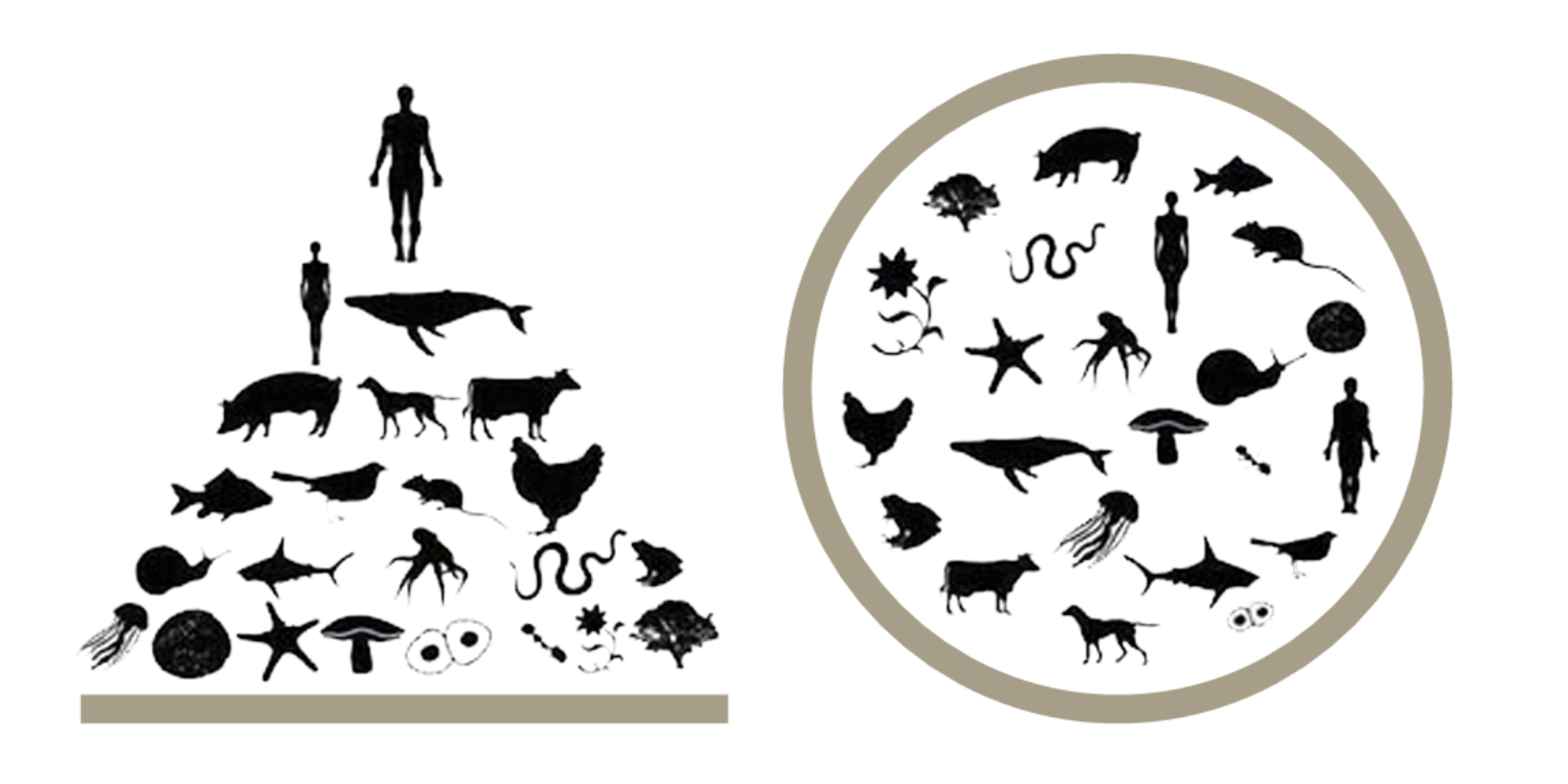
However, even human-centric design assumes that people are separate from and better than all other natural systems and beings.
Human-centric to Life-centric
Ego-centric v Eco-centric diagram adapted from Art Tawanghar, Designer, San Diego (2016). Image: Designing with Country Discussion Paper, Government Architect New South Wales, March 2020.
So, as we re-design almost everything, everywhere, all at once – how do we avoid making the same mistakes?
How might the ‘what and how’ we design, contribute to a better future?
Several ‘life-centric’ design approaches are emerging and gaining momentum that are well worthy of exploration including; Designing with Country, Circular Design and Regenerative Design.
These life-centric approaches acknowledge complexity.
Complex systems are characterised by many components that interact in multiple ways with each other and their environment.
That everything is connected, interactive, adapting, changing, and emerging, often in unpredictable ways.
Designing with Country
First Nations Peoples in Australia and around the world have endured for tens of thousands of years, by adapting ways of being, knowing and doing to live entirely regeneratively in relationship with their local places.
Information, knowledge, skills and design ingenuity have been passed down for countless generations through sophisticated cultural practices and models that are embedded in all aspects of life.
Country (with a capital C) has a significant spiritual meaning for Aboriginal Peoples and many nations have unique ways of describing the concept.
“Connection to Country means that we are connected to every living thing around us, the Ruwi (land), Murrundi (Murray River), Mungkular (lakes) and Yarluwar (ocean), trees, plants and animals. Our mi:wi is our spirit, our mi:wi connects to every living thing around us. It is our responsibility to care for Country, as it is a part of our soul and Country will always provide for us with everything we need. Healthy Country, healthy people.”
Quoted here with permission from Kaurna and Ngarrindjeri Elder Major ‘Moogy’ Sumner.
Designing with Country goes beyond human-centred design to life-centred, or Country-centred approaches to design. It views all natural systems and beings, including people, alongside animals, plants, landscapes, waterways, the atmosphere and the night sky as equally important parts of an interconnected ecosystem.
“Nata ngadlu kumangka yara kumaninthi” Now we together, two become one.
Quoted here with permission from Kaurna Elder – Uncle Lewis Yarlupurka O’Brien AO
Many Aboriginal Nations are developing local frameworks and processes to guide Designing with Country approaches that are: grounded in trust, genuine collaboration and generate community vitality, honouring the ecological and cultural and wisdom stories of place, and consider the impact of the project for future generations; of humans and all other living systems.
Designing with Country starts with knowing the place and being in a relationship with local First Nations leaders to understand and honour the local stories, and be a part of contributing to the place flourishing into the future.
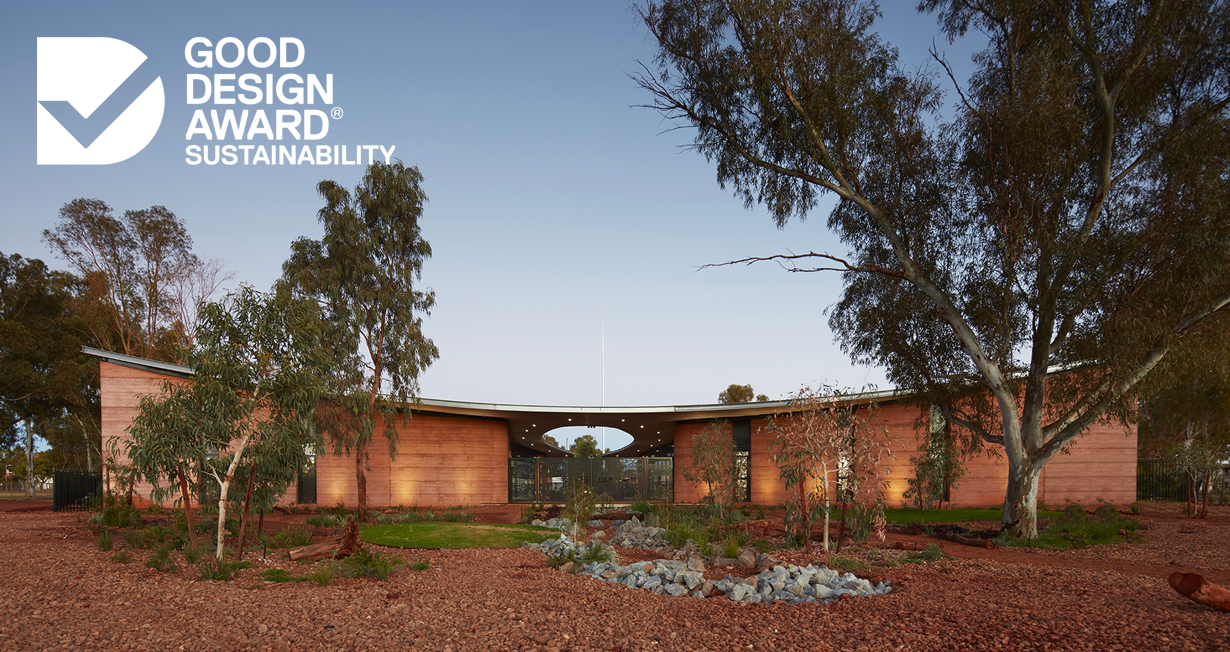
Puntukurnu AMS Healthcare Hub – 2021 Good Design Award for Sustainability. Designed by Kaunitz Yeung Architecture and commissioned by Puntukurnu Aboriginal Medical Service. Image: Robert Frith, Acorn Photography.
The Puntukurnu AMS Healthcare Hub is deeply rooted in place and imbued with humanity that engenders community ownership. It does so by cladding the building in rammed earth using earth from the site, incorporating art from female and male indigenous artists from five communities, incorporating 150kW of photovoltaics that produce 100% of electricity when the sun shines (more than 85% overall) and landscaping with more than 4000 endemic plants. Above all, this is achieved by genuinely involving Aboriginal people and respecting / reflecting people, culture, and Country. This was all achieved within the standard Commonwealth Government funding for similar buildings.
DESIGN QUESTIONS:
How can we, as designers, learn from (beyond but including learning about) Aboriginal culture?
What are the most respectful and appropriate ways to engage First Nations leaders and Elders?
How might we move at the speed of trust?
How might we put relationships before tasks?
How might our designs consider future generations – for all living beings (including humans) and ecosystems?
Regenerative Design
Regeneration refers to ways of being, living, working, learning and making that revitalise ourselves, each other, all other living systems and beings in the places we live on our wondrous planet, as part of the cosmos.
Regenerative design is an approach that cultivates the conditions that replenish human and other natural ecosystems to continue to flourish into the future.
So what does that mean for the design of everything?
Sustainability is not enough
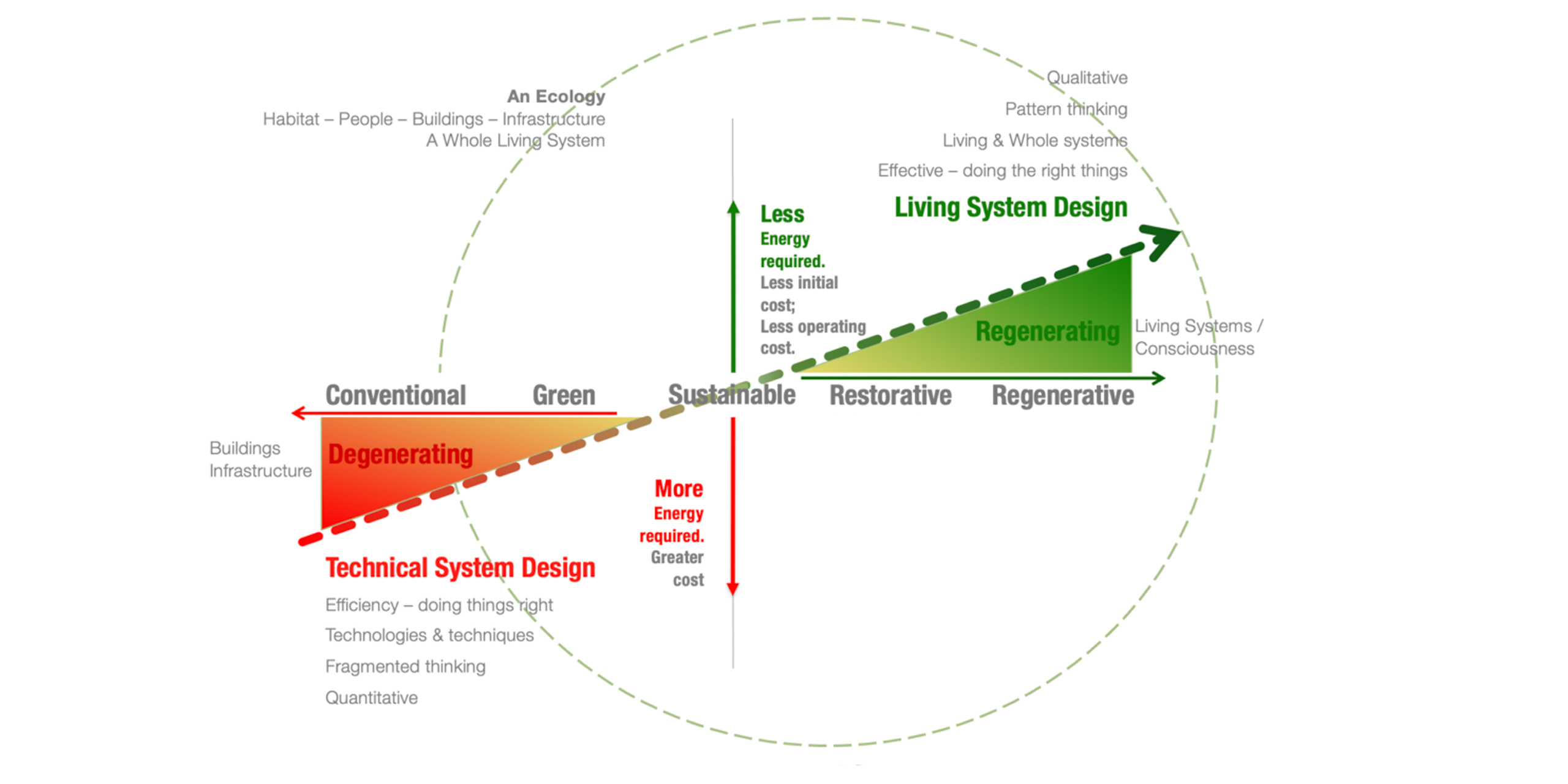
Sustainability has come to mean ‘doing less harm’ and at best ‘doing no harm’, however this means that the planet is still dying, just less slowly.
Regenerative design aspires to ‘do more good than harm’, having a positive, systemic impact – culturally and ecologically.
For projects already underway, this means shifting the focus from getting specific projects done for their own sake, to considering the highest order potential of a flourishing system or place, and finding ways that the project might be in service to that.
In a practical utopian future, it’s the ecological, social and cultural flourishing of places at the bioregional that determines all else; the projects, materials, even local economies and industries.
The focus on place at the bioregional scale means that the place is big enough to be an ecosystem, but small enough for it to make sense and have meaning – for people to care.
Trajectory of Ecological Design: Bill Reed, Regenesis
DESIGN QUESTIONS:
What is this place/ bioregion wanting to come to be?
Is your project in service to that?
What value are you trying to create?
What do we mean by this place?
What are the bigger wholes that this place nested within?
How is this project in relationship with the place?
How might this project serve the essence of this place?
How might this project nourish the ecological resilience of the place?
How might this project enrich the lives of the local community?
How might this project build local vitality?
How might the design process and/ or outcome enrich people’s dignity, sense of belonging, connection to each other and place?
How might the design process and/ or outcome deepen people’s connection to other beings and ecosystems as part of nature?
Circular Design
It is clear that the linear ‘take-make-waste’ system of product design and manufacturing of the industrial era is unsustainable.
The decisions made through the design phase have ecological, environmental, social and cultural impact throughout a product’s entire lifecycle.
The shift towards designing products and their component parts to be repaired, reused, repurposed, and recycled – with the intention of keeping materials in permanent circulation, is the basis of Circular Design.
Circular Design is a ‘whole of lifecycle’ approach based on three principles:
Wasting nothing and eliminating pollution
Up-cycling everything by keeping materials in use
Regenerating nature
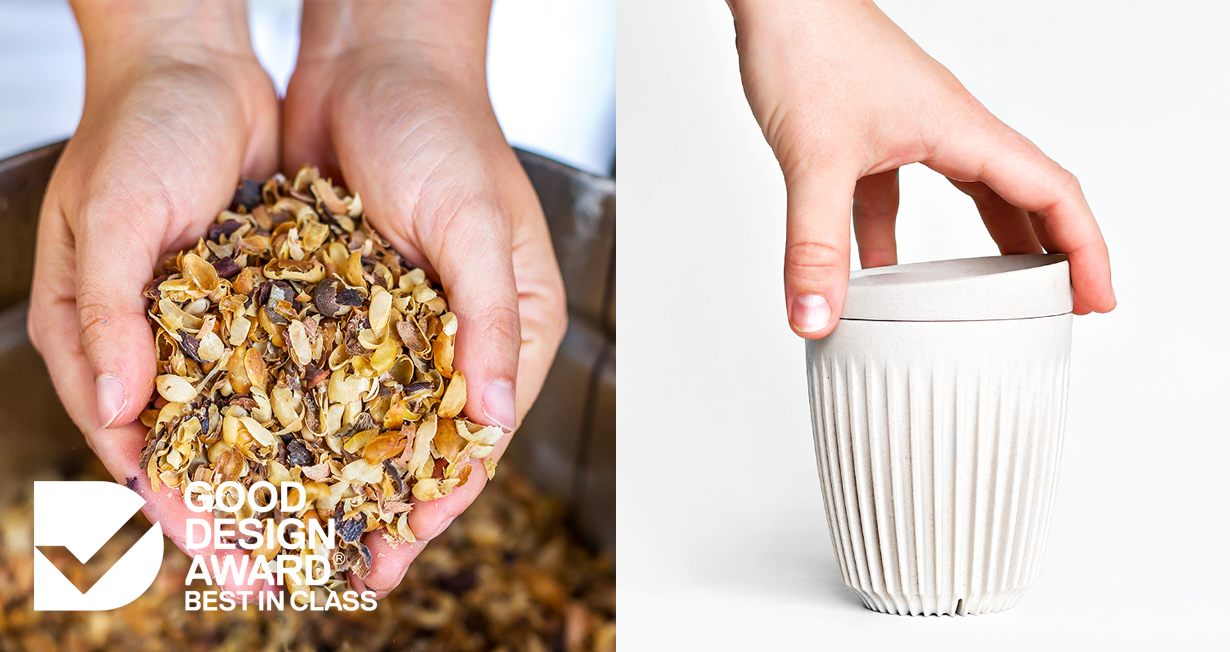
Huskee – 2018 Good Design Award Best in Class, Product Design, Housewares and Objects. Designed by Vert Design for Huskee.
Huskee uses coffee husk as a raw material combined with a unique eco-composite polymer. By repurposing this bi-product from the production of coffee, the Huskee range reduces waste from the coffee farm through to the cafe, where it diverts disposables from landfill.
DESIGN QUESTIONS:
How might we use recycled materials across our product lifecycle?
How are materials across our product lifecycle repairable or recyclable?
How is our product lifecycle cultivating the conditions for human and ecological flourishing?
Biomimicry – nature’s design genius
Human’s are the only species on the planet that generate waste.
All other species live in reciprocal relationships with the places they live, wasting nothing, upcycling everything, doing chemistry in water, at low temperatures, and using only local resources that contribute back to the ecosystem that in turn create the conditions conducive to life.
Other species have ingeniously designed trillions of diverse materials, forms and processes.
“The best ideas might not be ours” Janine Benyus, Founder of Biomimicry
The web of a tiny spider that is five times stronger than steel (per square inch), seashells harder than concrete, beetles that harvest water in the desert, seeds that fly, skin patterns designed to resist bacterial growth, feathers shaped to generate beautiful colours and wild networks of underground interspecies communication systems.
It’s wild – literally.
The concept of Biomimicry was presented by biologist Janine Benyus in the nineties acknowledging that it’s taken 4.5 billion years of R&D for species to evolve in the places they live.
How might designers learn from (beyond learning about) other living beings and systems and ‘ask nature’ for inspiration?
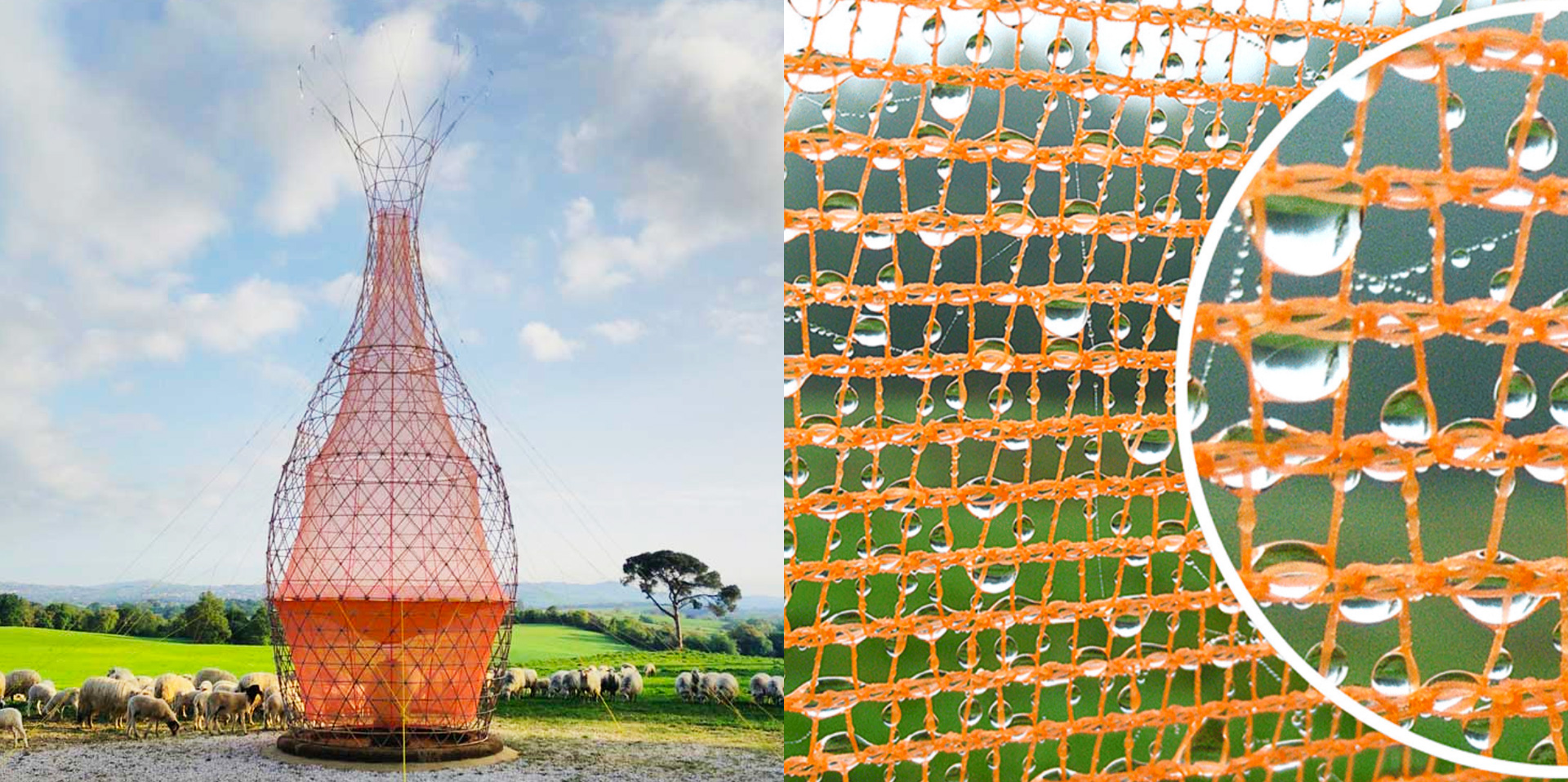
Warka Water Tower is designed to harvest potable water from the atmosphere. It collects rain and harvests fog and dew and functions only by natural phenomena such us gravity, condensation and evaporation and doesn’t require any electrical power. The Warka Tower is designed to be owned and operated by the villagers, a key factor that will facilitate the success of the project. The tower not only provides a fundamental resource for life – water – but also creates a social place for the community, where people can gather under the shade of its canopy for education and public meetings.
DESIGN QUESTIONS:
How might we waste nothing?
How might we use and design materials that are non-toxic?
How might we upcycle everything?
How might we design materials at room temperature?
How might we design materials at low temperatures?
What problem are we trying to solve and how does nature solve this?
How might our food production restore soil health?
Designing for Better
There is not one way to design for better – but myriad ways, by myriad practitioners in myriad relationships and collaborations.
So how might we cultivate the conditions to design for better?
Nestedness – consider the place or system that your project is nested within and its greatest potential to flourish.
Trust – honour trust a unique and critical enabler, that it takes time and can’t be faked.
Curiosity – creating team cultures that can embrace big, wild and difficult questions.
Diverse perspectives – actively seek to expand worldviews and listen deeply to others who are genuinely interested in the potential of the greater place or system your project relates to.
Deep listening – developing skills to respect and understand the meaning of others perspectives.
Holding space – having the patience to allow for consideration and emergence.
Navigating ambiguity – sitting in the discomfort of not knowing all the answers as you proceed.
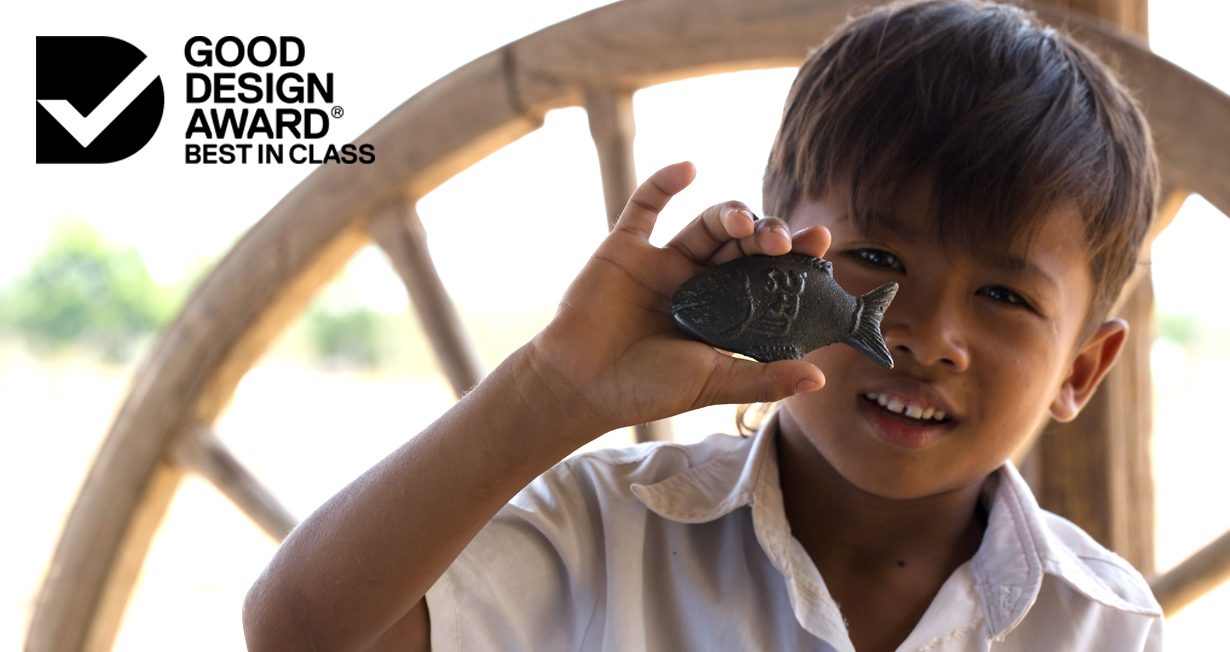
Luck Iron Fish – 2016 Good Design Award Best in Class, Social Impact. Designed by Gavin Armstrong for Lucky Iron Fish.
Lucky Iron Fish is a simple, reusable and effective cooking tool that adds extra iron to daily food and drinks. It is made from food-grade electrolytic iron powder that is FDA certified and approved for food fortification worldwide. The Lucky Iron Fish is a side-effect free source of iron, especially for those with iron deficiency anemia.
What other questions should we be asking?
In our endeavour to catalyse a regenerative future, we believe that one of the most powerful things we can all do is to ask great questions and have great conversations.
In shifting from ‘What problem are we trying to solve?’ to ‘What value are we trying to create?’, we propose this series of questions with the intention to provoke rich and constructive conversations.
Not all of these questions will resonate or be relevant for all situations, but provided simply as provocations.
Call to action – have a conversation.
Start a conversation with your design team, colleagues, friends and family.
Listen deeply with respect and kindness – put the relationship first.
Discuss whatever arises – the value is in the conversation.
We earnestly encourage you to come up with your own and would love to hear what design questions you and your teams are finding energising and helpful.
Please let us know what other design questions you find helpful. Go strongly, gently.