NextSense Centre for Innovation

good-design-award_winner_rgb_blk_logo
  • 2026

  • Built Environment
    Architectural Design

Designed By:

Commissioned By:

NextSense

Designed In:

Australia

The NextSense Centre for Innovation is a purpose-built facility for people who are deaf, hard of hearing, blind, or have low vision. It integrates education, healthcare, and research to deliver inclusive services, advance knowledge, and support children, adults, families, and professionals through accessible, sensory-focused design.
view website

2.jpg
WMK Sketch Perspective by John Andreas
3.jpg
Tom Ferguson
4.jpg
Tom Ferguson
5.jpg
Tom Ferguson
6.jpg
Tom Ferguson
7.jpg
Tom Ferguson
  • CHALLENGE
  • SOLUTION
  • IMPACT
  • MORE
  • The project responds to the growing and complex needs of people with hearing and vision loss, within a fragmented service landscape and rising national demand. The challenge was to unify education, clinical services, and research into a single, highly accessible environment while addressing diverse sensory requirements.It required rethinking conventional design standards to prioritise acoustics, wayfinding, and visual clarity, while remaining welcoming and non-institutional. The project also needed to foster collaboration across disciplines and partners, integrate with the Macquarie University precinct, and create a scalable model for future service delivery, both in-person and remote.

  • The design resolves the brief through a highly integrated, sensory-led environment that unites education, clinical services, and research across two interconnected pavilions. Guided by the principles of Sensory, Network, and Sense of Purpose, the building prioritises acoustic performance, intuitive wayfinding, and visual clarity.A key milestone was co-design with stakeholders, shaping inclusive spaces beyond compliance. The planning fosters connection between disciplines while maintaining functional clarity. Challenges included balancing complex user needs with an open, collaborative environment and embedding accessibility into every detail. The result is a flexible, future-focused model that supports evolving service delivery and innovation.

  • The NextSense Centre for Innovation delivers significant societal impact by improving access to education, healthcare, and support for people with hearing and vision loss, reducing isolation and enabling lifelong participation.Commercially, it strengthens Australia’s leadership in sensory services by co-locating research, industry, and practice, fostering innovation and new partnerships.Environmentally, the project incorporates sustainable design initiatives, including energy-efficient systems, solar generation, and water-sensitive strategies.As a scalable model for integrated service delivery, it sets a new benchmark for inclusive design, influencing future projects and expanding access to high-quality care both nationally and globally.

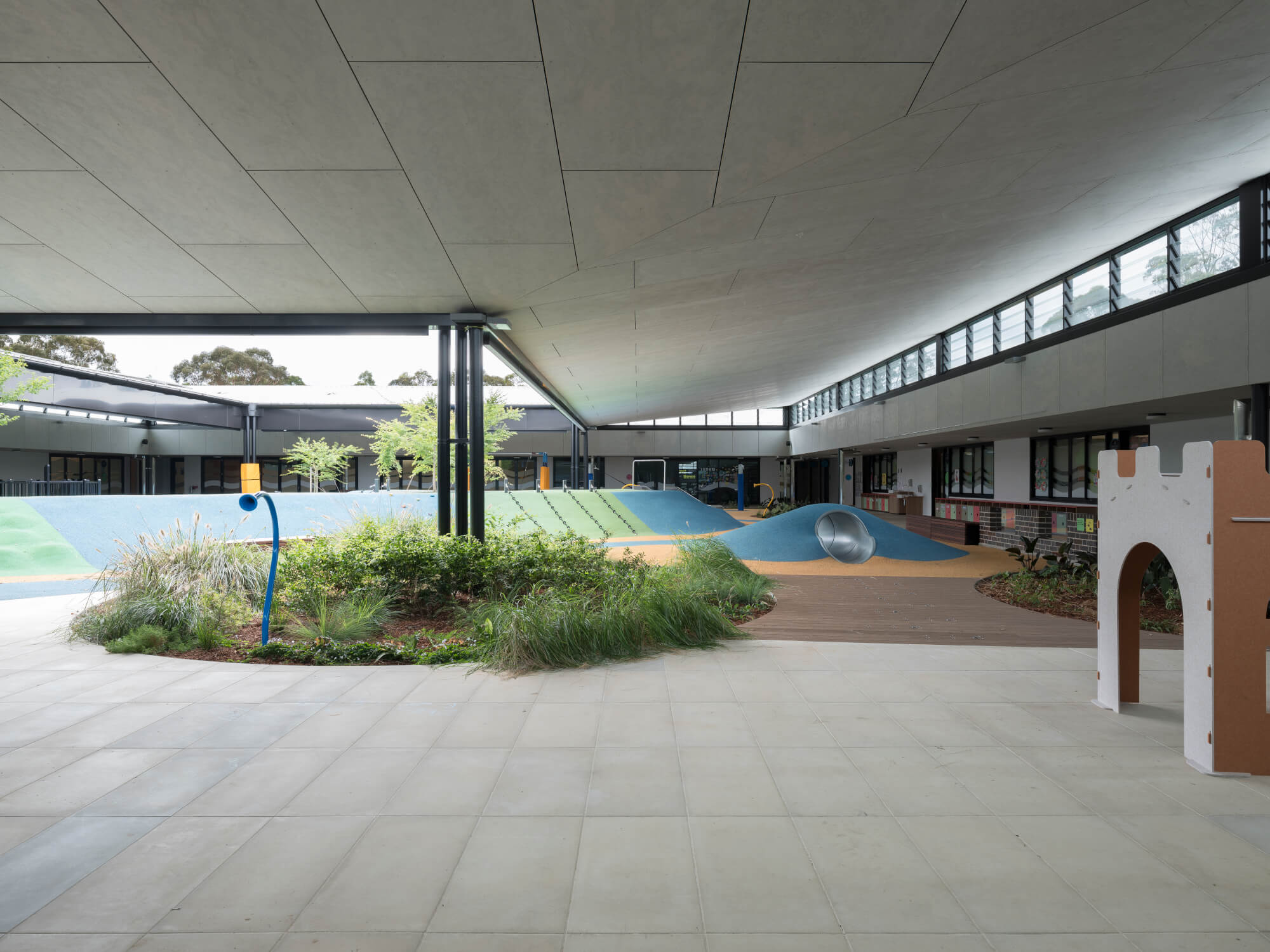
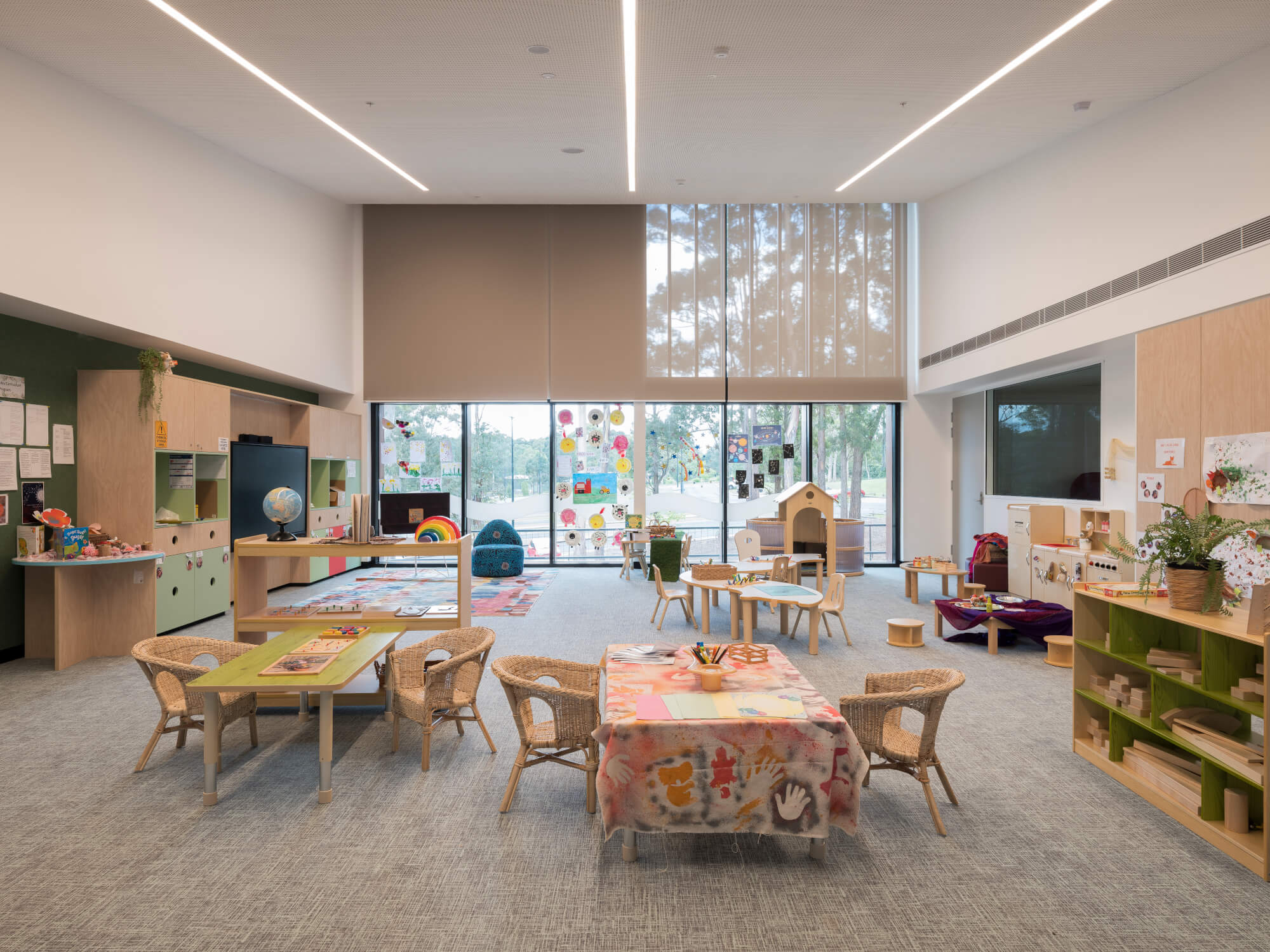
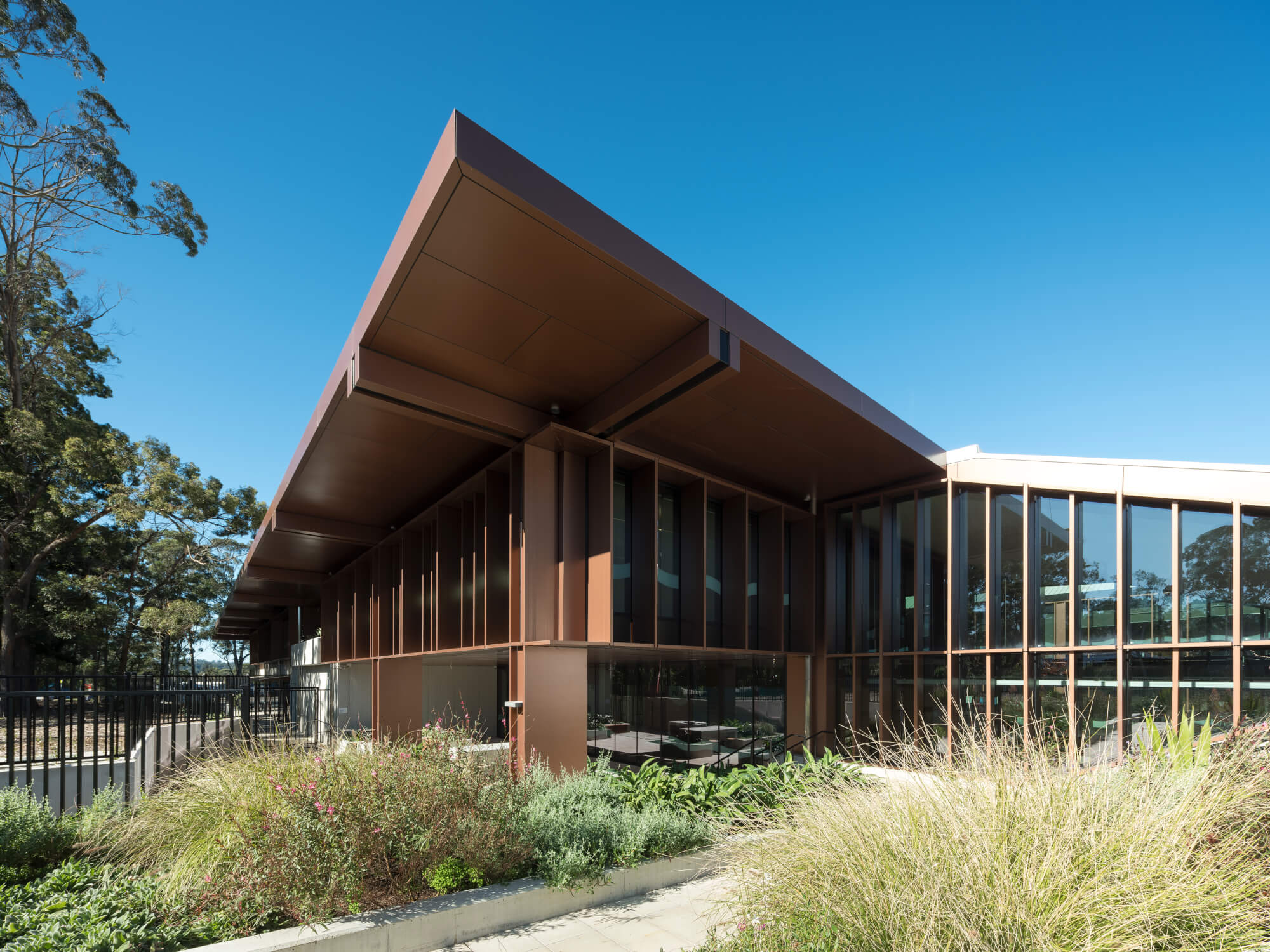
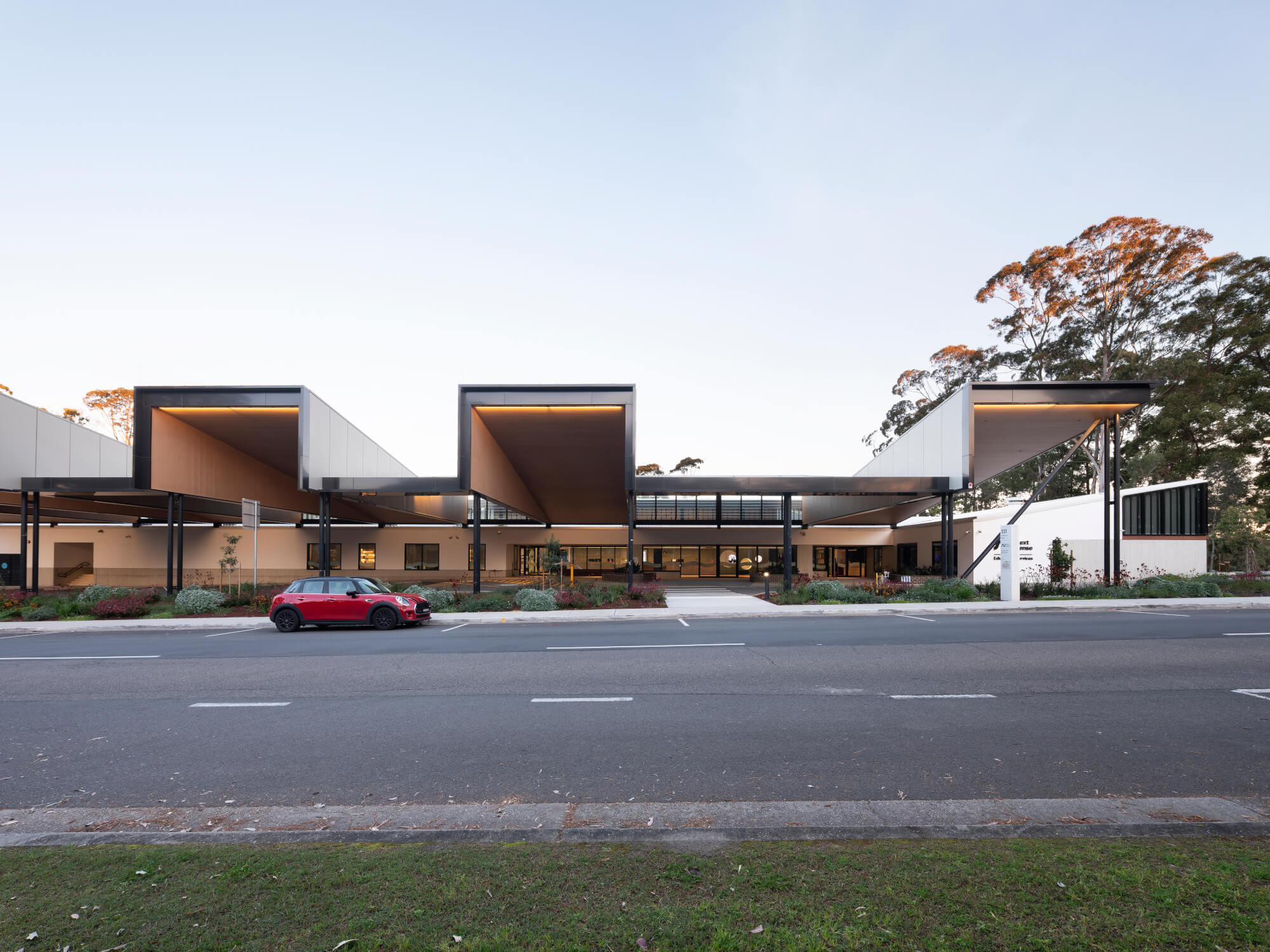
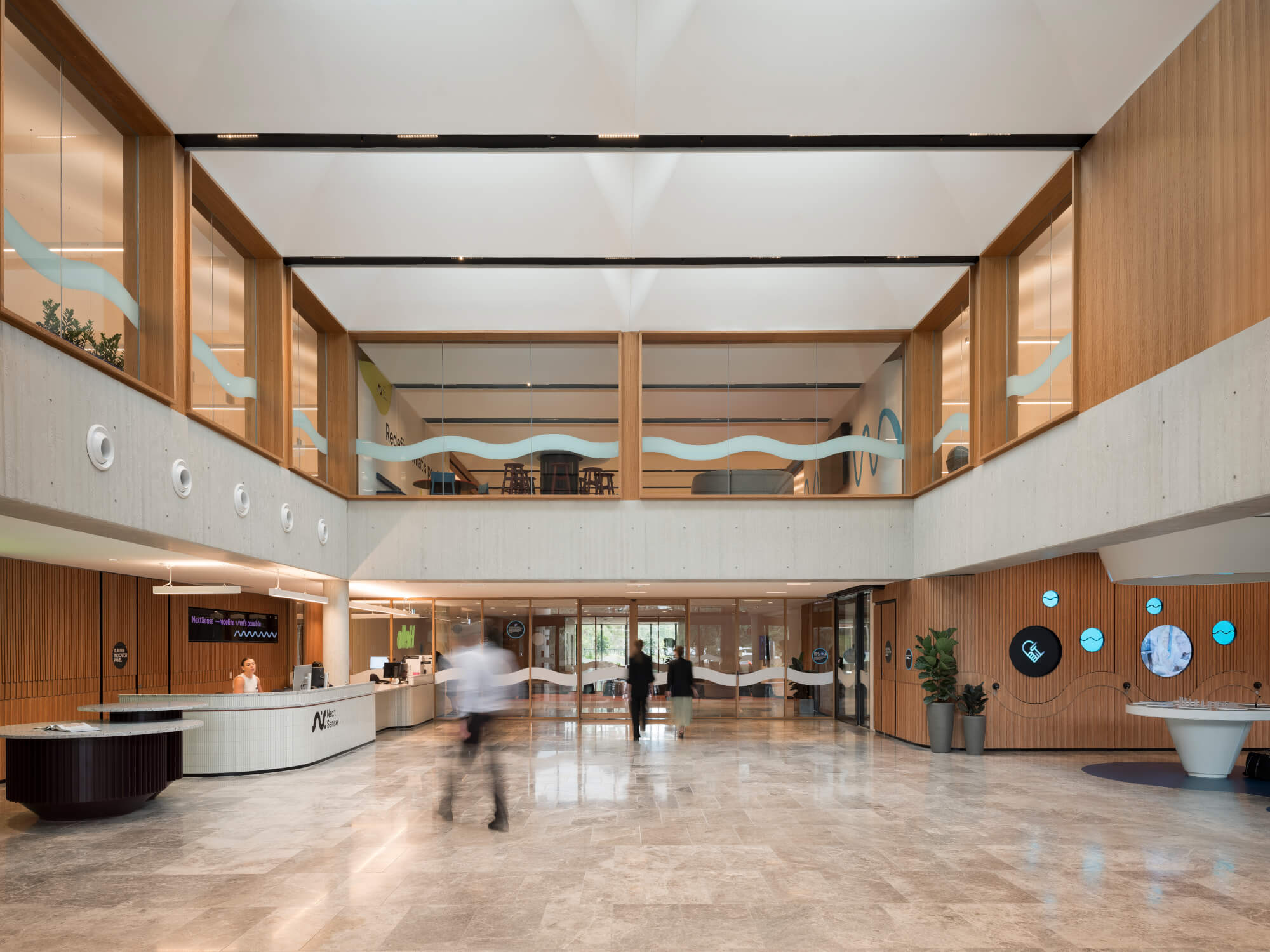
  • Key features of the NextSense Centre for Innovation are driven by a holistic, sensory-led design approach that places user experience at the forefront. The building achieves exceptional acoustic performance, critical for people with hearing loss, alongside high-contrast interiors, tactile materials, and intuitive wayfinding systems that support navigation for people with low vision or blindness.The centre is organised across two interconnected pavilions, separating yet unifying education and clinical functions. This enables seamless collaboration while maintaining clear spatial identity. A central public interface—including a double-height foyer, café, and business hub—acts as a vibrant, multi-sensory meeting point for clients, staff, and partners.Learning environments are directly connected to outdoor “rooms within a garden,” supporting wellbeing, sensory play, and flexible teaching modes, including Auslan and bilingual education.The workplace is designed as a series of neighbourhoods to encourage collaboration and agility, while specialised clinical, therapy, and research spaces are fully integrated.Sustainability is embedded through passive design, solar energy, water management, and material selection. Together, these features create a highly inclusive, future-focused environment that sets a new benchmark for accessible, integrated design.