Macquarie Group Global Headquarters Workplace Design

good-design-award_winner_rgb_blk_logo
  • 2025

  • Built Environment
    Interior Design

Commissioned By:

Macquarie Group

Designed In:

Australia

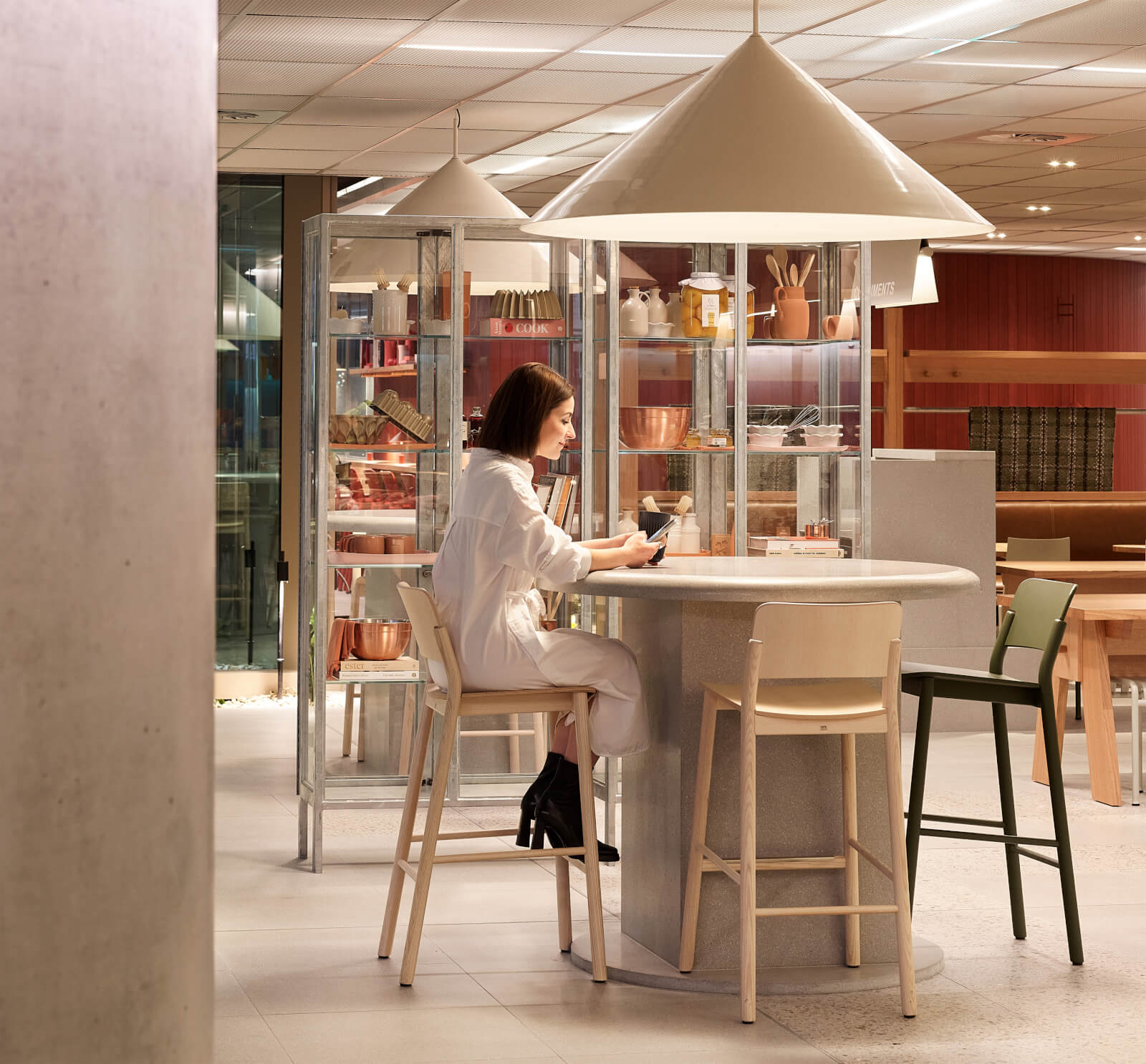
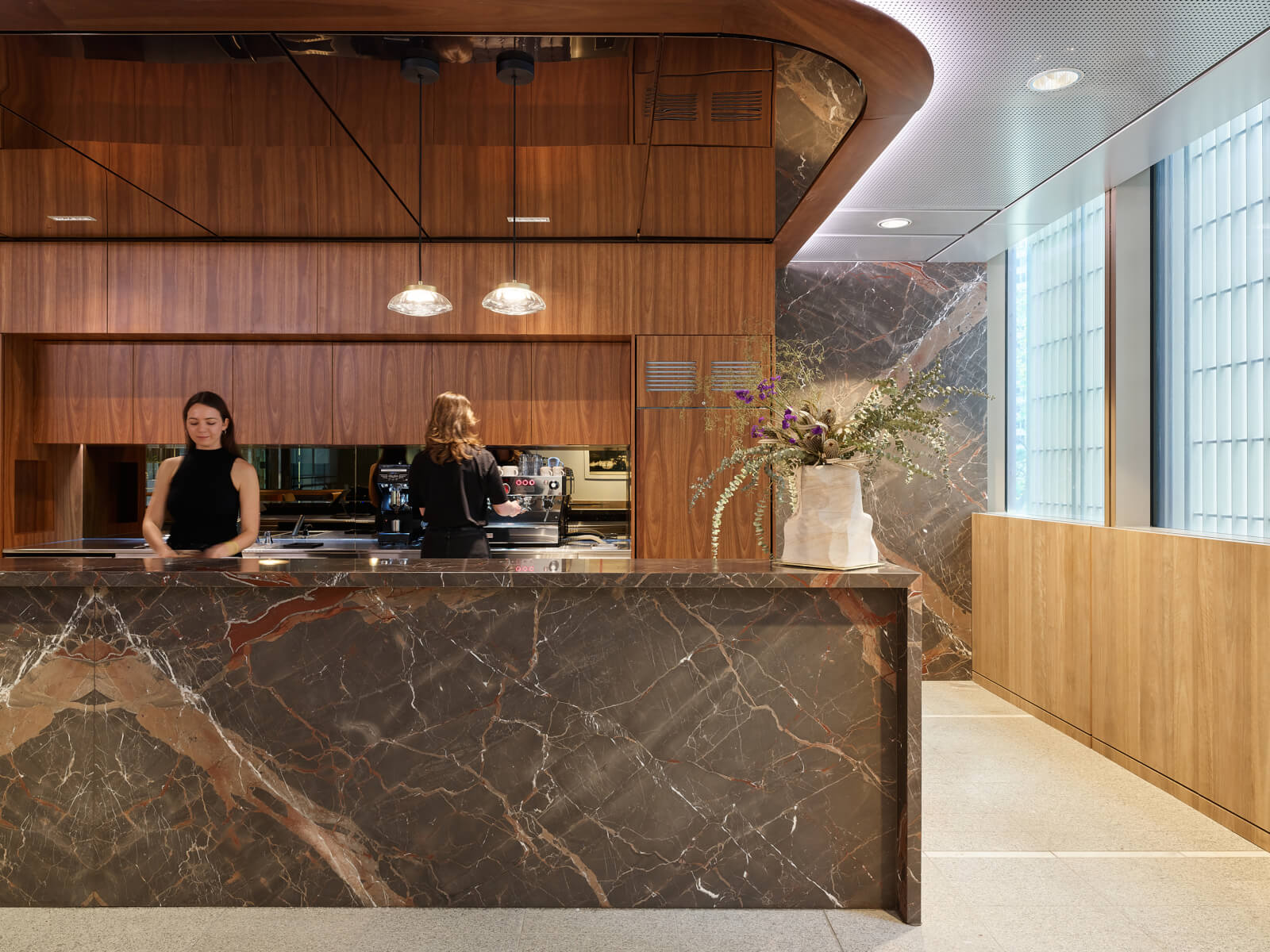
Macquarie Group’s global headquarters in Sydney’s Martin Place is a dynamic, light-filled workplace designed for community, collaboration, and sustainability. Featuring advanced technology, wellbeing facilities, and amenities such as a public art gallery and hospitality floor, it offers an adaptable, inspiring environment that enhances the experience of both employees and guests.


view website

1.jpg
2.jpg
3.jpg
4.jpg
5.jpg
6.jpg
7.jpg
8.jpg
9.jpg
  • CHALLENGE
  • SOLUTION
  • IMPACT
  • The project’s functional requirements were established with input from stakeholders during several design sprints. The challenge was to create a workplace with spaces that meet various client and community functional requirements, including dedicated community spaces, such as a publicly accessible art gallery, a business lounge, multicamera broadcast studio and client and hospitality spaces. The project was driven to provide Macquarie’s people and guests with an innovative, purposeful, and inspiring environment, supporting dynamics of Macquarie’s operations and workforce. Workfloors needed to respond to the changing future of work, allowing for maximum adaptability, catering to various work styles and evolving business needs.

  • Design decisions across the project were rigorously assessed to provide Macquarie with a purposeful environment with long term flexibility. A unique typical floor plan was developed to deliver work floors containing a 25% fixed zone – including diverse social, collaborative and meeting spaces – and 75% flexible zone that had been scenario tested to adapt across all business units. This approach offers flexibility over time, supporting the dynamic nature of work. Materials strategies were equally robust, with a reductive palette of locally-sourced new and recycled materials, furniture reuse across most areas, design honouring the base building architecture, as well as minimal overcladding.

  • Sustainability was a core tenet of the project, with 1 Elizabeth achieving a 6 Star Green Star Design rating and aiming to be 100 percent electric in normal operations. Design decisions focused on energy and material efficiency, with sustainable procurement principles adopted for furniture, including significant reuse from previous sites. By minimising overcladding and exposing services, the project optimised costs while achieving a unique aesthetic. The use of local, recycled materials reduces embodied carbon within the fitout, while providing potential for disassembly and reuse. The building features automated resource-efficient systems, and extensive biophilic elements, showcasing an approach to user wellbeing.