A Path of Remembrance

good-design-award_winner_rgb_blk_logo
  • 2026

  • Built Environment
    Installation Design

Designed By:

Designed In:

Australia

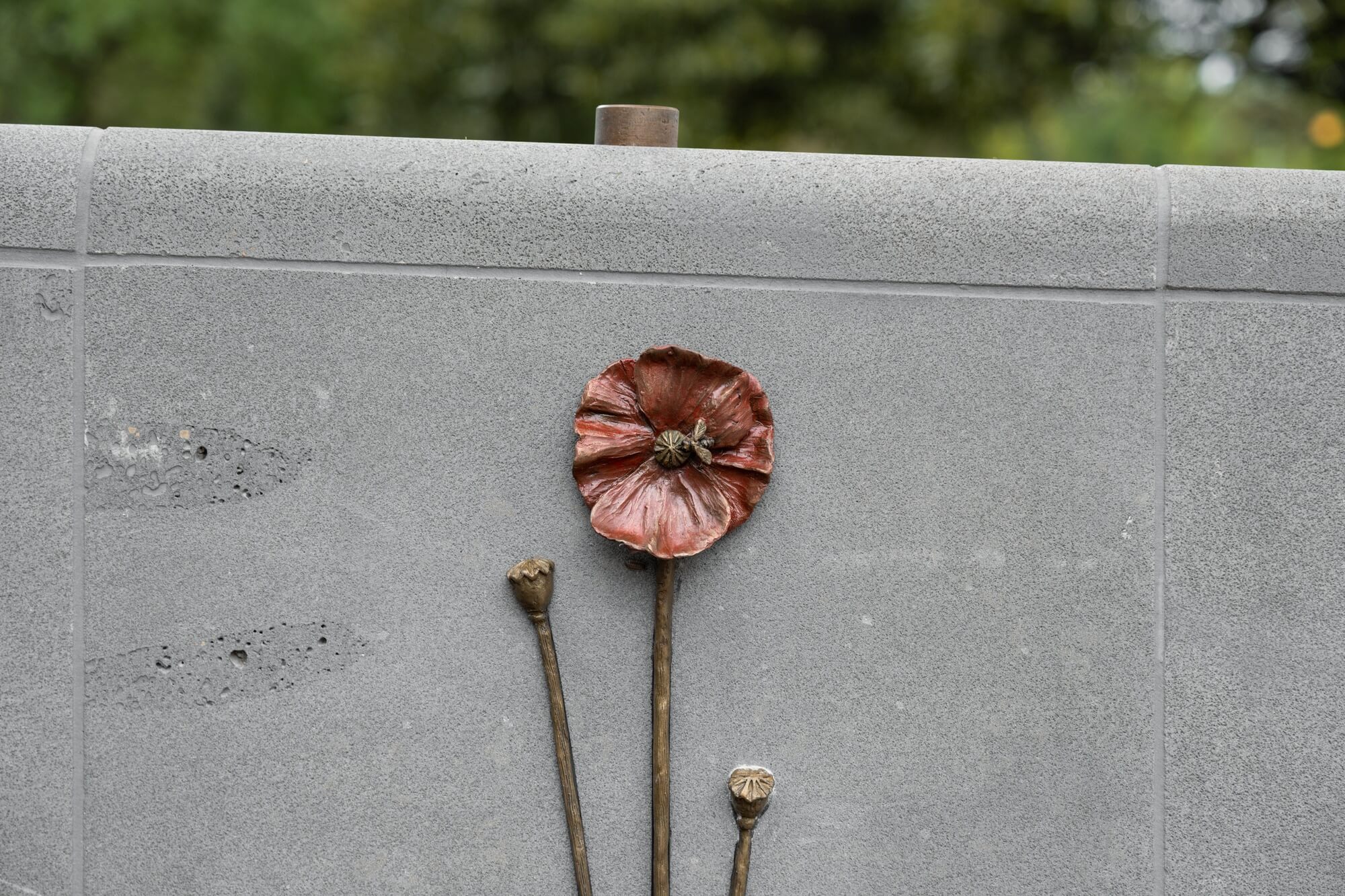
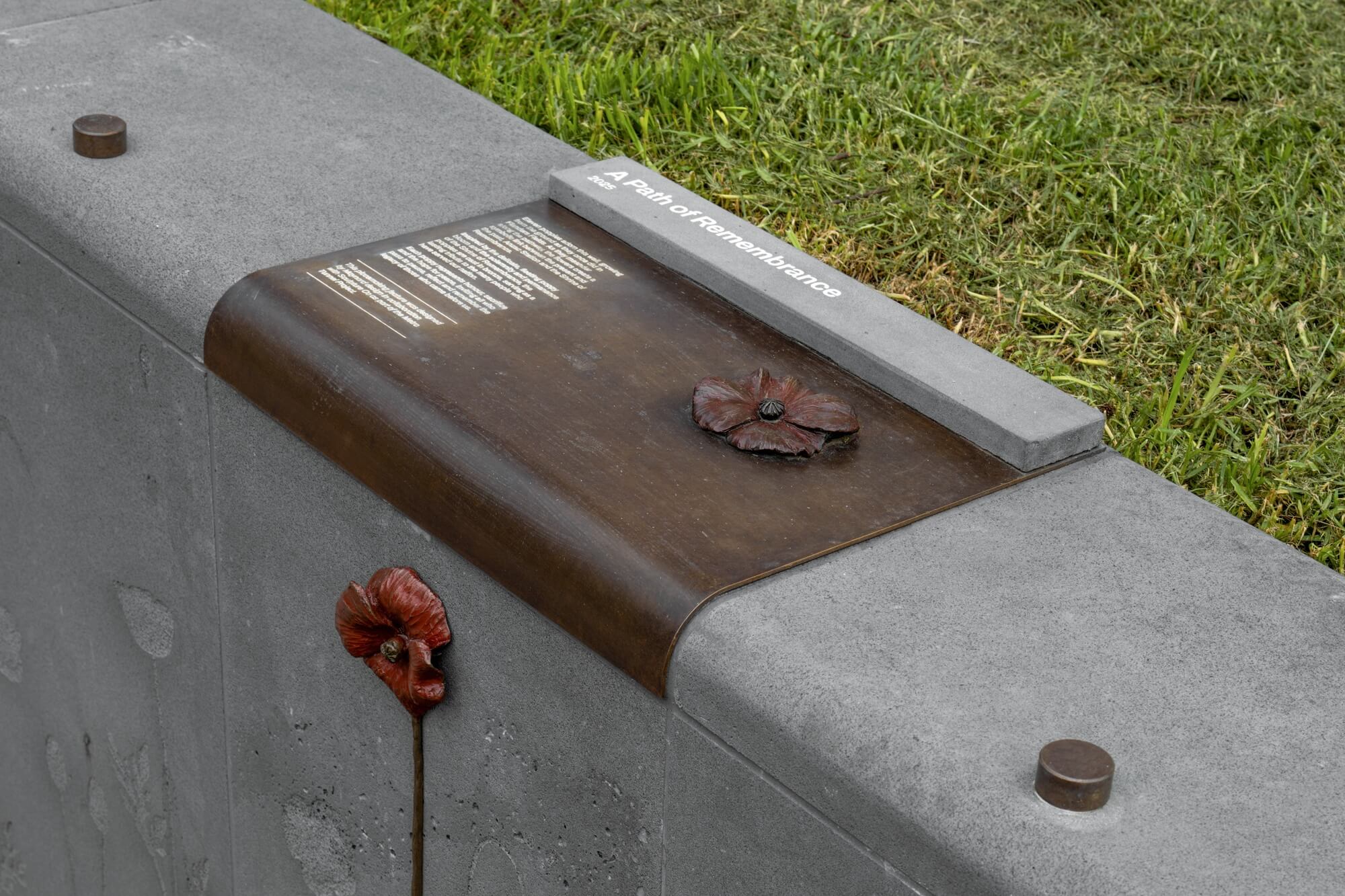
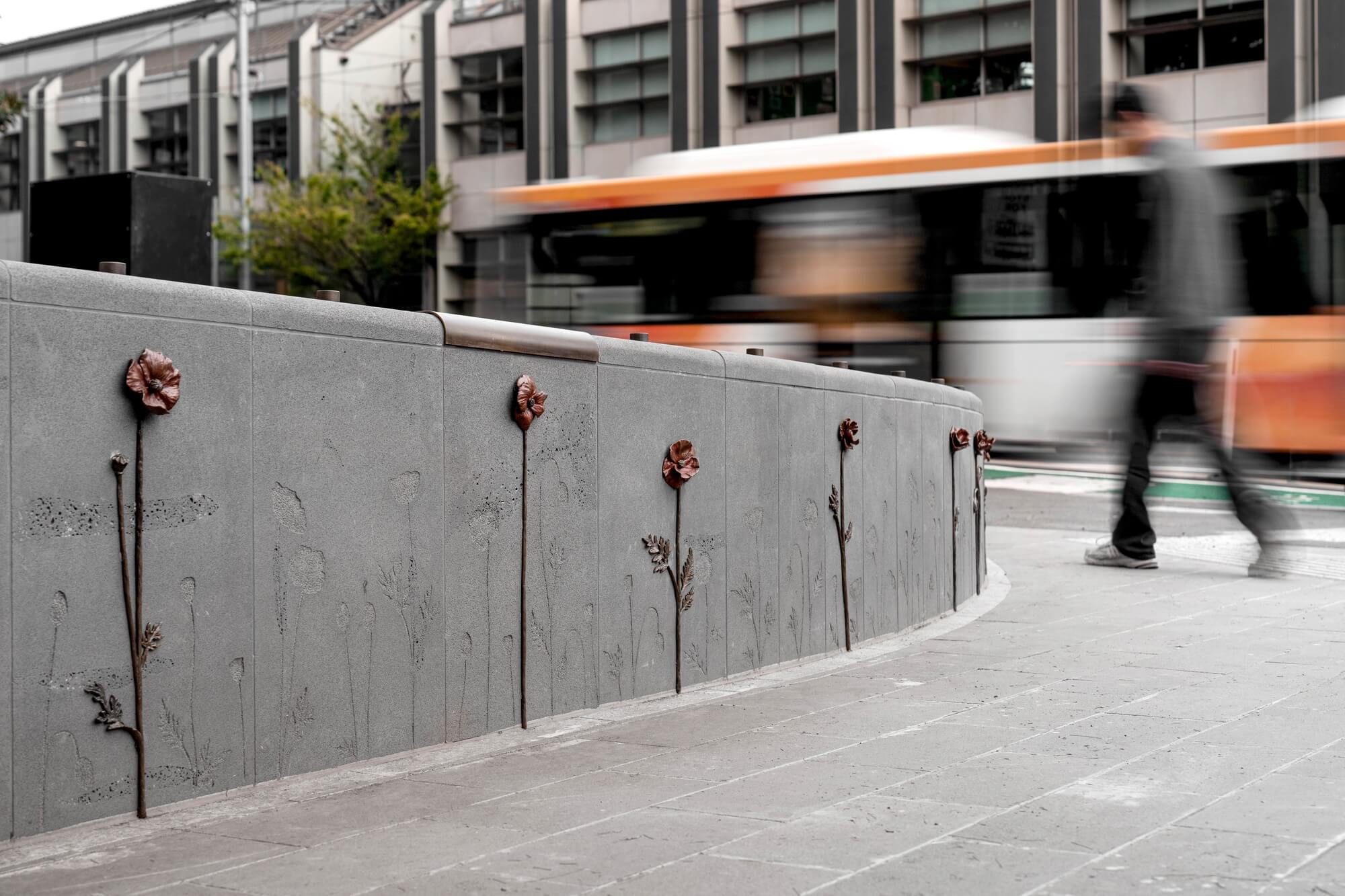
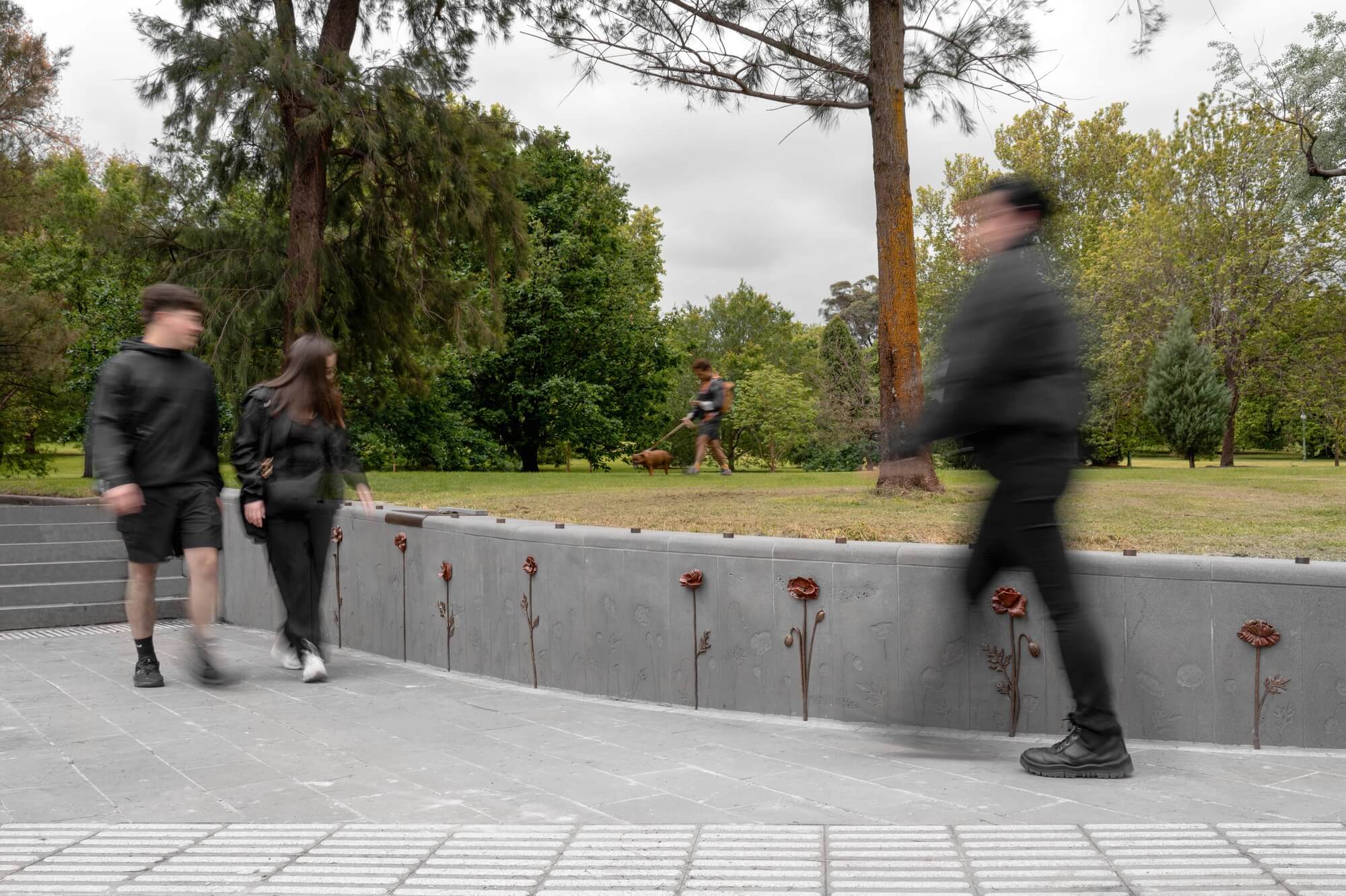
A Path of Remembrance is a permanent public artwork by Maynard (with support from Sculpture Co.), comprising eleven bronze poppies set into the wall outside Melbourne’s new Anzac Station. As a symbolic gateway to the Shrine of Remembrance, the work invites commuters, visitors and passers-by to pause, reflect, and remember.
view website

1.jpg
2.jpg
3.jpg
4.jpg
5.jpg
6.jpg
  • CHALLENGE
  • SOLUTION
  • IMPACT
  • MORE
  • Sitting at the threshold of Anzac Station and the Shrine of Remembrance, the key challenge was to design a meaningful, legible transition between a bustling metropolitan train and tram interchange and a highly charged place of national memory, without diluting the identity or vital function of either. Our approach had to address everyday commuters, tourists, and first-time visitors, while simultaneously honouring veterans, their families, and the profound solemnity of remembrance. The artwork needed to feel open and accessible, yet measured and respectful, guiding people seamlessly from the rhythm of daily life into a space of quiet commemoration.

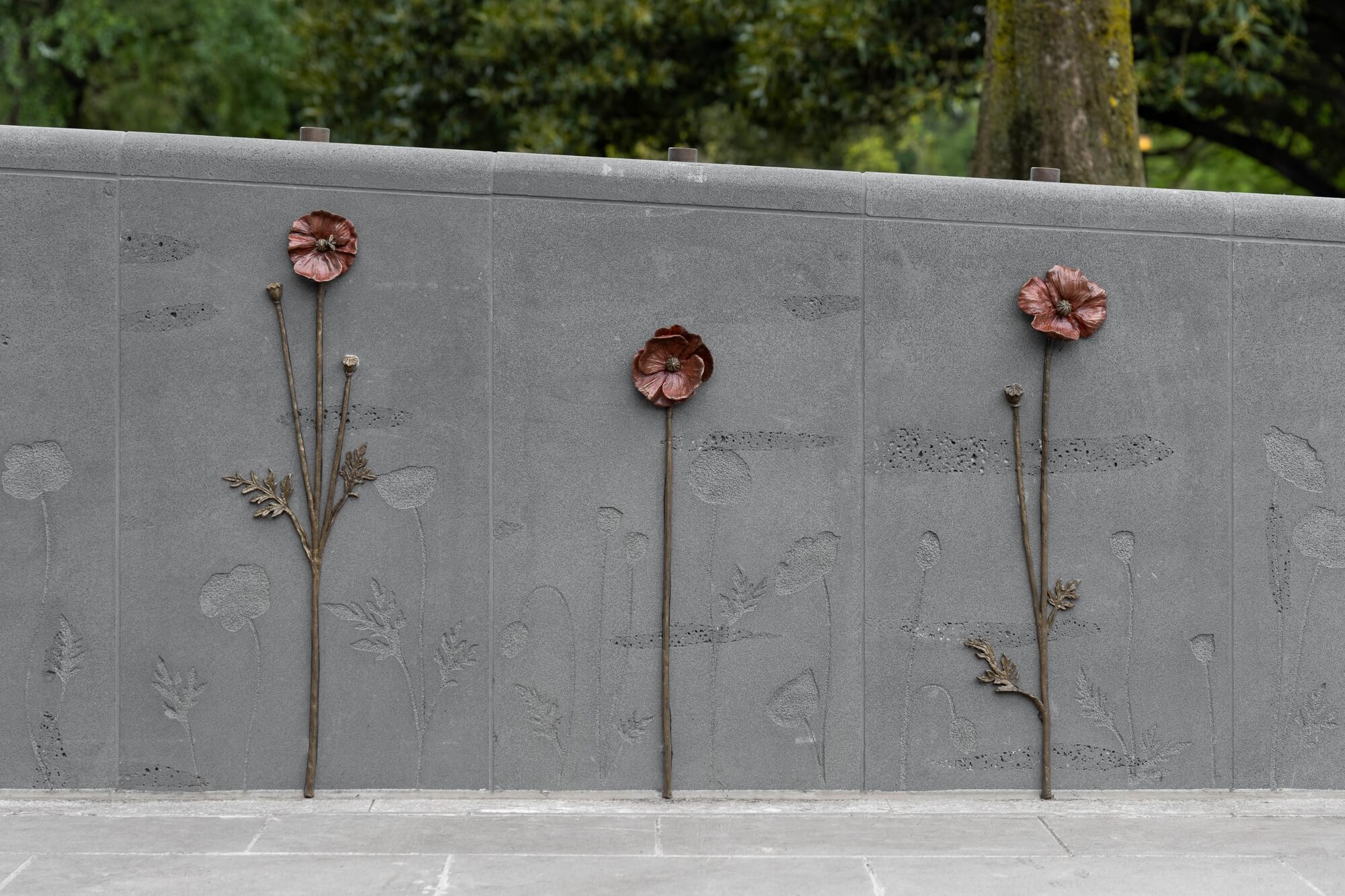
  • Eleven bronze poppies grow from the bluestone walls, set against a sand-blasted field of flowers. The poppy holds significance as a symbol of remembrance, growing across the battlefields where soldiers fell during the First World War. The number eleven encodes the 11th hour of the 11th day of the 11th month, to signify the end of the First World War. Working closely with the Metro Tunnel Project Office and the Shrine of Remembrance, Maynard iterated the design through rounds of testing and stakeholder feedback, meeting the stringent structural requirements of the metro station, without compromising the artwork’s delicate, naturalistic aesthetic.

  • A Path of Remembrance transforms an everyday transit journey into an opportunity for reflection for the millions of passengers moving through Anzac Station each year, including commuters, visitors, veterans, families, tourists and school groups attending the Shrine. By physically linking the station to the Shrine, the pathway creates a meaningful pause within the everyday transport journey, enriching the passenger experience. It signals to the broader community that military service is not a distant history, but a living, present act of acknowledgement and respect embedded in the city’s infrastructure.

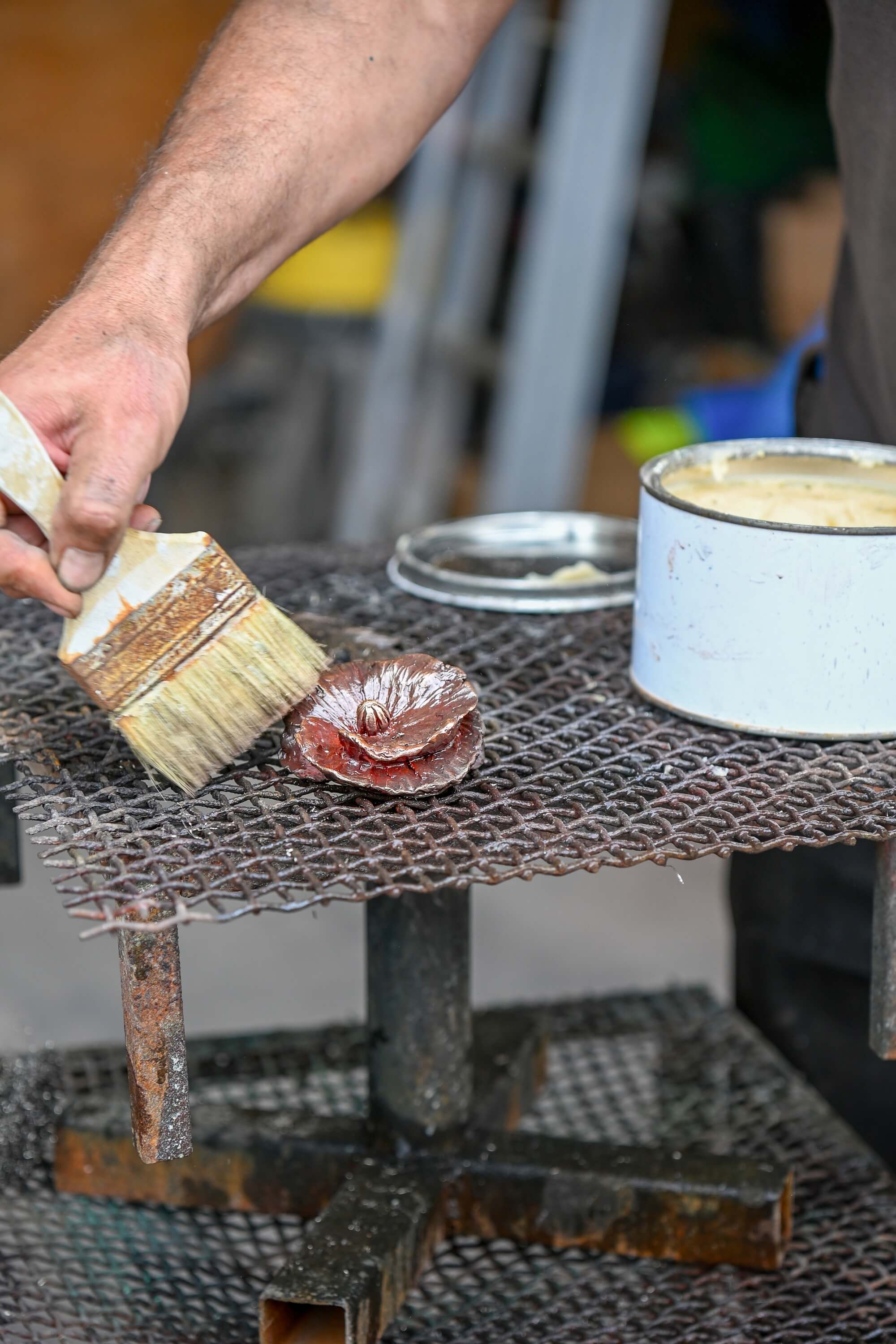
  • The eleven bronze poppies are the defining focus, each hand carved in wax and cast with botanical fidelity to capture the fragility, movement, and asymmetry of a living flower. Bronze was selected for its permanence, patina, and cultural weight, ensuring the work will endure for generations, alongside the Shrine itself.Behind the bronze poppies, a field of sandblasted flowers etched into the bluestone wall provides a visually cohesive backdrop, anchoring the artwork in Melbourne’s civic identity and local sense of place. The interplay of raised bronze forms and etched bluestone fields creates depth, legibility and tactility at both close and distant viewing scales.Extensive consultation with the Shrine of Remembrance and the Metro Tunnel Project Office ensured the design sits lightly and respectfully within one of Melbourne’s most significant public spaces, remaining true to its history, its context, and its role as a major transport interchange.