Let’s Fly Fair: ThinkPlace Nudges Gender Equality

good-design-award_winner_rgb_blk_logo
  • 2025

  • Social Impact

Commissioned By:

Department of Infrastructure

Designed In:

Australia

The Women in Aviation Nudge Trial used behavioural science to design and evaluate low-cost interventions that shift culture and promote gender equity across the aviation sector. Delivered by ThinkPlace, the project created real-world change through co-design, trialling ten nudges with four aviation partners, impacting 230 participants nationally.
view website

1.jpg
2.jpg
3.jpg
4.jpg
5.jpg
  • CHALLENGE
  • SOLUTION
  • IMPACT
  • MORE
  • Despite decades of gender equality efforts, women in aviation remain underrepresented—particularly in technical and leadership roles. Traditional interventions have struggled to shift workplace norms, address subtle biases, or change everyday behaviours. The challenge was to create simple, evidence-based solutions that could influence cultural attitudes, promote inclusive behaviour, and support safer, more equitable workplaces. Solutions had to be low-cost, adaptable, and avoid triggering backlash. The brief was to explore how behavioural science could be used to target attitudes, awareness, and interpersonal behaviours in ways that supported women’s success and retention—without relying on traditional compliance-based approaches.

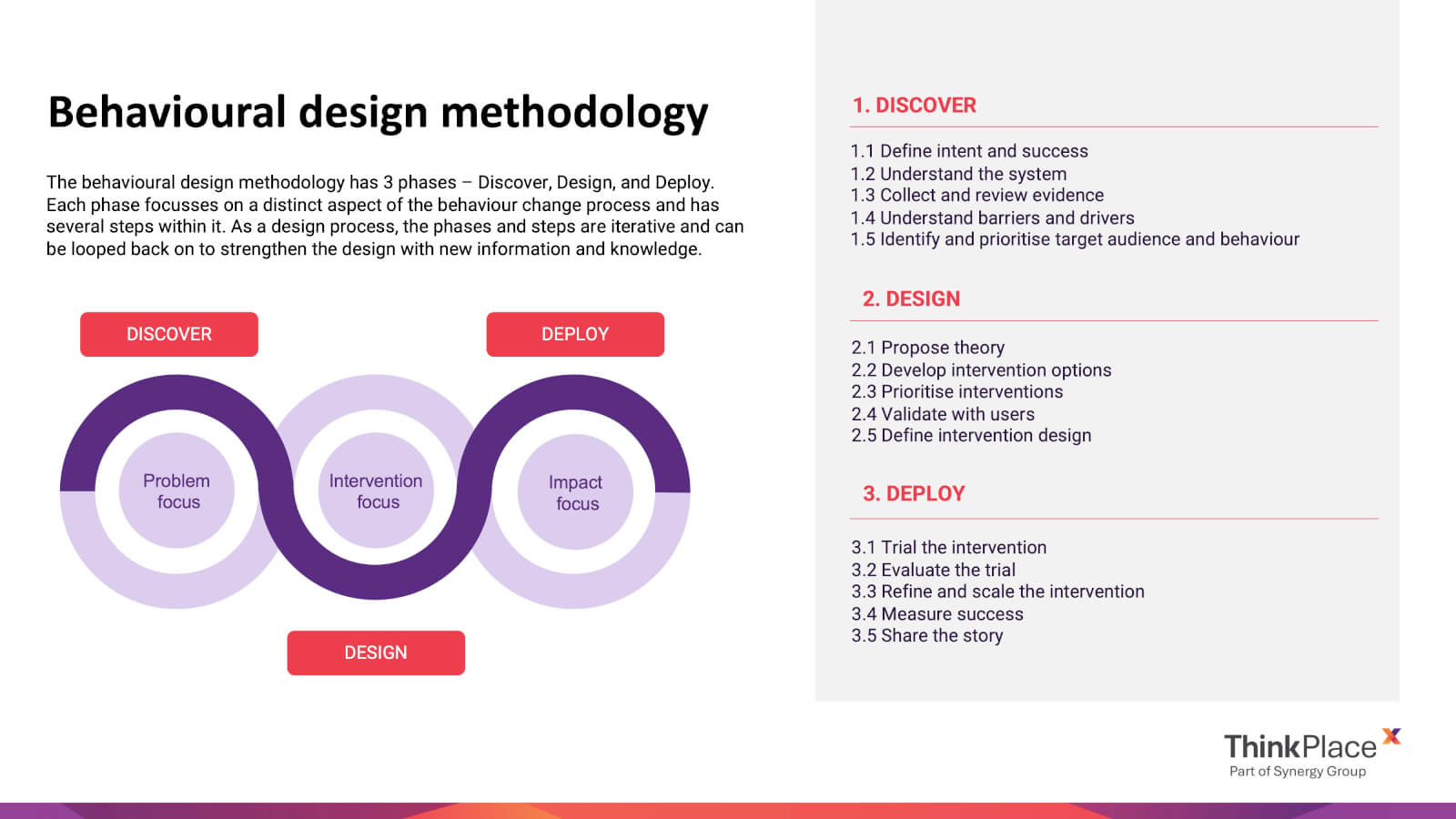
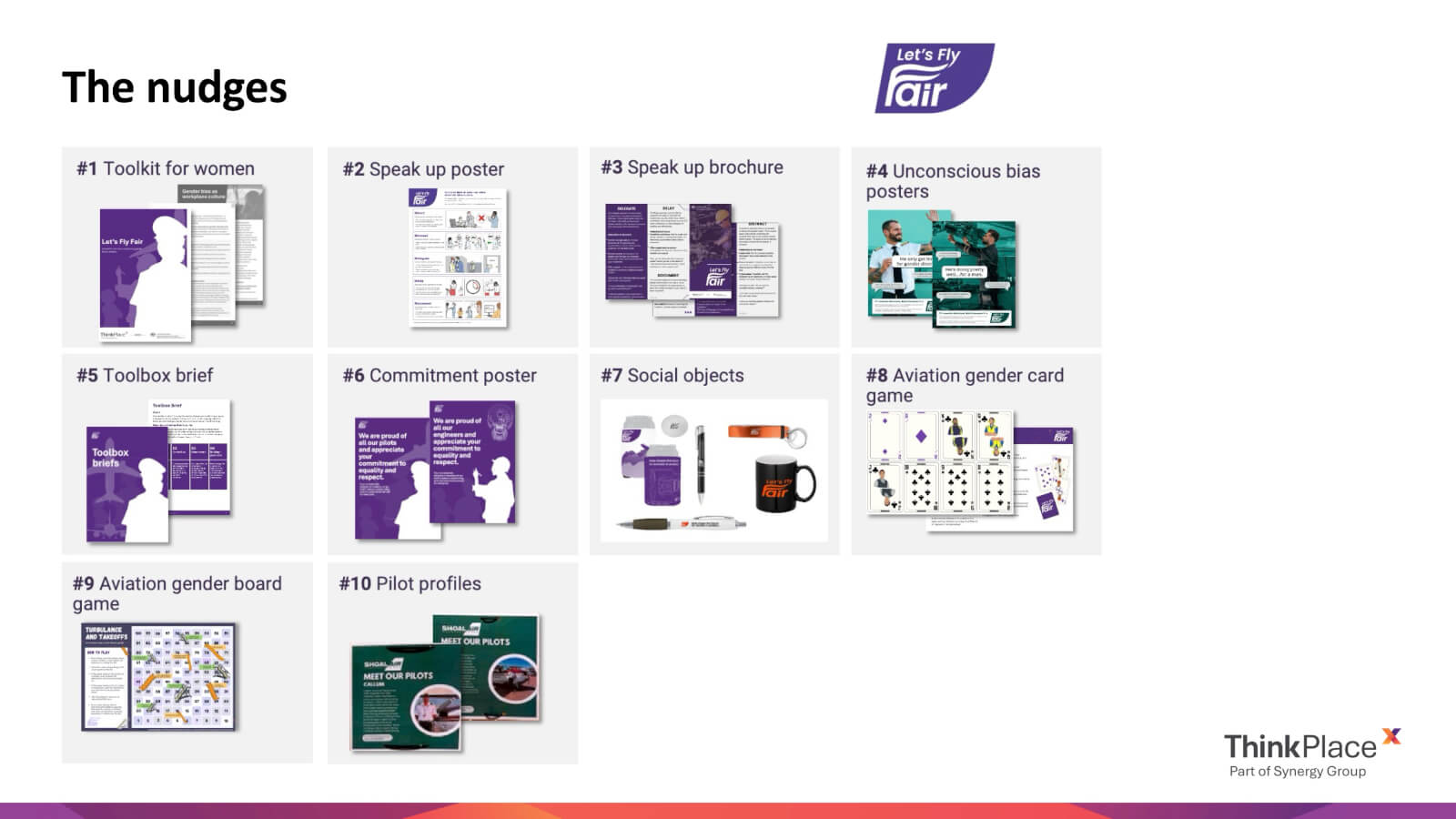
  • ThinkPlace applied a three-phase behavioural design methodology to understand barriers, map the system, and co-design interventions. Using COM-B model a and Theoretical Domains Framework (TDF), we prioritised five key behaviours and developed psychographic profiles to tailor responses. Ten nudges—toolkits, posters, games, conversation prompts, and commitment cues—were implemented over four weeks in four organisations across Australia. Each intervention was part of the unified "Let’s Fly Fair" campaign. The design process engaged stakeholders at all levels, with materials contextualised for engineering teams, pilots, students and training providers. Pre- and post-trial data provided insights into effectiveness and pathways for scale.

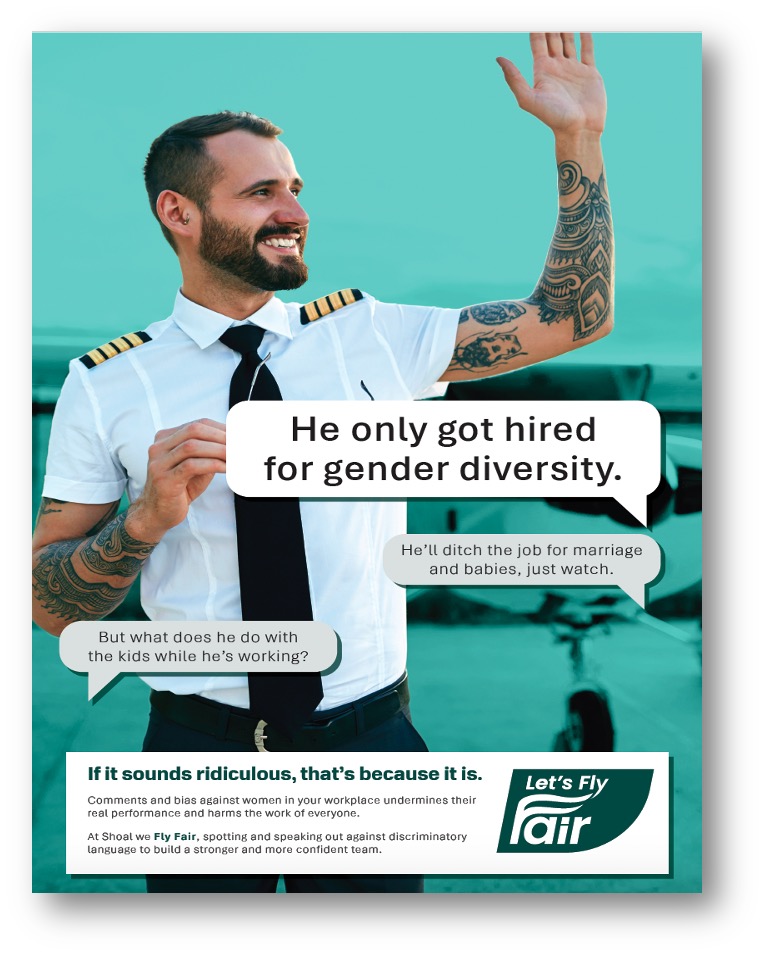
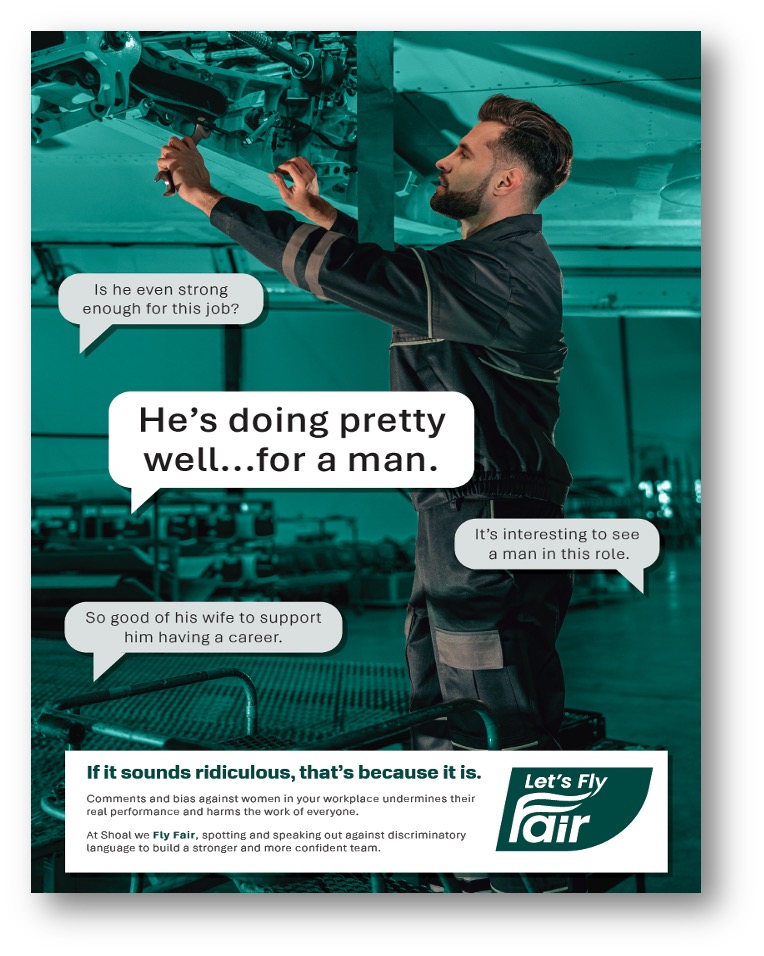
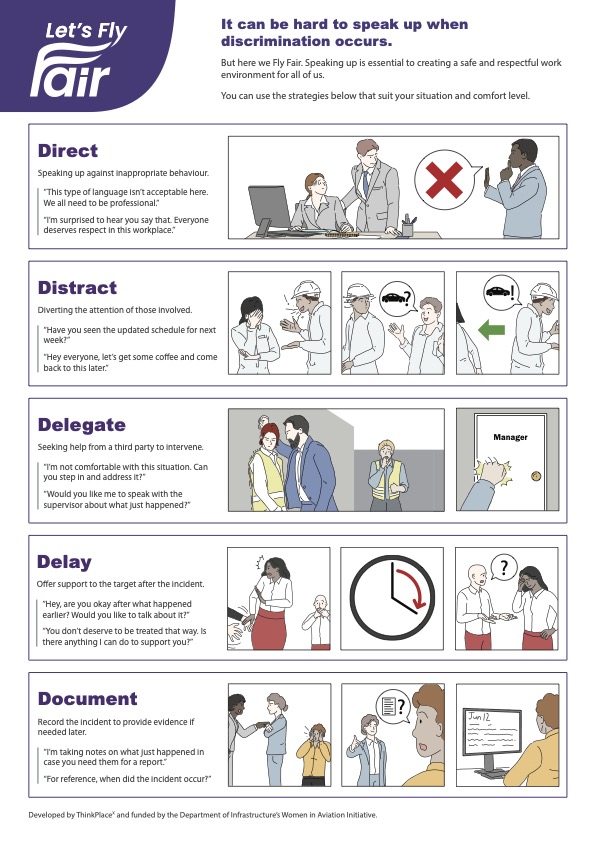
  • The trial achieved measurable cultural impact: a 43% average increase in participants seeing positive change in their own behaviour with some trial partners experiencing even stronger results. Confidence to respond to bias grew, biased comments declined, and conversations about equity increased. Partners found the nudges easy to implement and aligned with psychosocial safety frameworks. Tools like the gender bias card game, speak-up posters, and pilot profile posters created awareness and prompted reflection in everyday settings. The project delivered scalable, evidence-informed, and low-cost cultural change tools, now publicly available to support sector-wide transformation.

  • Co-designed nudges tailored to diverse user types, including engineers, pilots, and students “Let’s Fly Fair” branding unified interventions for higher recognition and resonance Ten nudges targeting five behaviours (awareness, allyship, inclusive response) Tools included: card and board games, posters, toolkits, commitment signage, and conversation objects Interventions mapped using Capability, Opportunity, Motivation–Behaviour (COM-B) and TDF Psychographic segmentation used to tailor message and medium to audience mindset Tested with 230 participants across four organisations (commercial, training, regional) Supported by qualitative interviews and pre/post quantitative surveys Refined using real-time feedback from participants and organisational champions Easily integrated into existing work,health & safety (WHS) and leadership training contexts