Hullbot – 2025 Australian Good Design Award of the Year
- Published on: 20 October 2025
Share
THE AUSTRALIAN GOOD DESIGN AWARD OF THE YEAR IS HISTORICALLY AWARDED TO ONLY ONE EXEMPLARY PROJECT ACROSS ALL DESIGN DISCIPLINES AND CATEGORIES.
IT REPRESENTS THE VERY PEAK OF DESIGN EXCELLENCE AND INNOVATION.
IN 2025, THE JURY FOUND TWO PROJECTS DESERVING OF THIS TOP ACCOLADE – DEADLY DEMOCRACY AND HULLBOT.
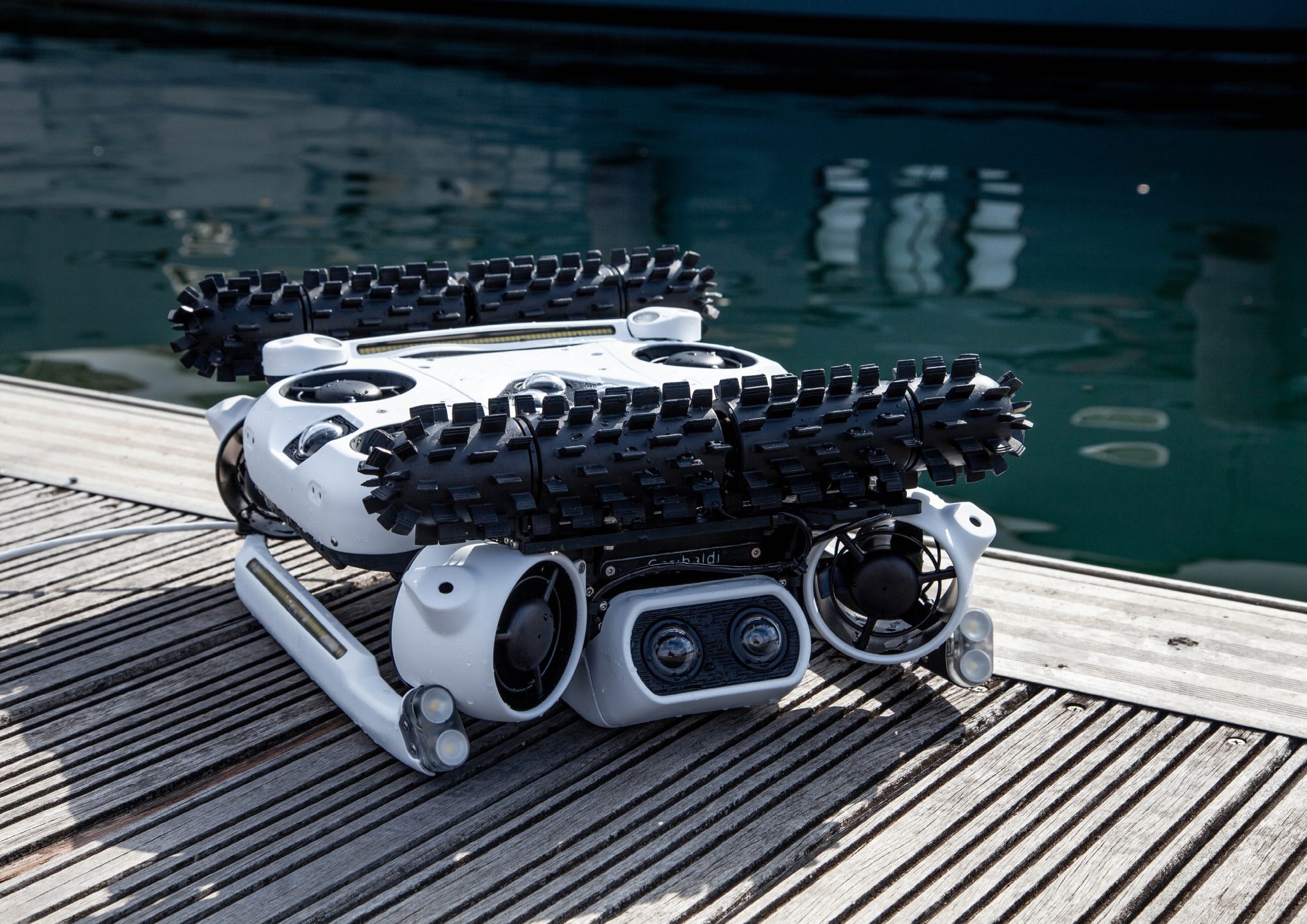
The 2025 Australian Good Design Award of the Year goes beneath the surface in more ways than one. Hullbot is an autonomous underwater robot tackling one of the ocean’s oldest and most complex challenges: biofouling.
Biofouling, the build-up of marine organisms on ship hulls, causes higher drag, wasted fuel, increased emissions and the spread of invasive species. For decades, the industry relied on toxic antifouling paints and risky diver cleaning to fight it, creating a band-aid on an evolving issue.
Hullbot offers something radically different, a full autonomous in-water system that cleans hulls proactively, safely and without releasing poisons into the sea.
A smarter way to clean
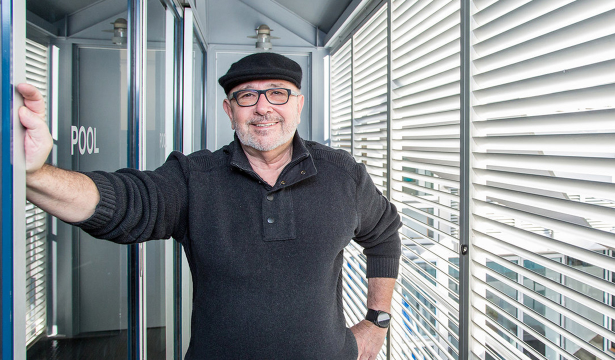
To dive deeper, we spoke with Tom Loefler, CEO and Co-Founder of Hullbot. Tom tells us the idea began with the realisation that human divers alone could never meet the scale of global demand.
“The shipping and ferry industries are burning millions of tonnes of extra fuel every year, and driving up emissions because of biofouling.
“There aren’t enough human divers in the world to drive the impact and decarbonisation the planet needs. The insight was that if cleaning could be done proactively and gently and make the process easy for operators, we could prevent the problem altogether.
“We thought, what if small, smart robots could put themselves in the water and clean the ship every day or every week? It could be more like brushing your teeth.”
This led the Hullbot team to a decade of research and iteration. It took six generations of prototypes shaped by engineers, marine scientists and designers who refused to accept the limits of conventional robotics.
Creating the world we want to live in
Loefler’s own journey helps explain the ambition behind Hullbot.
“When I was graduating from UNSW and choosing my major project, I looked beyond the paths many industrial designers were taking into services, software and consumer electronics,” Tom told us.
“I kept asking where the truly impactful technologies would be in the middle of my career. Robotics felt inevitable and useful. I wanted to find an invention I could work on for a long time and build a company around it.
“Robots let us decouple intention from willpower. They can take on essential, repetitive tasks we don’t have the time, incentives or safe conditions to do ourselves. That’s powerful when you’re facing big environmental problems.
“We can invent, design and engineer machines that help create the world we want to live in without adding human risk or unsustainable labour.
“Hullbot grew from that belief and from applying industrial design to robotics.”

A resilient robot for the sea
Operating autonomously beneath the surface is not an easy feat. Tom shared with us how Hullbot’s team had to design for grace and grit in equal measure.
“Underwater, there is no GPS, there is no WiFi, it is very difficult to see and it is one of the harshest environments on the planet.
“The hardware had to be compact but powerful enough to handle this complex marine environment. We designed a system of modular components that can be serviced quickly in the field. The environment forced us to make Hullbot both rugged and graceful.
“The system can operate in near zero visibility and strong currents, using various sensors to navigate the hull.”
The result is a modular, field-serviceable system that navigates complex hull geometries, withstands currents and cleans with precision.
“We designed the Hullbot experience to be smart, adaptive and light-touch,” Loefler noted.
“Every aspect of the user’s journey was stripped back so that operators don’t need to be distracted or impacted at all.
“The environmental effectiveness comes from precision, the robot is potentially the only product in class on the market that can navigate complex shapes and clean these effectively. It preserves coatings and minimises disturbance to marine life globally.”
Multidisciplinary excellence
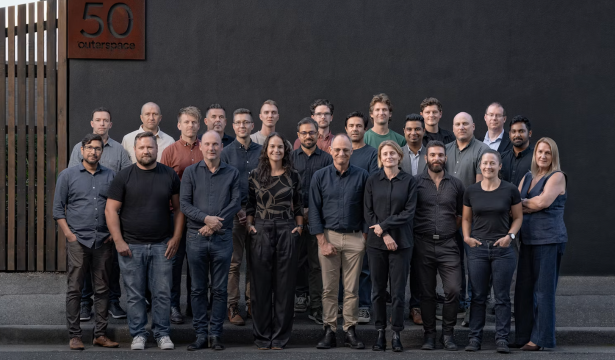
Behind every successful robot lies a collaboration of unexpected experts. Hullbot’s team is across mechatronics, software marine science and product design.
Tom shared, “We built a culture around shared purpose rather than specific disciplines.
“Everyone from marine biologists to mechatronics engineers, was united by the same goal: protect the ocean.
“That alignment allowed for open communication and rapid iteration. We’d have roboticists testing underwater alongside designers, all learning from each other in real time.”
That collaboration accelerated technical progress and shaped the company’s culture. Iteration became second nature. Creativity was used not as decoration, but as a problem-solving tool.
Bringing his own discipline expertise to Hullbot, Tom added, “Industrial design is a great tool for translating between different engineering disciplines and keeping the creativity and the ambition high to counterbalance the hardcore engineering that is required to make robots work.”

Winning the market’s trust
Introducing new technology to a risk-averse market required empathy and evidence in equal measure.
“Ship owners were understandably cautious about letting a robot near their very expensive hull coatings,” Loefler said.
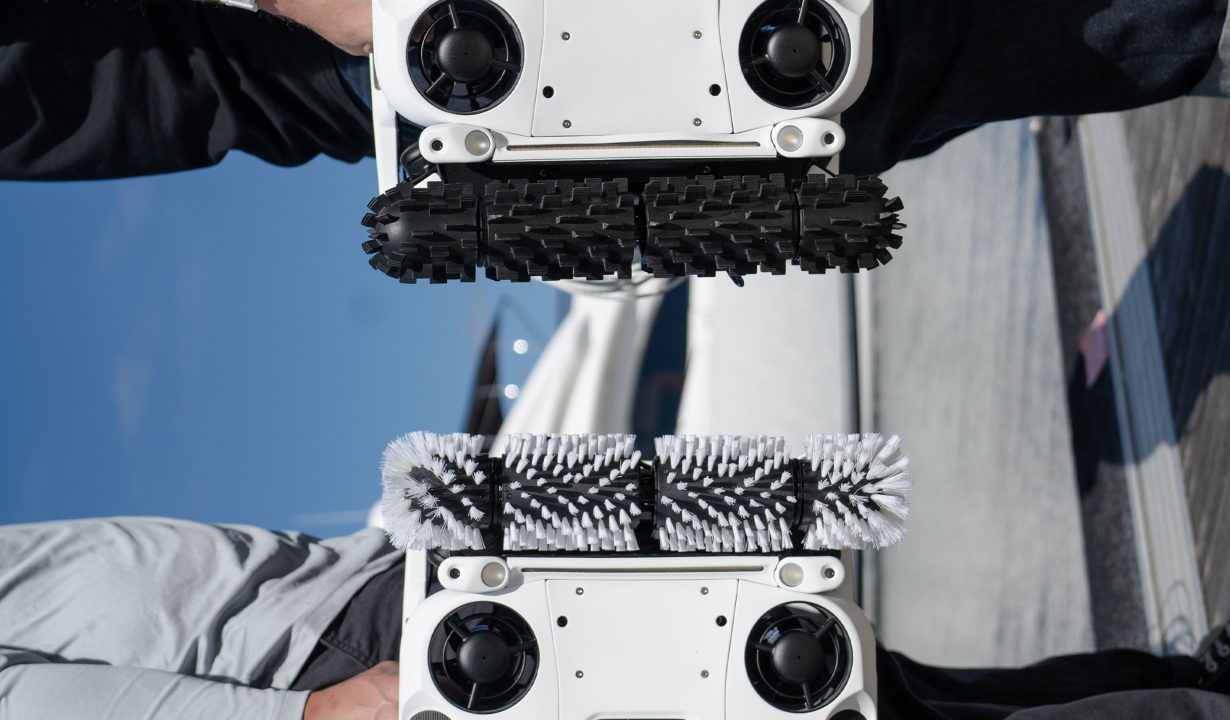
“We overcame this through design, experimentation, the search for objective evidence, clear reporting, video feeds and the development of various brush heads depending on coating serviced.”
The robot’s visual sophistication became a silent ambassador.
“If it was a robot that was not well designed, we wouldn’t be here. We wouldn’t have broken through a market that was so unreceptive to innovation.”
Clean early, change everything
Hullbot’s results are as tangible as they are transformative. Operators across Australia, the U.S., Singapore and Europe report fuel savings of 10-26%, extended hull-coasting lifespaces and drastically lower emissions.
The system has already prevented over 250,000 kg of CO₂ emissions from entering the atmosphere with a long-term goal of cutting half a gigaton annually by 2035.
By enabling the use of non-toxic silicone coatings, Hullbot removes the need for antifouling paints and their associated microplastic pollution.
Each robot can prevent up to 150 tonnes of CO₂ emissions every year.
“Waiting for biofouling to grow means you’ve already lost efficiency and increased emissions,” Loefler said.
“Our philosophy is: clean early and clean often. That small design shift, multiplied across thousands of ships, translates into huge emissions reductions globally.”

The future of designed decarbonisation
At its core, Hullbot represents what great design can do when applied to global problems.
“Good design serves without friction, empowers people and improves the world quietly,” Loefler reflected.
“You know it’s good design when something complex feels simple and when its impact extends beyond its form.”
And as industries race toward decarbonisation and sustainability initiatives, Loefler believes design will remain the key between ideas that inspire and those that endure.
“Design will be the differentiator between solutions that stay theoretical and those that scale. The future of decarbonisation depends on usability, if sustainable technologies aren’t practical or desirable, they won’t be adopted fast enough.
“Design is what turns ambition into adoption.”
And for designers looking to tackle big, systemic challenges, Tom advised:
“Stay close to the problem. Go where the impact happens, in our case, that meant being underwater, not just behind screens. Understand the system deeply, then design interventions that are both elegant and practical.
“Strive to incorporate good design in all aspects of the journey. And remember, solving environmental problems isn’t just a technical challenge; it’s a human one.”
Good Design Australia congratulates and thanks Hullbot for their industry-shaping design.