DESIGNING BETTER TRANSPORT
- Published on: 31 March 2026
Share
DESIGNING BETTER TRANSPORT: MAKING COMPLEX SYSTEMS EASIER TO NAVIGATE
Transport systems work best when people can navigate them clearly and confidently.
Design sits behind that experience, from early research through to policy and delivery. It informs how decisions are made and how those systems are navigated day to day.
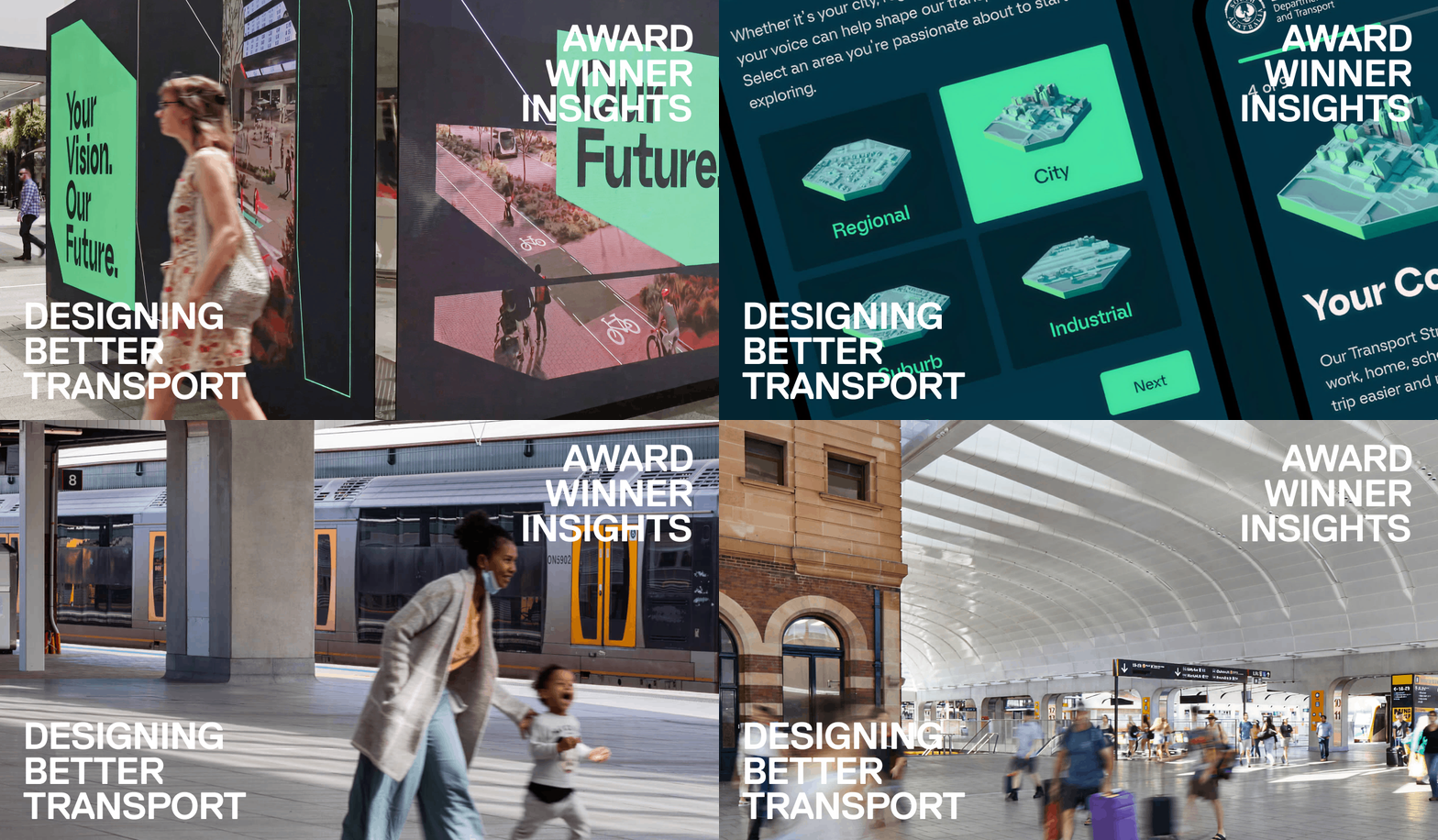
In South Australia, CatalystXR partnered with KPMG Creates and the state government to develop a mixed reality experience as part of the state’s 30-year transport strategy. Participants ranked transport priorities and saw those decisions play out across different future scenarios, turning policy into something people could engage with directly.
At Central Station in Sydney, Büro North, alongside Woods Bagot and JMP Architects, used design research to inform upgrades within one of the country’s most complex transport environments. These upgrades support more than 250,000 people moving through the station each day.
These projects show what designing better mobility looks like in practice. Systems grounded in real user needs and decisions that are tested and understood, resulting in environments that feel easy to navigate.
Featured Project: Your Vision. Our Future. Mixed Reality Transport Engagement for South Australia’s 30-Year Strategy
Using advanced VR development and precision 3D modelling, the project brought transport planning data to life. It gave people a way to explore future infrastructure in a spatial, interactive environment, making complex information easier to understand and engage with.
Developed for Meta Quest, the portable experience allowed users to interact with a dynamic model of South Australia and see how different priorities shape future transport outcomes. The project was recognised with an Australian Good Design Award Gold in 2025, in the Policy Design category.
We spoke with Jamie Gilroy at CatalystXR about how the experience made complex transport decisions visible and participatory.
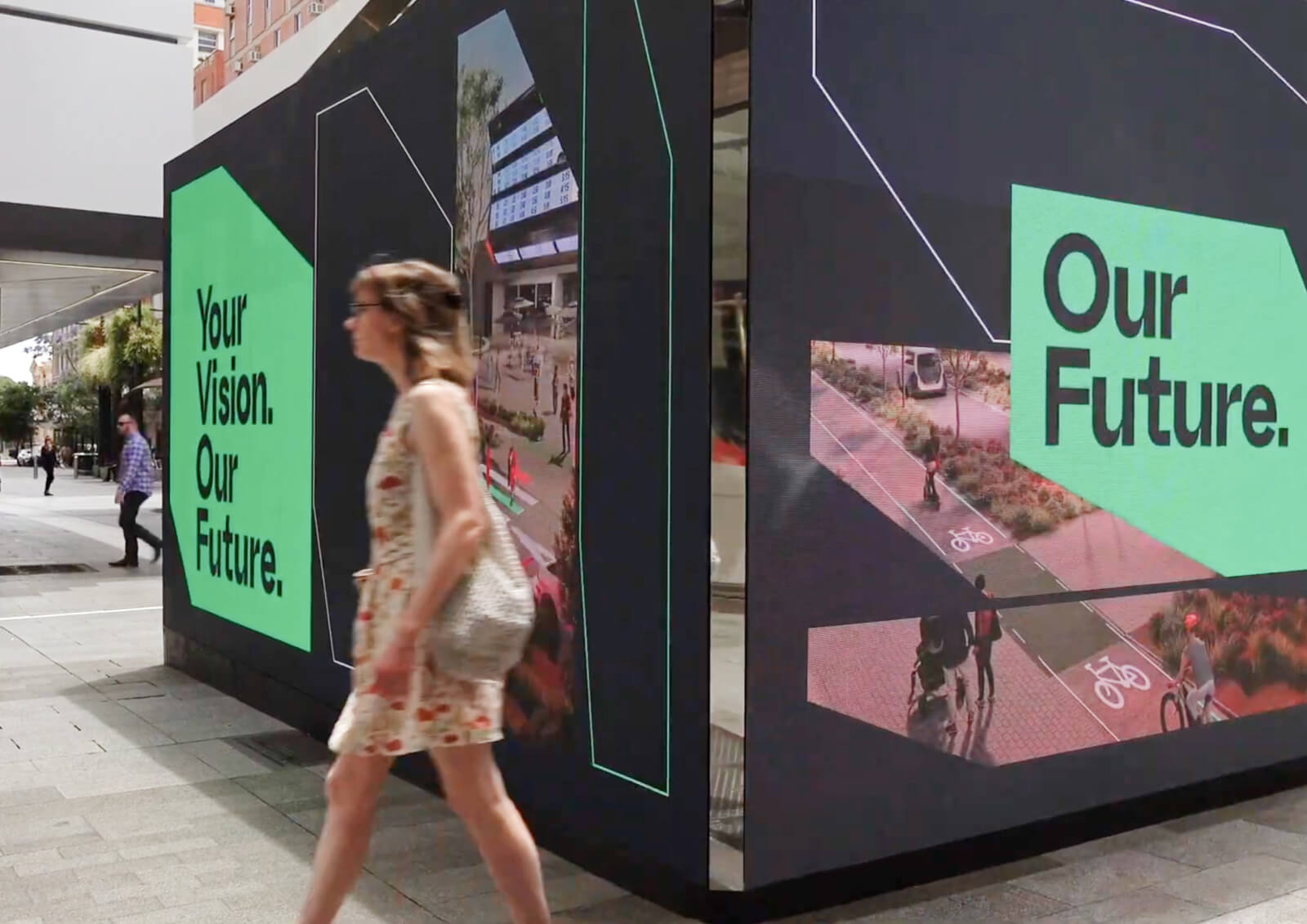
Image: Your Vision, Our Future. Image: Supplied
Making future systems visible
Planning a 30-year transport system is complex. It often requires people to interpret technical information and imagine how future infrastructure might work in practice.
South Australia’s Transport Strategy sets the direction for how people and goods will move across the state, shaping investment and planning priorities over time. Developed through consultation with more than 6,000 community members and industry stakeholders, it captures a wide range of perspectives on what the future transport system should deliver.
“Mobility and transport is all about the user and the individual. Everyone’s different, and everyone has different accessibility needs and priorities,” said Jamie Gilroy.
Rather than asking people to interpret plans, the experience allowed them to rank transport priorities and see how those choices shaped personalised future scenarios in real time.
The mixed reality experience extended that consultation beyond traditional formats. More than 700 people used the experience to explore future scenarios and provide input, helping translate complex planning decisions into something people could see, interact with, and respond to in real time.
“It created a really easy but powerful way for people to appreciate and empathise with others. Being able to visualise a decision and see how it impacts someone else.”
This shift, from abstract planning to something people could engage with directly, became central to how users understood the system.
“Even small decisions can be understood differently when you can see them from someone else’s perspective,” he added.
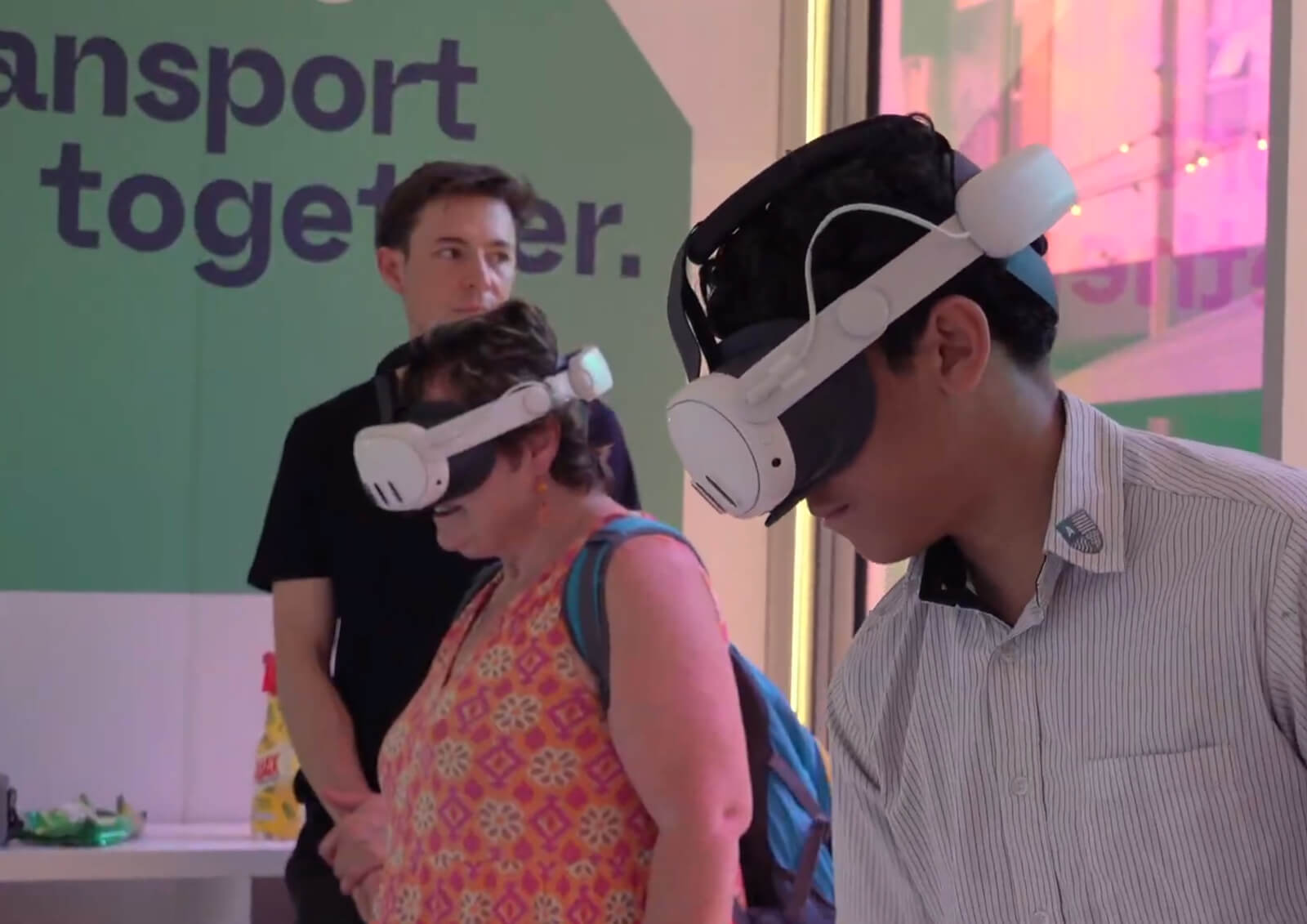
Image: Mixed Reality Transport Engagement for South Australia’s 30 Year Strategy. Image: Supplied
Designing for participation, not observation
A key difference in the experience was how users engaged with it.
“It’s about giving people agency. This isn’t press play and sit back. It’s about letting users make decisions and see, in real time, how those decisions play out. That’s where the power is. When people have control, you get deeper engagement and a stronger understanding.”
This interactivity played a critical role in building understanding, particularly when considering the needs of others. For Jamie, the value of mixed reality lies in its ability to reduce the effort required to understand complex systems.
“If you’re looking at flat plans, it takes a lot of effort to process that and turn it into a three-dimensional understanding,” he explained.
“Being able to visualise things in 3D gives people a much clearer perspective. It helps them understand and empathise with other people’s experiences more easily.”
In this context, better mobility is about perspective.
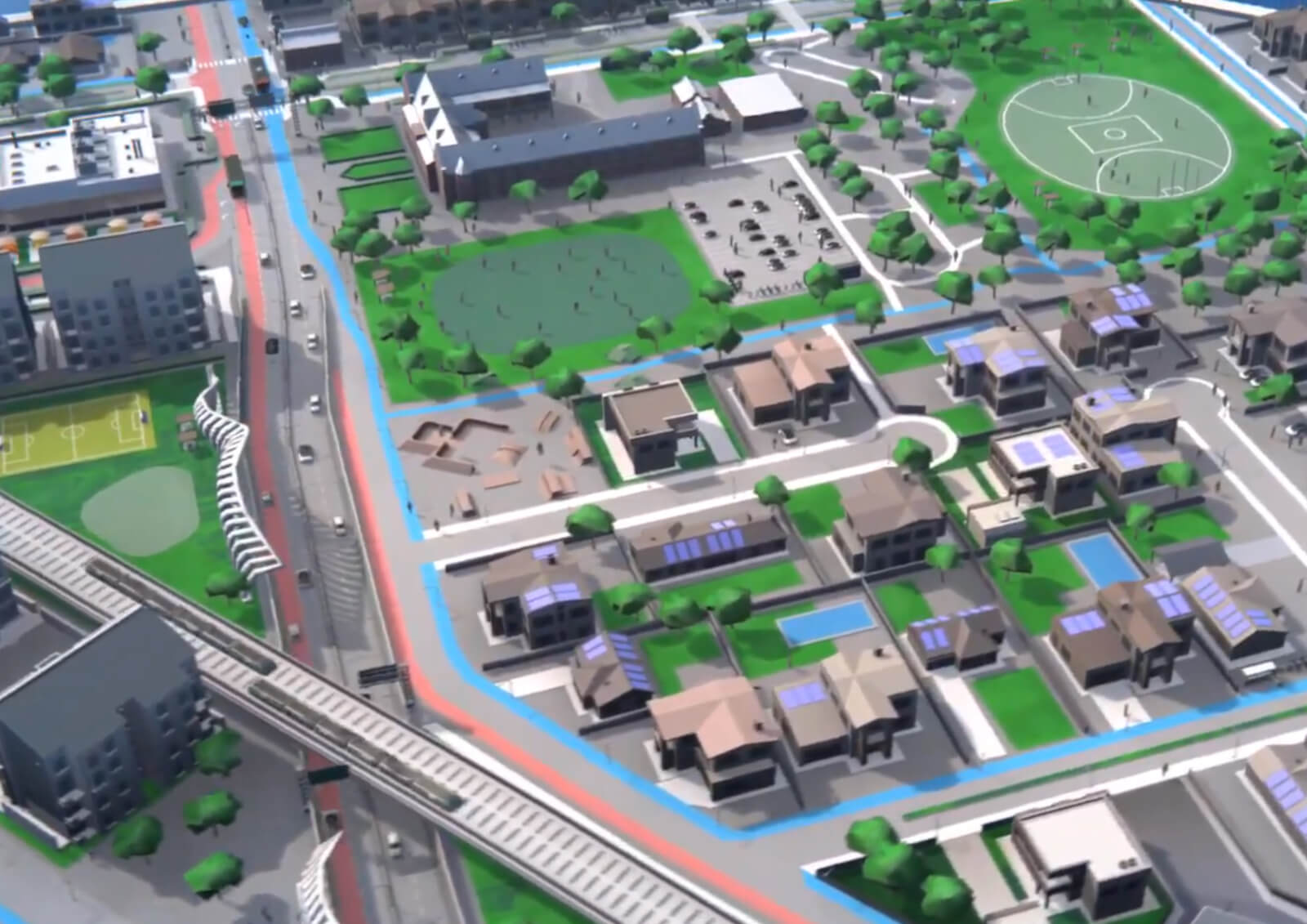
Image: South Australia’s 30 Year Transport Strategy. Image: Supplied
Featured Project: Central Station Sydney Metro
Central Station, Australia’s busiest transport hub, called for a new approach to integrate an additional transport mode alongside major upgrades.
Designed by Büro North with Woods Bagot and John McAslan & Partners for Laing O’Rourke Australia, and commissioned by Sydney Metro, the project used design research to create a more accessible, inclusive and intuitive station. Each journey was mapped to support clear, confident movement.
The project was recognised at the 2025 Australian Good Design Awards, receiving Best in Class in the Design Research category.
We spoke with Soren Luckins, Partner and SEGD Chapter Chair at Büro North, to explore how design research informed better movement through the station at scale, drawing on over two decades of experience in wayfinding for transport infrastructure.
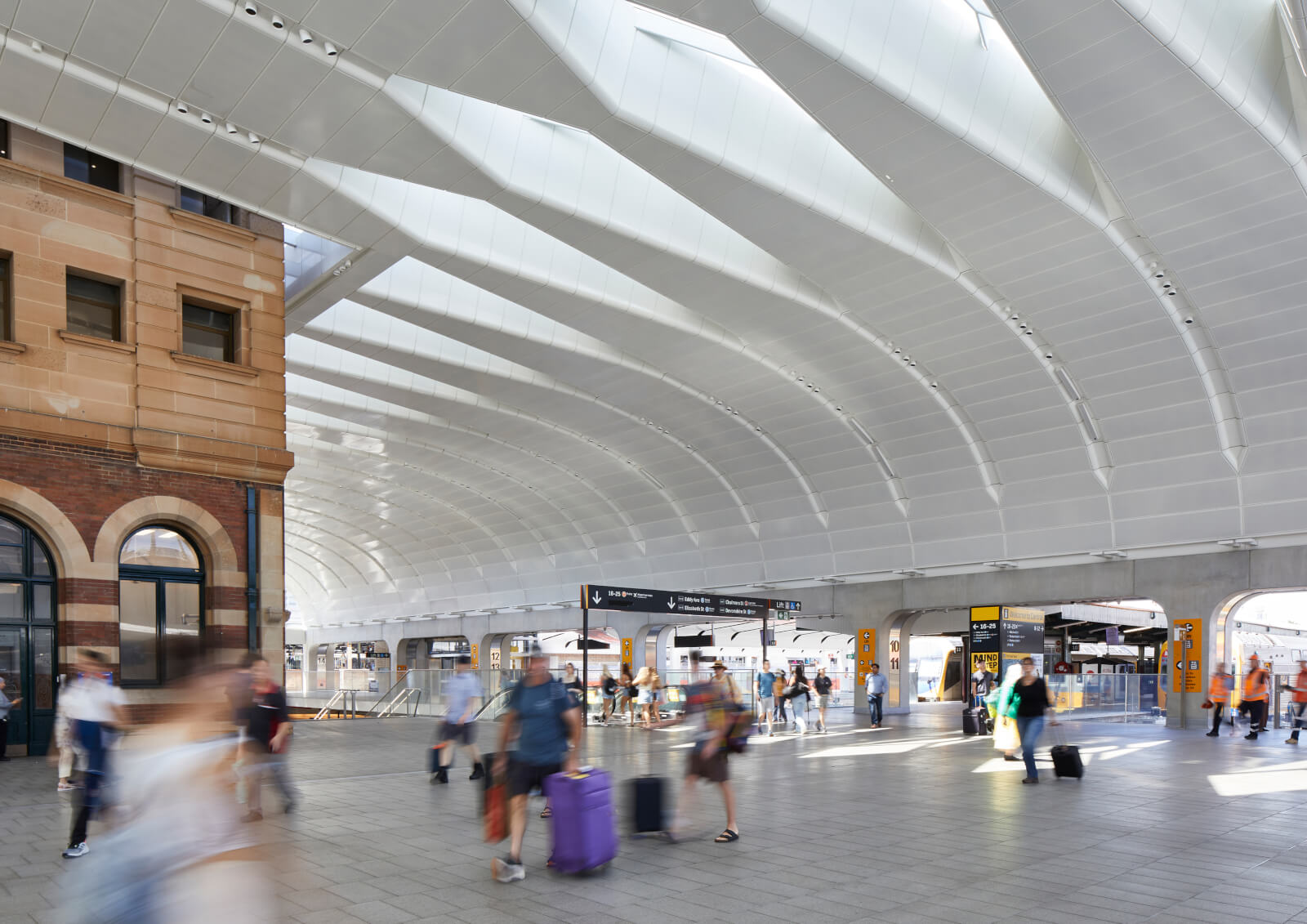
Image: Movement through Central Station. Image: Supplied
Wayfinding as critical infrastructure
Wayfinding shapes how people move through complex spaces. But it is often introduced after key decisions have already been made, even though it plays a critical role in how a place is understood.
“More and more, these large infrastructure and public environments need to consider a diverse range of users,” said Soren.
Designing for this diversity meant going beyond compliance to create environments that support clarity, calm, and confidence for everyone moving through the space.
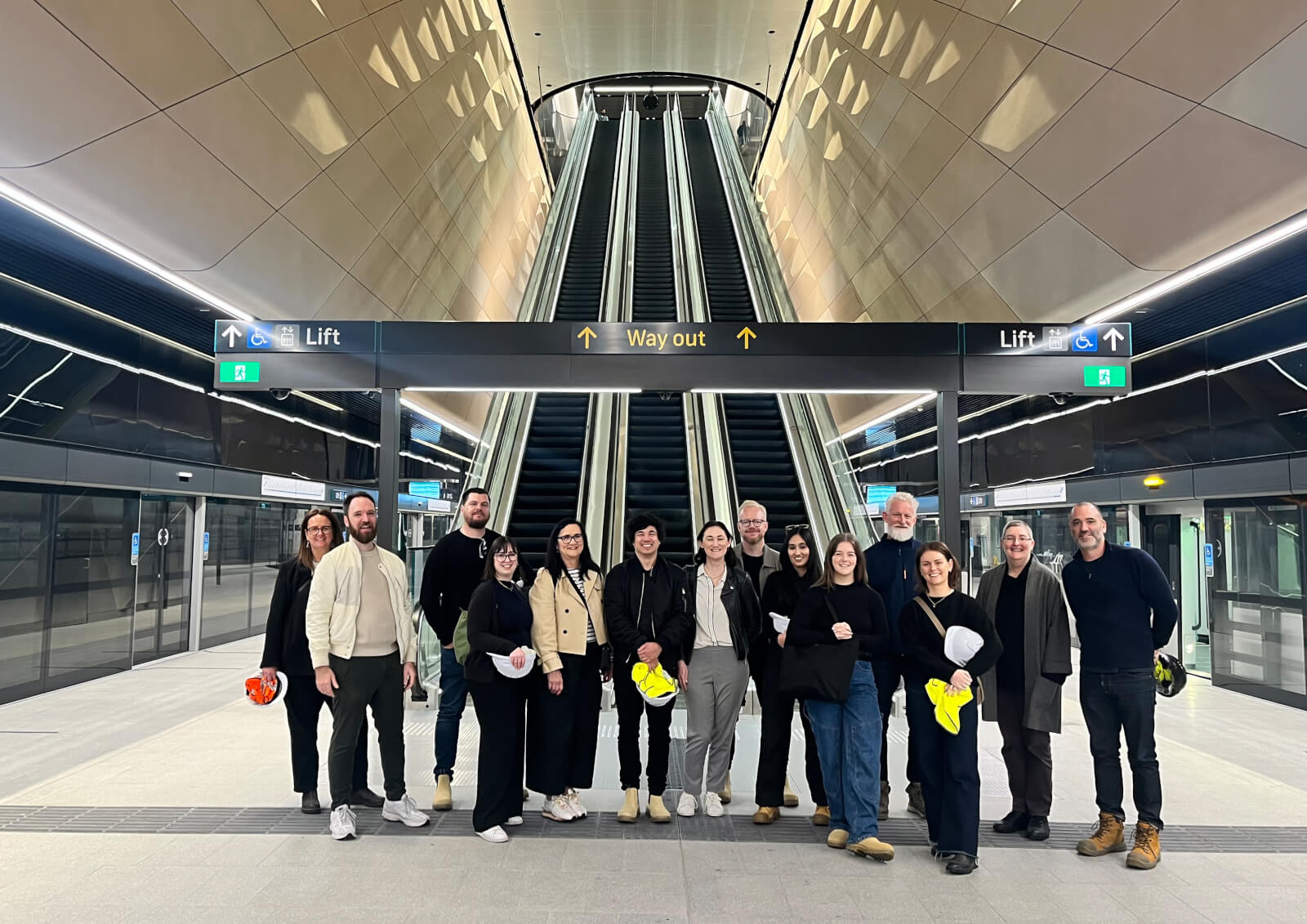
Image: Central Station Project Team. Image: Supplied
Understanding the challenges at Central Station
Central Station is not a single system – it’s five.
“You’ve got five modes of transport that interact there” said Soren. For users, that complexity should disappear.
“As a user, if you’re catching a train and then getting on a bus, you actually don’t care who owns the system or who maintains and operates the system. You just care that you can get from your train to your bus smoothly and that those systems connect seamlessly,” he explained.
This reframed the design challenge. The focus shifted from individual systems to the experience of moving between them.
“We often say that if we can solve the problem for the hardest 1%, then we’ve solved the problem for everyone else,” he noted.
Designing for the most complex journeys revealed how many people face barriers in unfamiliar environments.
“We have often found that one of the most challenging user groups is non-English first-language speaking families that have migrated to Australia and might have elderly family members in a wheelchair supported by younger family members who don’t have a high reading proficiency,” said Soren.
“So you’ve got mobility requirements, language barriers, and operating in an unfamiliar environment. If we can get a young, recently immigrated user who’s taking a grandparent somewhere on the train and we can effectively get them through the station, through the processes, navigating the environment, changing modes of transport successfully, then we’ve kind of done our job for everyone else.”
Designing the environment, not just the signage
The focus was not on adding more signage, but on reducing reliance on it.
“For us, it was about getting the environment to do the work. You could put more and more signs up, but that relies on people understanding the system and reading those signs,” he explained.
“At Central Station, it was more about opening up views to the city. If users could see the clock tower at the bottom of the metro and knew that it was the entrance or the exit, they could navigate towards it.”
“You could put 50 exit signs up, but if everyone can see a consistent landmark on their journey, it removes the need to rely on signage.”
“It also lowers stress. If you do get lost, your stress level spikes and your ability to process information decreases.”
Soren emphasised how sightlines and level changes shape the experience.
“As soon as users lose confidence, their ability to navigate decreases. Opening up sightlines so you can see the lifts, escalators, and exits is critical,” he explained.
“If you’ve got to go up and down three or four times just to get to your train, you’re doing a lot of work just to move forward in a process. A lot of the work for us was about how to make these journeys on grade on a consistent level,” he added.
The role of user research
Every decision was tested against real user behaviour.
“We were in the UX strategy phase for 12 months on the project, considering it was an eight-year project. We used the architect’s 3D model and VR to test the station with a couple hundred users, including people with mobility requirements and a range of backgrounds,” said Soren.
“That allowed us to take away assumptions and ensure the findings were based on real user evidence.”
He reflected on why the success of this work is often invisible. “One of the challenges of our work is that when we’ve done our job really well, there’s just nothing to point to,” he said.
The outcome is not visual. It is operational. “It works. It’s super efficient, and the operator isn’t inundated with problems, queries, or lost people,” he added.
For the people involved, the impact is more tangible. “Users involved in the process were in wheelchairs or vision impaired. A lot of them have gone back now that it’s built and have messaged us to say what they think, and most of them are very proud that they had some input into a piece of civic infrastructure that will be there for 100 years or more,” he said.
That approach is already influencing how future projects are delivered.
“I think the customer testing is probably what’s set it apart and set the benchmark because there’s a lot of projects now since then that are making it a brief requirement to embed the customer testing in the process. Clients have worked out that it derisks them,” he added.
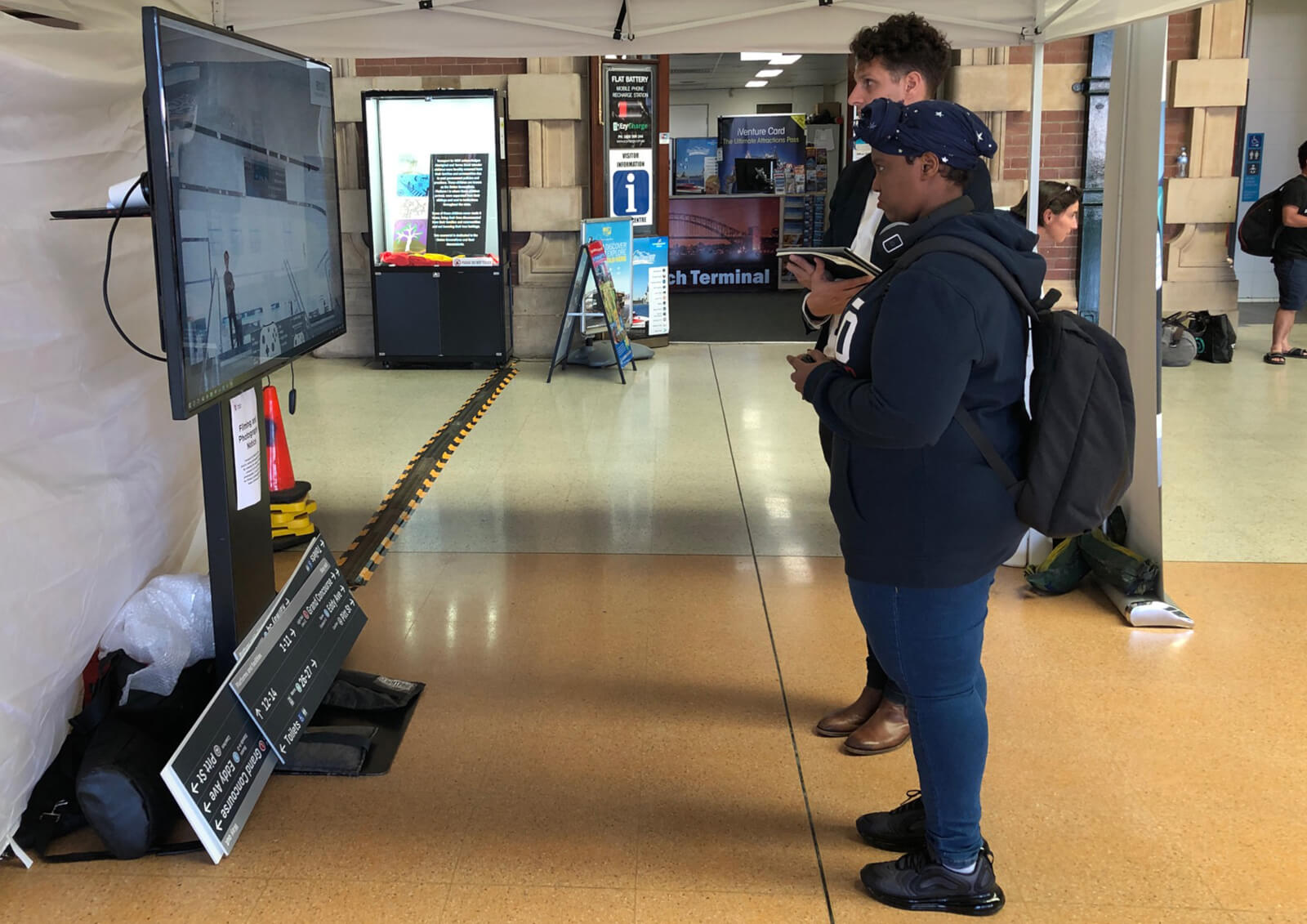
Image: User Testing. Image: Supplied.
Movement designed for people
Better transport comes down to how people move through it.
Across both projects, design helped make complex systems easier to use. It brings decisions into view before they are built, and grounds them in real behaviour.
Better mobility grows from this. Testing ideas with real people, understanding how journeys actually unfold, and creating environments that feel clear from the moment you enter.
These 2025 winners reflect projects grounded in evidence and designed for real use.
Entries for the 2026 Good Design Awards are currently calling for entries across all design disciplines including Built Environment, Design Research, Policy Design and many more.