Designing for Planet: 2025 World Design Congress
- Published on: 7 October 2025
Share
At the World Design Congress 2025 in London, more than 1,200 designers and industry leaders came together to explore a vital question: How can design shape the future of our planet?
The theme, “Design for Planet,” was a clear call to action, reminding us that design isn’t just about how things look or work anymore. It’s about rethinking what we create, the impact our work will have on our lives and our planet, how we collaborate, and who we design for, with the future of our planet front and centre.
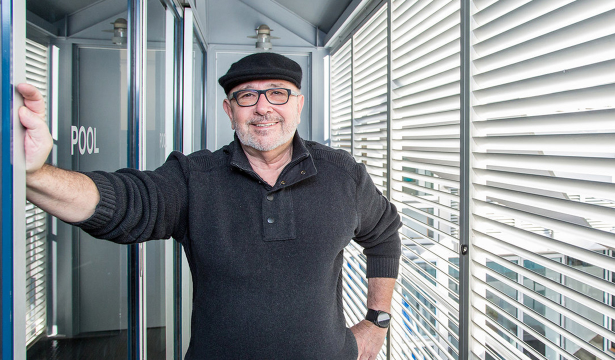
We caught up with Dr. Brandon Gien, Chair of Good Design Australia, who spoke openly about some of the challenges the design industry has faced and the urgent need for designers to be involved right from the start. But he also shared a strong sense of hope, inspired by leaders like Dieter Rams, whose timeless design principles continue to guide us, along with exciting new projects aiming to upskill a million designers around the world.
Keep reading to hear more from Brandon about the Congress, and why design feels more important now than ever.
Q. If you had to sum up the Congress in one sentence, what would it be? And, could you expand on what that means to you?
Brandon: As a designer, a life-long advocate for design, and someone who is passionate about our industry, the best way I can put it into a sentence is: Equal parts terrified, equal parts disappointed that we, as designers, have contributed to this mess – but, also a renewed sense of hope that design has the power to solve these challenges.
It was a real reflection as a designer to think: we’ve got a lot to answer for.
We’ve been blindly designing, feeding this market – this whole capitalistic view of the world. We really need to take a second look at what it is that we do.
But on the other hand, I’m equally optimistic and positive, with a renewed passion for design as a problem-solving tool.
We’ve got a big responsibility here. To clean this mess up and make sure we’re much more conscious of the projects we design and put out into the world.
Whether we’re designing built environments as architects, products as industrial designers, or digital platforms as digital designers, sustainability simply cannot be an afterthought anymore – it has to be the first thing we start with.
It’s the question we have to start asking from the very beginning: What material is it going to be made from and are there more sustainable alternatives to consider? How will it be made and are there more efficient ways to manufacture it or build it? Do we even need to design this thing in the first place or is there a digital solution that can solve the same problem? What happens at the end of its life, has it been designed in a way to make it easy to repair and maintain, easier to disassemble and recycle? Is what we are designing going to add value to people and the planet or is it just going to be another piece of landfill?

Q. What tangible actions can designers take today from the “Design for Planet” theme?
Brandon: I think one of the statements that kept coming up, and was repeated in almost every keynote, was this idea that 80% of the environmental impact of a product is decided at the design stage.
If you think about it: 80% of the environmental impact is decided when designers sit around a table and start to conceptualise. What is this thing? What material will we use? What’s the manufacturing process? All the questions that designers start to ask before we put pen to paper.
So even though I’ve heard it before, hearing it consistently made me think: How do we make that 100%? How do we hammer home the message that the fate of a product or project is decided at this design stage? That puts a profound responsibility and power in the hands of a designer, to decide if something ends up in landfill or becomes long-lasting and useful.
And when I say product, I mean everything from a high-rise building, which uses too much energy and material, to a simple product such as a toaster.
So what does that actually mean in practice? I think it reinforces the designer’s role – not just to choose materials, but to push for sustainable, recyclable, and responsible options. And not just in materials, also in processes and manufacturing.
It means starting the conversation with a client or corporate by saying: If we’re going to design this thing, let’s do it right.
I also think of the designer as a collaborator, or conductor, bringing in experts from different disciplines, is now more important than ever. Designers can’t do this alone.
Mechanical engineers, scientists, researchers, anthropologists, ergonomists, sometimes hundreds of experts from diverse fields that come together to bring a project to life. The true strength of a design-led approach lies in uniting everyone around a shared vision and a clear path forward. Having a designer lead the project’s direction, while providing the governance to define its environmental footprint, has never been more important.
If anything, I walked away from the Congress feeling more empowered. Because designers from all over the world are saying the same thing.
I’ve been in this space for nearly 30 years, and I still hear it: designers are brought in too late. By the time we are asked to be involved, the wrong materials are chosen, all the mistakes have been made and the product has gone to market. It flops. Then someone says: maybe now we should get a designer involved!
Getting designers at the table from day one, from the very first meeting, gives them a chance to design out as many mistakes as possible.
That’s a huge opportunity. But it’s also still a major challenge. Too often, businesses see our role as just making things look pretty. Let’s bring in the designer at the end, just to do the packaging or choose the colour palette. If we are to have any impact as a profession – that has to change!

Q: Was there anyone who really shifted your perspective?
Brandon: Social entrepreneur, architect, and visionary thinker Indy Johar from Dark Matter Labs, one of the standout speakers at the Congress highlighted the carbon impact of everything that we design. “We’re going to see a transformation in what it means to be human. It will change how we exist, the materials we consume. It’s a whole new economy of materiality,” he explained.
He really shook everyone by saying: If we do nothing, the data shows this is the impact we should expect. “If we see a 1.5 degree increase in global temperatures, this is what’s going to happen: there’ll be mass extinction.”

“It’s more than likely that people born today will experience a +3°C planet…”
You could hear a pin drop…
It was like, we cannot just put our fingers in our ears and hands over our eyes and pretend this isn’t happening. I think it reinforced this idea that we very well could be the last generation that’s going to have any ability to design our way out of this.
What that also did was spark conversations. After every keynote, there’d be a tea break, and people would start chatting. Imagine if we did nothing? What would the world look like? Or what if we threw everything at it? What if we genuinely threw the full power of design at this?
As designers, again, we’re probably not taken seriously enough. But when you hear someone like Indy Johar get up there and present the data, you can’t argue with that. We all took a deep breath thinking: It’s a pretty bleak future if we do nothing. But at the same time we have the design intellect, we have technology. It’s a matter of will and power to make the change.
“We need to invest in building designers’ skills so we can turn that potential into real-world solutions, and ensure designers are working closely with businesses to drive meaningful change and that’s exactly what the UK Design Council is doing.”
One positive outcome from the Congress was the UK Design Council’s plan to upskill a million designers globally. We talk about designing for the planet, but do we have the skills to actually build that world? Do we have the businesses, industry and governments ready to take up this design challenge?
Another standout moment for me was a panel discussion between economists Kate Raworth and Mariana Mazzucato, without doubt one of my favorites (I honestly could have listened to them all day). Both challenged the way we think about economics and pushed for models that put people and planet ahead of profit.
They spoke about the role of design in shaping our economies, and raised a powerful question: Why do governments continue to fund innovation in businesses when the rewards end up concentrated in private companies rather than shared with society? Kate shared her Doughnut Economics model which was such a clear framework for balancing human needs within ecological limits, and how design can help people and communities “get out of the donut.” Mariana built on this by highlighting mission-driven innovation, arguing that governments should actively shape markets to create real public value.
What struck me most was how both these leading economists understand the power of design as a driver of systemic change, turning bold visions for fairer, more sustainable economies into something tangible and actionable.

Q: Dieter Rams was honoured this year with the World Design Medal. In your view, what’s the single most important lesson today’s designers should take from his legacy?
Brandon: The World Design Medal is something I’m particularly proud of. It was one of the initiatives we introduced during my term as President of the World Design Organization, so to see it continue is really special. The inaugural recipient was Hartmut Esslinger, founder of Frog Design, arguably one of the most prominent design agencies in the world, known for its early work with Apple.
One of the highlights of my term was calling Hartmut to tell him he’d received the Award – he ended up crying on the phone. As a design student, I admired him so much and followed everything Frog did, so to share that moment and emotion with him was truly special.
This time, the recipient was Dieter Rams, one of the most recognised and respected industrial designers globally. The World Design Organization Senators voted on the recipient, and it was unanimous that it should go to him.
The lessons and takeaways from his work are profound. Dieter is well known for his time at Braun, where his design language, aesthetic, and design principles have influenced so many products we see today. He has had an incredible impact on our industry.
What he is probably most famous for are his 10 Principles of Good Design, which he developed around 40 to 50 years ago. They remain relevant today, perhaps even more so. I have a poster in my office with those 10 Design Principles, and I look at them every day and think, yes, every single one is absolutely relevant. That’s something to be celebrated and is probably one of the reasons we chose him for this prestigious honour.
Number 10 is my favorite: “Good design should be as little design as possible.” I think that’s a beautiful way to sum up what good design truly is. It’s about minimalism, about avoiding over-design. Many designers make the mistake of overcomplicating things, trying to add too much. But that idea of a light touch, as little footprint as possible, is a real guiding principle for how we should approach design. I’m so proud the medal went to him.

Q: What was the core takeaway for you from the Congress?
Brandon: For many years, designers referred to themselves as user-centred. The idea was to put the user in the middle. If you’re designing a product, you need to understand the user at the most empathetic level possible. User-centred design was a big focus, which then shifted to human-centred design. This expanded the focus: it’s not just the user, but all humans interacting with the product. That became the norm, we are human-centred designers, and humans are at the centre.
Now, the conversation has shifted again to planet-centred design. It’s no longer about putting the human being at the top of the pyramid and designing everything around the needs and wants of that human. Instead, we’re designing with nature, with our planet in mind. It’s a rejection of human arrogance. Not just human-centred, but planet-centred design.
The theme of “Design for Planet” reminded me in a very profound way, that we share this Earth with millions of other species. If we are to design a more sustainable future and make it through the immense challenges we face, we must radically shift our thinking. We need to place our fragile, beautiful planet at the very heart of everything we design, ensuring that every decision honours and protects the economies and ecosystems that sustain us all.
Looking back on three decades of congresses, Brandon says this one stands apart, because for the first time, the focus was genuinely on designing with the planet at its heart.
Stay tuned and sign up for our newsletter, where we’ll continue to explore the transformative ideas from the Congress and the future of design.