Youth Transport Relief: Supporting Vulnerable Youth with Access to Public Transport

good-design-award_winner_rgb_blk_logo
  • 2026

  • Social Impact

Commissioned By:

Department of Revenue NSW

Designed In:

Australia

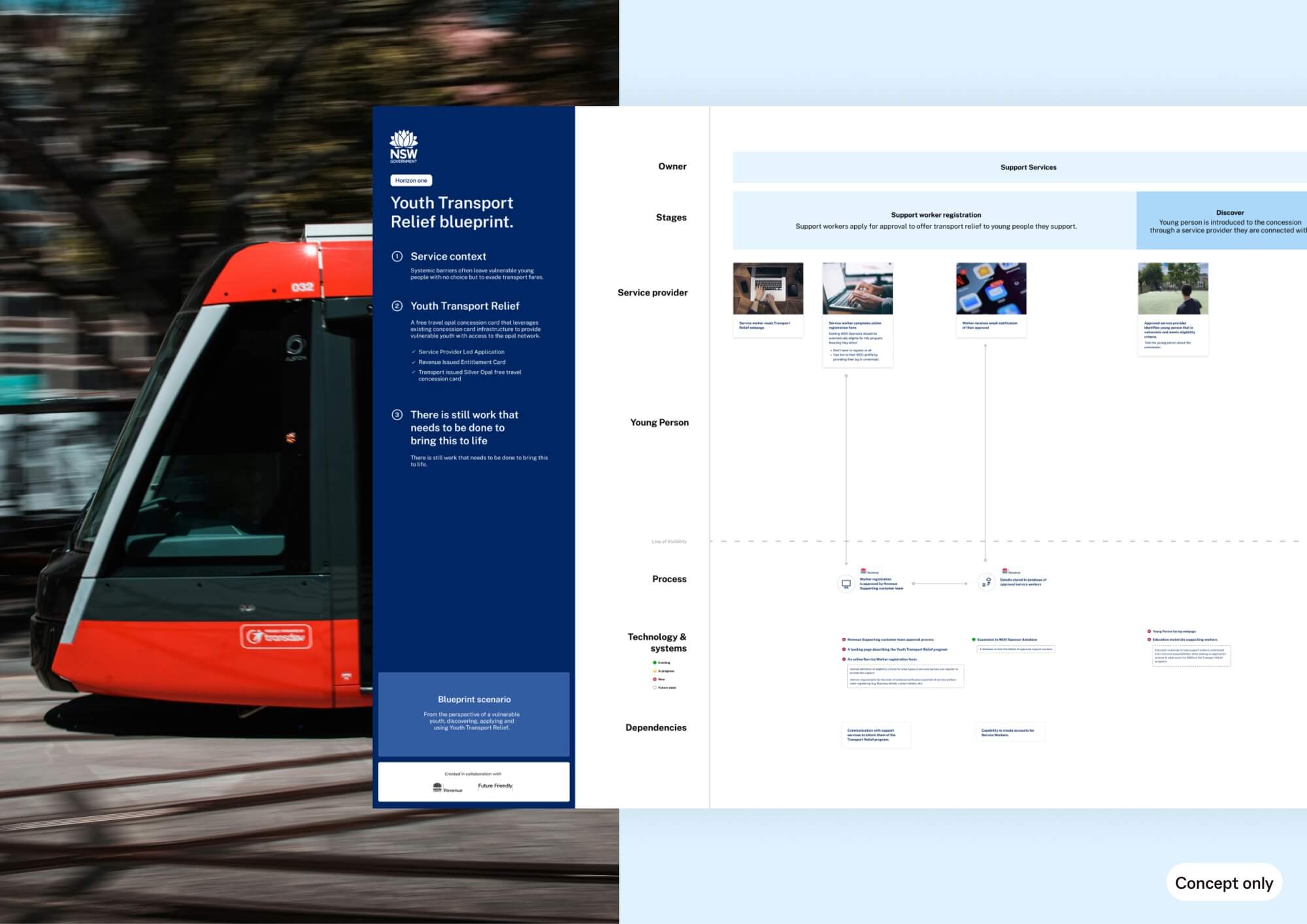
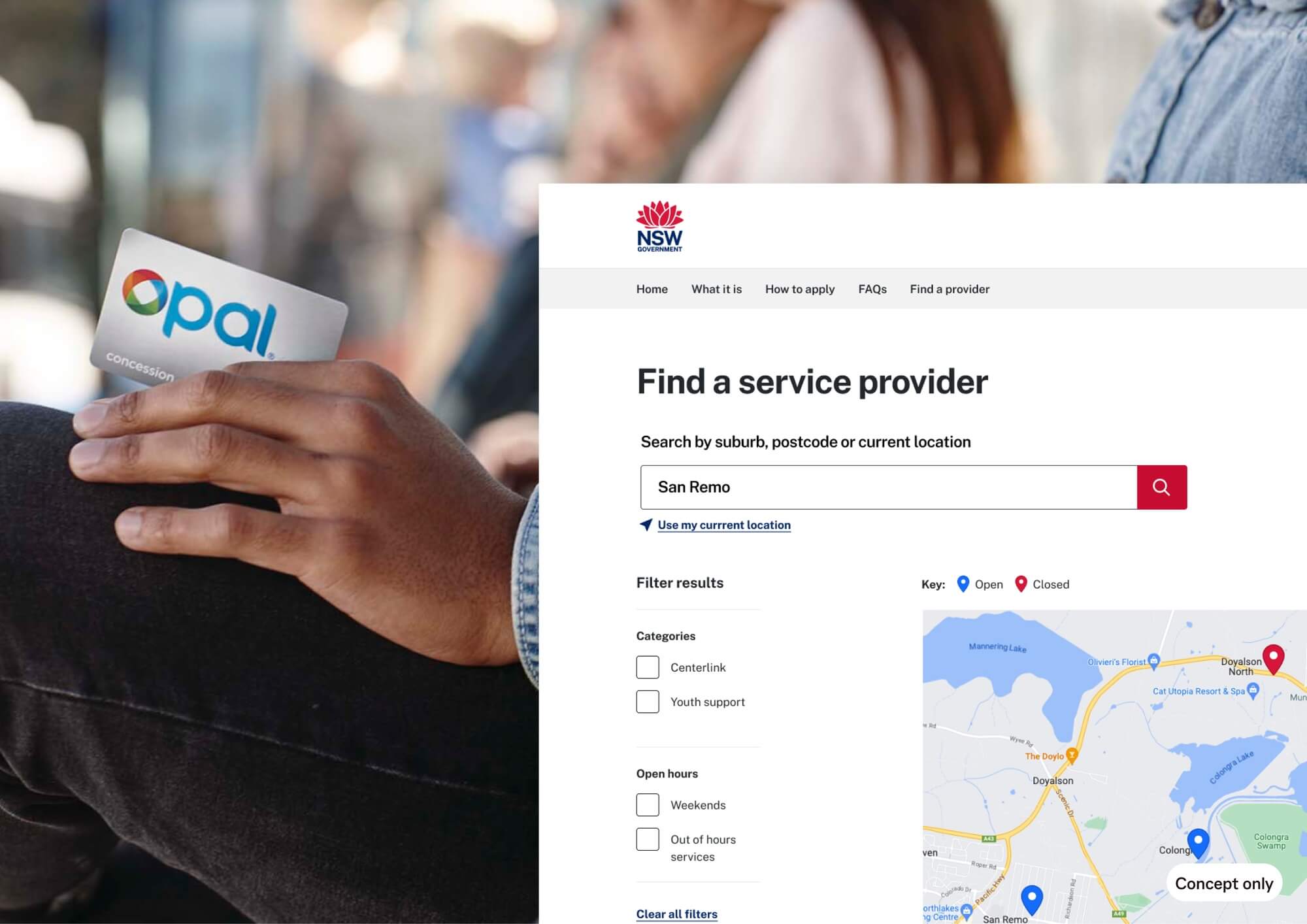
Young people rely on public transport, but systemic barriers can lead to fare evasion and compounding fine debt. Future-Friendly was engaged by Revenue NSW to co-design Youth Transport Relief, a model enabling travel assistance on the Opal-network for vulnerable youth. A 2025/26 pilot validated this initiative for those in need.
view website

2.jpg
3.jpg
4.jpg
5.jpg
6.jpg
  • CHALLENGE
  • SOLUTION
  • IMPACT
  • MORE
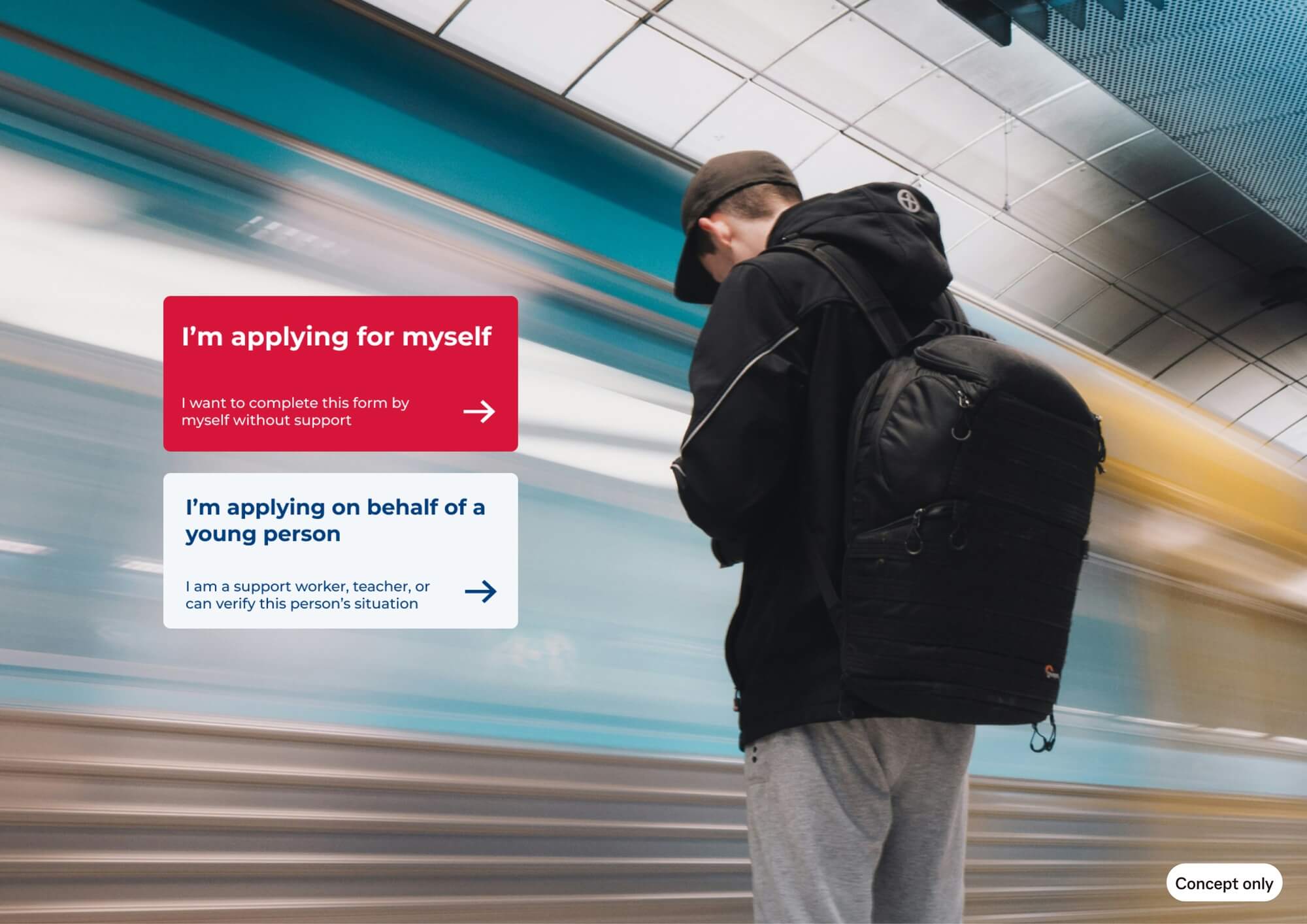
  • Transport access is vital for social outcomes, yet vulnerable youth, including those experiencing homelessness or domestic-violence, often cannot pay fares. This leads to systemic fare evasion, stressful enforcement interactions and compounding debt, with unpaid fines in NSW potentially escalating to drivers licence restrictions or other sanctions.The brief: design a scalable, low-barrier solution providing transport assistance for youth aged 14–21. We overcame technical and policy hurdles to create a compassionate model based on proactive support. Preventing fines before they occur and minimising the risk of compounding disadvantage for youth while reducing the long-term administrative burden on government and delivery partners.

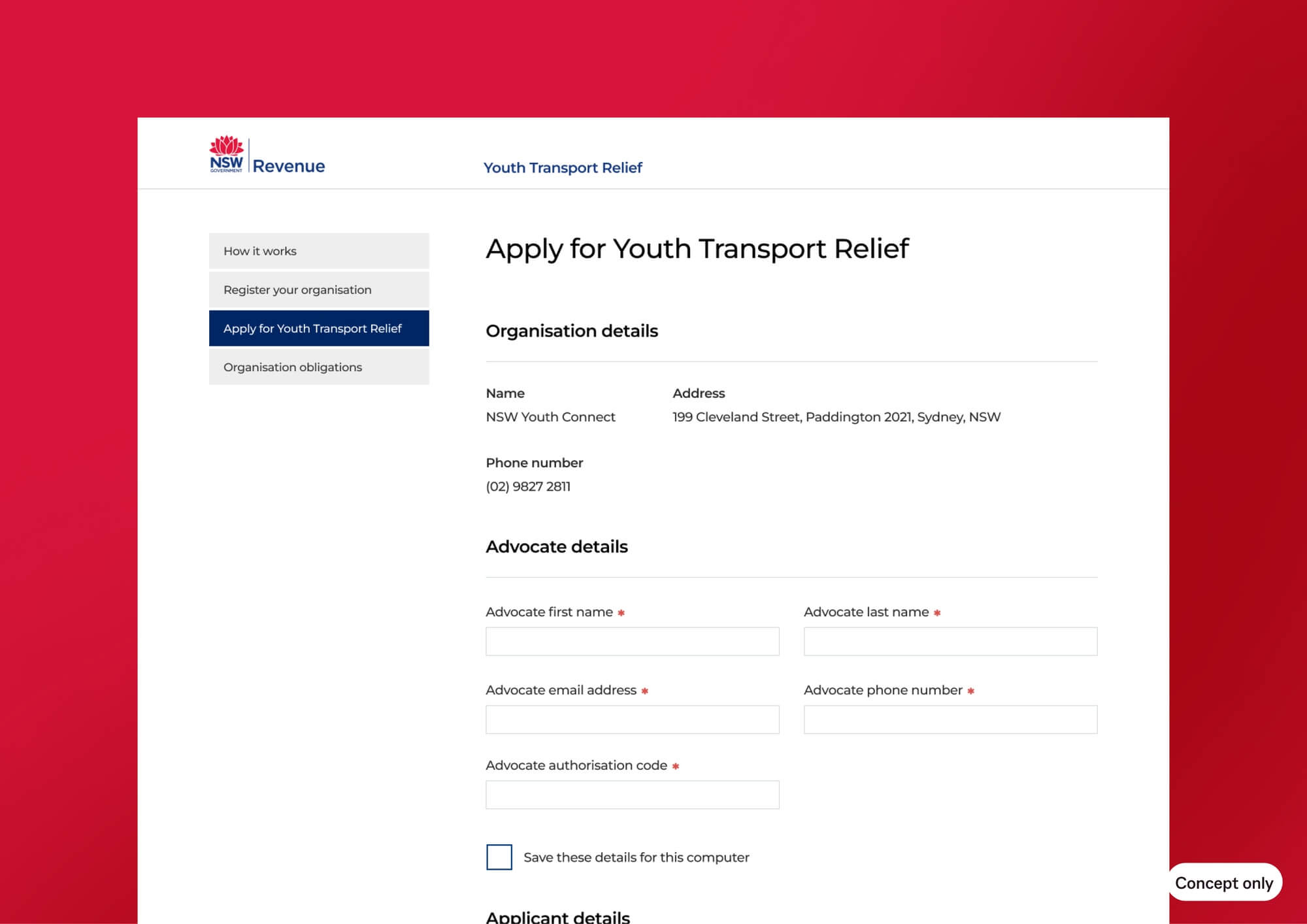
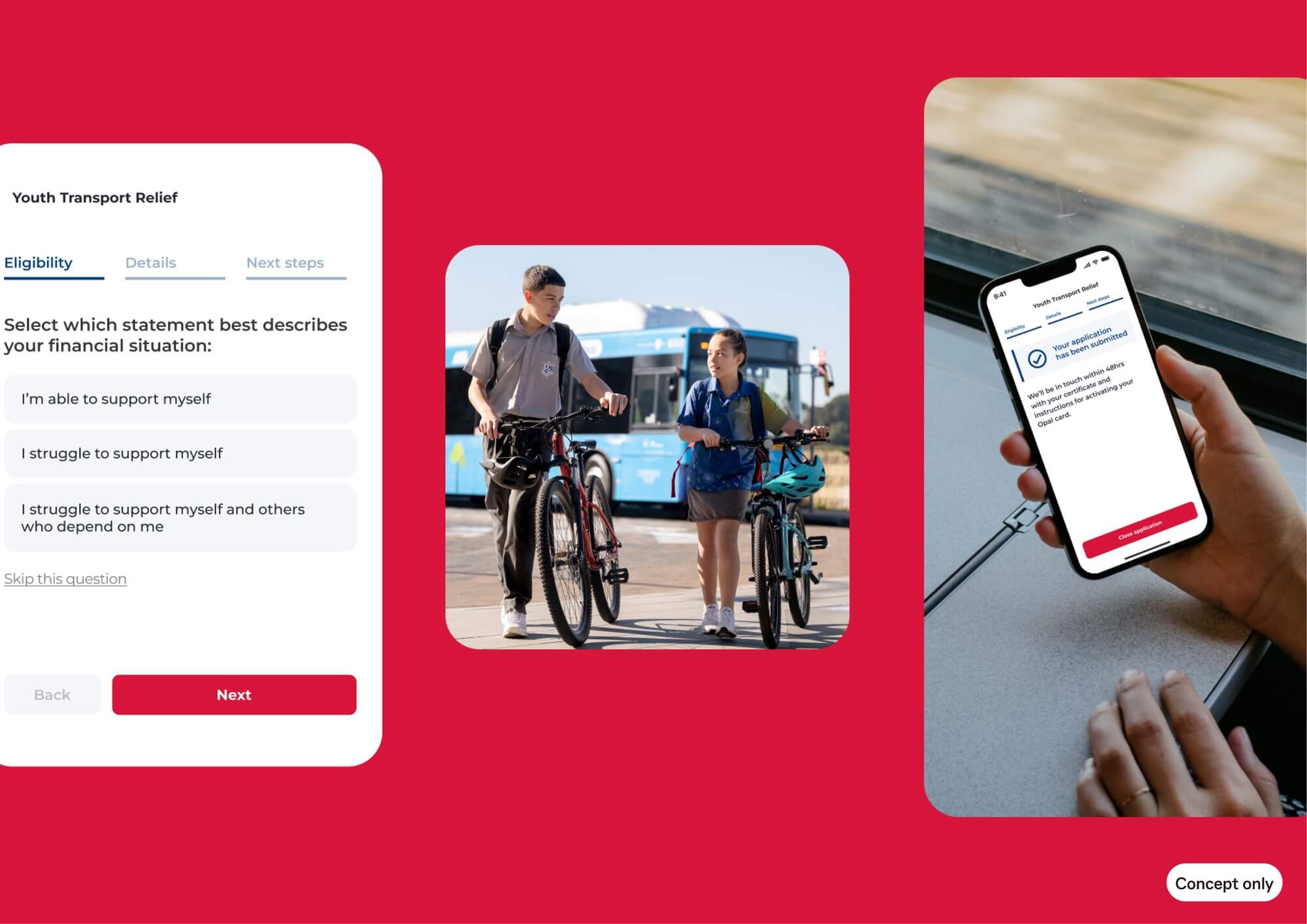
  • We designed a solution that provides free travel for youth on the Opal transport network. In 2025, a digital only version of this was validated through a Proof-of-Concept delivered by Revenue NSW with the Department of Communities & Justice, and Mounty Aboriginal Youth & Community Services. The PoC used a digital card attained through existing and trusted youth relationships with these partners, ensuring vulnerable youth can access support through established pathways without the friction of complex government portals. The pilot demonstrated high participant engagement, with cardholders completing 2,041 trips, while reinforcing the critical future need for physical card alternatives to address digital-exclusion.

  • The pilot proved that equitable transport access significantly reduces disadvantage, with participant fare evasion fines dropping effectively to near-zero for active users. Impacts to wellbeing were significant: 44% of participants reported feeling safer, and 41% noted an improved quality of life. By removing financial stress, youth redirected limited funds toward essentials like food and housing. Revenue NSW has extended the pilot support through June 2026, providing a rich evidence base for future policy consideration of scalable solutions that prioritise human dignity.

  • Proven Pilot Success: 55 active participants completed 2,041 trips on the Opal network, demonstrating high service engagement and technical feasibility of the designed solution.Recidivism Reduction: Fare evasion fines were effectively eliminated, dropping from a very high baseline of 197 fare evasion fines across the 61 pilot users, or an average of 3.2 fines per young person, to only 7 new fines for active users during the program, or 0.1 fines per travel relief recipient.Partner-Led Access: Delivered via Mounty Aboriginal Youth & Community Services and the Department of Communities and Justice ensuring the cohorts experiencing the greatest vulnerability , including those in Out of Home Care, receive support through trusted and existing relationships.Wellbeing Impact: Participants reported that free travel made life "easier and more affordable," citing significant improvements in safety (44%) and overall quality of life (41%).Inclusive Design Learnings: The pilot identified that digital-only approaches risk excluding those without smartphones, informing a roadmap for physical card options and simplified activation steps.Service Extension: Positive outcomes led to extended support through June 2026, creating a clear blueprint and data set to inform future programme evaluation