SeeWay: Australia’s Link to Living Well with Low Vision

good-design-award_winner_rgb_blk_logo
  • 2026

  • Digital
    Web Design and Development

Designed By:

Commissioned By:

Guide Dogs NSW / ACT

Designed In:

Australia

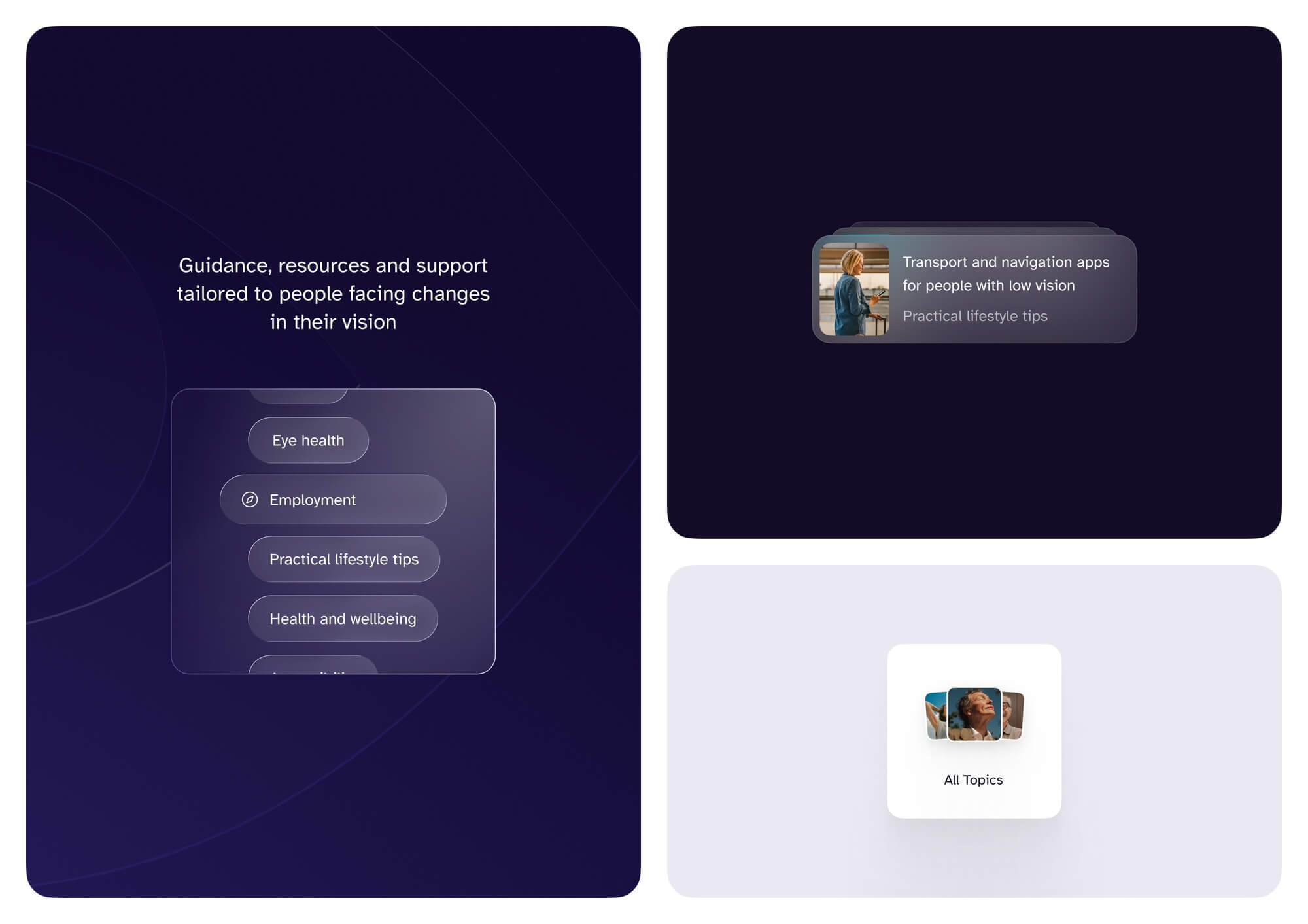
SeeWay is a digital platform backed by Guide Dogs NSW/ACT – the first single source of personalised resources for Australians living with low vision. Designed for people facing changes in their sight, their carers, and their families, SeeWay guides users toward the support, skills, and confidence they need.

view website

2.jpg
3.jpg
4.jpg
5.jpg
6.jpg
7.jpg
8.jpg
  • CHALLENGE
  • SOLUTION
  • IMPACT
  • MORE
  • For Australians living with low vision, the digital landscape offers contradiction: abundant information, but no single trustworthy place to find it. People newly diagnosed with conditions like macular degeneration or glaucoma - overwhelmingly aged 60 plus - are left navigating a fragmented, jargon-heavy internet alone. Carers feel unprepared. Families feel helpless. Eye-care professionals lack a platform they can refer to with confidence.Guide Dogs NSW/ACT, trusted for decades in the vision community, saw the gap and engaged Nightjar to close it: a credible, accessible, personalised platform that could meet people facing changes in their vision where they are - with crucial support.

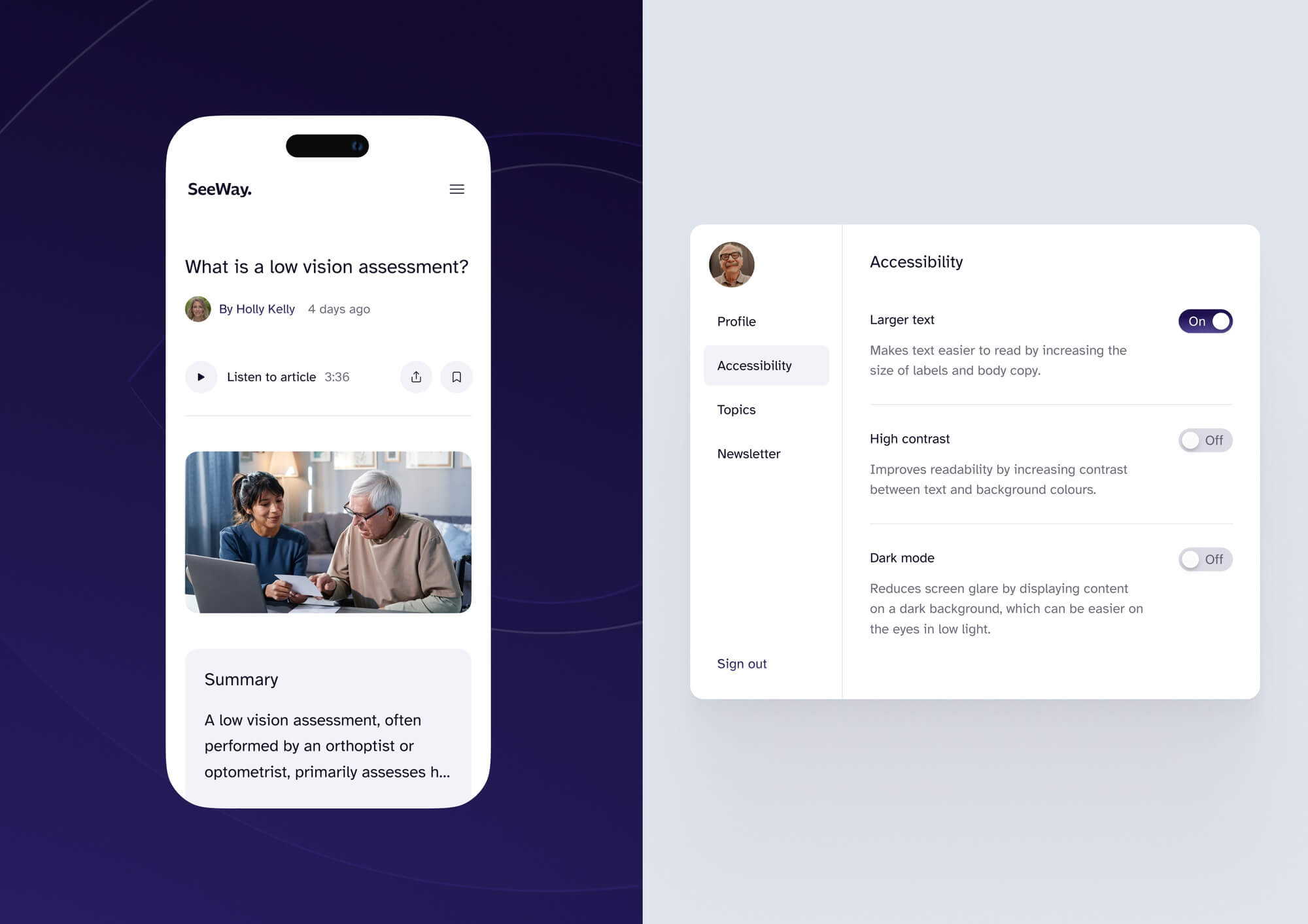
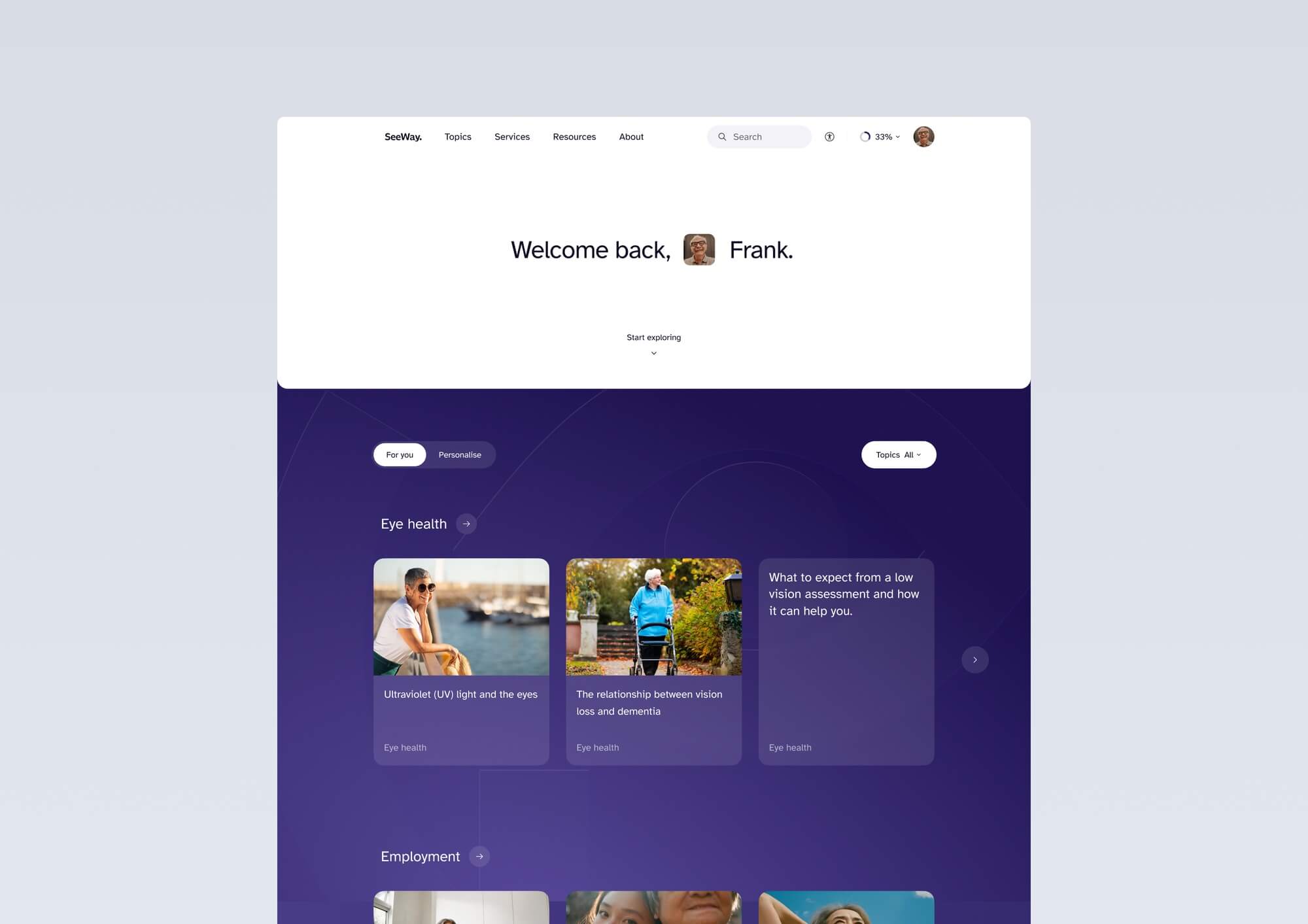
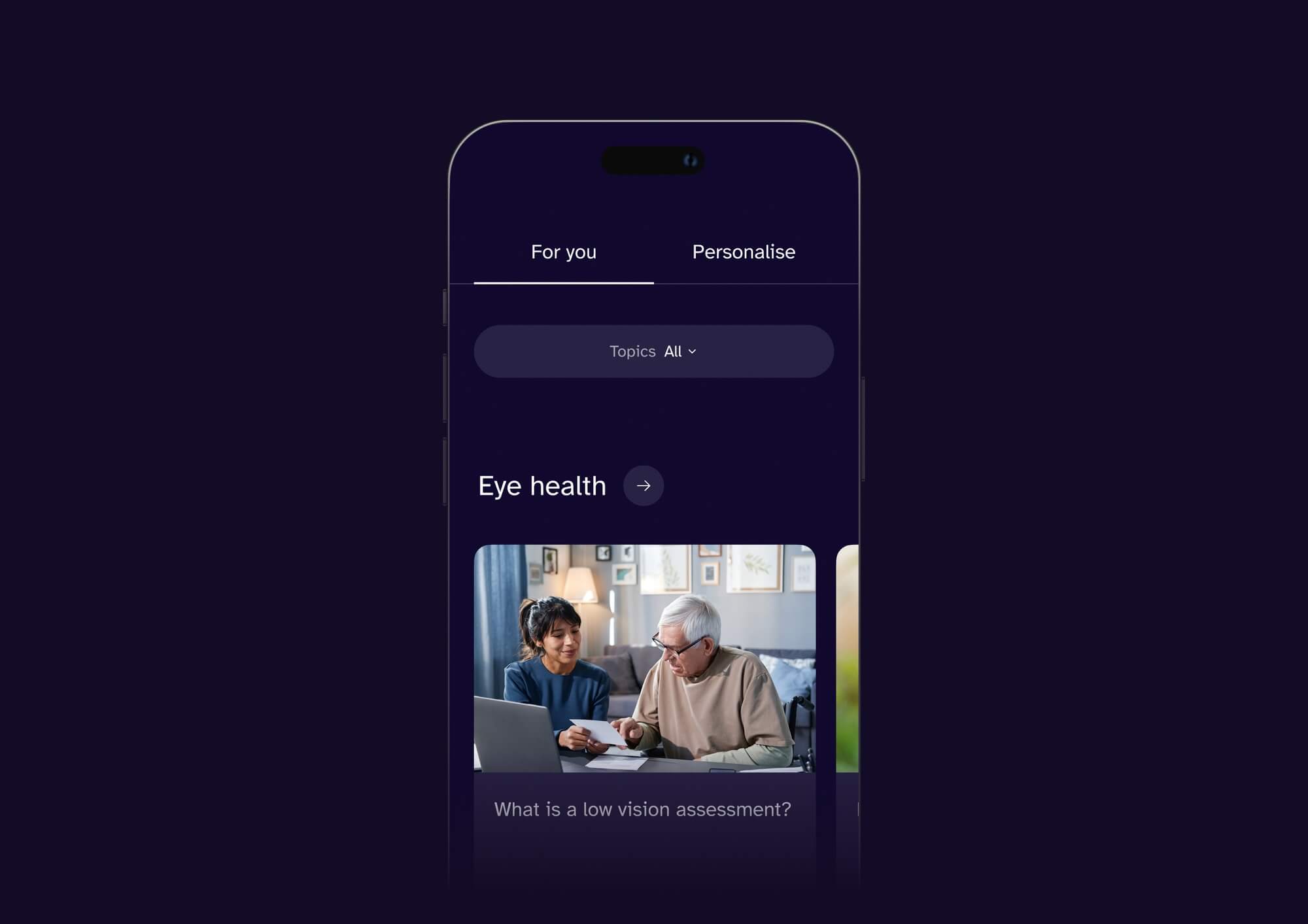
  • Nightjar delivered SeeWay in two phases.Phase One launched an MVP built around a personalised onboarding experience that segments users by condition severity and topic interest, feeding a dynamic feed of curated content. Native accessibility settings - large text, high contrast, dark mode - were built in from day one, alongside WCAG 2.2 AAA compliance verified by third-party specialists. Content is available without sign-up, with gentle prompts to create a profile for a more personalised experience.Phase Two, informed by behavioural data, saw Nightjar restructure navigation, reduce cognitive load, and reposition SeeWay from content repository to guided, supportive experience.

  • SeeWay represents a step-change in the organisation’s ability to deliver impact at scale. While severe low vision is supported by the NDIS and the 1-1 support Guide Dogs offer through their service dogs, white canes and mobility training, there's a lack of trustworthy 1-to-many resource platforms. Now, every person who finds credible information, develops a new skill, or feels less alone in their diagnosis, represents a social return that their traditional service model could never achieve. As an organisation measured by community impact, that multiplier effect is significant.

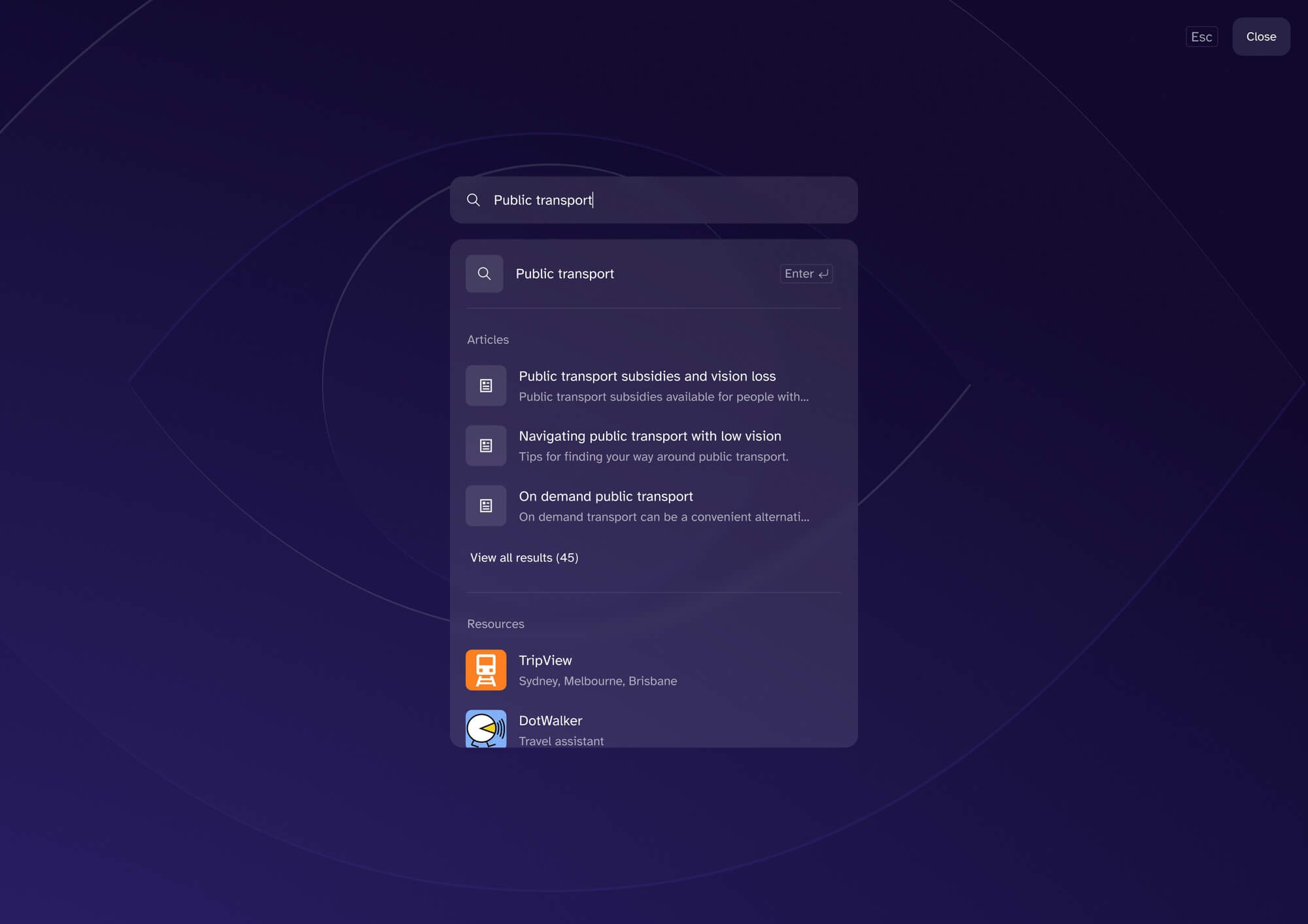
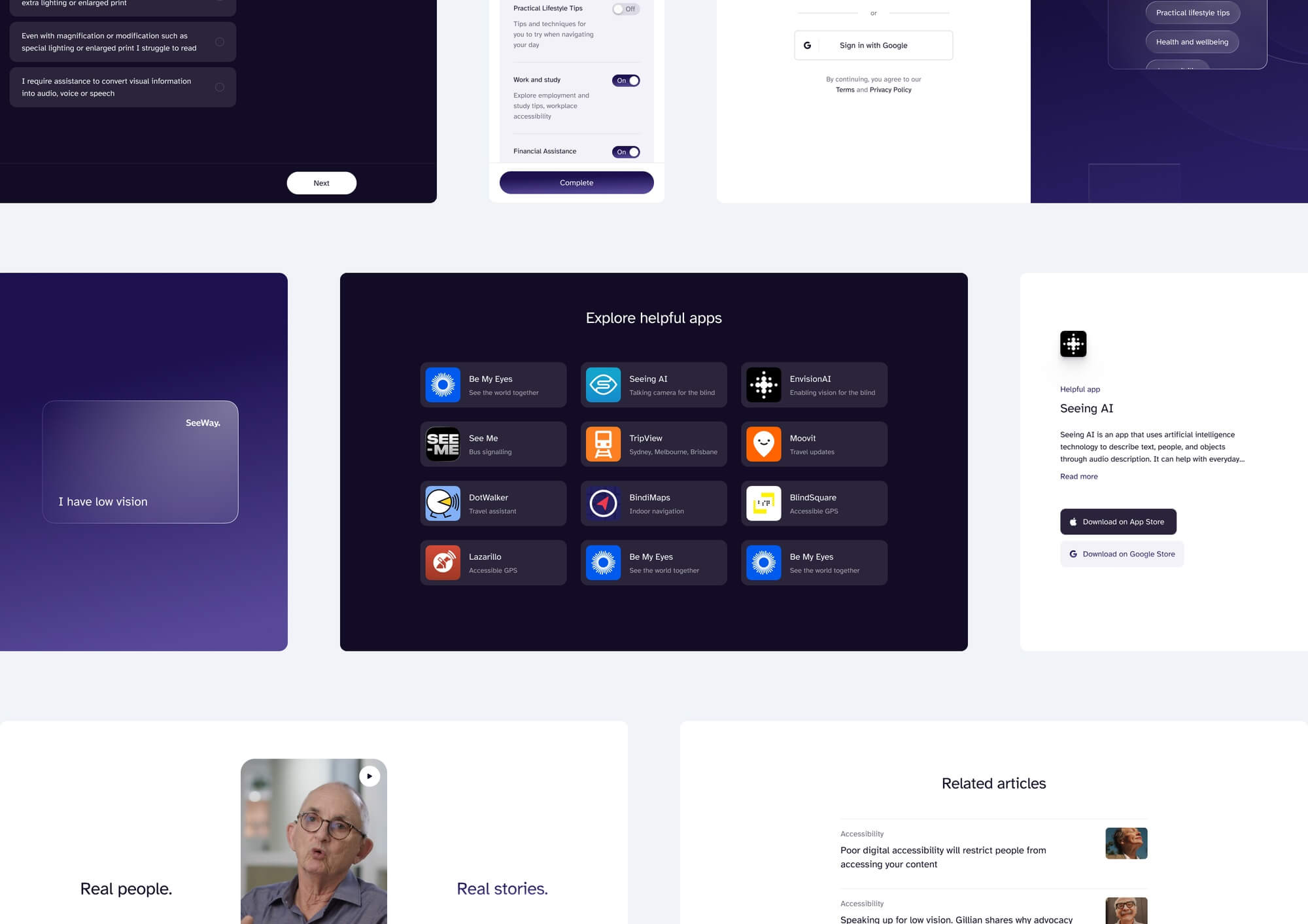
  • We designed and engineered a comprehensive set of features, built around specific needs of users with low vision that were uncovered in user research:- Personalised onboarding questionnaire assessing condition severity and everyday impact, used to segment users into personalised content pathways- Native accessibility settings: large text, high contrast and dark mode - these features received outstanding feedback in user testing- WCAG 2.2 AAA compliance - the highest accessibility standard - independently verified by digital accessibility consultants- Content available without account creation, with gentle prompts toward profile creation for a personalised experience- Persistent, prominent search bar across all pages- Text-to-speech leveraging native CMS AI functionality: users can listen to any article rather than read it - In-article sentiment tracker (‘Was this article helpful?’) to measure and improve content quality over time- Pathways to mental health support, for users navigating the emotional weight of a new diagnosis- Pathways to Digital Skills Training: guided courses to help users make the most of assistive technology on their phone, tablet, or computer- Triage to other Guide Dogs services (white canes, Guide Dogs) for users with severe low vision- Video content integration - Topic library spanning eye health, practical lifestyle, financial assistance, mental wellbeing, community advocacy, and assistive tools