Samson Park Masterplan

good-design-award_winner_rgb_blk_logo
  • 2026

  • Concept Design

Commissioned By:

City of Fremantle

Designed In:

Australia

The Samson Park Masterplan is an innovative, place-based framework guiding the future of Fremantle’s most significant urban bushland reserve and parkland. Created through extensive community engagement with expert environmental specialists and landscape architects, it balances and promotes ecological protection with community use, access and connection.
view website

2.jpg
3.jpg
4.jpg
5.jpg
6.jpg
7.jpg
8.jpg
  • CHALLENGE
  • SOLUTION
  • IMPACT
  • MORE
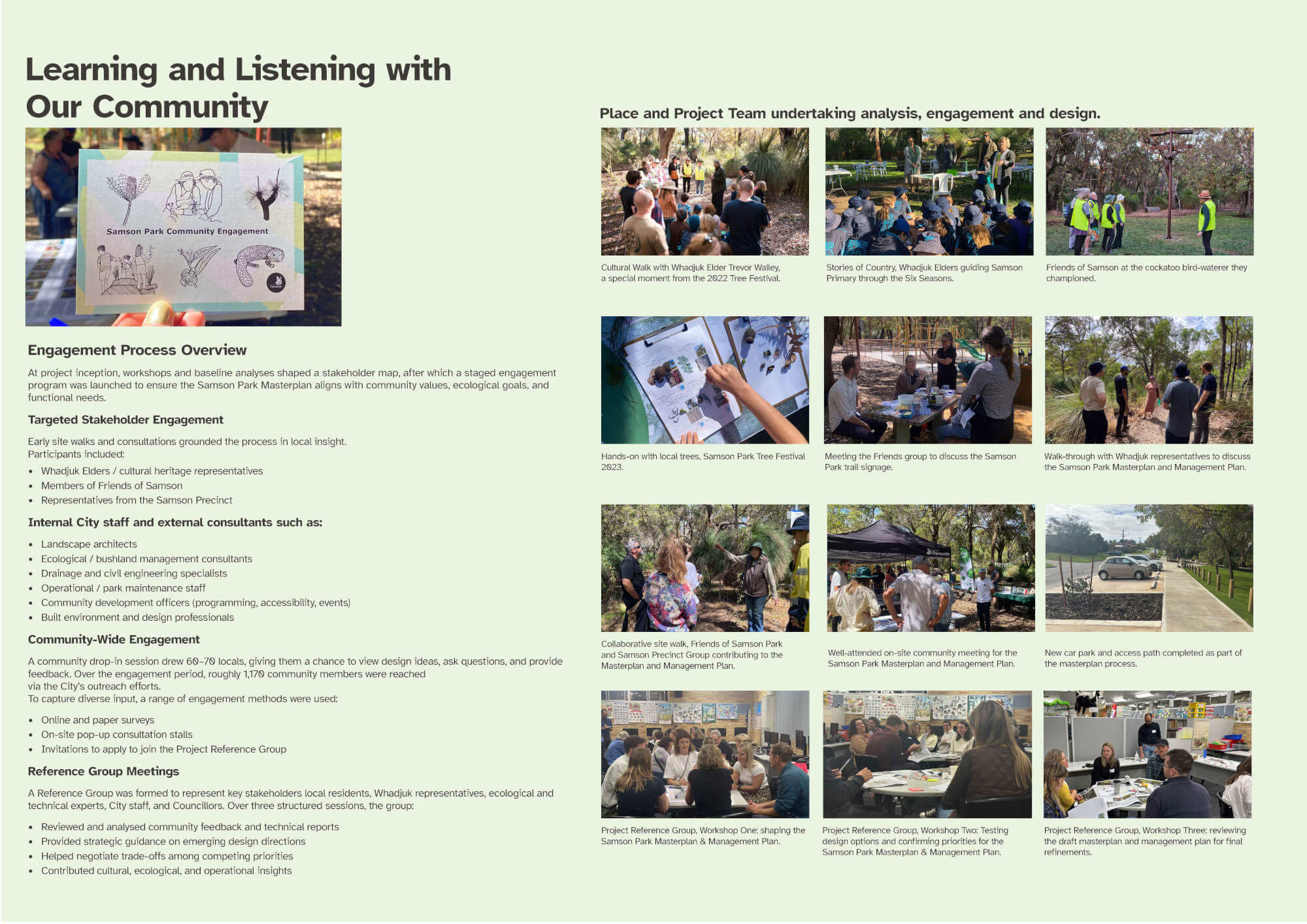
  • The project addresses the challenge of managing Fremantle’s most significant urban bushland reserve, a Bush Forever site functioning as an ecological-connector supporting biodiversity and species resilience, while also serving as a valued community space for families, walkers and dog owners. Environmental investigations identified pressures including flooding, erosion, weed invasion and plant disease, impacting ecosystem health and usability. Community engagement highlighted the need for improved accessibility, amenities and clearer circulation, alongside better management of dog use. Ageing infrastructure, incomplete path networks and service constraints limited functionality, making it difficult to balance ecological protection with community expectations and manage the park sustainably.

  • The place-led design approach delivers measurable environmental, social and economic outcomes, strengthening Samson Park as a resilient urban bushland and community destination. Drainage and biofiltration initiatives improve water quality, reduce flooding and restore habitat, supporting long-term ecological health. Improved accessibility, amenities and path networks enhance inclusion and everyday use, while clear dog governance protects sensitive areas and reduces conflict. The project strengthens community stewardship through ongoing collaboration with local groups and Whadjuk representatives, embedding shared ownership. Importantly, this place-led approach has unlocked State Government funding, enabled staged implementation and demonstrating real, lasting impact for the community and environment.

  • The project delivers environmental, social and operational benefits by providing a clear and implementable framework for the park’s future.Environmental outcomes are supported through improved drainage, habitat protection and reduced impact from informal trails. Social outcomes include improved accessibility, recreation opportunities and connection to nature.From an implementation perspective, the clear prioritisation of works has enabled funding to be secured for drainage upgrades, with detailed design now underway.Overall, the concept strengthens ecological resilience while maintaining the park’s role as an accessible and inclusive community space.

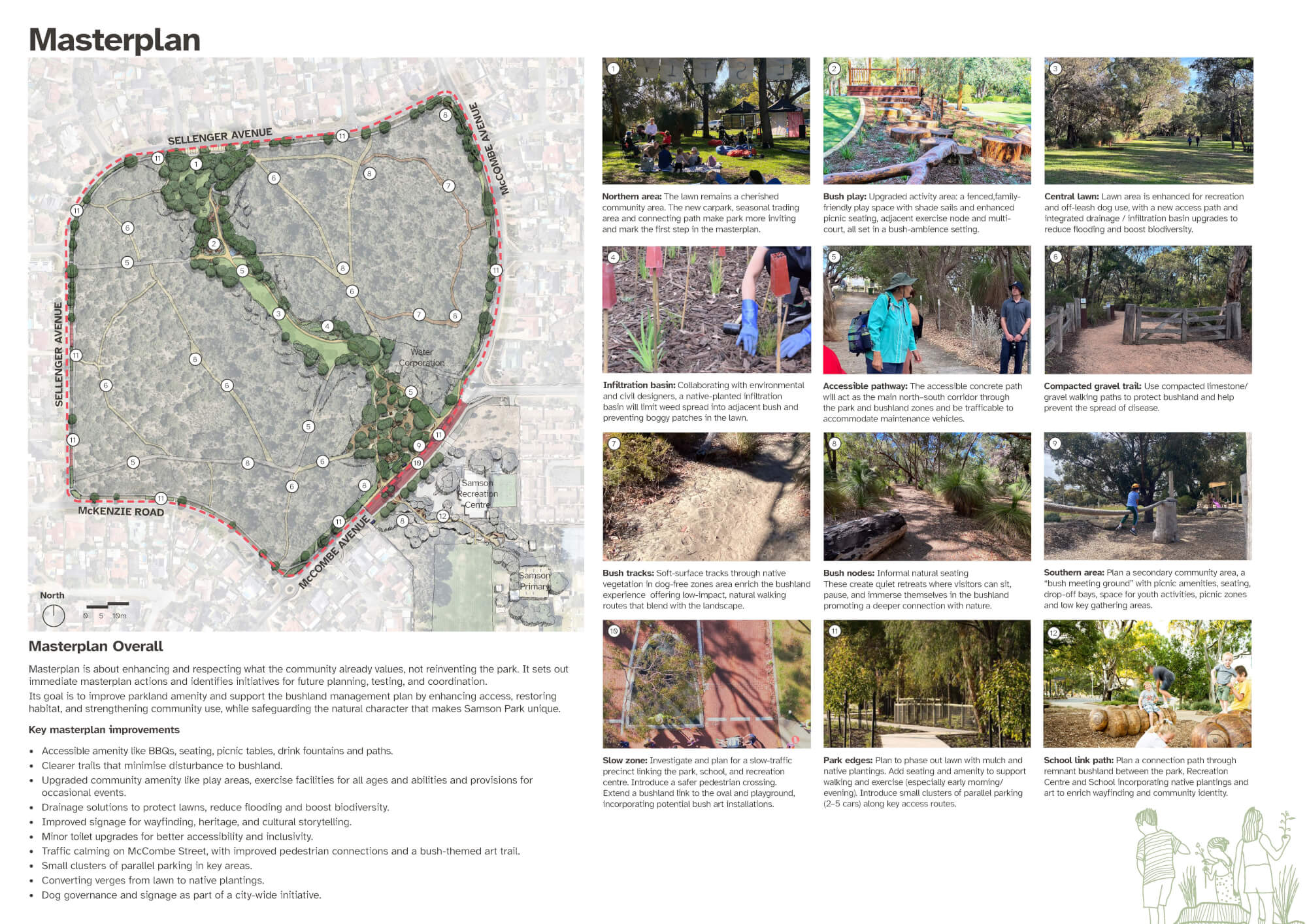
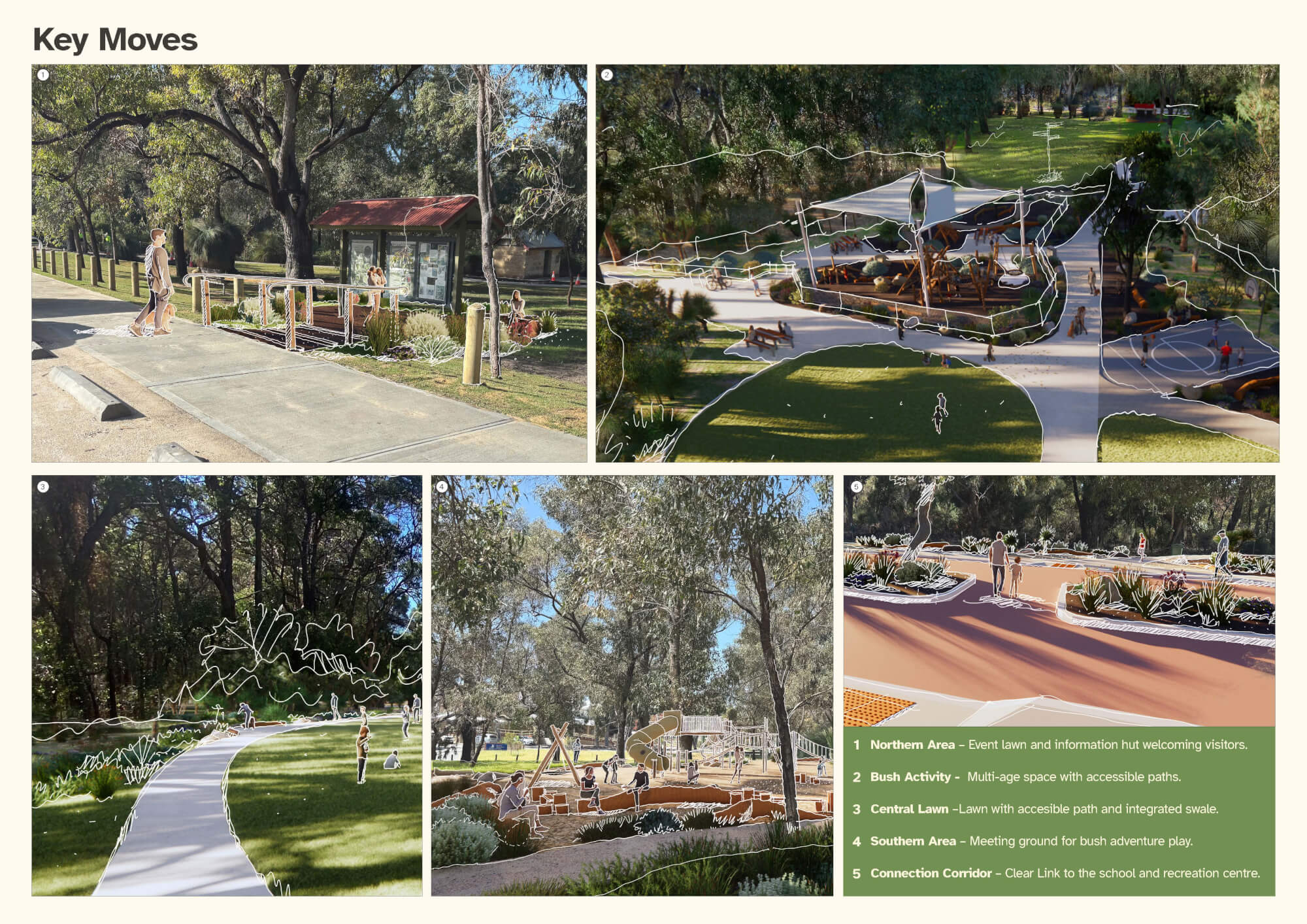
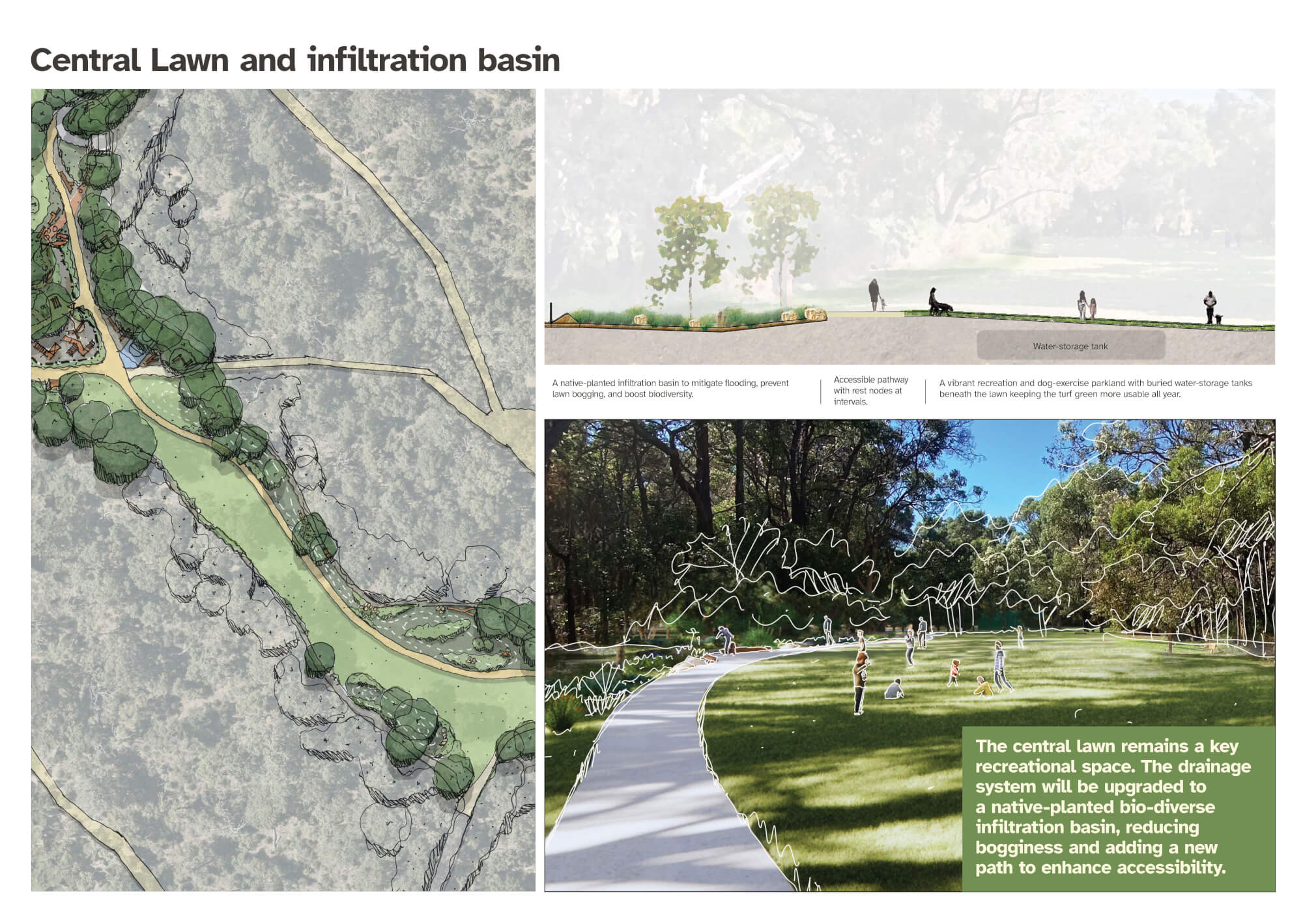
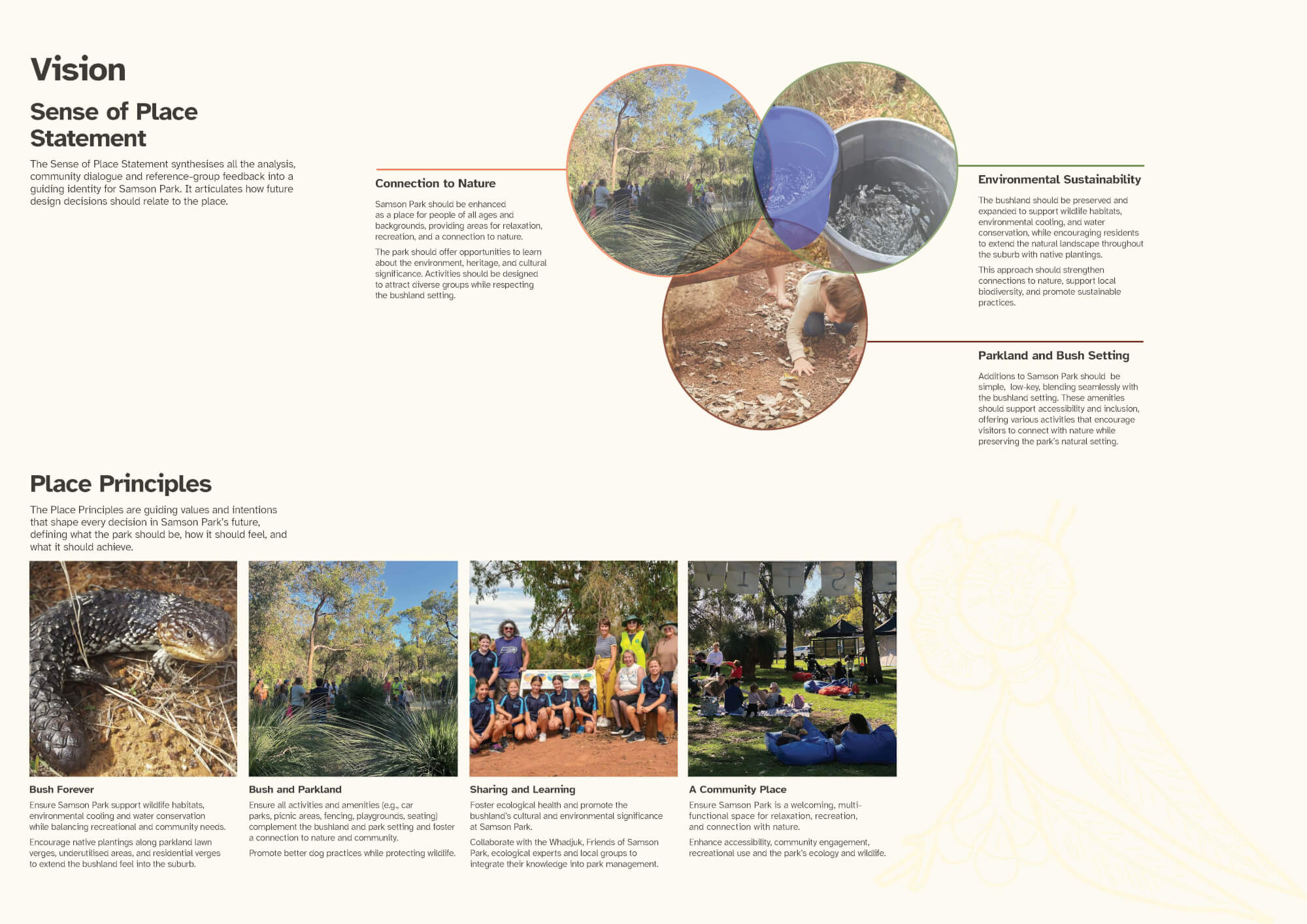
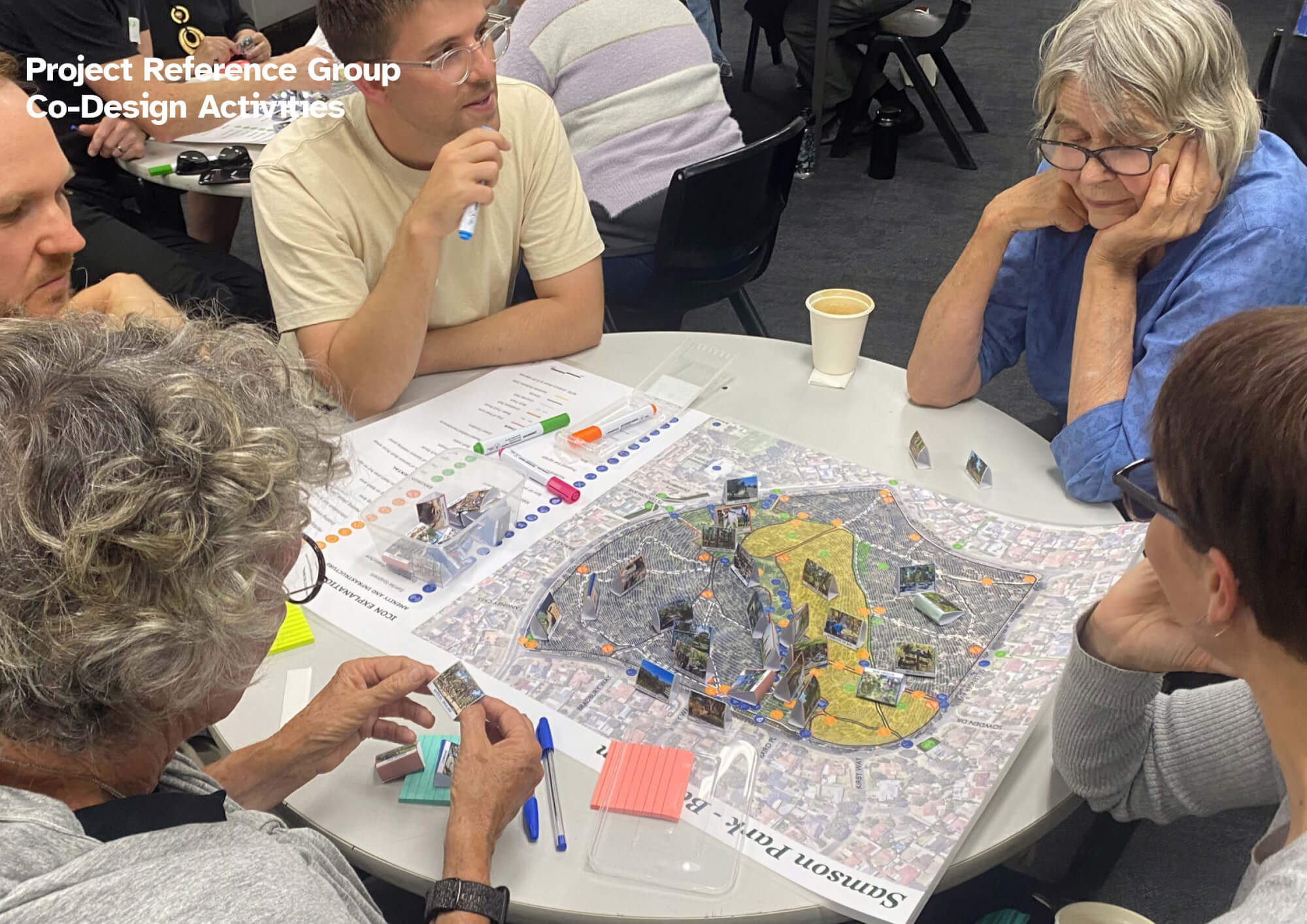
  • A defining feature of the design is its place-led approach, where the concept is realised through carefully considered interventions that unify bushland and parkland into a cohesive, thriving place. Shaped by analysis, engagement and expertise, the design responds to a much-loved place through subtle but impactful moves. Environment is central. A clear movement hierarchy reduces informal tracks, manages dieback and protects sensitive habitat, while low-impact limestone paths improve accessibility with minimal disturbance. Water-sensitive design transforms ageing drainage into vegetated swales and infiltration systems that slow, filter and store stormwater, reducing flooding, improving water quality and enhancing biodiversity. Community is embedded through everyday experience. Play and activity nodes adopt a bushland character, while enhanced information huts, improved paths and new connections to the school and recreation centre strengthen access, learning and stewardship. The Friends of Samson Park and local groups are championed, with their knowledge shaping key outcomes. Engagement with Whadjuk Elders informs cultural storytelling and interpretation. Verge parking extends bushland into surrounding streets as ecological corridors, supported by wildlife-friendly kerbing. Amenity and infrastructure are minimal and carefully located, prioritising sensitive upgrades over expansion. Seasonal trading is integrated within parking areas, supporting everyday use and events while preserving the central lawn.