healthinsurance.au: Built to Be the Most Honest Tool in the Category

good-design-award_gold-winner_rgb_blk_logo
  • 2026

  • Digital
    Web Design and Development

Designed By:

Commissioned By:

healthinsurance.au

Designed In:

Australia

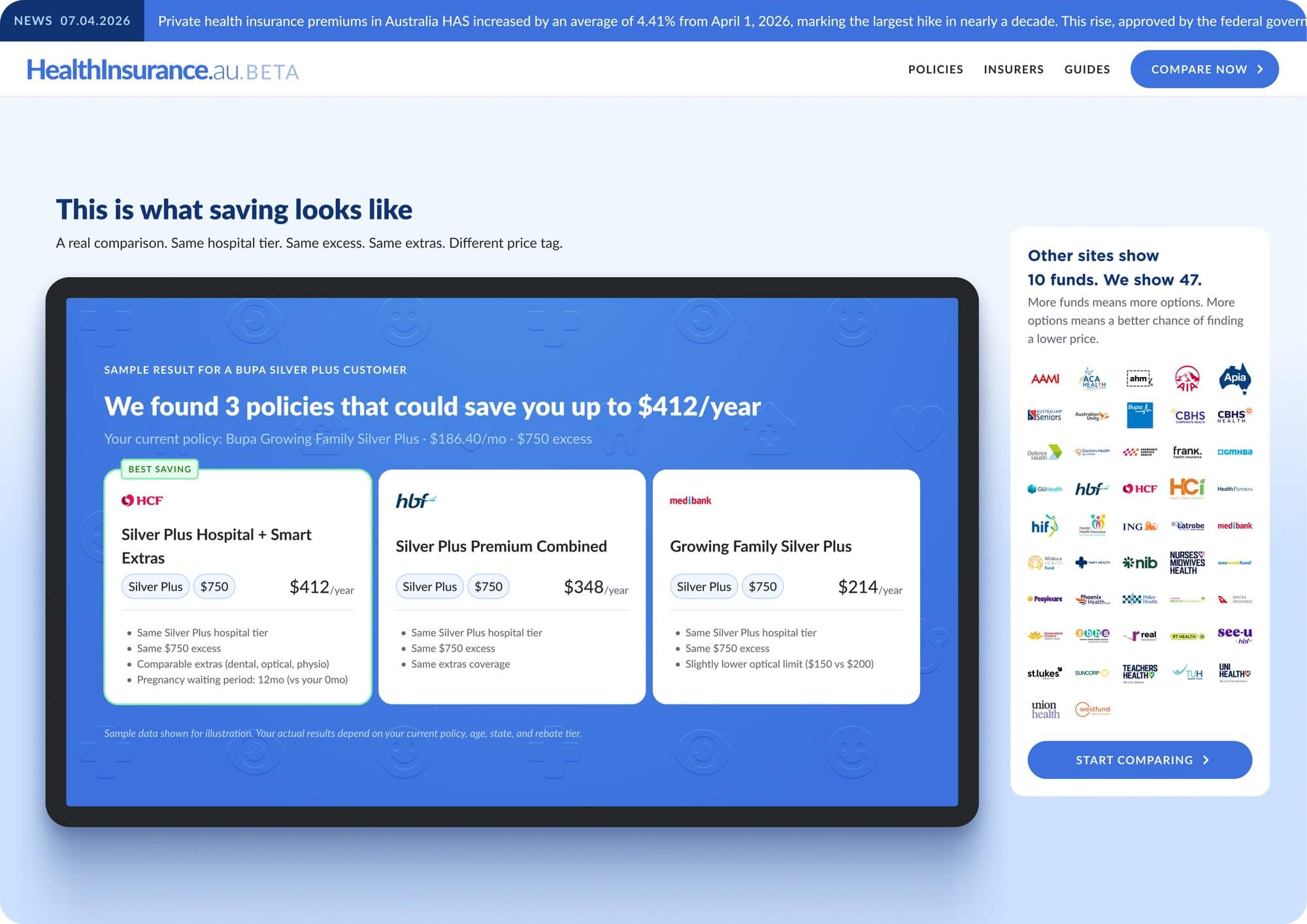
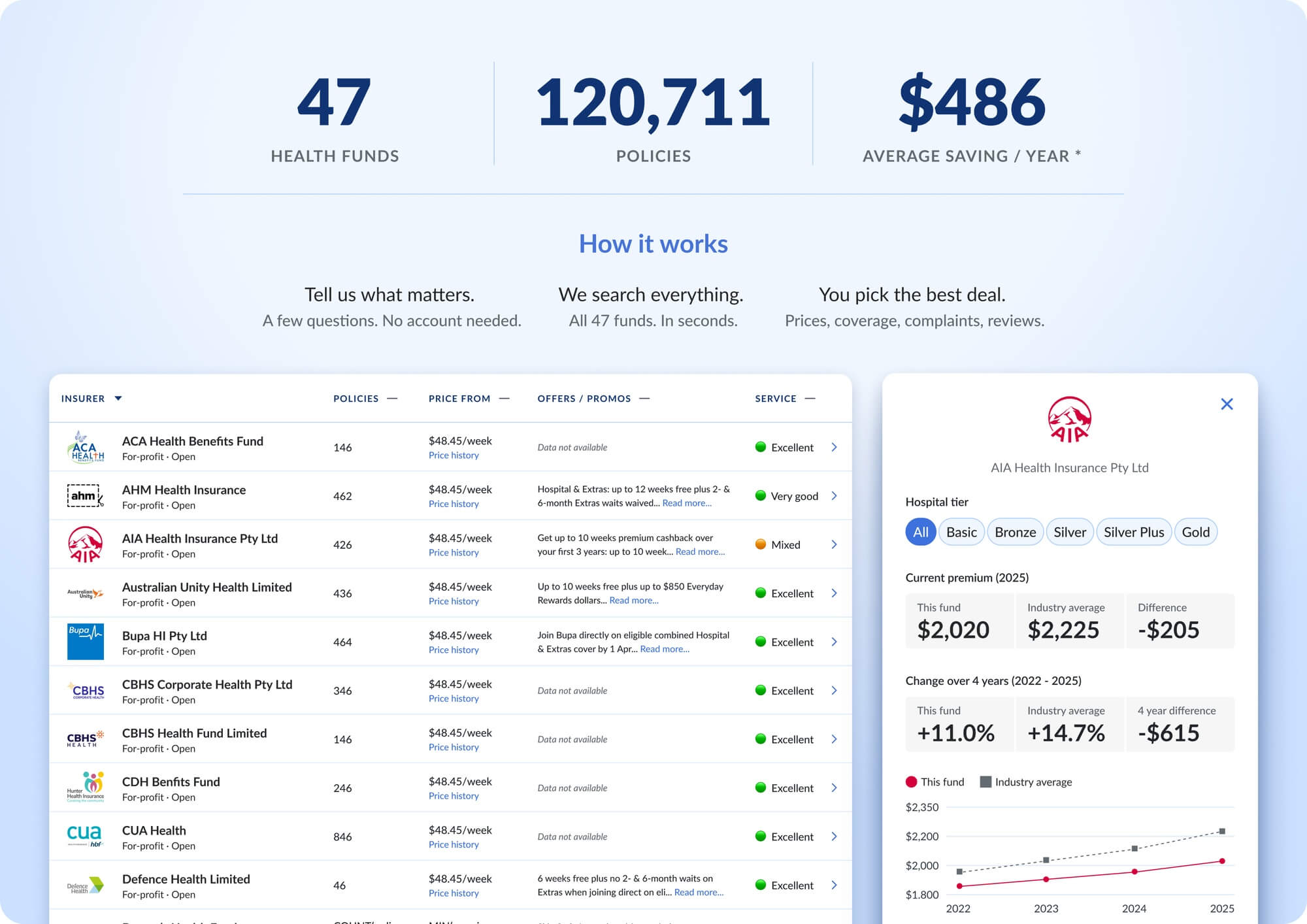
There are 47 health insurers in Australia. Most comparison sites show ten. The government runs a site that lists them all, which sounds useful until you try using it. healthinsurance.au shows every fund, every policy, refreshed daily with government data, and uses AI to narrow the whole market in minutes.
view website

2.jpg
3.jpg
4.jpg
5.jpg
  • CHALLENGE
  • SOLUTION
  • IMPACT
  • MORE
  • Previously, there were two ways to compare health insurance in Australia, and neither worked. Commercial aggregators show ten funds out of forty-seven, chosen because those funds pay commission. The government's own site, PrivateHealth.gov.au, lists all forty-seven but is practically unusable for real comparison. The harder problem lived underneath. Health insurance data in Australia is scattered across government databases, fund systems and product disclosures that contradict each other. Rebates change depending on who the provider is. Discounts stack in ways no two funds agree on. We had to reconcile all of that, daily, before any interface could exist.

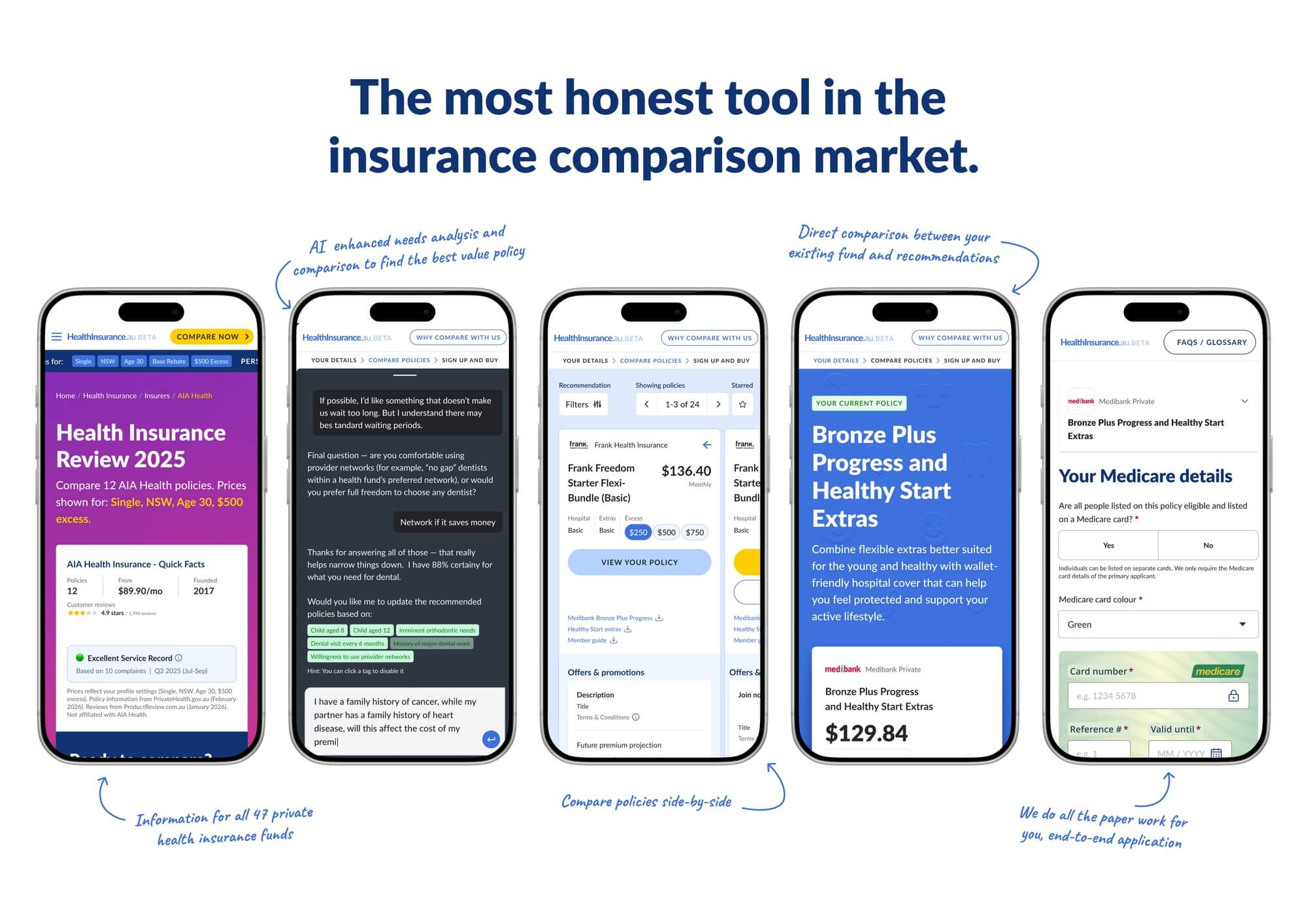
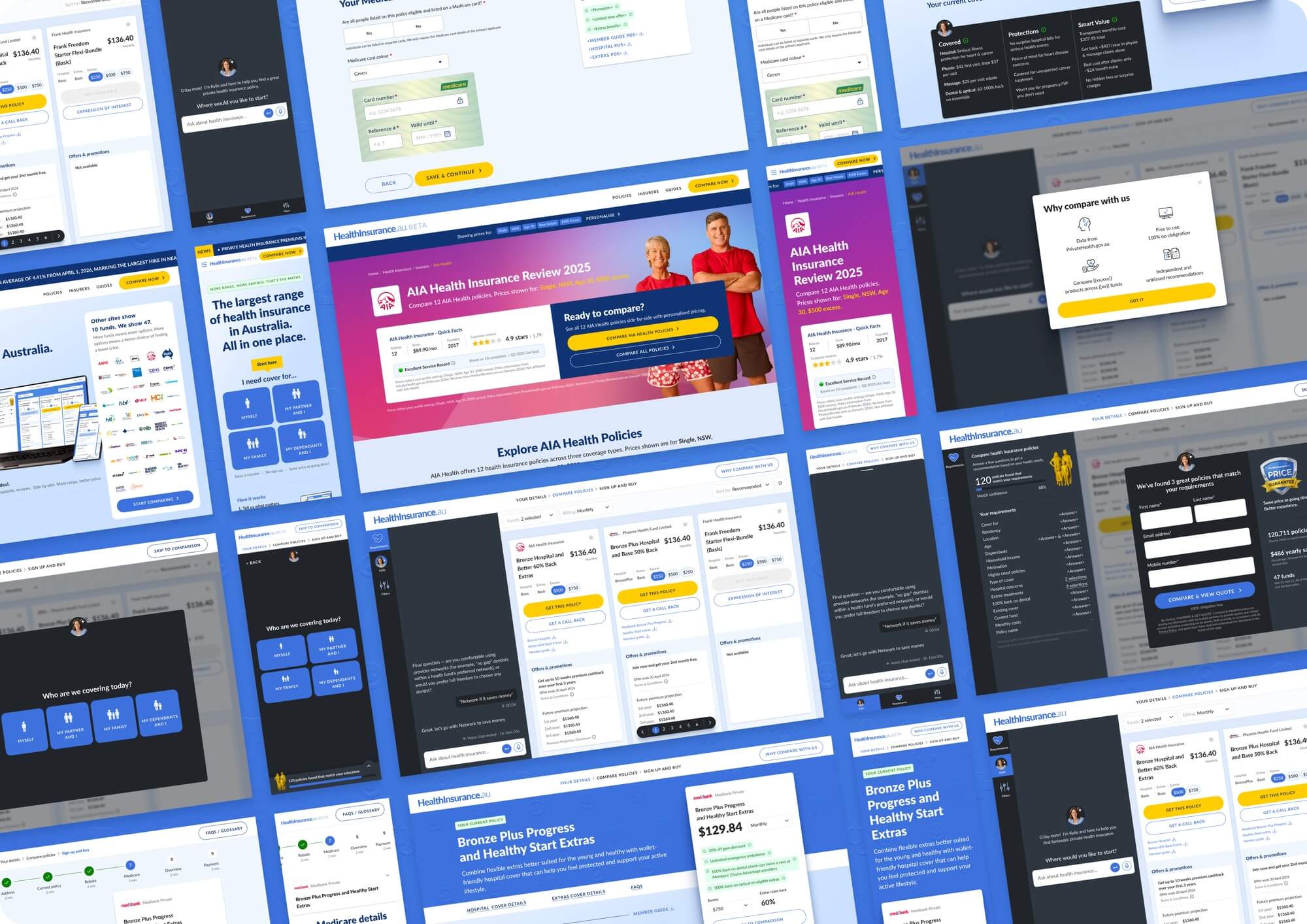
  • The interface couldn't be built until the data underneath was trustworthy. A pipeline pulls from government data, ombudsman records, reviews and fund structure every day, then reconciles the contradictions into one dataset. We had to make that dataset usable. We built an AI agent on the open AG-UI protocol, which lets the agent stream its reasoning and comparison live rather than batching a reply at the end. As someone explains their situation, typed or spoken, the shortlist narrows in real time. They end up looking at their current policy beside the one that fits. Switching happens on the same page.

  • Three changes worth pointing at. First, people can see every fund now, not ten. Second, the thirty-seven insurers invisible on aggregators for two decades are back in view, many of them member-owned not-for-profits with better complaint records than the major brands. Third, and this is the one that reshapes the market: when every policy can be compared side by side in real terms, funds can't hide junk cover behind a low headline price. They have to compete on what a policy actually does. Eighty per cent of people who start finish with a better policy and it's free to use.

  • Comparing your current policy.Users put their existing cover in and see the full market against it, in one place. Nowhere else in Australia offers this without a phone call.A daily data pipeline. Policy and pricing data comes from PrivateHealth.gov.au, the government's own comparison site. That site lists every fund but is almost impossible to use for real comparison, since there are over 120,000 policies in market. We take raw data, add ombudsman complaint records, customer reviews and fund structure, then reconcile the contradictions. Things like stacked discounts, rebates that shift depending on your provider, sticker prices that aren't real prices. All of that gets resolved before anything reaches the interface.Live agentic refinement. The AI layer runs on the AG-UI protocol. Ordinary chatbots give you a reply and stop. AG-UI streams the agent's reasoning and the comparison as events, so as someone's needs come into focus, the shortlist updates alongside them.Voice or typed. Someone can talk through the decision the way they would with a broker, except the healthinsurance.au agent is working from the reconciled market, not a product brochure.Synthetic policies. Hospital and extras cover combine independently, opening up pairings the funds don't market themselves.