eSmart Interactive Games – Gotchas Galore and Detective Training Day

good-design-award_winner_rgb_blk_logo
  • 2026

  • Digital
    Game Design and Animation

Designed By:

Designed In:

Australia

Conduct and the Alannah & Madeline Foundation, designed two interactive games for the eSmart program: Gotchas Galore and Detective Training Day. Built for Grade 5 and 6 students in Australia, the games take a fun, visually rich approach to building critical online safety skills, including media literacy and data privacy awareness.


view website

2.jpg
3.jpg
4.jpg
5.jpg
  • CHALLENGE
  • SOLUTION
  • IMPACT
  • MORE
  • Children and young people are immersed in an increasingly media-saturated world where online services, algorithms and advertising operate with motivations that are rarely transparent. Existing online safety education relies on binary, knowledge-based approaches that treat online harms as clearly right or wrong. This approach falls short when addressing the nuanced realities of data privacy and media bias. The challenge was to design gamified learning experiences that build critical thinking skills rather than deliver simple facts, helping students develop analytical frameworks for a complex digital landscape. A further constraint was achieving this within a budget comparable to traditional e-learning production.

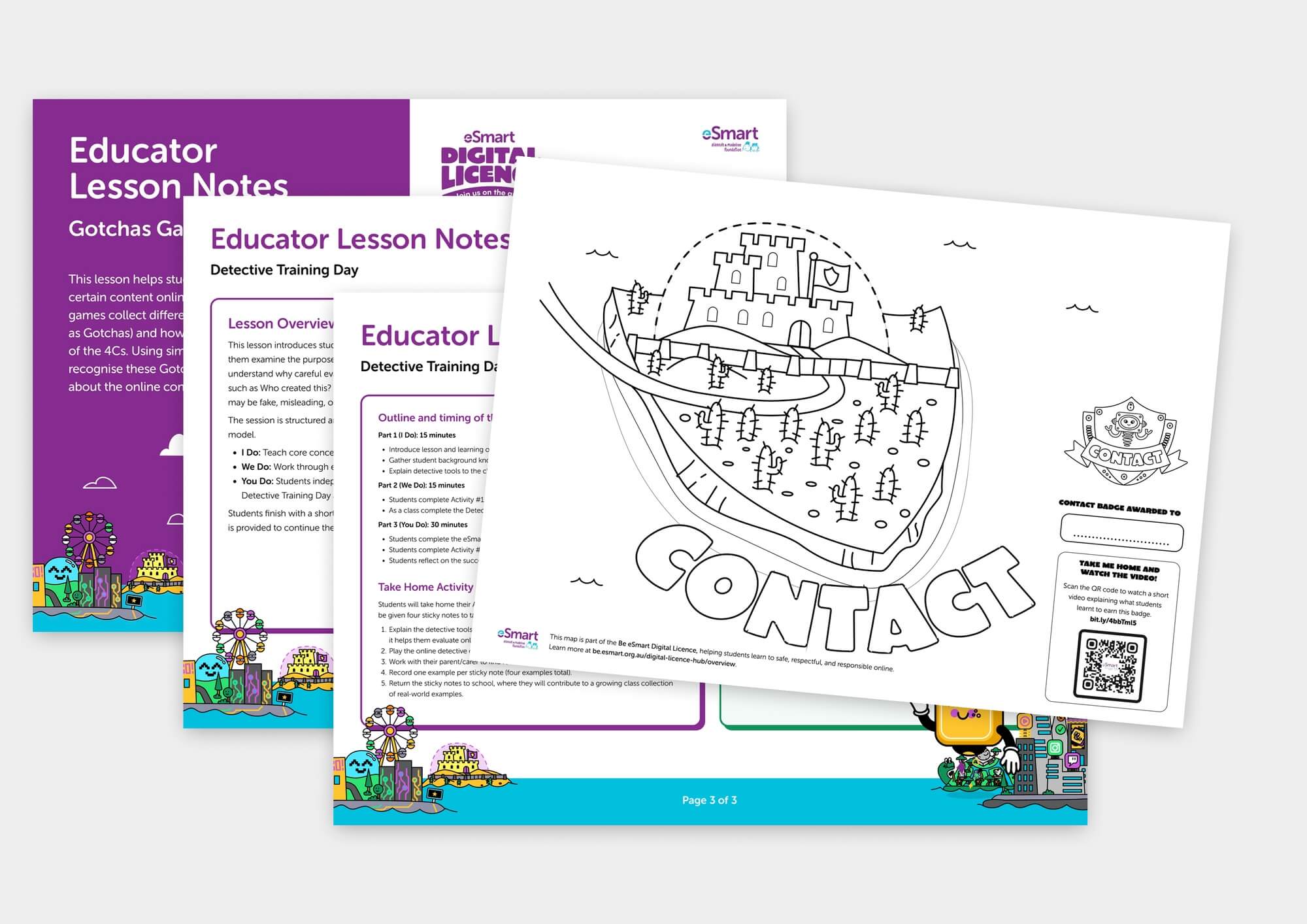
  • The teams collaborated with educational subject matter experts to define learning objectives, before taking an iterative design and development approach using the PixiJS game engine. Formal user testing was conducted with 48 students at Westgarth Primary School to calibrate difficulty and refine interaction models.A second testing phase at Murrumbeena Primary School assessed the games as part of a complete, teacher-led lesson. This informed the development of accompanying slide decks, teacher instructions and accessible worksheet alternatives. The result is a cohesive learning package where the games serve as an embedded, interactive component within a broader structured lesson.

  • Early in-school testing across 90 student responses found that 97 percent of students completed both games, and 62 per cent reported learning something new about online safety. In free-text responses, students demonstrated comprehension of core concepts including data tracking, personal information value and identifying misleading online content.The games are offered free through the federally funded eSmart platform, maximising reach across Australian schools. By embedding these skills into the Grade 5 and 6 curriculum, the project contributes to a more critically informed generation of digital citizens, while strengthening the Alannah& Madeline Foundation's eSmart offering as a standout educational resource.

  • Both games, found at https://be.esmart.org.au/lesson-plans/detective-training-day and https://be.esmart.org.au/lesson-plans/gotchas-galore are browser-based and built with low-bandwidth environments in mind. Assets are preloaded on launch, ensuring smooth and uninterrupted gameplay even in regional or lower-connectivity classrooms. This also supports shared-device use, a common reality in Australian primary schools where students may take turns on a single iPad.A key design feature is the nuanced gameplay mechanic in Gotchas Galore, which moves beyond binary correct or incorrect responses. Instead, students are equipped with tools that mirror the real-world critical thinking skills they need when evaluating online content and data exchanges. This reflects a deliberate pedagogical decision to build capability rather than test knowledge.The games are packaged as part of a complete lesson resource including teacher slide decks, facilitation guides and a fully accessible worksheet version for students with additional needs or device limitations, supporting inclusive classroom delivery.AI-assisted tools were used throughout production, including Claude Code for game logic and development, ElevenLabs for voiceover generation, and Google Gemini for asset generation and extrapolation from original concept designs. This approach allowed the team to achieve a higher level of visual fidelity and interactivity than traditional e-learning authoring tools would permit, within a comparable budget envelope.