Adelaide Airport Digital Experience Platform

good-design-award_winner_rgb_blk_logo
  • 2026

  • Digital
    Web Design and Development

Designed By:

Commissioned By:

Adelaide Airport Limited

Designed In:

Australia

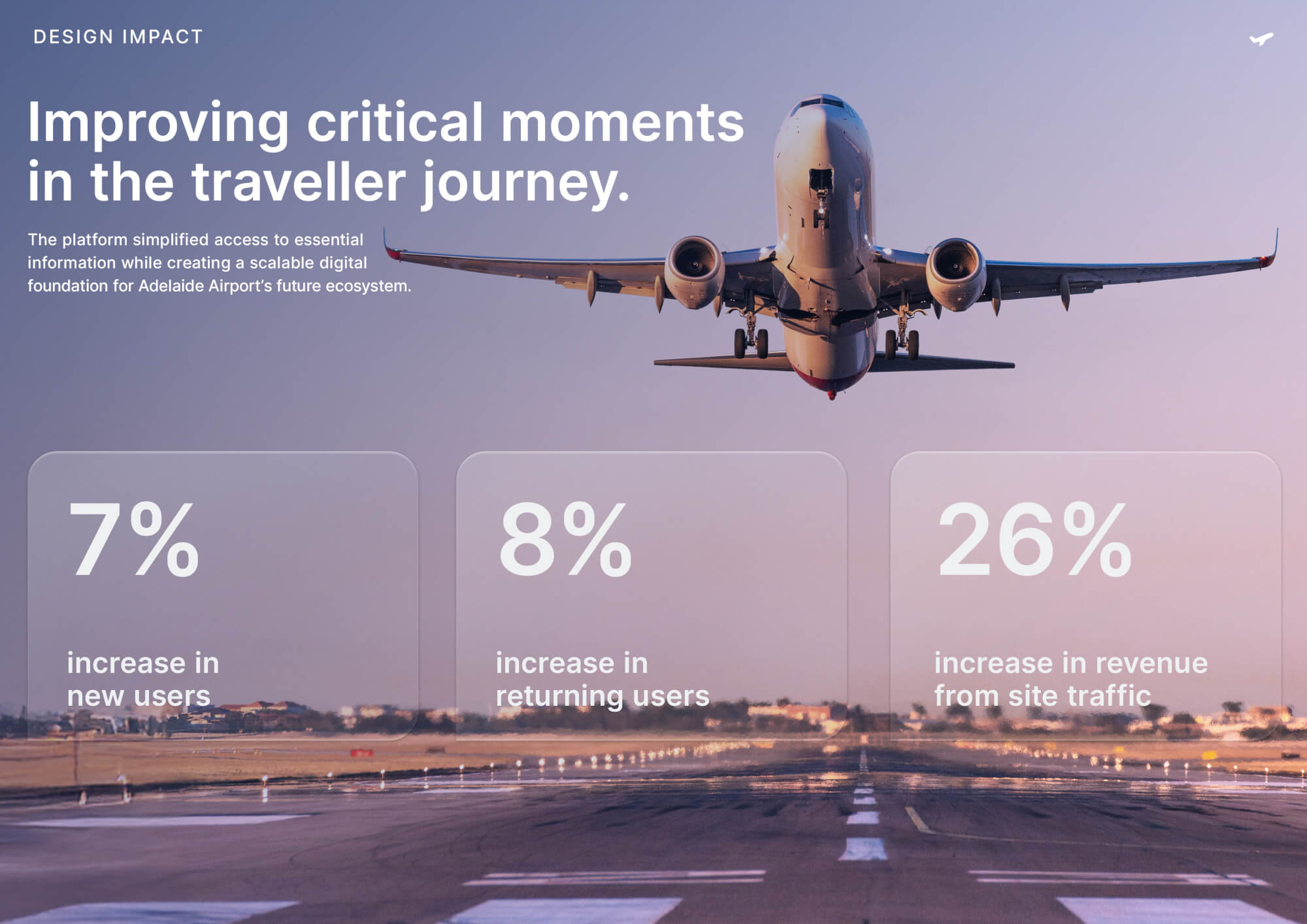
Adelaide Airport’s digital platform reimagines how travellers prepare, navigate, and experience the airport online. Unifying three sites within an ecosystem, it simplifies journeys through research-driven design, real-time data, and accessibility-first thinking, helping deliver measurable impact, including a 7% increase in new users, 8% in returning users, and 26% revenue growth.
view website

2.jpg
Introduction
3.jpg
The Challenge
4.jpg
The Solution
5.jpg
Key Features
6.jpg
Design Impact
  • CHALLENGE
  • SOLUTION
  • IMPACT
  • MORE
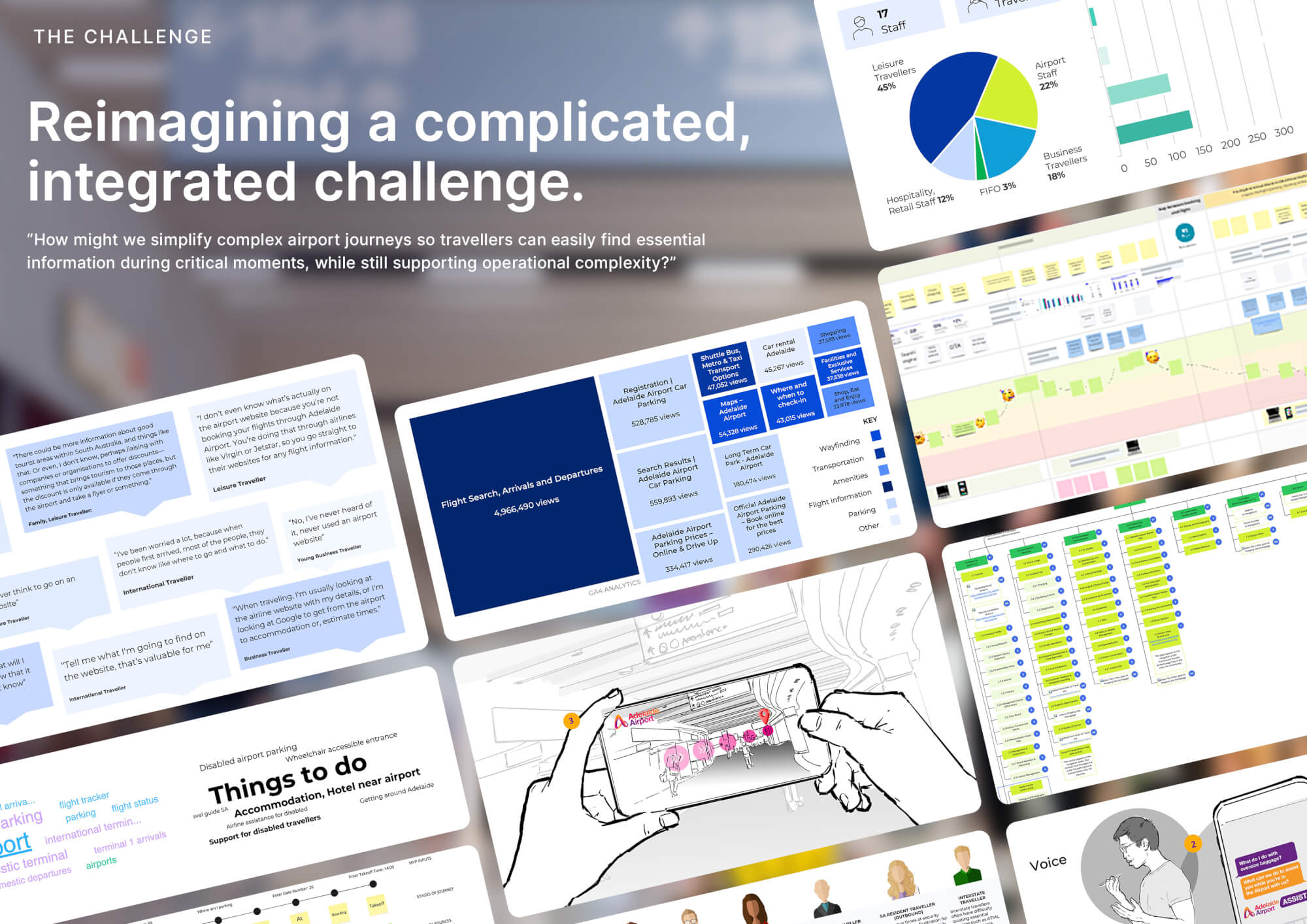
  • Adelaide Airport’s digital ecosystem had evolved across three separate websites serving travellers, corporate stakeholders and property partners. The structure reflected internal organisational silos rather than real traveller behaviour, creating inconsistent navigation, duplicated content and complex publishing workflows.For travellers, this fragmentation made it difficult to locate essential information such as parking, transport and terminal services during time-critical moments.To understand the problem, the team conducted field research inside the airport, interviewing more than 55 travellers across five segments.These insights highlighted the need to design a platform that simplifies journeys while supporting the complexity of a modern international airport.

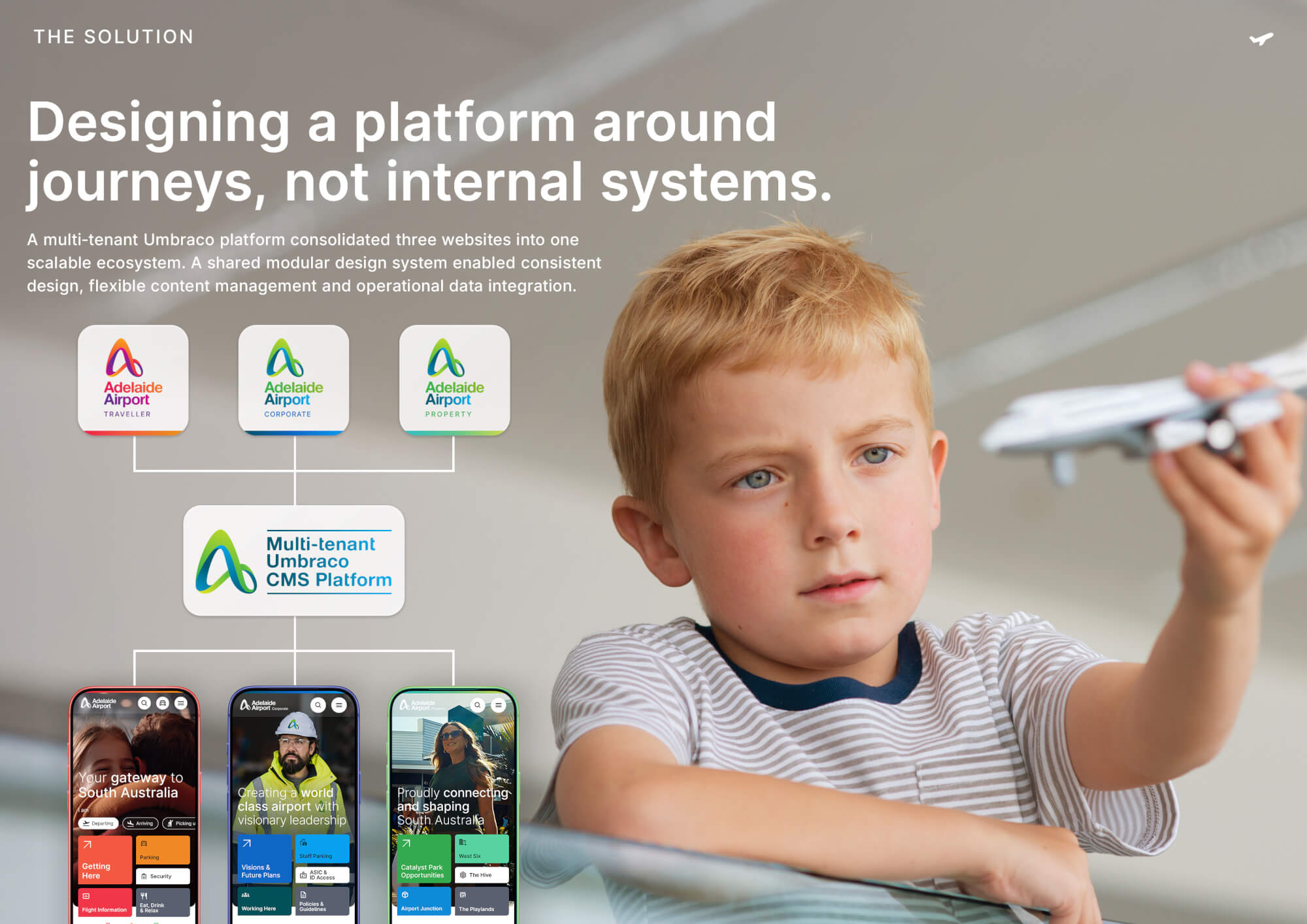
  • The design solution restructured the digital experience around real traveller journeys rather than internal organisational structures.Discovery combined traveller interviews, analytics, stakeholder workshops, and technical collaboration with Adelaide Airport’s operations, IT and cyber security teams.The platform unifies three previously disconnected digital properties, Traveller, Corporate, and Property, within a single multi-tenant Umbraco CMS.A shared design system ensures consistency while allowing each site to maintain a distinct identity. Modular templates and reusable components enable efficient content creation.The result is a scalable platform that supports Adelaide Airport’s long-term digital strategy.

  • The platform transforms how travellers access essential information during critical moments of their journey.By restructuring the experience around key scenarios such as arrivals, departures, and pick-up or drop-off visits, users can quickly locate information relevant to their situation.A real-time dashboard surfaces operational information, including flight updates, weather conditions, and parking availability, helping travellers plan ahead.Internally, the modular CMS simplifies publishing workflows and content governance across multiple sites.The result is a digital platform that reduces time spent searching for critical information while establishing a scalable foundation for Adelaide Airport’s future digital ecosystem.

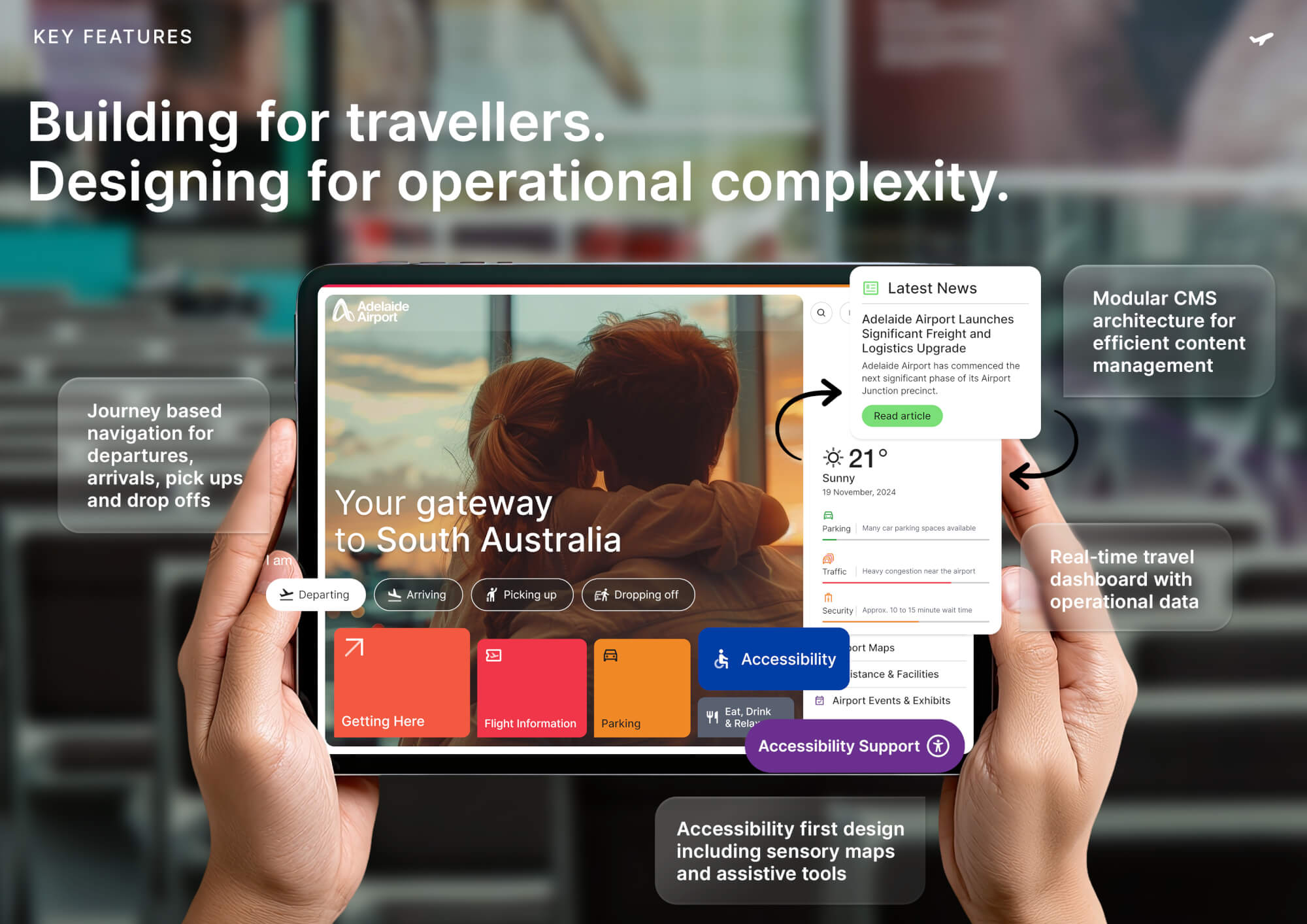
  • The Adelaide Airport platform introduces a modular digital ecosystem designed to improve traveller experiences while supporting operational flexibility and long-term digital growth.RESEARCH-DRIVEN JOURNEY DESIGNThe platform was informed by field research conducted inside the airport, including more than 55 traveller and staff interviews across five user segments.MULTI-TENANT PLATFORM ARCHITECTURETraveller, Corporate, and Property websites operate within a unified Umbraco CMS ecosystem while maintaining distinct brand identities.REAL-TIME OPERATIONAL DASHBOARDA flexible homepage dashboard surfaces key travel information, including weather conditions, parking availability and airport status. The architecture supports future integrations such as security wait times and travel timing updates.VERSATILE FLIGHT TRACKERThe flight tracking system was designed to support both public travellers and internal airport teams, enabling the same interface to serve operational and customer needs.ACCESSIBILITY-FIRST EXPERIENCEAccessibility considerations were embedded throughout the platform, including accessible colour palettes, recognisable interface cues such as the accessible blue dashboard tile, sensory maps, a comprehensive accessibility information section and integration with the Recite accessibility tool.MODULAR CMS ARCHITECTUREA comprehensive library of reusable content modules enables editors to assemble pages dynamically while preserving visual and structural consistency across the platform.