A Youth-Led Co-Design Initiative to Address Loneliness in Young People

good-design-award_winner_rgb_blk_logo

Developed by headspace’s Mental Health Education Program with the National Youth Reference Group, Connection & Wellbeing is a youth-led secondary school workshop. It addresses rising loneliness by building practical skills for connection, belonging, wellbeing, and help-seeking within today’s changing social and digital environments experienced by young people.
view website

2.jpg
3.jpg
4.jpg
5.jpg
6.jpg
  • CHALLENGE
  • SOLUTION
  • IMPACT
  • MORE
  • Youth loneliness is a significant public health issue in Australia, with more than two in five young people reporting loneliness and one in seven experiencing it persistently, affecting mental health and wellbeing. Despite high digital connectivity, many report reduced face‑to‑face interaction, weak school belonging, and difficulty forming meaningful relationships. Recent social media minimum age reforms, while aiming to reduce online harm, may also temporarily disrupt social supports. Schools require an evidence‑based, age‑appropriate, engaging response co‑designed with young people that strengthens offline connection, belonging, and help‑seeking, balances governance and cultural responsiveness, avoids stigma, and is practical, scalable across diverse school settings.

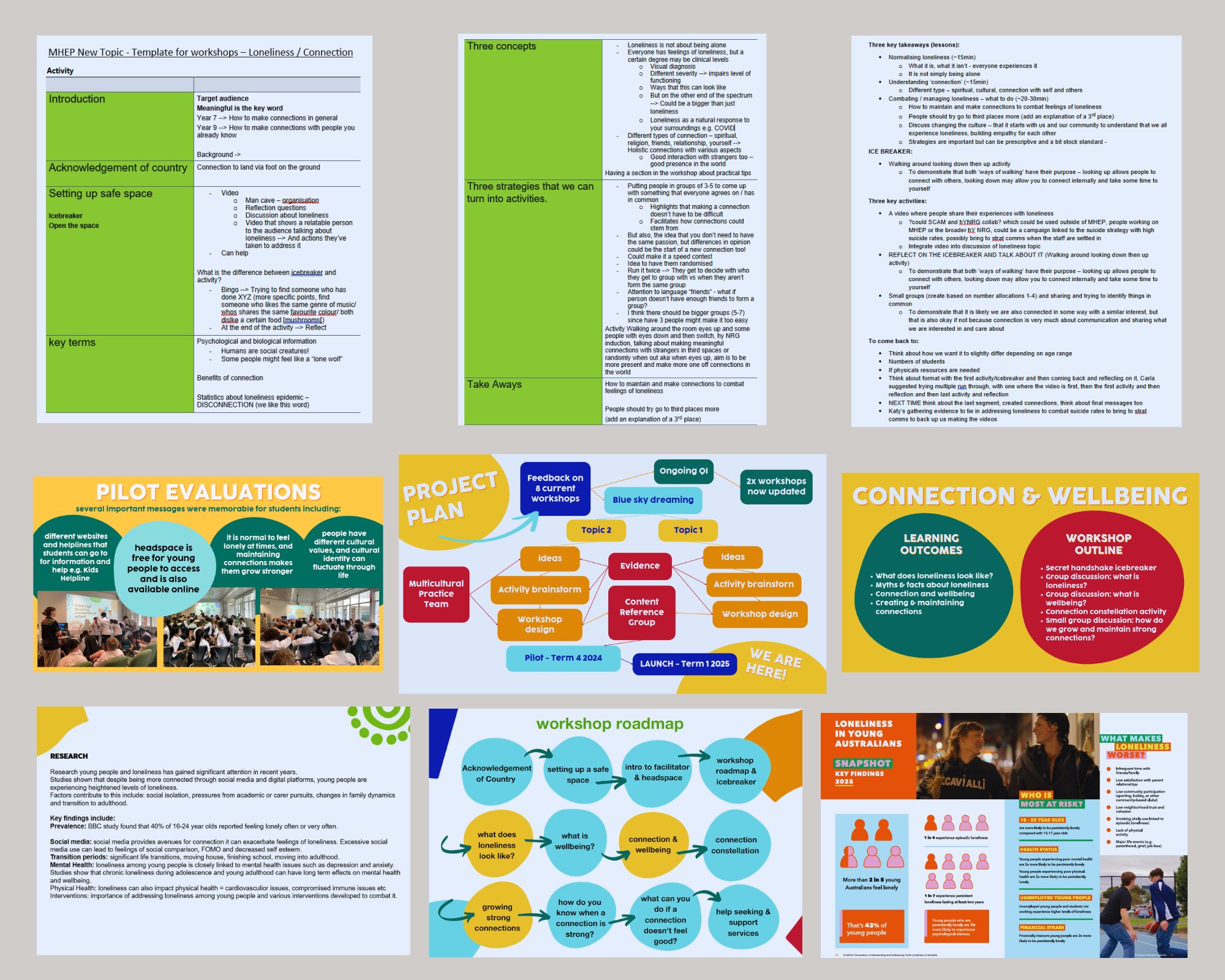
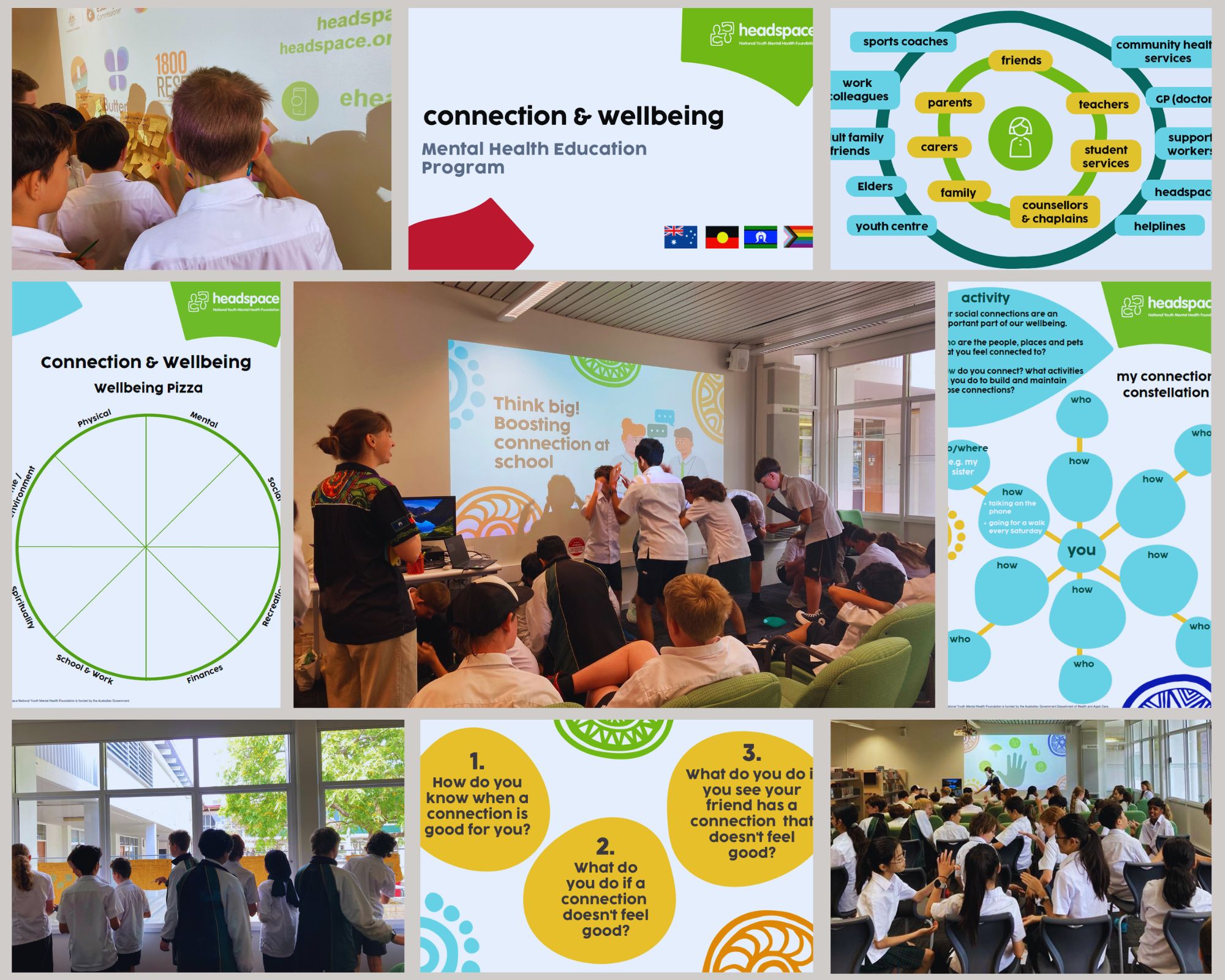
  • The solution was Connection & Wellbeing, a youth‑led, co‑designed mental health literacy workshop embedded within headspace’s Mental Health Education Program (MHEP). Developed over six months with the National Youth Reference Group, young people led topic selection, language, activities, and delivery style, supported by clinical and education specialists. Using interactive, trauma‑informed design, storytelling, skills practice and reflective discussion, the workshop normalises loneliness and builds practical connection skills. Prototypes were piloted and refined through continuous student and educator feedback. Launched in February 2025, the workshop has since been delivered nationally, ensuring safety, cultural responsiveness, consistency and scalability across diverse school contexts.

  • The Connection & Wellbeing workshop demonstrates strong societal impact by strengthening young people’s knowledge, skills, and confidence to build connection and seek help. Students showed improved understanding of loneliness, connection strategies, and available supports. Over half reported increased confidence to seek help, and 70% were satisfied or very satisfied. Delivered nationally across metropolitan, regional, and remote communities, the program supports equitable access to preventative mental health education. Its engaging, scalable design contributes to improved wellbeing, safer help-seeking pathways, and stronger, more connected school communities.

  • Youth‑led co‑design: Young people were engaged as equal decision‑makers rather than consultants, shaping topic selection, program naming, language, activities, and stigma‑reduction strategies. Insights from headspace’s National Youth Reference Group ensured authenticity and relevance grounded in lived experience.Evidence‑informed design: Content is grounded in Australian youth loneliness research, youth mental health literature, WHO social connection frameworks, and post‑pandemic wellbeing data, translated into developmentally appropriate learning experiences.Curriculum‑aligned: Explicit alignment with the Australian Curriculum Personal and Social Capability (v9.0) supports educator uptake and integration within existing school wellbeing frameworks.Interactive, creative pedagogy: The workshop uses games, movement, reflection, storytelling, skills rehearsal and personalised visual tools (including identity and island‑mapping activities) to maximise engagement, retention, and peer connection.Trauma‑informed delivery: Design includes protective interrupting, school staff presence, contextual risk screening, and clear escalation pathways to ensure psychological safety.Strength‑based reframing: Shifting language from “loneliness” to Connection & Wellbeing promotes collective responsibility, reduces stigma, and focuses on capability‑building.Iterative testing and refinement: Prototypes were piloted across schools, incorporating real‑time student and educator feedback.Scalable national system: Delivered through the established Mental Health Education Program, enabling consistent national rollout with flexibility for diverse school contexts.