Bale Bio

good-design-award_winner_rgb_blk_logo

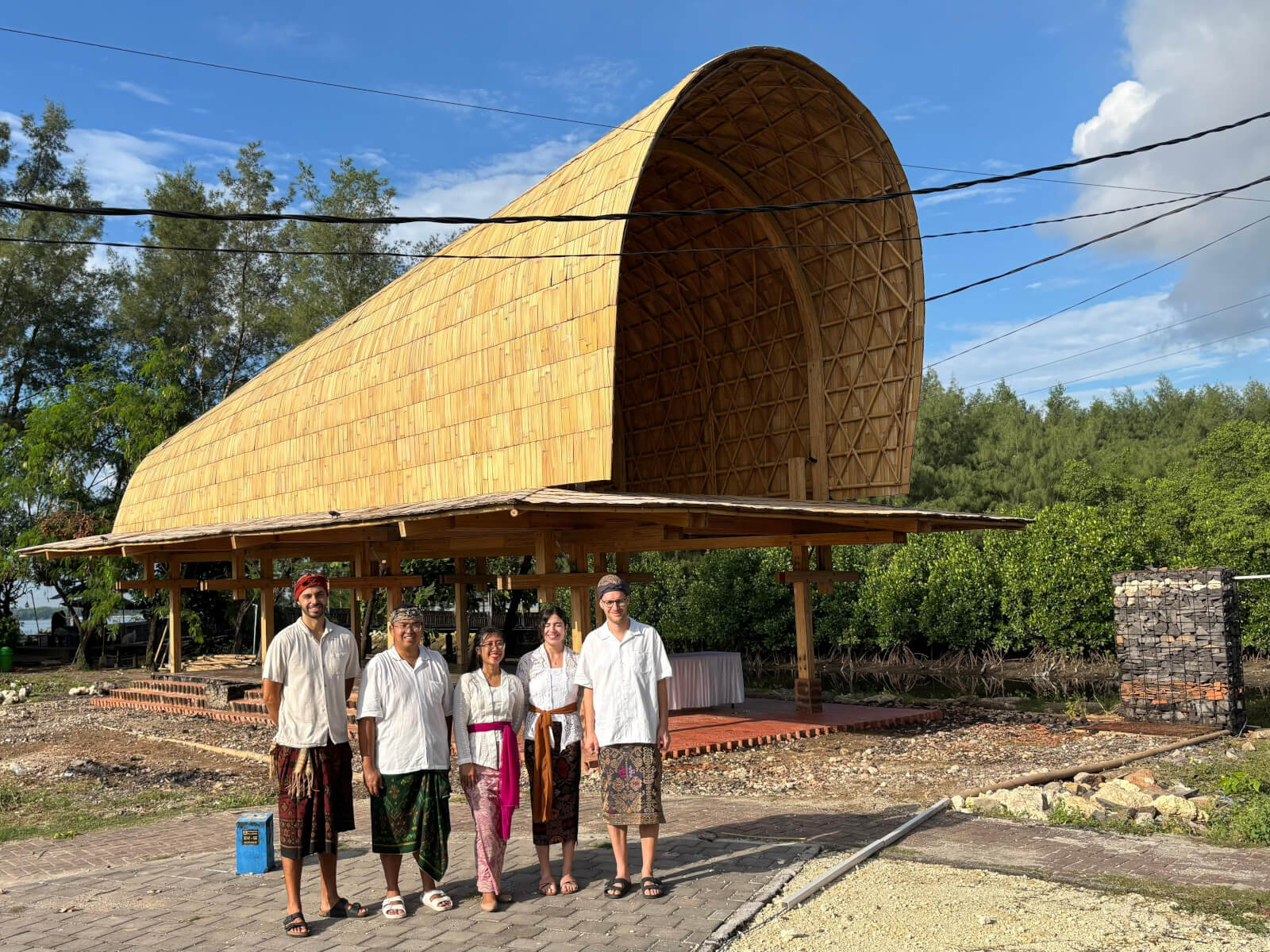
Bale Bio is an 84-square-meter pavilion that explores the possibilities of regenerative architecture in tropical areas. The pavilion is not only a space for the local community, but also a prototype for how architecture can restore ecosystems, pioneer material technologies, support local economies, and reconnect cultural heritage with contemporary building


view website

1.jpg
2.jpg
3.jpg
4.jpg
5.jpg
6.jpg
7.jpg
8.jpg
9.jpg
  • CHALLENGE
  • SOLUTION
  • IMPACT
  • MORE
  • The pavilion forms part of a Bauhaus Earth research initiative exploring regenerative building practices. It aims to showcase nature-positive building solutions by integrating locally available bio-based and re-used materials through the re-contextualisation of traditional construction techniques. Developed through collaboration with public and private sectors, academia, and local communities, the pavilion is the first structure in Bali to utilise structural laminate bamboo, demonstrating proof-of-concept as a viable bio-based alternative to non-renewable resources in urban construction. The buildings material supply-chains supports rural livelihoods and the restoration of degraded landscapes, while a Life Cycle Assessment (LCA) confirms its carbon-negative footprint.

  • The 84m2 pavilion showcases the use of locally sourced bio-based and reused materials, including structural laminate bamboo, an innovative material sourced through rural village-based agroforestry and manufactured locally. As the first structure of its kind in Bali, the design process involved extensive material testing and prototyping to establish its structural performance. Drawing on local vernacular typologies, such as the Bale Banjar, the design reflects community input and responds to its cultural context, integrating a diverse range of regenerative materials. This collaborative approach, aimed to showcase local champions and create a design that supports both environmental restoration and community resilience.

  • The Bale Bio demonstrates the social, cultural, ecological, and economic potential of regenerative design. Developed with input from local stakeholders, it is operated by the Sanur community, with the goal of promoting community cohesion and regenerative practices. The project established a forest-to-construction value chain, using bamboo from rural agroforestry co-ops in the neighbouring island of Flores, transformed into durable, standardised laminate bamboo. This approach, which supports multiple SDGs, provides climate-positive employment and strengthens rural economies. Life Cycle Assessment (LCA) confirms the pavilion's carbon-negative footprint, showcasing how regenerative material systems can deliver measurable environmental, while having a positive social impact.

  • The Bale Bio Pavilion is a key outcome of the global Rebuilt initiative led by Bauhaus Earth, which explores regenerative building practices across four regions: Berlin-Brandenburg (Germany), Cape Town (South Africa), Paro-Thimphu (Bhutan), and Denpasar–Bali (Indonesia). As the first structure in Bali constructed from structural laminate bamboo, the pavilion serves as proof of concept for this emerging material technology. Co-designed with architecture students from the University of Warmadewa and local stakeholders, the pavilion reflects a collaborative design process rooted in community values. Its architecture reinterprets the Bale Banjar—a traditional open-air meeting hall—using sustainable, locally sourced materials to revive cultural forms often lost to concrete construction. Structural testing conducted during the project contributed to the development of a future Indonesian building code for engineered bamboo and ensured high standards for durability and performance. A Life Cycle Analysis (LCA) revealed the building achieved a 104% reduction in Stage A emissions, with a carbon footprint of -2,062 kgCO₂e compared to a baseline of 51,336 kgCO₂e, confirming its carbon-negative status. The pavilion not only showcases the potential of bamboo but also demonstrates how regenerative building practices can scale by drawing on local knowledge, regionally available materials, and community champions.