NAB In-Branch Terminals

good-design-award_winner_rgb_blk_logo
  • 2025

Designed By:

Commissioned By:

NAB

Designed In:

Australia

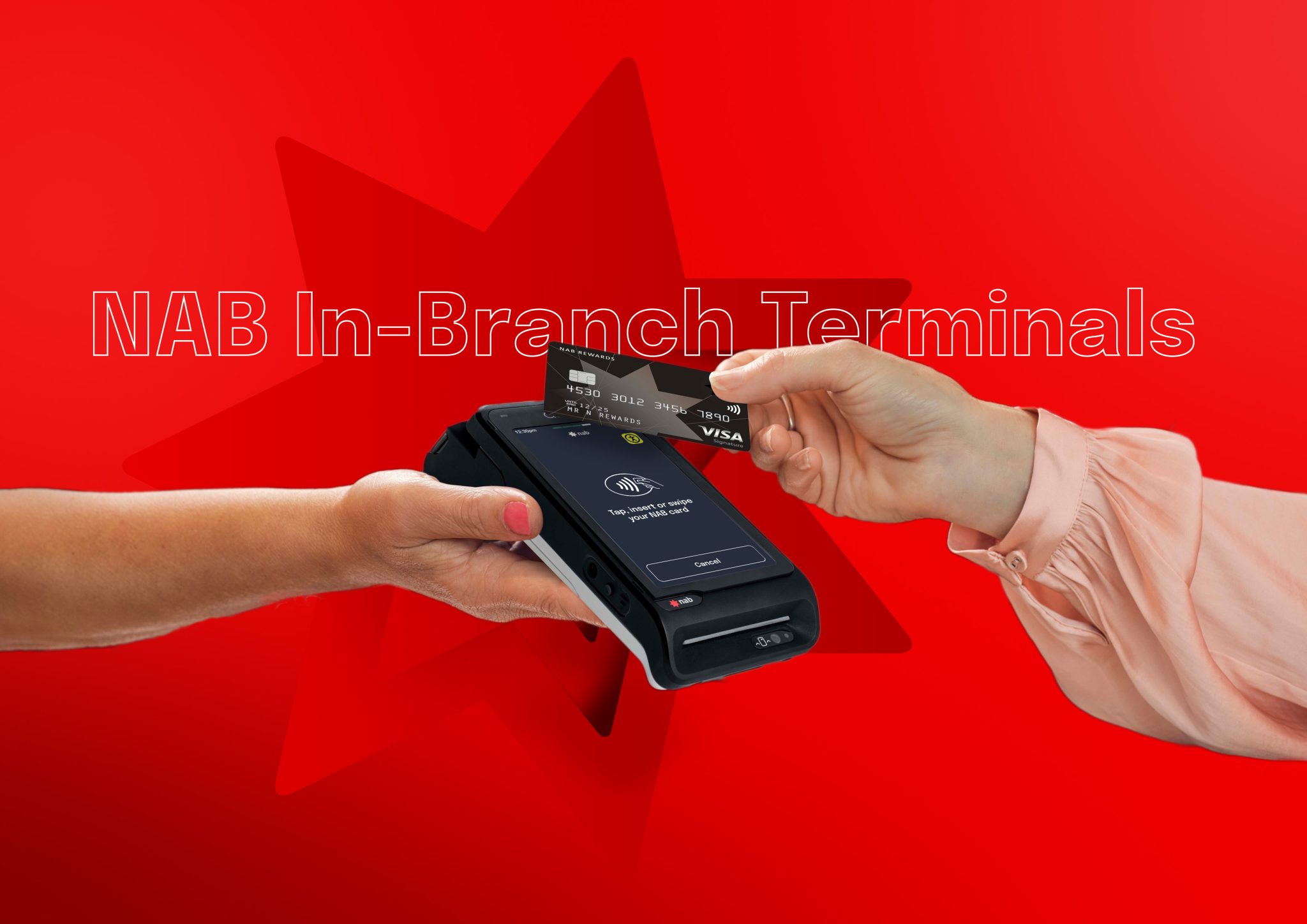
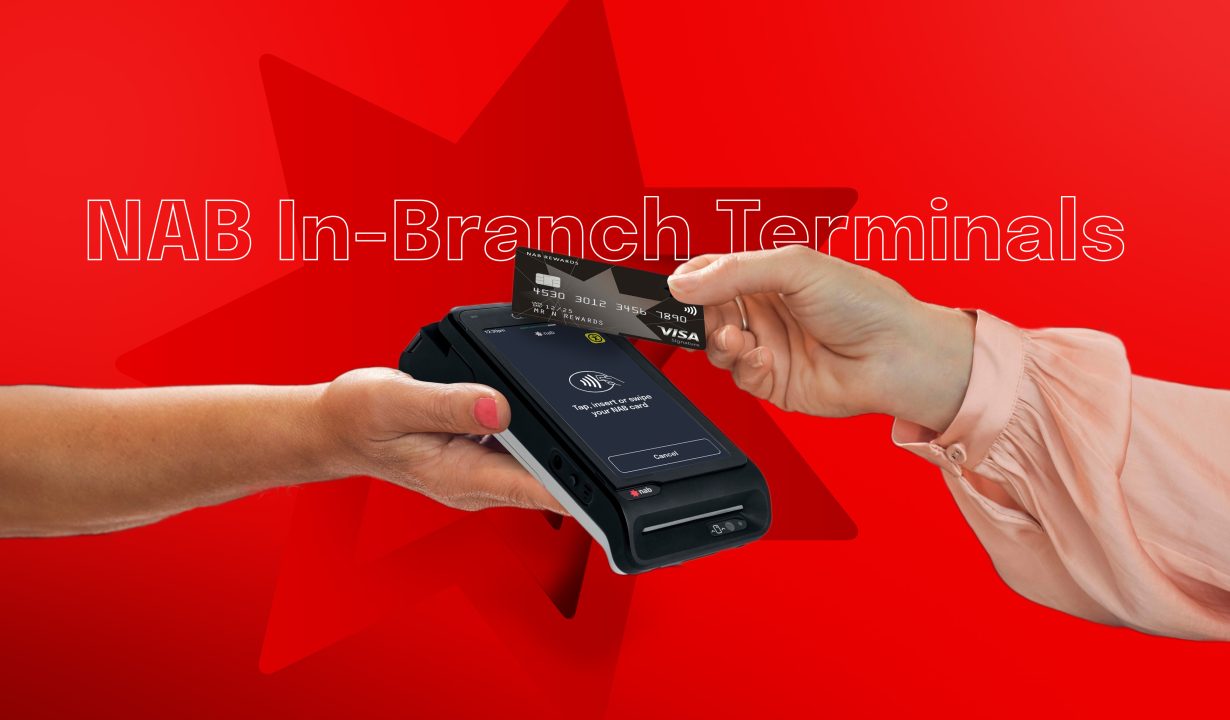
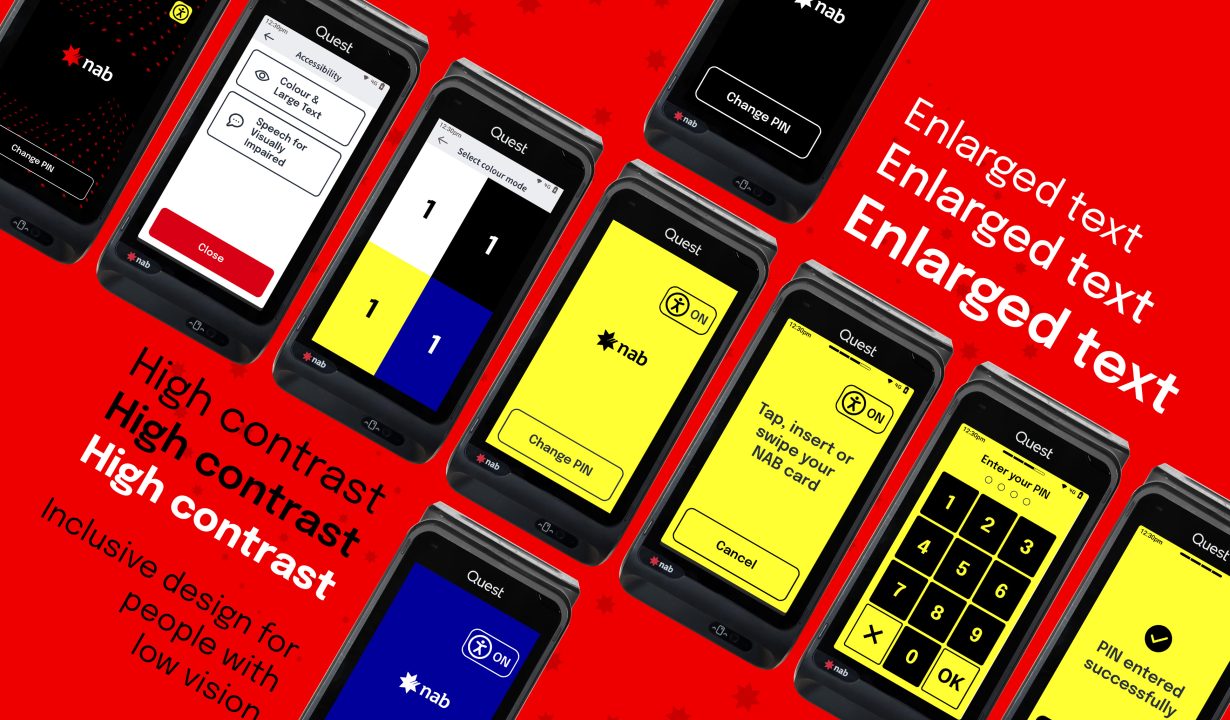
NAB In-Branch Terminals allows customers who visit a branch to authenticate themselves quickly & easily. The terminals cater for an increasing number of customers who are opting to use digital cards on their smart phones over plastic cards. Championing inclusive design, the experience has been designed for people with a disability.

1_in-branch-terminals_hero-1
2_in-branch-terminals_hero-2
3_in-branch-terminals_accessibility_low-vision
4_in-branch-terminals_accessibility_vision-impaired
  • CHALLENGE
  • SOLUTION
  • IMPACT
  • NAB’s CardSwipe Device Replacement Program introduces a new terminal experience aimed to enhance customer authentication within branches. With the rollout of new devices, there was an opportunity to reimagine the user experience and user interface. Our goal was to create a seamless and inclusive terminal experience within banking branches that empowers individuals to independently access and utilise banking services effectively. This encompasses customers with visual impairments including those who are blind, colourblind or have low vision.

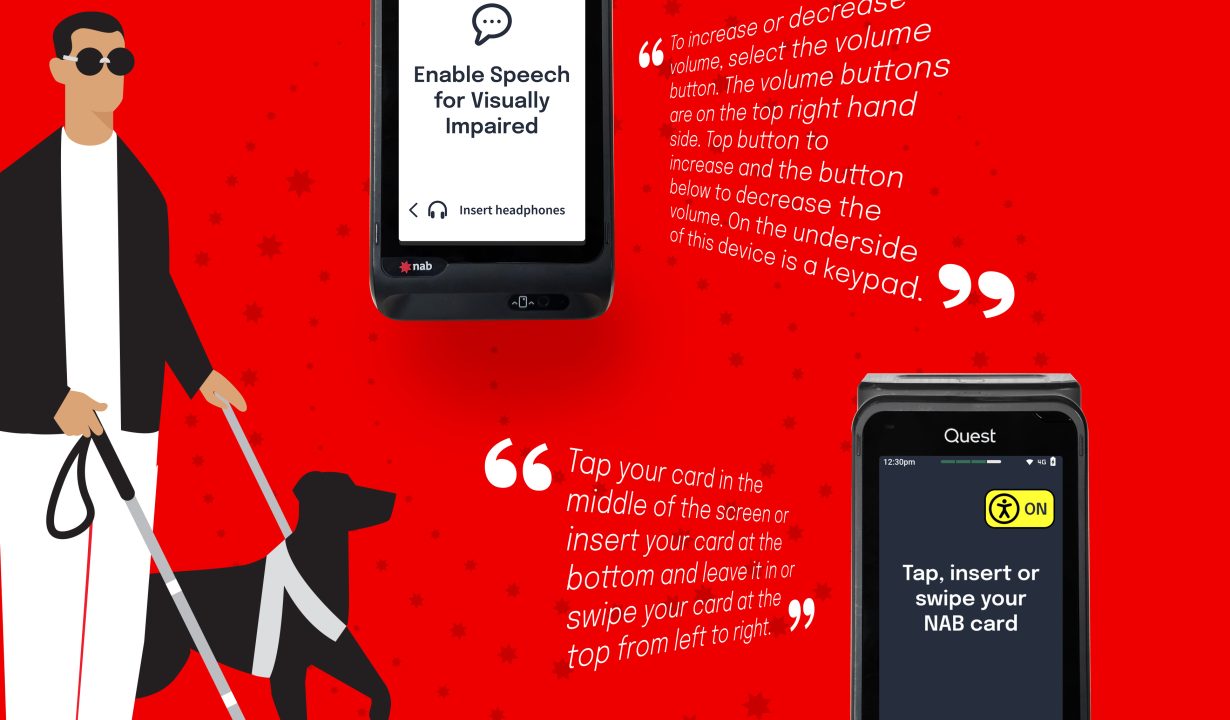
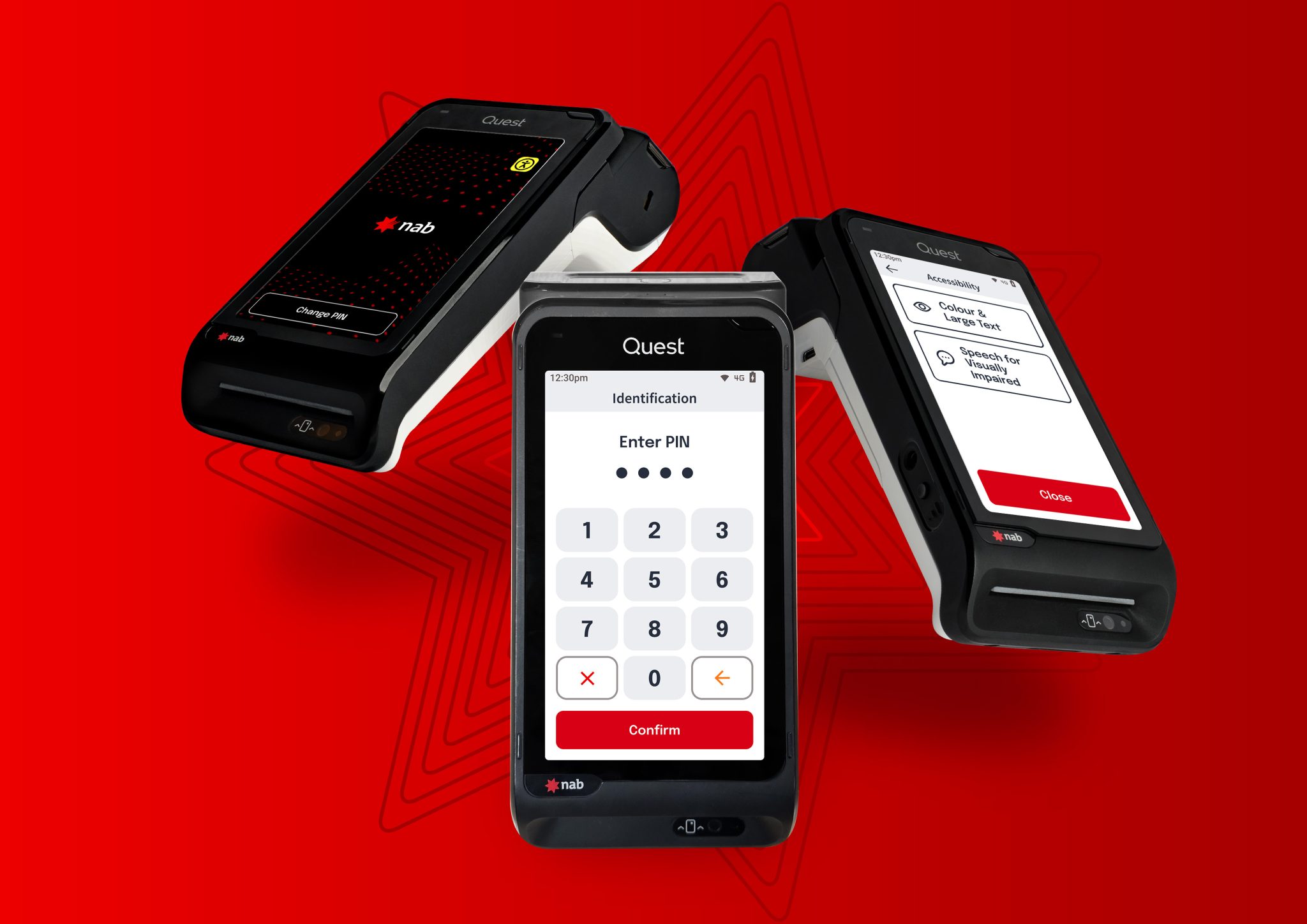
  • The new in-branch terminals will allow NAB customers to authenticate themselves using their mobile devices and virtual cards at the branch. The terminals include an accessibility menu where customers with accessibility needs can go down the path of changing the colour, increasing the text size, or enabling speech mode for those who are visually impaired. The experience for blind people will provide the user with a series of different beeps and tones to indicate how they are moving through the flow and provide guidance if they are coming up against any stops or errors.

  • We have designed a new experience for In-Branch Terminals that focuses on inclusivity for people who are blind, have low vision or experience colour blindness. This would have several impactful outcomes: 1. It would significantly improve accessibility for a broader range of customers leading to increase customer satisfaction 2. The design would prioritise user experience for these groups ensuring that they can access services independently and efficiently 3. By considering the needs of diverse uses the terminal would promote inclusivity and demonstrate a commitment to serving all customers equitably