Maryville Heirloom House

good-design-award_winner_rgb_blk_logo
  • 2025

  • Built Environment
    Architectural Design

Designed By:

Commissioned By:

Melanie and Michael Lukin

Designed In:

Australia

Maryville Heirloom House transforms a 1905 miners’ cottage into a modern family home, balancing heritage preservation and sustainability. Featuring a gable-inspired pavilion, the design incorporates passive solar elements and reclaimed materials. This project exemplifies flood resilience, restoration, small-lot housing and providing lasting social and architectural value.


view website

10.jpg
1.jpeg
2.jpeg
3.jpeg
4.jpeg
5.jpeg
6.jpeg
7.jpeg
8.jpeg
9.jpeg
  • CHALLENGE
  • SOLUTION
  • IMPACT
  • MORE
  • After three generations of family occupation, the project brief outlined the need for substantial repairs and additions to transform the 88-square-metre historic brick miners' cottage into a modern family home. Situated on a 267-square-metre flood-prone site, the new habitable floor levels had to be raised 1.4 meters above the natural ground. During the restoration phase, family members revealed that the cottage had been elevated by 1 metre in 1937 due to significant flooding. The design brief required careful consideration of site limitations, environmental regulations, and the cottage's compromised structure while honouring its deep familial significance.

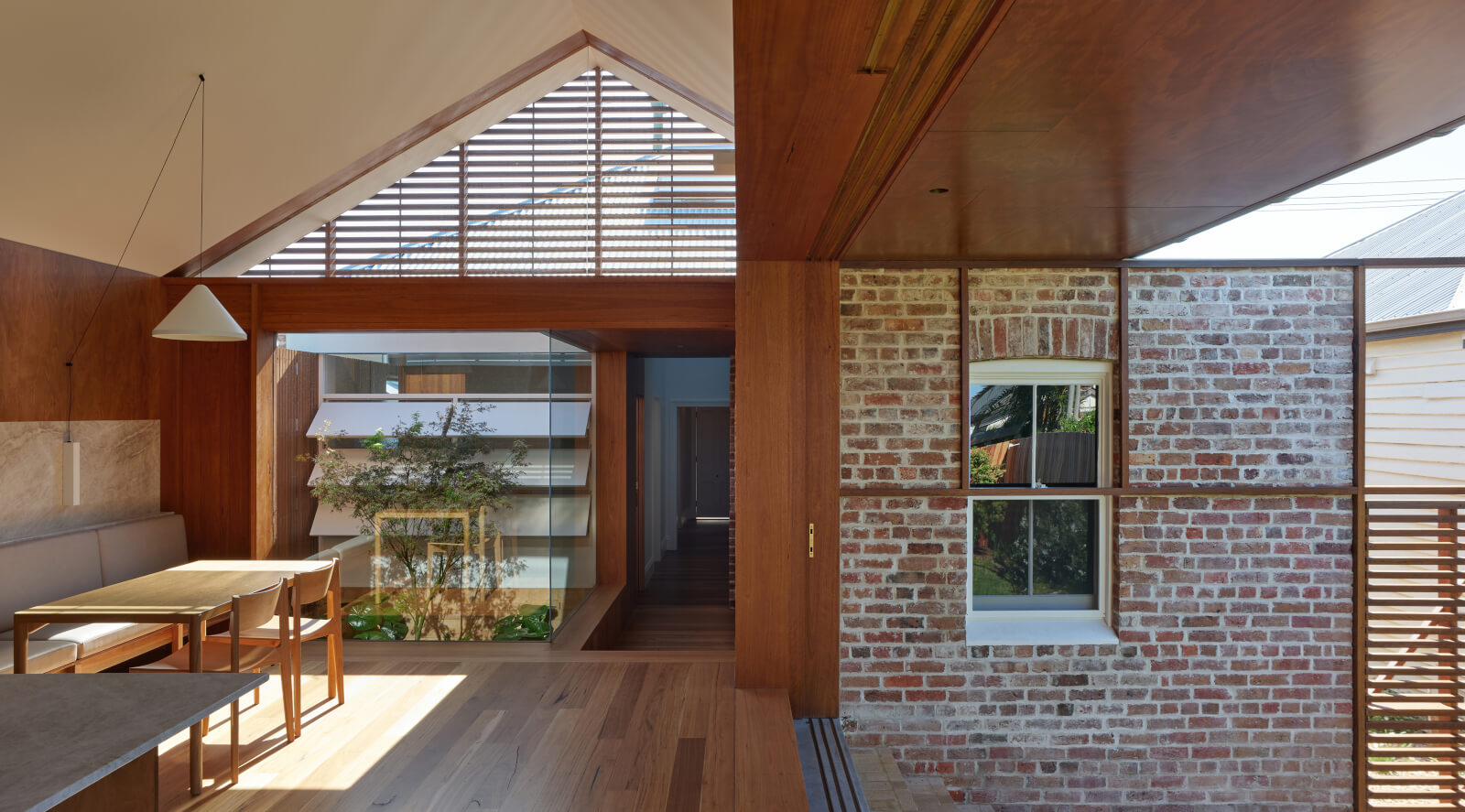
  • The overall approach adheres to the established old and new legibility, with spatial planning designed to enhance the existing character. Careful attention was given to original features, with existing materials fully restored or replaced only as a last resort. The materials used—brick, timber, and corrugated iron—are reflected in the new addition to create a cohesive overall design.   To address flood risks, a new elevated split-level living pavilion has been introduced. Connections to the outdoors are preserved through a terraced garden that minimises the impact of the 1.4m level change whilst creating an active, north-facing, covered outdoor space.

  • The design's ultimate impact is restoring the existing house's character and preserving the Maryville heritage fabric. Given the structure's condition, demolishing and rebuilding would have been more cost-effective. This project highlights how thoughtful design can significantly enhance occupants' experience in heritage spaces. Reconstruction can breathe new life into existing building stock that might otherwise face demolition. From inception to completion in less than 24 months, Maryville Heirloom House demonstrates the value of respecting the unique aspects of existing structures and implementing responsive small-lot housing solutions to promote renewal and resilience in our built environment.

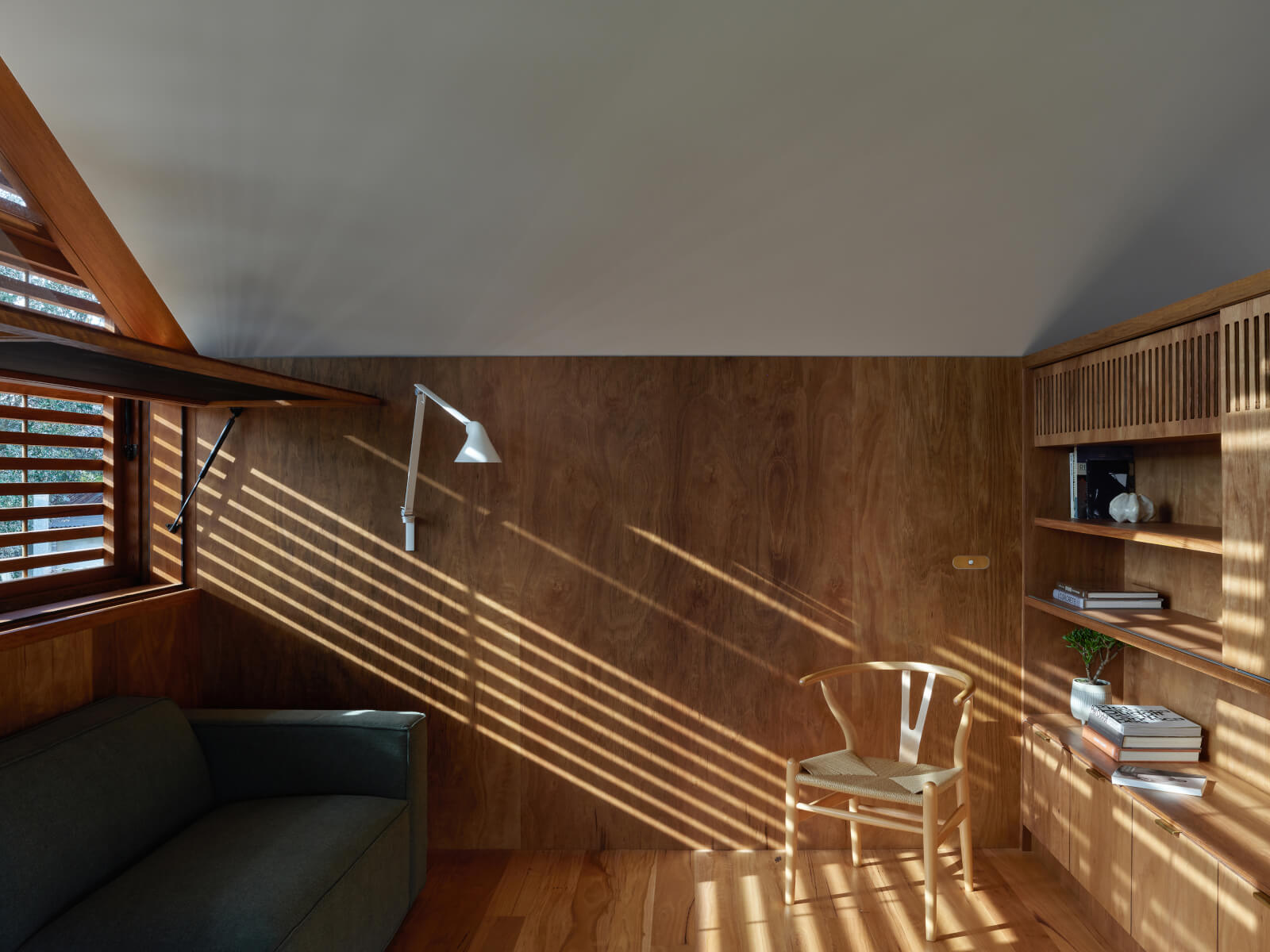
  • One of the fundamental principles of Anthrosite's design thinking is the value of an interior connection with the outdoors. The integration of architecture and landscape is crucial for human comfort and health. In response to the site's flood constraints, the north-facing rear terraced garden minimises the impact of the 1.4-metre elevation change, offering an opportunity to develop an active and sheltered outdoor area. A large roof overhang provides shade for this outdoor room. At the same time, generous timber sliding doors and insect screens enable cross ventilation and easy access. Along with passive solar considerations, the roof form reflects the high-pitched hip roof of the original miner's cottage, although contrasting in design with a gable end roof form. This combination of common suburban roof styles helps establish a meaningful connection with the surrounding built environment. At Anthrosite, we value the artistry of skilled craftspeople and recognise the profound impact of tactile experiences. Every detail—from construction joints to material alignments, set-out patterns, textures, and selections—plays a crucial role in enhancing the sensory experience of inhabitants and contributing to their overall well-being.