Deadly Democracy – 2025 Good Design Award of the Year

THE AUSTRALIAN GOOD DESIGN AWARD OF THE YEAR IS HISTORICALLY AWARDED TO ONLY ONE EXEMPLARY PROJECT ACROSS ALL DESIGN DISCIPLINES AND CATEGORIES. 

IT REPRESENTS THE VERY PEAK OF DESIGN EXCELLENCE, INNOVATION AND IMPACT. 

IN 2025, THE JURY FOUND TWO PROJECTS DESERVING OF THIS TOP ACCOLDADE – DEADLY DEMOCRACY AND HULLBOT. 


When First Nations young people lead, entire communities benefit. Deadly Democracy, a partnership between YLab – a youth sector consultancy – and the Australian Electoral Commission (AEC), was created to boost civic participation and deepen understanding of democracy among First Nations youth.

The program trained paid participants as community leaders and facilitators, empowering them with the skills, confidence and knowledge to design and lead civic engagement initiatives within their own communities.

Deadly Democracy was recognised with the Good Design Australia’s highest honour, the 2025 Australian Good Design Award of the Year. We spoke with Brigid Canny, YLab CEO, for a behind-the-scenes look at the project. She also highlighted the dedicated YLab Team who brought Deadly Democracy to life, including: 

  • Angel Towney, She/Her, Wiradjuri woman 
  • Kelsey Dole, She/Her, Ngiyampaa woman 
  • Will Austin, He/Him, Peek Woorroong Keerraay Woorroong man 
  • Jannah Firebrace She/Her, Gunditjmara and Yorta Yorta woman
  • Mercedes Kirwin She/Her Wakaman woman
  • Chelsea Lang, She/Her
  • Damon Chester, He/Him
  • Ruby Healey, She/Her


Dive into the incredible co-design journey behind Deadly Democracy, including defining features such as lived experience-led co-design, paid employment, and strong community partnerships.

Deadly Democracy – Winner of the 2025 Australian Good Design Award of the Year. Image: Supplied


A values-led approach

YLab and the AEC began conversations about Deadly Democracy in 2020. From the beginning, it was clear that the civic education program would require robust co-design processes.

Brigid reflected why YLab was the right fit for the project.

Part of why YLab was an attractive partner is that we had a First Nations team embedded in our organisation.

“They brought both professional expertise in working with government and partners, and lived experience as First Nations young people, providing this depth of knowledge around cultural safety, relationships, and legitimacy with the young people we were working with,” Brigid said.

YLab prioritises their values from day one of project discussions. It’s why they’re discerning with the work that they take on, and why they feel they stood out to the AEC. 

“I think the AEC were pleased that we reconsidered the original scope of work. They initially wanted us to lead all delivery, however, we consider ourselves an ally organisation because we’re not Aboriginal-owned.

“We emphasised the importance of partnering with local organisations. Every language and cultural group is unique, and local partners – such as Umeewarra Media – can sustain relationships long-term.

“Our approach was about going to where young people are and giving them a significant role in shaping the program, rather than bringing them out of their communities.”

How past experiences sparked new ideas

YLab looked back on previous civic education programs, which hadn’t achieved the desired outcomes. Drawing on their findings, they dove into new ways to embed design participation. Every choice aimed to support First Nations young people to engage confidently and meaningfully in democracy.

The AEC were really self-aware in recognising there was a need to rethink First Nations engagement.

“We wanted to avoid the fly-in, fly-out model which consultants often rely on with remote communities, which can often leave them feeling disillusioned.

“Alternatively, it’s quite common in First Nations or youth-focused programs for organisations to think, ‘Let’s bring young people to the city,’ which can mean conforming to a metropolitan, Western way of working.

“We were aware that First Nations young people thrive when they’re in their own context and community. We wanted to ensure their knowledge and lived expertise was legitimised. Our question was always: how might we use those strengths and ensure the program is embedded in community?” Brigid shared.

The power of paid employment

One of the defining elements of YLab’s approach was paid employment of participants. This not only ensured First Nations young people were shaping the delivery of the program, but highlighted the importance of reciprocal co-design.   

“YLab has been operating for around 10 years, and we’ve always had youth employment at the centre of our model. If we’re engaging young people, we should also be building their capability and paying them for their time, so they’re better off from the experience. It’s about not being extractive.

“Paying participants ensures they can prioritise this work without sacrificing paid employment elsewhere. It also legitimises cultural work as professional work, a core value for us. Finally, it allowed us to support participants to thrive in meaningful roles.”

Brigid explained how paying participants not only supports the goals of the Deadly Democracy program, but also champions a wider mission to close the youth employment gap.

“Youth unemployment remains disproportionately high in First Nations and culturally and linguistically diverse communities, so this approach helped bridge that gap by offering young people paid, entry-level experience based on their lived expertise rather than prior work history.

We believe lived expertise is worth paying for. Too often, consultations or co-design processes ask young people and communities to give their insights without reciprocity. For us, reciprocity is always at the centre of our work with young people and First Nations communities.”

Deadly Democracy – Winner of the 2025 Australian Good Design Award of the Year.  Image: Supplied

Co-designing with First Nations young people

From creation through to delivery, Deadly Democracy is rooted in co-design. Brigid explained how YLab adapted their existing co-design framework to achieve better outcomes. 

Firstly, it’s important to acknowledge that I’m not Aboriginal or Torres Strait Islander, and some of our team aren’t either. So everything I share here comes from what I’ve learnt from my First Nations colleagues and their guidance.

“We’re conscious that as an organisation we don’t always get it right, but we’re committed to constantly learning and improving our practice of allyship.

“We’re always mindful that co-design can sometimes be used superficially to appear collaborative when decisions have already been made. True co-design means genuinely handing over decision-making power. It’s not a one-size-fits-all tool. It needs to be used thoughtfully, with awareness of context, limitations, and strengths.

“Traditionally, YLab’s co-design model follows three broad stages – understanding the problem, designing solutions, and scaling for impact. But in a First Nations context, YLab’s co-design approach is much less linear and more circular.

“A yarning, fluid, open-ended conversation proved to be a far more effective and culturally grounded way to co-design with First Nations young people.

“We also noticed that many participants expressed themselves through creativity and cultural practices, like weaving and craft, rather than traditional workshop methods such as post-it notes.”

YLab also stepped away from the Western approach of separating young people into standalone engagement sessions.

“In many First Nations communities that can feel inappropriate. First Nations cultures are so much more intergenerational. We worked with Elders who were as invested in youth issues as young people themselves. So in some workshops, we involved both Elders and young people together.”

Diverse workshops for greater engagement

YLab’s usual approach to workshop delivery is two-tiered: a core group of young people are employed and trained to lead facilitation with our mentorship, and then the young people engage a broader cohort in their communities. 

“We want to leave capacity behind whenever we work in a community”, Brigid said.

When it came to Deadly Democracy, each young person designed their own engagement. Their methods ranged from yarning circles to sports. This approach also allowed for a deeper understanding of the barriers to participation for First Nations young people, which was incredibly valuable for the AEC. 

“The idea was for them to decide what would best engage their peers. The focus was always on increasing young people’s civic participation and understanding of democracy – why voting matters, how to vote, and what happens if you don’t – without pushing any political agenda. Because of the history of colonisation and mistrust in electoral systems, it was essential that First Nations young people led this work themselves.”

As the world changed, so did the workshops. In 2021, the COVID-19 pandemic meant the program needed to be delivered through a hybrid model. YLab found this made the program more accessible for young people who were remote, neurodiverse, or preferred online engagement.

Later, the 2023-24 program ran during the leadup to the 2023 Australian Indigenous Voice referendum. This sensitive time required an additional focus on wellbeing for both First Nations YLab team members and participants.

“Many workshops included education about the referendum and the Constitution, always handled with care. It was a tense time, and we had to ensure facilitators – who were young Aboriginal people themselves – felt supported through that cultural and emotional load.”

Deadly Democracy – Winner of the 2025 Australian Good Design Award of the Year.  Image: Supplied


Relationships built on trust

YLab co-delivered the program with local Indigenous organisations, opening the door to connection through an existing First Nations organisation that potential participants know and trust. 


“As an ally organisation, we believe it’s essential to work alongside local and subject-matter experts, especially in communities that aren’t our own. Each community is unique, and local Indigenous organisations have the relationships, context and cultural knowledge needed to make engagement meaningful and sustainable.

“Co-delivering ensured the work wasn’t extractive or “fly-in, fly-out”. It helped build lasting connections between young people and organisations that could continue supporting them beyond the program.

“Partner selection was a relational process. In some cases, we built on existing AEC partnerships. In others, we reached out directly to local youth centres or community groups to understand who was already trusted and active. This approach also allowed us to direct funding to local organisations, strengthening their capacity and recognising the critical role they play in their communities.”

The secret to strong partnerships 

Brigid had parting words for ally organisations like YLab. Partnerships with First Nations organisations are fundamental. However, they must be relational and reciprocal, never extractive.

“Too often, partnerships are formed just to meet procurement requirements and get contracts. Then, there’s not enough care or courage in the way that the work is designed and co-delivered.

“We pride ourselves on holding ourselves accountable. If we are working with First Nations Communities, we need to trust and empower local community partners and act as a backbone of support rather than the lead.”


Deadly Democracy has created culturally safe spaces for leadership, learning, and enduring connections. Good Design Australia congratulates and thanks YLab and the AEC for creating an exceptional example of co-design with lasting outcomes and meaningful impact.

Celebrating the 2025 Australian Good Design Award Winners

This year, the Australian Good Design Awards invited us to rethink what ‘better’ really means in design. More human-centred. More planet-centred. More inclusive. And ultimately, more impactful.

Design excellence is no longer just about form or function. It’s about ideas with intent, solutions with staying power. It’s about how we care for the planet, how we connect with one another and how we create systems that respond to the world’s biggest challenges.

Last Friday night, against a backdrop of black-tie glamour, we came together to honour the designers, innovators and visionaries shaping the future across various industries.

It was a celebration of creativity with purpose, a night that reminded us that bold ideas, thoughtful processes and collaborative efforts make design a powerful force. A force that shapes how we live, move, build and belong.

We will be sharing the stories behind this year’s Australian Good Design Award Winners over the coming weeks for their extraordinary contribution to Australian and international design. 


2025 Australian Good Design Award of the Year

In 2025, the Jury recognised two projects for this top accolade, Deadly Democracy and Hullbot, highlighting the exceptional quality and innovation among this year’s entries.

Hullbot Autonomous Ship Hull Cleaning System

Hullbot is a standout example of better product design. It offers something radically different, a full autonomous in-water system that cleans hulls proactively, safely and without releasing poisons into the sea. 

Tackling the global challenge of biofouling, Hullbot’s innovative approach demonstrates how design can solve complex environmental problems while enhancing operational efficiency. Its thoughtful engineering and user-centric design make Hullbot a standout in sustainable technology.

Hullbot – Winner of the 2025 Australian Good Design Award of the Year. Image: Supplied.

Deadly Democracy: Improving Civic Education for Indigenous Youth

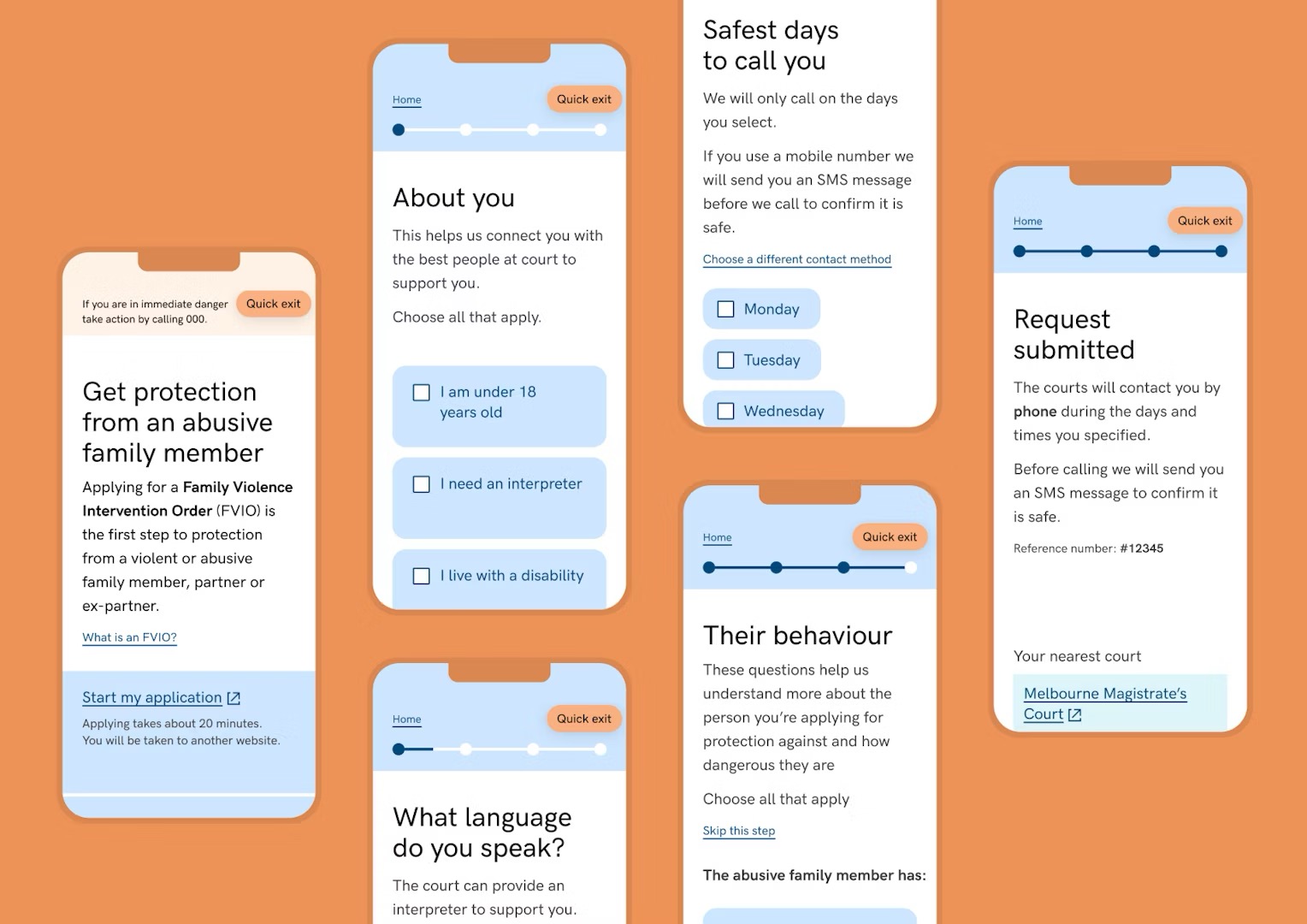
A collaboration between YLab and the Australian Electoral Commission (AEC), Deadly Democracy is redesigning civic education for the better, empowering First Nations young leaders to engage confidently in Australia’s democratic process.

The initiative responds to a political system that has long lacked cultural safety for First Nations people, aiming to turn voting into a form of leadership and self-advocacy.

Through co-designed workshops delivered both in-person and online across regional communities, participants gained practical skills, networks and knowledge to influence change. 

Deadly Democracy – Winner of the 2025 Australian Good Design Award of the Year. Image: Supplied


Australian Good Design Award for Sustainability 

First Building – Bradfield City Centre

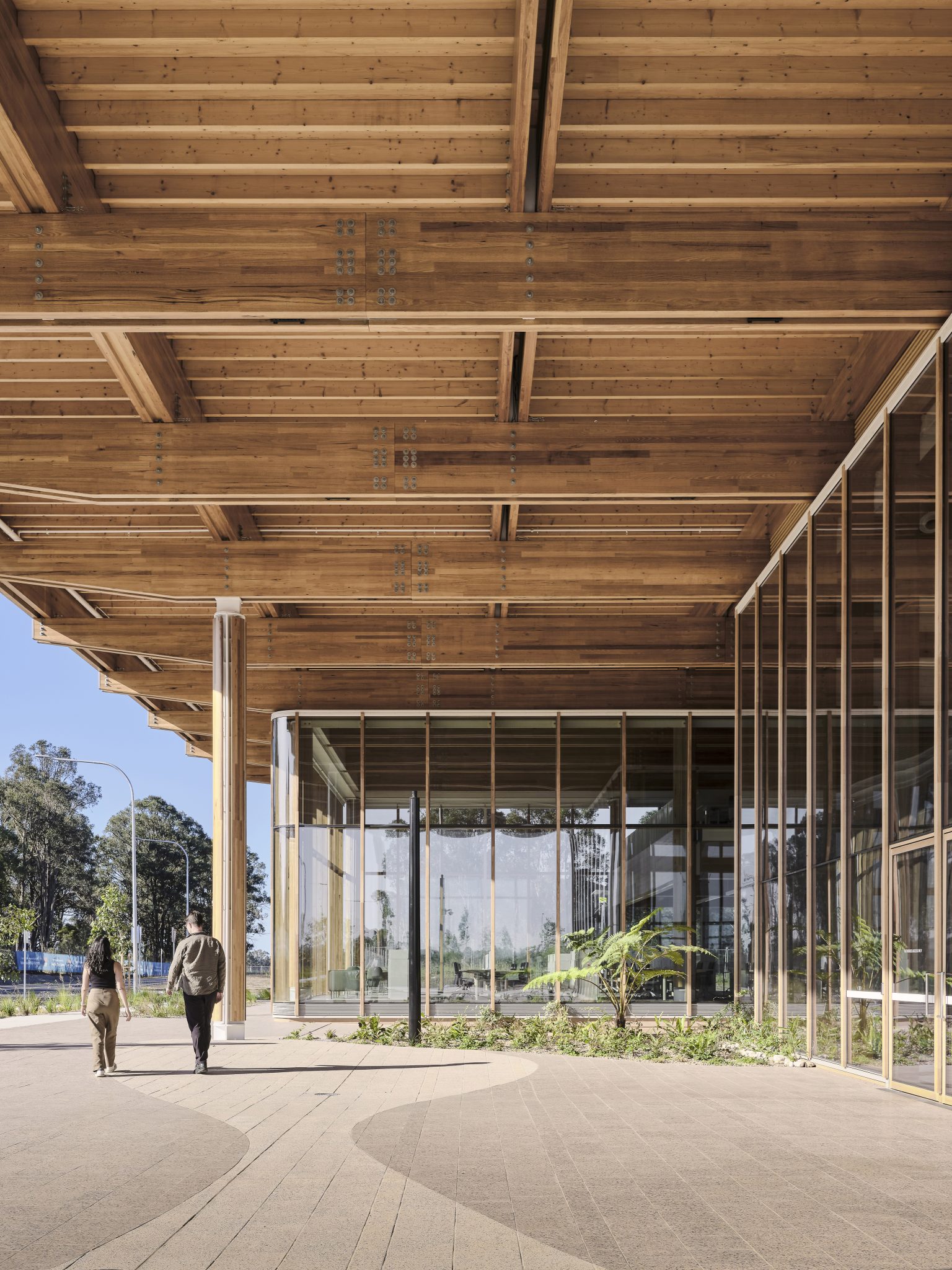
First Building at Bradfield City Centre is a bold vision for the future of sustainable cities. Designed with adaptability, circularity and resilience front of mind, it sets a new benchmark for regenerative urban design that honours Country.

Led by the Bradfield Development Authority (BDA) and NSW Public Works, and realised by Hassell Studio in collaboration with cultural research agency Djinjama, the building blends regenerative design, cultural storytelling and cutting-edge technology, demonstrating how design can transform cities for people and place.

The First Building – Bradfield City Centre – Winner of 2025 Australian Good Design Award for Sustainability. Image: Hassell Studio


Australian Design Prize 

Professor Mark Burry AO

Professor Mark Burry is shaping the future of Australian cities. 

As Founding Director of Swinburne University’s Smart Cities Research Institute, he’s rethinking urban design to be smarter, more inclusive and truly human-centred. 

His visionary work, which bridges architecture, research and city-making, has earned him the Australian Design Prize, recognising a career-long impact on the way Australians live, work and move through their cities.

Professor Burry has been a key figure in completing the Sagrada Familia since joining the project in 1979. As the Senior Architect, he is known for deciphering Antoni Gaudí’s original designs and for introducing digital technologies, such as parametric design and 3D modeling, to the construction. He has dedicated much of his professional career to unraveling the complexities of Gaudí’s vision and applying modern tools to translate his analog designs into reality.  

Professor Mark Burry AO – Winner of 2025 Australian Design Prize. Image: Supplied


Australian Good Design Team of the Year

Today

Today is an impact and innovation agency. They’re driven by a purpose to achieve positive social and environmental impact, using design as a lever.

Design is embedded in every aspect of Today. Over eleven years, they’ve built a collaborative, innovative and compassionate culture. Their deeply intentional approach has shaped an award-winning portfolio across the impact sector. Now, they add the 2025 Good Design Team of the Year Award to their decorated mantle.

Today – 2025 Good Design Team of the Year Award. Image: Supplied


Women in Design Award

Sasha Titchkosky

As co-founder and CEO of Koskela, Sasha Titchkosky has long championed the idea that good design can and should make the world better. Her leadership embodies this year’s theme, proving that sustainability and social impact can coexist with commercial success.

Sasha has reimagined what responsible business looks like in Australia’s design landscape. From advancing circular design principles and supporting local manufacturing to building long-term partnerships with First Nations artists and communities, her work shows that design is most powerful when it serves people, place and planet.

Sasha Titchkosky – Winner of 2025 Women in Design Award. Image: Australian House and Garden


Michael Bryce Patron’s Award

First Responder EMVision 

Exemplifying excellence in concept design, the First Responder is a portable neurodiagnostic device designed for ground and air ambulances to rapidly detect strokes and traumatic brain injuries (TBI) at the point of care. 

Compact and highly portable, it enables on-site and in-transit diagnosis, minimising critical treatment delays. Engineered for high-pressure emergency environments, its innovative design ensures seamless integration into existing paramedic workflows and swift, reliable operation when every second counts.

First Responder – Winner of 2025 Michael Bryce Patron’s Award. Image: Supplied


Indigenous Design Award + Powerhouse Design Award 

Footprints on Gadigal Nura – Mili Mili 

Footprints on Gadigal Nura redefined Waterloo Metro Station, earning not one but two prestigious design accolades. 

This Aboriginal-led design transforms the station into a culturally grounded public space, guided by Country+Community methodology.

By embedding story, language and connection to Country, it recognises Aboriginal people while inviting the wider community to engage in a shared journey of understanding and belonging. 

The project has delivered measurable impact across cultural, social and environmental spheres, showcasing how visionary design can elevate public infrastructure and community wellbeing.

Footprints on Gadigal Nura – Winner of 2025 Indigenous Design Award + Powerhouse Design Award. Image: Supplied


Automotive Design Commendation

The Automotive Design Commendation honours two exceptional vehicles in the Product Design, Automotive and Transport Design Category, showcasing the boldest exteriors and the smartest interiors. From first glance to every detail inside, these cars drive design forward.

Automotive Design Commendation – Best Exterior Design 

Hyundai IONIQ 9

The Hyundai IONIQ 9 is a three-row electric SUV that turns heads with its striking exterior, without compromising comfort or premium features. 

Its futuristic design maximises space and utility, featuring a flat floor, world-first bi-directional sliding console and optional relaxation seats. 

Sleek and commanding, the IONIQ 9 makes a bold visual statement, reinforcing Hyundai’s leadership in sustainable mobility on its journey to become carbon neutral by 2045.

Hyundai IONIQ 9 – Winner of 2025 Automotive Design Commendation – Best Exterior Design. Image: Supplied

Automotive Design Commendation – Best Interior Design

Volvo EX90

Designed for families who value thoughtful design, advanced technology and Volvo’s renowned commitment to safety, the Volvo EX90 ushers in a new era of electrification. 

Its interior combines comfort with understated style, reflecting a modern Scandinavian aesthetic. Departing from traditional luxury materials, Volvo has embraced innovative, progressive materials that highlight the brand’s design philosophy while creating a warm and inviting cabin.

Volvo EX90 – Winner of 2025 Automotive Design Commendation – Best Interior Design. Image: Supplied


Robert Pataki Award for Healthcare Design

SCOOT: Open Source Power Assist

The Robert Pataki Award celebrates design that genuinely improves lives. 

SCOOT is an open-source power assist for manual wheelchairs, cleverly built from off-the-shelf electric scooter parts to make mobility more affordable and accessible. 

Power assist attaches directly to a standard wheelchair, giving users motorised support to move more easily and independently. By extending range and boosting freedom, SCOOT proves that a small device can have a big impact.

Image: SCOOT – Winner of 2025 Robert Pataki Award for Healthcare Design. Image: Supplied


Livio Bonollo Award for Longevity

PB/5 Pedestrian Button – Nielsen Design

The inaugural Livio Bonollo Award for Longevity celebrates designs built to last, showcasing creations that stand the test of time. PB/5 Pedestrian button is exactly that, showcasing longevity through durability, relevance and thoughtful innovation. 

A true Australian icon recognised worldwide, the Audio-Tactile Pedestrian Detector is engineered with care and precision. It empowers people with vision, hearing and physical impairments to navigate streets safely and independently, proving how good design can transform everyday life.

Image: PB/5 Pedestrian Button – Winner of the Livio Bonollo Award for Longevity.


Congratulations to all of this year’s Winners across all categories, from the Good Design Award Winners and Gold Award recipients to those celebrated as Best in Class, through to the Good Design Award of the Year.

You can explore all of this year’s Winners on the Good Design Winner’s Index and dive into the complete showcase of outstanding projects and visionary designers recognised this year.

Good Design Australia extends a heartfelt thanks to the design community, every entrant, collaborator and innovator, whose creativity, passion and commitment are shaping a better tomorrow. 

These Awards are a testament to what’s possible when design is thoughtful, purposeful and bold.

Stay with us as we continue to share the stories behind this year’s Award Winners and celebrate the innovations defining the future of Australian design.