Designing Better Healthcare

Healthcare technology has accelerated rapidly in recent years, bringing genuine innovation to a category that carries uniquely high stakes. Designing for health demands ethical restraint, deep empathy and an acute awareness that these products sit alongside people at their most vulnerable. The responsibility placed on designers is significant.

To explore what thoughtful, human-centred healthcare design looks like in practice, we spoke with two 2025 Australian Good Design Award Winners approaching this responsibility from different perspectives. 

We sat down with the team at Nakatomi, the venture studio behind Ovum, an award-winning intelligent health journal for women, and Industrial Designer Maoxin Yuan, creator of Sooze, a modular eye care system designed for people living with Keratoconus.


Ovum: Interview with Nakatomi 

A lot of health apps are built to measure bodies. Ovum was designed to help people listen to their bodies more intently.

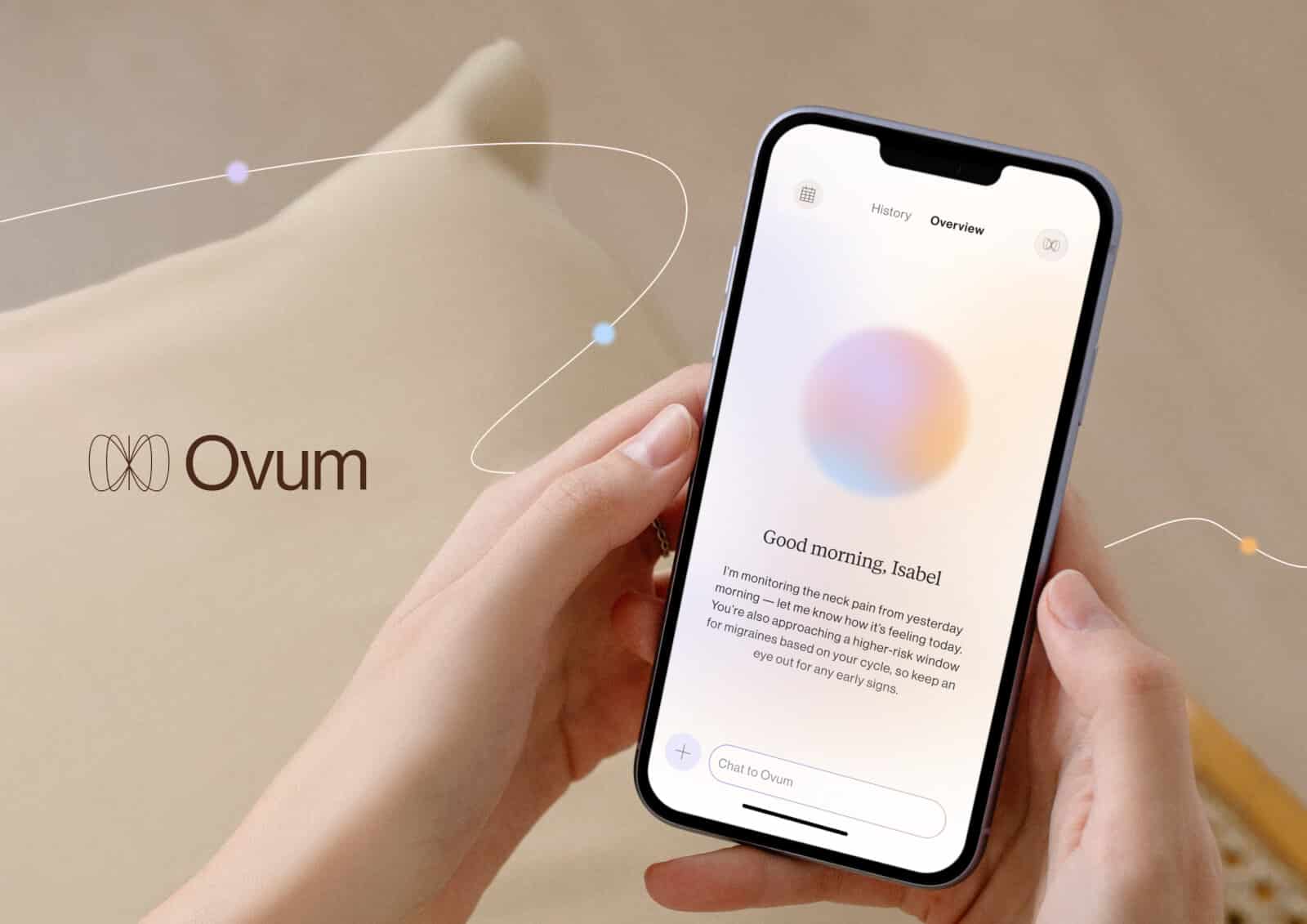
Created with Founder Dr. Ariella Heffernan Marks, Ovum is an intelligent health journey for women. It combines symptom logging, cycle tracking and health data storage with conversational AI, so users can track patterns over time and advocate for better care.

To unpack the thinking behind Ovum, we spoke with Benjamin Bray, Founding Partner, and Jasmine Subrata, Creative Strategy Lead at Nakatomi, the venture studio behind the app. Ovum received the 2025 Australian Good Design Best in Class Award in Digital Design – Apps and Software, recognising Nakatomi’s approach to building bold, purpose-led ventures from day dot.

The impressive interface of Ovum. Image: Supplied 

GDA: Women’s healthcare has historically been fragmented and male-centred. From a design perspective, what did “better healthcare” actually need to look and feel like for Ovum to genuinely challenge that status quo?

Nakatomi: The first thing we did was research every health product out there. The one thing that stood out was there were a lot of cycle tracking apps, a lot of pregnancy tracking apps, a lot of menopause apps. But they treated women as just a uterus and only focused on their reproductive health. We wanted to create a tool that supports women as a whole human, not just their individual parts.

It was also important for Dr. Ariella to fight for change without a brand and product that’s angry or noisy for the sake of it. ‘Quietly defiant’ is our brand essence and was a helpful phrase for us through the design process. We wanted to make an app that serves its purpose and provides real value to the audience in a way that’s better than what’s out there, but with solutions not complaints.

GDA: Ovum isn’t designed as a diagnostic tool, but as a companion that helps women be heard and believed. How did that philosophy translate into concrete design decisions across the interface and user journey?

Nakatomi: Making it chat-first. We made the decision to have chat live on top of the entire experience rather than it just being one page or section of the app; so at all times we’re reinforcing our mission for women to feel heard and believed. We’re trying to encourage people to provide their perspective on their health rather than displaying it to them at all times, which is quite a different way to visualise information. In testing we found that women loved the fact that they recorded and received their information through the conversational aspect. 

Making the experience feel a little more free-flowing, a little less rigid, was super important.

GDA: Healthcare apps often overwhelm users with data. How did your team approach clarity, restraint and emotional safety when designing Ovum’s daily health overview and longitudinal tracking?

Nakatomi: One of the initial design rules we had was that graphs were illegal, to challenge us to find more imaginative and unique ways to show data. Which is hard, because graphs take something complex and simplify it into something that’s easy to see. But we wanted to show women that they’re more than a number, percentage or statistic. So, how do you display complex information without graphs? That was a constant challenge that provided the opportunity to create an interface that’s very unique and highly visual.

We would debate small details for days to find that balance between being official and being personal, acknowledging the seriousness of certain topics without over-indexing in a way that creates anxiety.

GDA: Trust is critical in digital health. What role did design play in communicating privacy, consent and data ownership?

Nakatomi: Being a health app, Ovum operates with the highest standards of privacy and security. But beyond that, the ways we really build trust are by being very transparent about what is used and what isn’t, not forcing any information to be shared, and giving users agency over what they share. One of the things that’s always been really important to Dr. Ariella is allowing women to opt into sharing some of their insights to help further research and improve care for women in the official healthcare system. 

GDA: Ovum integrates memory, history and pattern recognition over time. How did you design for “intelligent recall” in a way that feels supportive rather than intrusive?

Nakatomi: It is easily the hardest part from a technical perspective. The longer you talk to an LLM (Large Language Models) such as ChatGPT, the more it starts to go off track, start making things up, or start forgetting things, because its context is full and it starts to drop stuff off in order to respond.

When you’re building a longitudinal health app, we have to build a custom memory. If you talked about a medication you were on six months ago and now you bring up a symptom, we need to know that it could be linked to that medication. Balancing that constantly is a massive technical challenge, but it’s what makes it feel personal and intelligent, and more valuable than just googling your symptoms.

GDA: Many femtech products are narrowly focused on reproductive health. What design challenges emerged when creating a whole-body health system?

Nakatomi: The challenge with shifting from cycle to whole body is that health is so broad, and different women put more importance on different things. Good user experience and good design is personalised, it feels like it’s made for you. 

One of the ways we did that was we didn’t want to have distinct pages in the app for each section. Since it’s a holistic health partner, we didn’t want you to open the app and be just a cycle tracker, or diet trainer, in different pages. We wanted it to feel connected. Conversation is a massive part of that. The challenge was not making it five apps stitched together, while still feeling like it does a good job at each of those things in one cohesive experience.

GDA: The app supports women across multiple life stages. How did you design a system that could adapt as users’ bodies, priorities and health contexts change over time?

Nakatomi: One of the challenges with building something that is personal and AI-driven is how fluid it is. It adapts entirely to you, but it doesn’t move into a different mode. If you report you’re going through pregnancy, we thought about how best to serve more relevant information and insights based on your needs now without turning it into “pregnant mode.” We try to make the transition so fluid it doesn’t feel like anything’s changed other than how Ovum responds to you.

GDA: Healthcare design often prioritises efficiency over empathy. Where did you consciously slow things down in Ovum and make users feel seen, and why was that important to the experience?

Nakatomi: One thing that was super important was no matter what is said, there’s immediate visual feedback showcasing that you’ve been heard. If you report something as significant as a major diagnosis, or a stubbed toe, or a diet change, or a tough day at the office, you get immediate gratification that it has been captured. 

GDA: Looking beyond Ovum, what responsibility do designers have when working in healthcare? What do you hope this project signals to the wider design industry?

Nakatomi: This was certainly a product design challenge, because of how significant a role it plays in women’s lives and how diverse and nuanced those experiences are.

Strategy was huge for us. We spent a lot of time researching, experimenting, and testing before we moved on to building anything. Strategy sessions on individual features could see us in a room for three days straight challenging and trying everything. Every design decision ladders up to the product strategy and positioning.  This way, the entire team is working with the same shared vision and every aspect of the user experience reinforces Ovum’s mission.

Ovum App. Image: Supplied


Sooze Modular Eye Care Device For Keratoconus Patients: Interview with Maoxin Yuan 

Maoxin Yuan is an emerging Australian Industrial Designer working at the intersection of healthcare, technology and lived experience, drawing directly from his own challenges living with Keratoconus – a progressive eye condition that fundamentally changes how you see and move through the world.

Keratoconus causes the cornea to thin and distort, leading to impaired vision, light sensitivity and visual distortion. For many, daily life revolves around rigid contact lenses, ongoing discomfort and the loss of visual independence once those lenses come off. While treatments can slow progression, there is often no simple or comfortable solution.

Sooze emerged to solve this. The modular eye care system combines virtual retinal projection, neurostimulation and light therapy to support comfort, independence and dignity throughout the day and night. This human-centred approach to future healthcare earned Maoxin the 2025 Australian Good Design Best in Class Award in the Next Gen category.

Meet the Sooze Modular Eye Care Device. Image: Supplied

GDA: What first drew you to designing for healthcare and why did you choose Keratoconus as a focus?

Maoxin: Everybody had to pick a topic for our capstone project. I took quite a bit of time and it was challenging thinking about what I wanted to do and the impact I wanted coming out of the project. 

I have this condition, Keratoconus, myself. I wanted to do something about it. It’s a rather rare condition that not a lot of people know about. It was a way for me to understand what other people with this condition are experiencing, across different stages of the disease and how it affects their life.

GDA: How did patient research shape both the problem definition and the design direction?

Maoxin: Me being a patient myself was a starting point, but actually talking to people was important. Being a patient is an enabler during those conversations because people can open up more. I talked to patients and also practitioners, optometrists and doctors. You hear stories about how the condition affects daily life. People hit corners of the bed when they get up, wear their shirts inside out because of their impaired vision without their rigid contact lenses.

One patient I interviewed wanted to become a pilot, and because of this she couldn’t. Later she did a surgery and came back and gained her commercial pilot license. That stuck with me. It changed people’s life trajectory, not just everyday life.

I also understood what hacks or products they use to deal with the challenges. A lot of people suffer from dry eyes and constantly use eye drops. They have to stop what they’re doing because their eyes are dry. They couldn’t sleep very well because of eye pain at night. Once they take off their rigid contact lenses, they don’t have a consistent, reliable, comfortable way to do activities they love, like reading or watching TV before bed. That became the focus area. Bringing vision support after their rigid contact lens session, plus eye care for dry eye and eye pain.

GDA: How did you balance clinical function with comfort and wearability?

Maoxin: I wanted the least invasive product that supports them without them really needing to take care of it, or having to remind themselves to use it. It needed to blend into their lifestyle better. You’re still asking a lot from the patient to wear something in the house and during sleep. That’s a lot of hours and commitment.

Form and design language mattered. I wanted something softer, more inviting, so people could easily accept it. Function is one thing. If this looks horrible, or if it looks uncomfortable, people are not going to wear it. Balancing function and visual aesthetics was really important.

GDA: Why was a modular system the right solution for supporting patients across day and night?

Maoxin: Patients wear their rigid contact lenses during the day. Once they get off work and their usual routine, they’re tired and their eyes are dry because of keratoconus or because of the lens. They take off their lens and before this solution, they wouldn’t have any reliable way to see.

Now they put on Sooze with the visor and the headband. They go about their activities, watching TV and reading books. When they’re about to sleep, they take off the module and put it into the case. They still wear the headband and turn on the red light therapy and sleep. The next day they take off the headband, put it on the charging dock, and start wearing their rigid contact lenses. If they need vision support in the morning, they can pop the visor back in, get ready, then take it off and put it back into the case.

Modularity helps get rid of non-necessary functions when there isn’t a need for it. Vision support is not needed when you’re sleeping, and it’s better not to wear more things during sleep. It also allows flexibility and future-proofing. You could do another module, like an eye mask to block out light for better sleep.

GDA: How do Virtual Retinal Projection, neurostimulation and light therapy work together to restore independence?

Maoxin: Virtual retinal projection is aiming at vision support. Neurostimulation is aiming at dry eye and eye discomfort.

Virtual retina display is like shooting a safe level laser into your eyes. Because it’s condensed, it can deliver the image without being too distorted by your cornea, bypassing imperfections and delivering a sharper image. You could wear this and see the world captured by the camera but delivered more clearly into your eyes.

Neurostimulation has research around pain relief. There’s also research about neurostimulation stimulating the nerves around your forehead areas or upper eye areas for tear stimulation, so you have more tears coming out and that helps with dry eye issues.

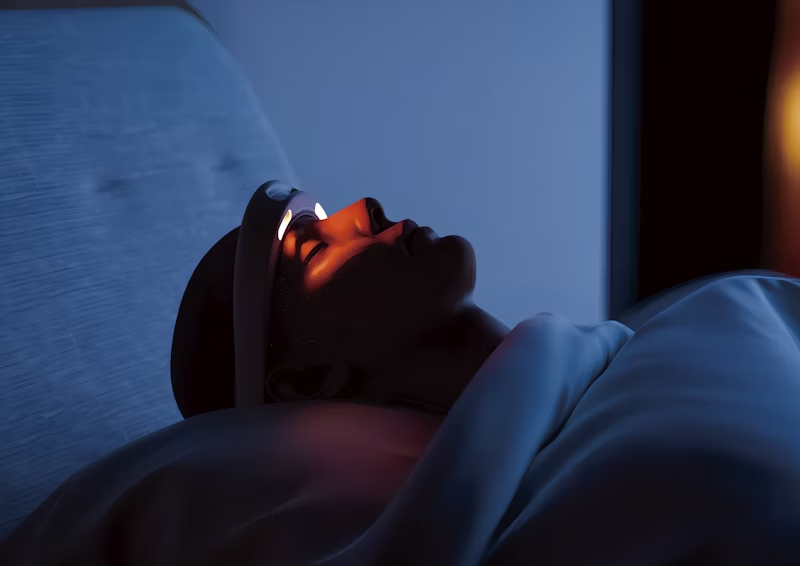
Light therapy is part of the system. The light engine that does the virtual retina display is only needed when you’re awake. Once you’re ready to sleep, you take off the vision support module, the visor and the camera module. Then the light engine is available for other purposes. Because they have sleep issues, the light engine can be used for red light therapy during sleep to help with sleep quality. It’s an add on function after they take off the visor.

The Sooze device being used during sleep. Image: Supplied

GDA: As a young person, what edge or insight do you have that sets you apart from more experienced designers?

Maoxin: Because you’re new to the industry, you have a lot of ideas. People can have a certain understanding of the industry that wouldn’t have wild ideas you could bring to the table. Being the youngest team member also means you’re exposed to new technology and new trends, and directions and angles that people might not have thought about. Experience builds up, but the level of curiosity and your new way of thinking can contribute to the project.

GDA: What did winning the 2025 Australian Good Design Best in Class Award mean to you?

Maoxin: It’s huge. I was really grateful and really excited. You dream of winning something like this. It’s a nod to my hard work. It’s also an inspiration and encouragement for me to do more.

GDA: What responsibility do designers have when shaping future healthcare tools?

Maoxin: Designers are ultimately the advocates for humans. That is one of the most important things in designing for future healthcare, or for the future in general. Always thinking back to the user. Always thinking about what we could do better to help a certain group of people have a better quality of life.

Maoxin Yuan. Image: Supplied


Designing with, not for.

Through the work of Nakatomi and Maoxin Yuan, we see what becomes possible when design is led by care, lived experience and deep respect for the people it serves.

Good Design Australia acknowledges and celebrates the designers, founders, patients, collaborators and communities whose voices shape projects like Ovum and Sooze. Together, these works set a benchmark for designing better healthcare.

2025 Automotive Interior Design Commendation: Volvo EX90

GOOD DESIGN AUSTRALIA’S AUTOMOTIVE DESIGN COMMENDATION IS A SPECIAL ACCOLADE WITHIN THE AUTOMOTIVE AND TRANSPORT CATEGORY THAT RECOGNISES EXCELLENCE IN AUTOMOTIVE DESIGN AND STYLING.

Calm is the ultimate luxury, and you feel it the moment you step into the Volvo EX90. Designed for families who value space and style, the seven-seat SUV received the 2025 Automotive Interior Design Commendation.

The cabin feels like a modern Scandinavian living room. Sunlight floods through the panoramic roof, illuminating seats sculpted for long journeys and layouts that adapt seamlessly to children, cargo, or both.


Serenity in motion

We spoke with Lisa Reeves, Head of Interior Design at Volvo Cars, about how interior design shapes the way we connect with space.

“As a designer, I’m always interested in how space makes people feel. For the EX90, it begins with that immediate sense of calm you associate with a living room, a feeling of light, spaciousness, and comfort, where everything feels intuitive and considered,” said Lisa.

“Translating that into an SUV that is also engineered to perform and protect you in critical moments is both a responsibility and an inspiration. We worked with lightweight proportions and an open, airy layout, so the interior feels welcoming rather than imposing,” she added.

“By integrating intelligent technology into soft, harmonious forms, we aim to create an environment where you feel relaxed, cared for, and confidently in control, reflecting both Scandinavian design principles and the quiet confidence of an electric Volvo.”

2025 Automotive Interior Design Commendation – Volvo EX90. Image: Supplied


Responsible luxury

Every detail of the EX90 is considered. It’s not about flashy features – it’s about simplicity, comfort, and natural materials.

“Sustainability and tactility were central to the EX90’s material choices,” Lisa said.

 “We selected premium, responsibly sourced materials that feel natural and inviting, creating a tactile, comforting cabin experience. Upholstery options include a soft, durable wool blend and Nordico, a leather-like material made from recycled PET bottles and bio-attributed materials from Swedish and Finnish forests,” she added.

“These are paired with calming interior colour themes and carefully chosen décor elements to ensure a refined, luxurious atmosphere. Every material was chosen not only for its feel and quality but also to reflect Volvo’s commitment to a sustainable, human-centric design philosophy.”

Some design elements required pushing boundaries. One standout example is the illuminated backlit wood – real wood panels subtly lit from behind to highlight their natural grain and create a warm, inviting glow throughout the cabin.

“The illuminated backlit wood was a challenge. It was a new concept and took some development testing,” Lisa said. 

“Features like the shaping of the natural wood and the illumination are an example of combining art and engineering to create crafted sophistication. These are features of high emotional value and create an extraordinary design.”

Recognising the care and innovation behind the design, the 2025 Australian Good Design Awards’ Jury highlighted how the interior combines complementary styles and materials into a harmonious, inviting space.

“Nicely styled and well executed, including thoughtful material selection. A standout example of automotive design excellence and highly worthy of recognition. Volvo sets a high benchmark for good design in this category,” the Jury said.

Volvo EX90 Ultra Twin Motor. Image: Supplied


A new era for Volvo in electrification, technology, and safety

Volvo’s design team emphasised that from the start, electrification, technology, and safety shaped their approach to the interior.

“Choosing an electric car with advanced technology comes with an expectation of seamless functionality, and creating a sense of ease and trust was a conscious design decision,” Lisa said.

“The electric platform gave us the freedom to rethink proportions and focus on clarity rather than complexity.”

“Lightweight volumes and balanced geometry create an interior that feels intuitive and composed, while technologies such as the 14.5-inch centre display, head-up display, and premium audio systems are integrated to support the experience without overwhelming it,” she added.

Safety is always central to Volvo’s design process.


“The advanced safety systems define the volume framework of the interior, and from that foundation, we create the key lines and forms”, Lisa explained.

“Our goal was to make these elements feel extraordinary and eye-catching without being loud, and clear without feeling minimalist. Striking the balance between pure, harmonious shapes and intuitive readability is what makes the interior feel both safe and inviting, without compromising simplicity or comfort.” 

This attention to safety was also a standout to the Jury.


“Packed with intuitive safety technology, the EX90 is unmistakably Volvo in both design and style. Its design language, built on decades of expertise, positions safety as a must-have and defines what high-end truly means,” the Jury said.


Designing luxury without compromise

At every touchpoint, design principles informed the ergonomics and spatial layout, ensuring comfort for every occupant.

“Our guiding principles were inclusivity, comfort, and intuitive functionality”, said Lisa.  

“Controls and displays are thoughtfully positioned for natural reach and visibility, while seats with heating, ventilation, and massage options enhance personal comfort.” 

“Thoughtful details such as charging ports, cupholders, generous storage, and a flat second-row floor ensure comfort and practicality for everyone, so refinement and family functionality coexist seamlessly,” she added. 

From soft, ambient lighting to nature-inspired materials, every element is designed to put occupants at ease, while twin motors deliver confident performance. It’s everything families would want in a car, and more.

“In the EX90, families don’t have to compromise on luxury. Precious materials at eye level create an emotional connection, while durable finishes handle everyday life,” Lisa said.

“The EX90 interior points to the future of Volvo design by combining calm, human-centered spaces with seamless technology.”

“It shows how we can create spacious, balanced, and intuitive interiors that are emotionally connected, inclusive, and confident, where comfort, safety, and innovation naturally create a premium balance,” Lisa added.

Shaping the future of automotive design 

This vehicle showcases that exceptional automotive design emerges when disciplines work together from the outset.

“This cohesion starts with teamwork. From the very start, UX, CMF, engineering, and design worked together as one team. This close collaboration ensures every detail – from materials and controls to displays and seating – is intentional and cohesive, creating an interior that feels seamless, intuitive, and fully integrated,” Lisa said.

“When asked what she hopes the interior conveys, Lisa added: ‘The EX90 interior is “just enough”. Nothing could be added, nothing taken away. I hope this idea resonates with people, reminding them to value what truly brings calm and purpose into their lives. Every detail is carefully considered, creating a serene, balanced space where luxury feels effortless, intuitive, and complete, offering comfort and wellbeing for everyone on board.’”

“The EX90 is a good example of design restraint and confidence that less is more. The car world needs more of this. The Volvo EX90 builds upon the well-earned reputation of safe and efficient family transport,” the Jury added.

Good Design Australia congratulates Volvo for showing how thoughtful collaboration and restrained, human-centred design can create interiors that are both elegant and deeply valued by families.