Every year, Good Design Australia invites renowned design experts from around Australia and the world to participate in the Australian Good Design Awards evaluation process. The Jury takes this process very seriously, debating, discussing and often arguing about the merits of good design in a multi-stage judging journey.
Good Design Australia sat down with a few of the 2023 Jurors to dive deep into the high-calibre of entries submitted to this year’s hallmark season. We discussed the come-ups, trends, surprises and moments of friction, shone a spotlight on the power of First Nations design and explored what the 2023 projects can tell us about the future of design.
But, let’s begin by illuminating the evaluation process from the very beginning.
From submission to speech
- At the conclusion of the submission period, each Jury member is assigned to an Award Category that aligns with their line of work. Independently, they will carefully analyse, evaluate and score each project in the Category.
- At the completion of the individual evaluation stage, Jurors come together with other inter-Category members. They will compare scores, checking thoroughness if a unanimous decision is reached and debating any disagreeances that arise. The Category Jurors emerge with recommendations that they present to the entire Good Design Awards Jury in a two-day judging marathon.
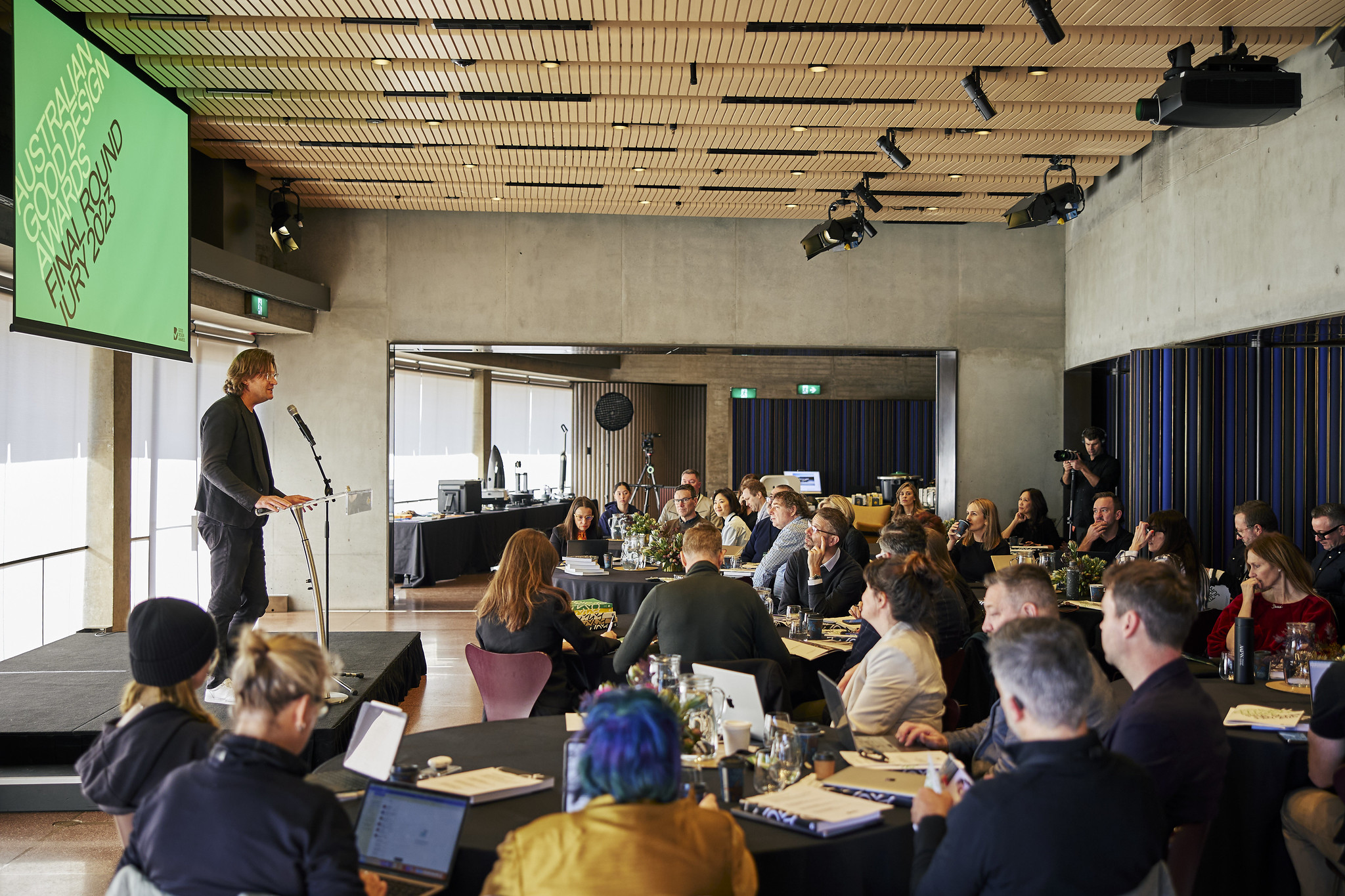
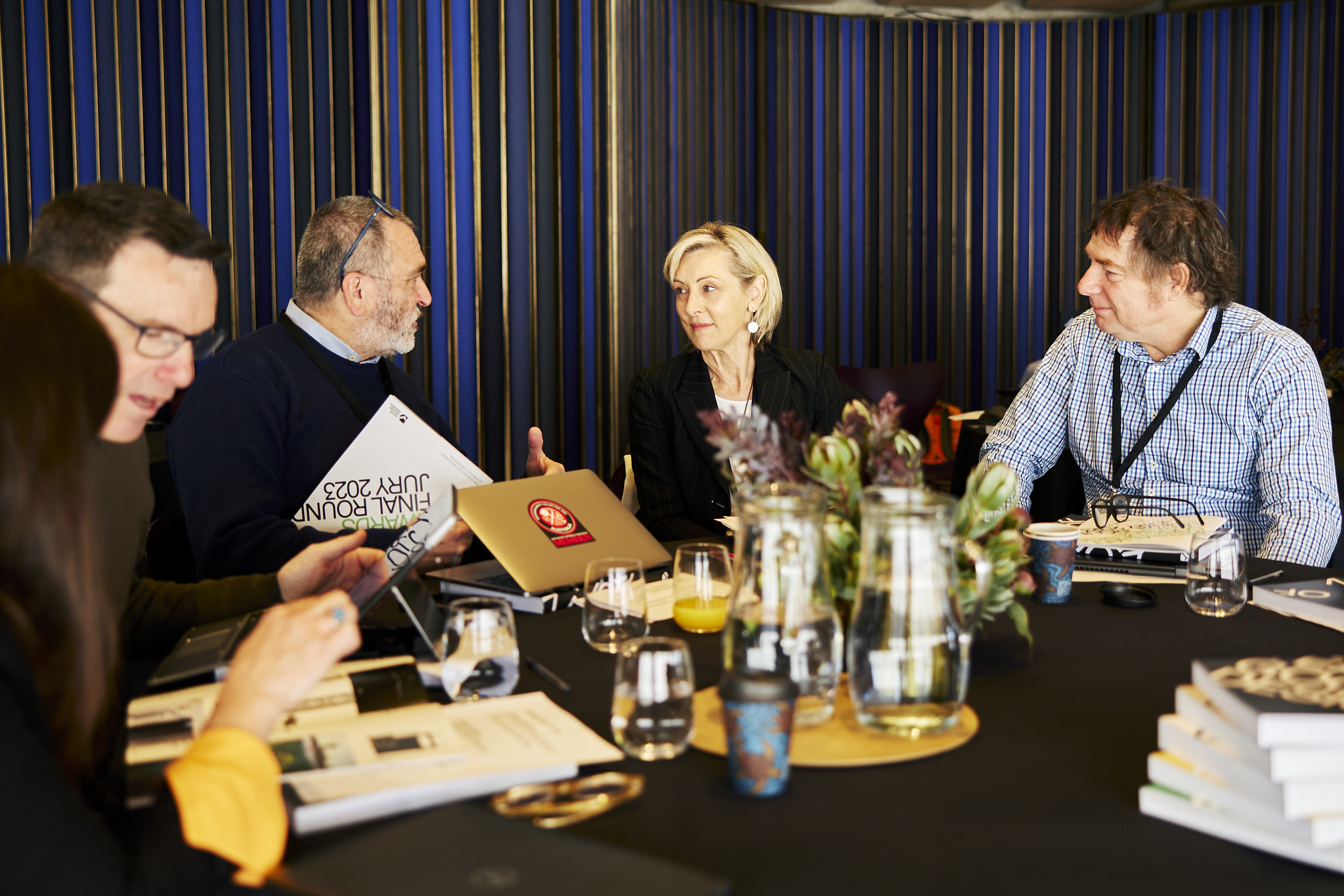
- The Jury meet-up brings together expert designers from all corners of the industry to evaluate, debate, recognise and award the most incredible projects submitted into the Awards. It’s where each Award Winner is solidified and the coveted Good Design Award of the Year is selected. The 2023 instalment unfolded on the shores of Sydney Harbour at the Sydney Opera House.
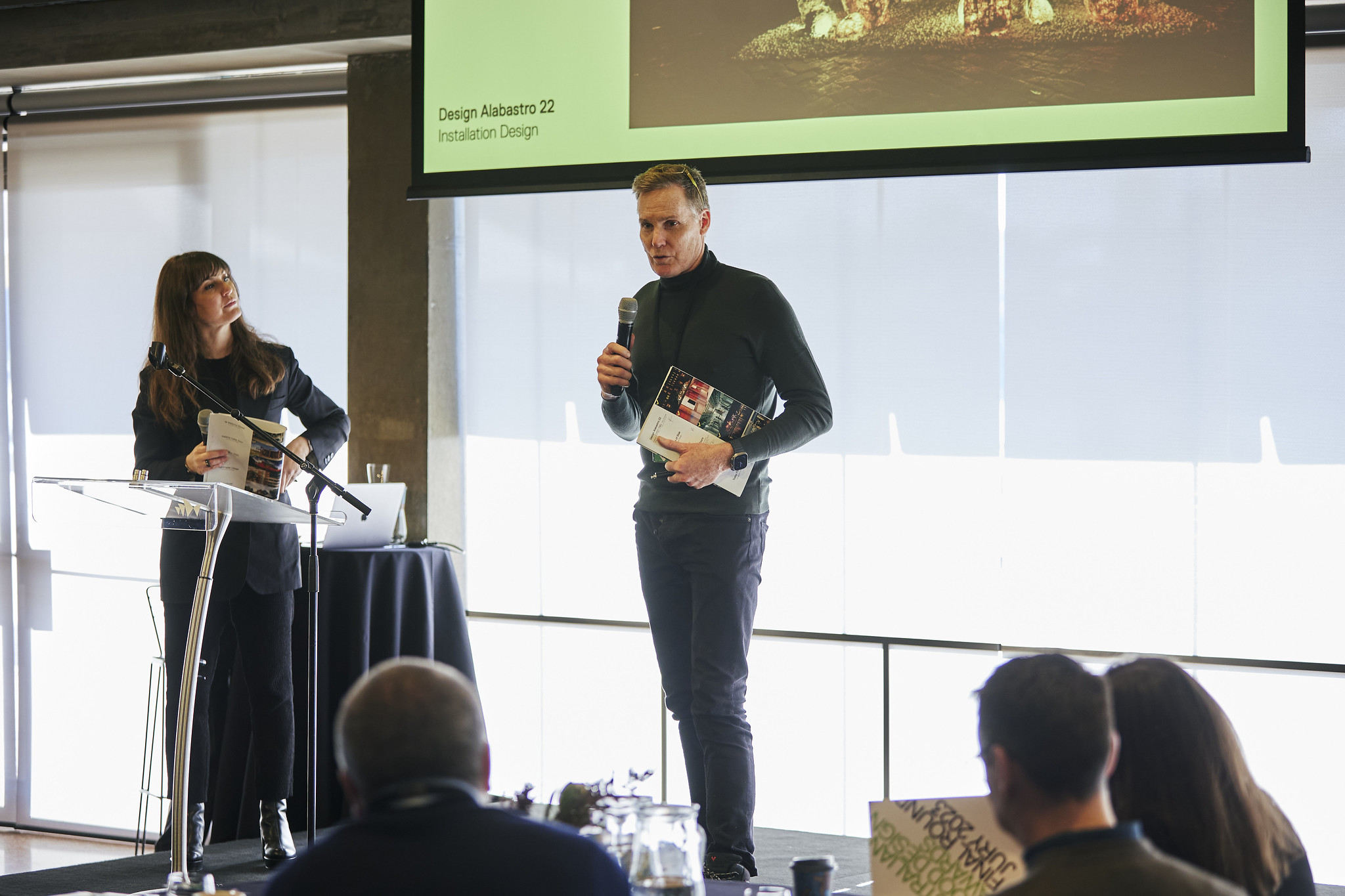
Behind the scenes of the 2023 Australian Good Design Awards
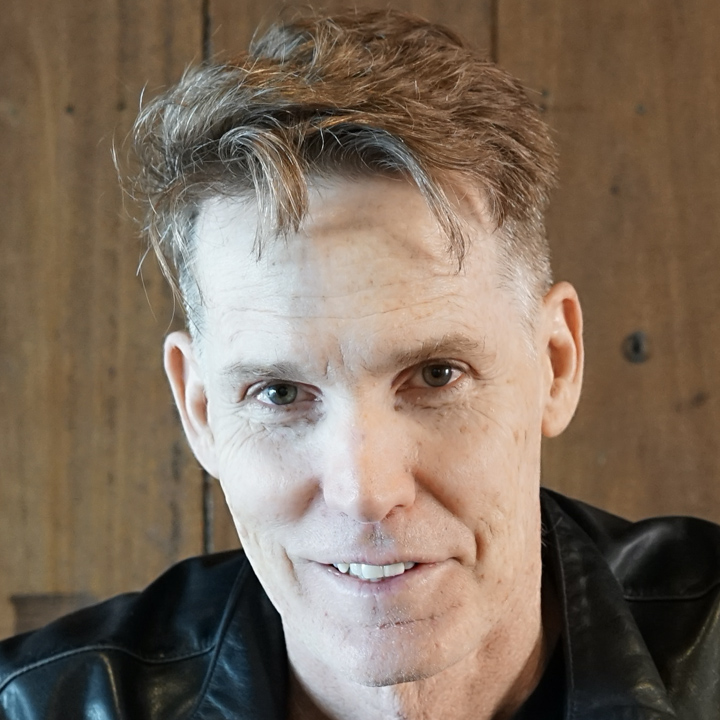
Prof. Ken McBryde
Design Director – Gensler
Architectural Design Juror
Prof. Ken McBryde is Gensler’s Head of Architecture in Australia and New Zealand. With a natural affinity with construction methodologies and innovative materials, he is a regular contributor to research papers and the recipient of multiple Good Design Awards.

Brendan Hutchieson
Director – Play&Co Creative Group
Product Design Juror
Brendan is an Industrial Designer with 20 years of global experience across the consumer lifestyles, medical, aerospace and architecture domains. With Play&Co Creative Group, he helps start-ups to Fortune 500s grow strategically by design.

Emrhan Tjapanangka Sultan
Cultural Consultant and Artist – Mukulri Creative
Indigenous Design Award Juror
Born and raised in Mparntwe, Emrhan is an artist and consultant passionate about setting foundations of First Nations cultural understanding within non-Aboriginal businesses through his agency – Mukulri Creative.
Good Design Australia: What were some common elements or characteristics that you found consistently contributed to the success of a project or design?
Ken McBryde: When there was an emotional connection to the problem. That problem, that threat clearly motivates a solution. When you hear that story and when you hear how they solved it, that affects you. Man, oh, man, I’m getting goosebumps now.
It provides really deep insight into an issue, providing a true understanding of what’s at play. People talk about unpacking a problem like unpacking a suitcase. The problem is – a suitcase is full of stuff. But, when you apply that genuine, emotional design and research process, you can unpack it and, suddenly, ideas reveal themselves. The ideas that come out of that will be generally irrefutably good, because they were well-founded, not on a whim. “I’d like it to be pink, or I’d like it to be blue. I think it should be this shape because it’s going to look good”. No, it’s this shape because of the wind, because of the geographic or the political context, or in response to an authentic human feeling. It’s deep insight that causes ideas to be there, and only ideas that are well-founded will be there in the end.
Brendan Hutchieson: Entries that made the effort to explain and illustrate their creative process rose to the top. Therefore, it was easy to evaluate the calibre – who the product is intended for, how it addresses their core need, and how the entrants implemented a creative process to deliver an innovative product, graphic, service or space.
Secondly, nearly all, if not all, of the successful entries placed sustainability and/or social impact at their core. This tangibly illustrates the power of design to address critical planetary and humanistic needs.
Emrhan Tjapanangka Sultan: For the Indigenous Design Award, it was those that broke down expectations of what First Nations/Indigenous design is and the incredible potential for industry wide and cultural impact.
I think overall recognising the importance of First Nations voices was vital to be represented in the design industry fairly, and how their processes came together in the core values, questions and considerations.
Good Design Australia: Were there any specific categories or aspects of design that posed challenges or sparked particularly insightful discussions among the panel?
Ken McBryde: There was lengthy discussion around the question of design being elite versus design being for everyone. Of course, there’s a place for both. Architecture, for example, has traditionally been an elite thing, yet more and more we’re obliged to make it accessible to everyone. It’s what modern methods of construction are doing – designing for manufacturing assembly and disassembly, to solve housing crises. These are global, and won’t be solved by conventional means. They’re the things that really motivate me.
Brendan Hutchieson: Some that come to mind: What constitutes sustainability and whether or not companies are genuine in their ESG targets, or simply ‘green-washing’ to inflate brand perception.
The importance of aesthetics was also a hot topic in the final round of judging in Sydney. My Jury group felt quite strongly that aesthetics are an important driver of product design and, consequently, brand value and equity. We were quite surprised that opinions from the panel varied a lot about the importance of aesthetics, ranging from “aesthetics just need to be fit for purpose” to “aesthetics are always paramount”. This was quite a relevant topic given that we were standing in the Sydney Opera House, arguably Australia’s single most prominent design icon, but also the source of much debate and controversy when it was designed and built.
Emrhan Tjapanangka Sultan: I believe it was unanimous [in the Indigenous Design Category], but when we are having to choose just one overall winner, that is the greatest challenge, as we never like to be seen as being in competition with one another.
Regardless of who was announced as the final winner, the important thing is that it recognises the importance of First Nations voices within the design industry and the important work being done to share our culture.
Good Design Can you identify any emerging trends or shifts in design thinking that were evident among the entries this year? How do you think these trends might influence the design landscape in the future?
Ken McBryde: With the growing emphasis on sustainability, it’s made me think that perhaps in future we shouldn’t have the sustainability category. We should just note that good design isn’t good unless it’s sustainable.
Where designers fit in with AI is also an important one. I would suggest that AI is an incredibly powerful tool, probably one of the most powerful tools we’ve seen since the conception of building information modelling in three dimensions. But at the end of the day, a design is about judgement, human connection and human experience. So I don’t feel threatened by AI, I feel excited by it, because it allows us to make judgement from a wider set of opportunities. However, in the near future, given designers operate between what a client wants and how they get it, then our clients will obviously look to AI to expedite their ambitions.
What it does mean, though, is that we’ll have to be good designers of prompts, be very good at judgement and be particularly good at human interaction, because ideas still have to be presented and we still need to evaluate and recommend. So, the skill that designers will need more than ever will be emotional intelligence and people skills.
There is still a great opportunity for Good Design Australia to tap into more Indigenous knowledge. There’s 60,000 years, at least, of remarkable design knowledge. If you just stop and think for a moment about the physics of a boomerang, or about the political structure of 350 different groups operating in a cooperative and highly communicative way, they have a lot sorted out that we are only just beginning to acknowledge.
We’re just at the beginning of good design from a non-Indigenous, or non-First Nations point of view. Up until this point, we’ve been incredibly arrogant and missed a lot of opportunities. I think Australian designers and Good Design Australia are steadily understanding that and we’re taking steps to learn more from our Indigenous cousins.
Brendan Hutchieson: This year, I’ve been encouraged by the translation of research-based technological innovations, in MedTech and AgTech for example, into commercially viable business solutions by the power of design. I expect this trend to continue into the future.
Moving forward into the coming decade, the design landscape, like all industries, is set to undergo one of the largest transformations in history. This transformation is already underway and is characterised by the amplification of ecological and societal challenges intersecting with revolutionary new technologies such as AI.
Change and innovation will happen at breakneck speed and, consequently, organisations will be in desperate need of creative guidance to make sense of this new world and their roles within it. Enter design. Designers have a unique awareness of these new technological trends, an empathy for people and the planet, and an ability to envision optimistic new concepts that solve real needs.
Given this need, I see a strong and important future for designers. One where we become more central to strategic organisational decisions, and are able to deliver greater impact and value to business.
Emrhan Tjapanangka Sultan: I believe that each submission put forward [in the Indigenous Design Category] shows what First Nations and Indigenous design really is.
It’s a way to not only share our culture with non-Aboriginal people but it also allows us, as Aboriginal people, to express our freedom of our own culture. How we choose to share that, as we’ve seen with each submission, has helped to shape and influence the future of the design landscape.
Thank you to the esteemed 2023 Jury
Good Design Australia extends our deep gratitude to the more than 70 Australian and international experts that make up the Jury. We thank them for giving up their time and for sharing their valuable expertise to evaluate this year’s Australian Good Design Awards.