VolDrive –2024 Australian Good Design Award for Sustainability

THE GOOD DESIGN AWARD FOR SUSTAINABILITY RECOGNISES PROJECTS THAT EMBODY EXCELLENCE IN DESIGN FOR SUSTAINABILITY AND CIRCULAR ECONOMY PRINCIPLES.

THE AWARD AIMS TO INSPIRE CHANGE TOWARDS A MORE SUSTAINABLE FUTURE THROUGH THE POWER OF GOOD DESIGN.

VolDrive is making wind an even cleaner source of energy. Crafted by Onvol, the device comes to life as the use of Internet of Things (IoT) sensors surge. These smart real-time sensors greatly improve the way industrial assets like wind turbines are protected and monitored. However, traditional IoT sensors are a drain on resources with harmful end-of-life consequences. They rely on environmentally-harmful batteries and require frequent, hazardous maintenance. 

Onvol’s solution? Find a new source of power. VolDrive harvests kinetic energy to power sensors in a way that’s both environmentally and economically sustainable. Replacing the need for traditional battery-powered IoT sensors, one VolDrive device can avoid the use of 4800 batteries and 500 kilograms of GHG emissions over its 10-year life span. 

The device powers advancements in technology that would not be possible with battery-powered sensors. Features like an acoustic camera and real-time blade health monitoring increases the efficiency of wind energy harvesting. Additionally, the entire life cycle of the device has been engineered to design out waste, reduce costs and maximise the amount of usable energy harvested. 

Onvol’s VolDrive has been honoured with the 2024 Good Design Award for Sustainability. We sat with Clinton Hopkins, CEO of Onvol, to explore the journey from a challenging request for a longer lasting battery to an industry-disrupting design solution. 

The Onvol team behind VolDrive Image: VolDrive

GDA: The VolDrive design began with a customer asking for a battery that could last for 10 years. Was this a theme of longevity upheld throughout the design process? 

Hopkins: Yes, definitely… We really built around making sure this is a very well designed product for all the people that have to use it. So it’s not just, ‘This is easy for us to make and we’re going to sell it.’ It’s about all the people that are along the chain… like the sensor company, that has to make [VolDrive] integrate with their system. 

But also, how do we freight it? And how do freight handlers deal with it without breaking it and [also] make sure it gets there on time? And then, how does the technician pull it out of a box and cart it to the top of a turbine and get it in there? [It was] even down to, how do we compress the packaging so that it’s easy to dispose of on site? …So [it was about] understanding all those points along the road.

Even things like our harvester broadcast data to the sensor, which sends it to the cloud. It tells you how it’s going in its life journey, whether it’s struggling to perform, and also gives ID… So that reduces the need to go and service them. We will know before it becomes an issue which ones will need to be put through the rebuild cycle.

GDA: Can you tell us about the environmental impact of battery-powered sensors and how VolDrive offers a sustainable alternative?

Battery-powered IoT devices are becoming prolific. About 80% of all IoT devices are battery powered. Each [IoT device] generally consumes about four double-A batteries per year. We currently have something like 10 billion individual sensor nodes out there, and that’s meant to triple over the next decade… so that’s a lot of battery waste. 

One big problem with battery waste is that it’s mostly uneconomical to recycle batteries, so around 95% of batteries end up in landfill. And of course, the minerals that go into them come from mining processes that are not brilliant for our planet. So, there is quite a huge carbon footprint per battery…

[With VolDrive] we replaced the need for about 4800 double-A batteries over a 10-year period. I think we’ve already displaced something like 81 tonnes of CO2 emissions in the first year of operation.

GDA: How does the VolDrive design uphold sustainability principles?

Hopkins: The good thing is that our product is part of a circular economy. So the internal componentry is the part that actually makes the power and some circuitry… It’s made of metals, aluminium and steel and copper, and it has a life of about 40 years. It’s the heart of the product so we can just refurbish it and give it four times its lifespan.

We’ve also tried as much as possible to source recycled materials. Then, we have a supply chain where the customer hands back the product to us whenever there’s an issue and we just refurbish the unit and send it back out…

GDA: What are some ways in which VolDrive reduces waste long term? 

Hopkins: Basically, the parts that we replace are only about 5% of the whole unit, but that could have up to four decades of operation… So that’s pretty significant to what the device does. 

But, more significant, is [VolDrive’s ability to power] the sensor [and its acoustic camera]…It can actually take an acoustic picture of the environment and then be able to zoom into different areas to tell whether that noise is correct or not for that piece of equipment. So, imagine you’re at a cocktail party and you just zoom around the room from one spot and listen to the different conversations… That’s effectively what we do inside a wind turbine blade…

If it was running on batteries, this would not be viable. You would just simply be better off accepting the hundreds of thousands of dollars in damage to the blade and replacing them every 10 years…

This particular product also enables real-time sensing of blade health, so that we don’t have to do visual inspections or drone inspections and we get real time understanding of what’s just happened to a blade anywhere in the world. Without [VolDrive], there is no way to power this. 

GDA: Can you give us an example of how collaboration came into play during the design process?

Hopkins: I wanted to go and travel and hop in a turbine. And, get the team to go [on site] for a day or two. We wanted to know how the crew worked and what their pain points were… Like, it could be really hard to fasten them to the surface. [Then] we come up with mounting mechanisms that are magnetic, so you just click it on… Basically making it really easy so you don’t have to read for a 10-page document to understand how this should install…

We couldn’t get in the turbine blade ourselves, because there’s quite a bit of OHS around that, so we did zoom calls with turbines in America. The engineer would show us around with his phone or his laptop as he’s crawling through different sections of the turbine. 

VolDrive – Winner of the 2024 Good Design Award for Sustainability Image: VolDrive

GDA: VolDrive is 10 times cheaper to deploy in the blades than batteries, making it sustainable both environmentally and economically. What’s the societal impact of VolDrive’s affordability?

Hopkins: How quickly we can transition to renewable energy properly comes down to the profitability of it…. What I’d like to see is that we enable wind to be cleaner so there’s less loss or waste. [Then] we’re not having to cut up these blades and put them in landfill. 

Really, it needs to be that we extend the life of those blades. Therefore, the assets become more profitable. Because they’re more profitable, more big businesses want to transition over from mining coal or pumping out oil to become a renewable player, which is a nice thing…

I think we’re just a small piece in a big puzzle, but having that can improve a lot of the pieces all the way up to the top… The more investment and the more scale we get, the better it is for all of humanity. 


Setting a cleaner future in motion   

From start to finish, VolDrive considers the best interests of users and the planet. The Onvol team’s design thinking ensures the device’s entire life cycle optimises efficiency. Practical, innovative and affordable, VolDrive achieves remarkable societal impact while making wind an even more attractive energy source. 

VIEW ALL 2024 GOOD DESIGN AWARD WINNERS HERE.

Clean Grow Lick Block – 2024 Michael Bryce Patron’s Award

THIS AWARD IS PRESENTED ANNUALLY BY THE PATRON OF GOOD DESIGN AUSTRALIA. IT RECOGNISES AND CELEBRATES THE BEST AUSTRALIAN-DESIGNED PRODUCT, SERVICE OR PROJECT IN THE ANNUAL AUSTRALIAN GOOD DESIGN AWARDS WITH THE POTENTIAL TO SHAPE THE FUTURE ECONOMIC, SOCIAL, CULTURAL AND ENVIRONMENTAL ASPECTS OF OUR PLANET.

Clean Grow Lick Block marks a significant advancement in sustainable farming in Australia. Designed for livestock, these lick blocks offer both nutritional benefits and a positive environmental impact. This product helps even the most remote cattle stations to reduce methane emissions while nourishing their animals.

Animals like cattle produce large amounts of methane, which then traps heat in Earth’s atmosphere. Due to our reliance on livestock farming for products like beef, wool and dairy, reducing these emissions is a significant challenge. Clean Grow, Winner of the 2024 Michael Bryce Patron’s Award, presents a new way to help curb these emissions.

Designed by Sea Forest and Olsson’s, Clean Grow is a lick block that reduces methane emissions in grazing livestock. The project modifies Olsson’s 16% High-Sulphur Lick Block by incorporating SeaFeed™. The key ingredient? A native seaweed called Asparagopsis. When Asparagopsis is fed to livestock, it has shown to reduce their methane emissions by up to 98%. 

Sea Forest is the first company in the world to commercialise the cultivation of Asparagopsis. They saw an opportunity for farmers to combat climate change in their own backyard. From production to end use, the lick block decarbonises the livestock supply chain while offering a seamless user-experience. Farmers can simply place Clean Grow lick blocks throughout their paddock and achieve a 30% to 70% reduction in their livestock’s methane emissions. 

We dove into the innovation behind Clean Grow alongside Sea Forest team members Dr Louise Edwards, Head of Product Development and Regulatory Affairs, and Professor Rocky de Nys, Chief Scientific Officer. 

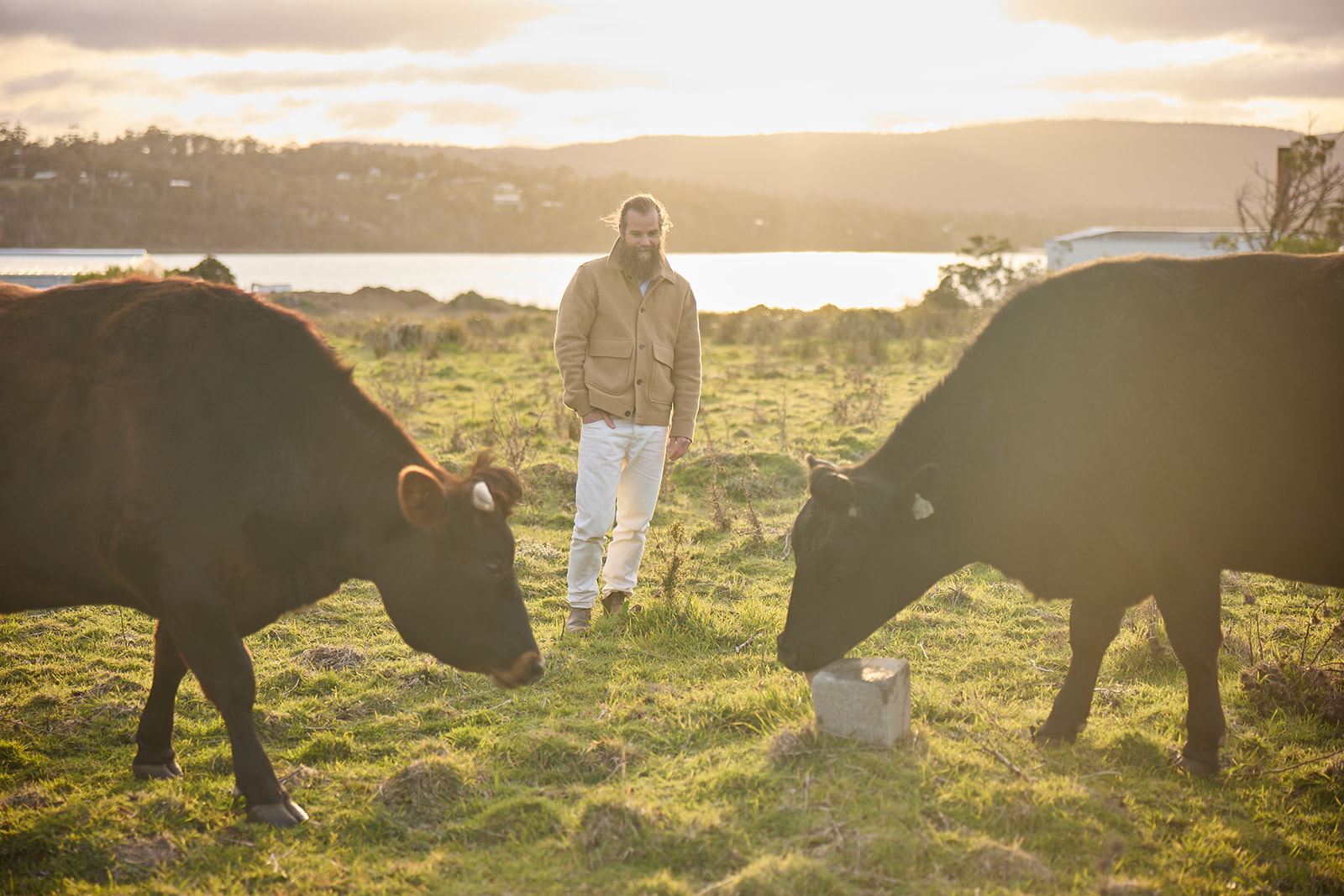
[Sea Forest CEO, Sam Elsom, with Clean Grow Image: Clean Grow]


GDA: If Clean Grow was fed to all grazing cattle in Australia, the 30% reduction in emissions would be like removing over 1.5 million cars off the road for a year. What does Sea Forest need to achieve this?

Dr Louise Edwards: We need farmers to get onboard. We’re very lucky to have developed the Clean Grow lick block in partnership with Olsson’s Industries, because it means we have an established route to market and wide distribution. We’re currently working with early adopters across the country before our official product launch [which is] coming soon. 

As you’ve pointed out, this solution holds so much potential to have a significant impact on reducing emissions. By simply placing Clean Grow lick blocks in the paddock, farmers will be providing a nutritional benefit to their animals, while making a positive contribution to climate by reducing methane emissions. It’s a win-win for livestock, the farmer and the planet. 

GDA: How does the life cycle of Clean Grow reduce waste?

Dr Louise Edwards: The blocks are packed in edible cardboard which the cattle and sheep consume. It’s completely safe to eat because even the ink is edible. Obviously, the lick block is 100 percent consumable too, so there’s zero waste. Alternatively, producers can request for package-free blocks, so there’s even less impact. 

[Clean Grow – Winner of the 2024 Michael Bryce Patron’s Award]


GDA: How does the design of Clean Grow consider the user experience of both the livestock and the people working directly with them?

Professor Rocky de Nys: The lick blocks are designed with the livestock and the farmer front of mind. It’s been formulated to provide the optimal nutrient and ingredient balance to meet the needs of livestock it’s being fed to. This is on top of the addition of the methane inhibiting feed ingredient, SeaFeed. 

It’s also designed to fit into existing farm operations, where they already use lick blocks, so no practice change is required to adopt the new technology to abate methane. The blocks are available in different sizes to provide solutions, whether that’s a hobby farmer with a small number of animals or an extensive grazing operation feeding thousands of heads. 

[Sea Forest Chief Scientific Officer and Lead Scientist of Clean Grow’s design team, Professor Rocky de Nys Image: Clean Grow]


GDA: Can you tell us about the testing process behind Clean Grow? 

Professor Rocky de Nys: Sea Forest and Olsson’s Industries were grateful recipients of Stage 2 of the Australian Government’s $29 million Methane Emissions Reduction in Livestock (MERiL) program. This program supports research and development of methane-reducing livestock feed supplements. 

The funding enabled an extensive product development process from lab to pilot to commercial scale and met defined product specifications. All this needed to be completed before any lick blocks could be fed to livestock. Following the testing, blocks have been safely and effectively provided to stock as a world-first product to reduce methane emissions in grazing livestock. 

GDA: What were the biggest challenges when it came to the delivery method and ensuring consistent intake? 

Dr Louise Edwards: The hardest part was scaling up. What happens in the laboratory doesn’t necessarily happen the same way at pilot scale or indeed commercial scale. The unique partnership between Sea Forest and Olsson’s provided the development of a practical delivery method, the block, with consistent intake, thanks to a certain mix of ingredients. 

[Sea Forest Head of Product Development and Regulatory Affairs, Dr Louise Edwards testing Clean Grow Image: Clean Grow]


GDA: More consumers want to see eco-friendly products on the shelves. How does Clean Grow address this need? 

Dr Louise Edwards: Clean Grow provides an accessible and easy to use product for the hobby farmer wanting to do their bit, all the way up to large commercial graziers. The solution’s applicable to most farm management systems and reduces the production of methane in grazing animals that represent the vast majority of animal production. This innovation provides the technological solution to decarbonise agriculture and deliver low-carbon, eco-friendly agricultural products onto the shelves.  

GDA: How did you approach integrating SeaFeed with Olsson’s existing high-sulphur lick block?

Dr Louise Edwards: Obviously, we can’t give all our secrets away, but we spent a lot of time in the beginning understanding the High-Sulphur Lick Block product and the contribution of the individual ingredients. We needed to understand how SeaFeed would work with these ingredients and if needed, make changes to ensure they were complimentary. 

GDA: How did the research and design team work together during the process of bringing Clean Grow to life?

Dr Louise Edwards: We worked extremely closely. It was definitely a team effort. Everyone’s input was critical in ensuring the best outcome and we’re stoked to be recognised with a Good Design Award. It’s testament to the hard work and contributions that everyone made.  

GDA: What role does initiatives like the Good Design Awards play in encouraging environmentally responsible design? 

Dr Louise Edwards: With the Good Design Awards shining a light on environmentally responsible design it creates awareness which has a halo effect. You can’t see the projects the Good Design Awards showcase and not want to try and do things better.    

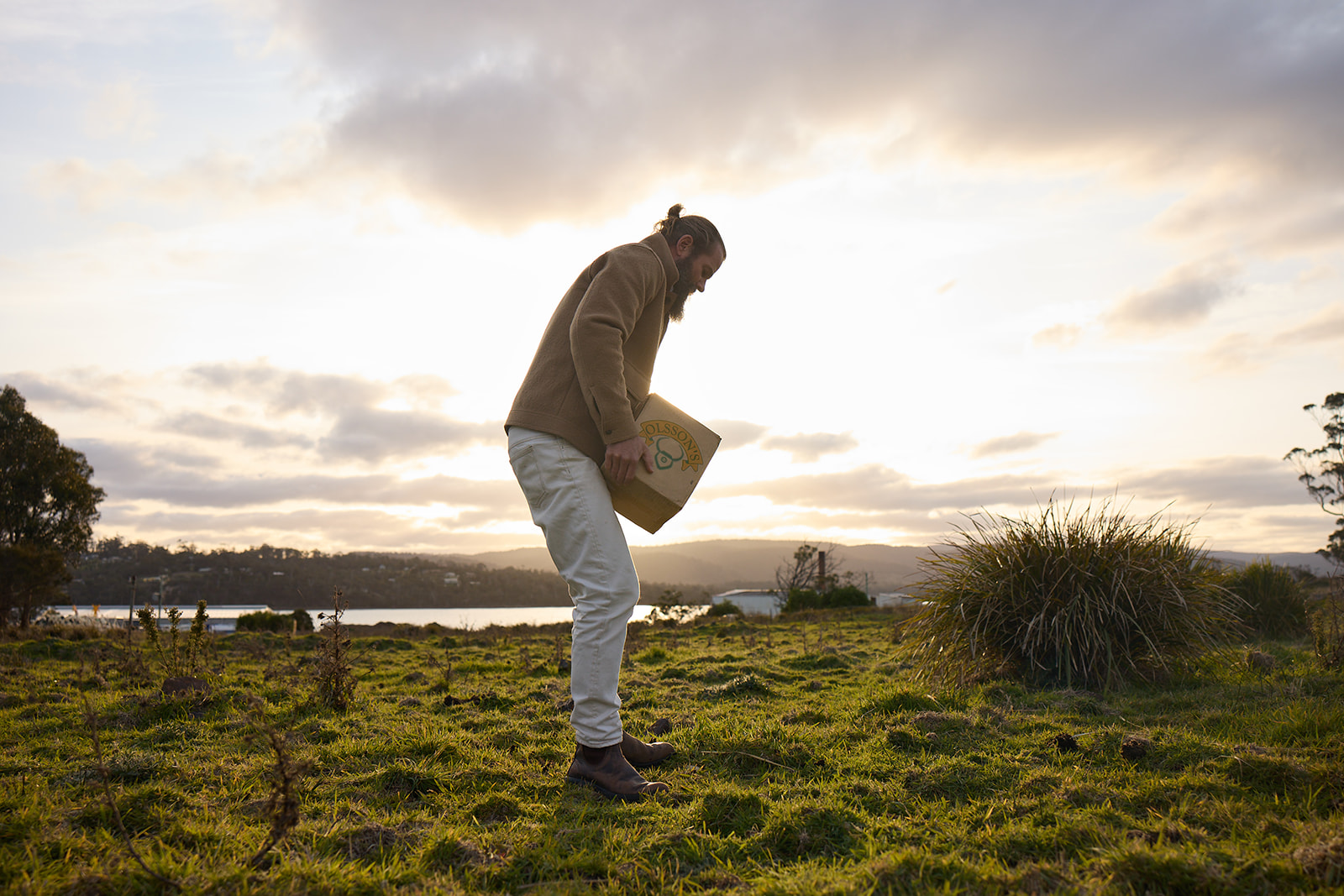
[Clean Grow – Winner of the 2024 Michael Bryce Patron’s Award Image: Clean Grow]


Clean Grow achieves an easily-implemented solution to reducing methane emissions. Years of perfecting the design of the lick block and its lifecycle have resulted in a truly world-first product. Congratulations to Sea Forest and Olsson’s on this remarkable project – we’re looking forward to seeing Clean Grow in paddocks across the globe.