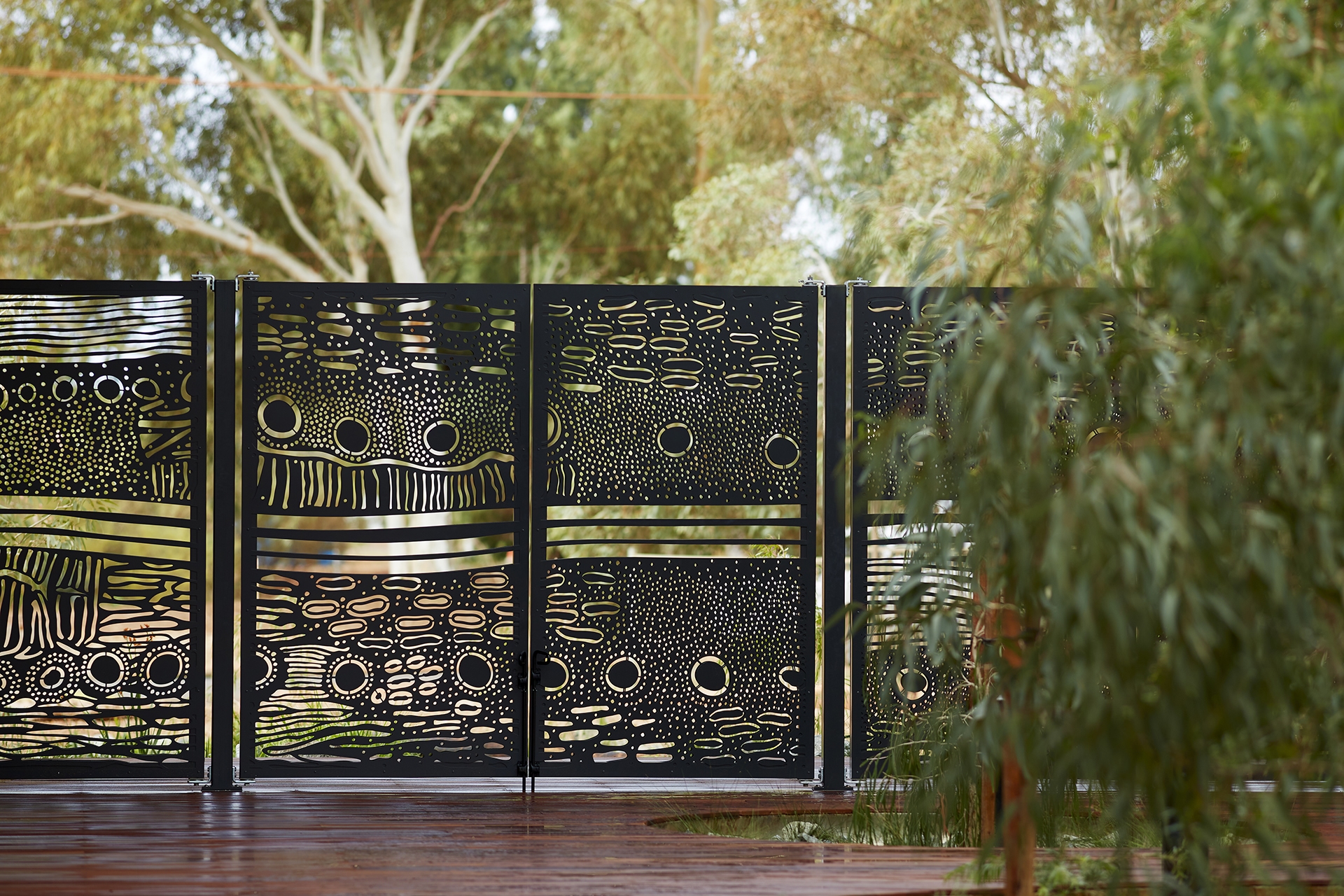
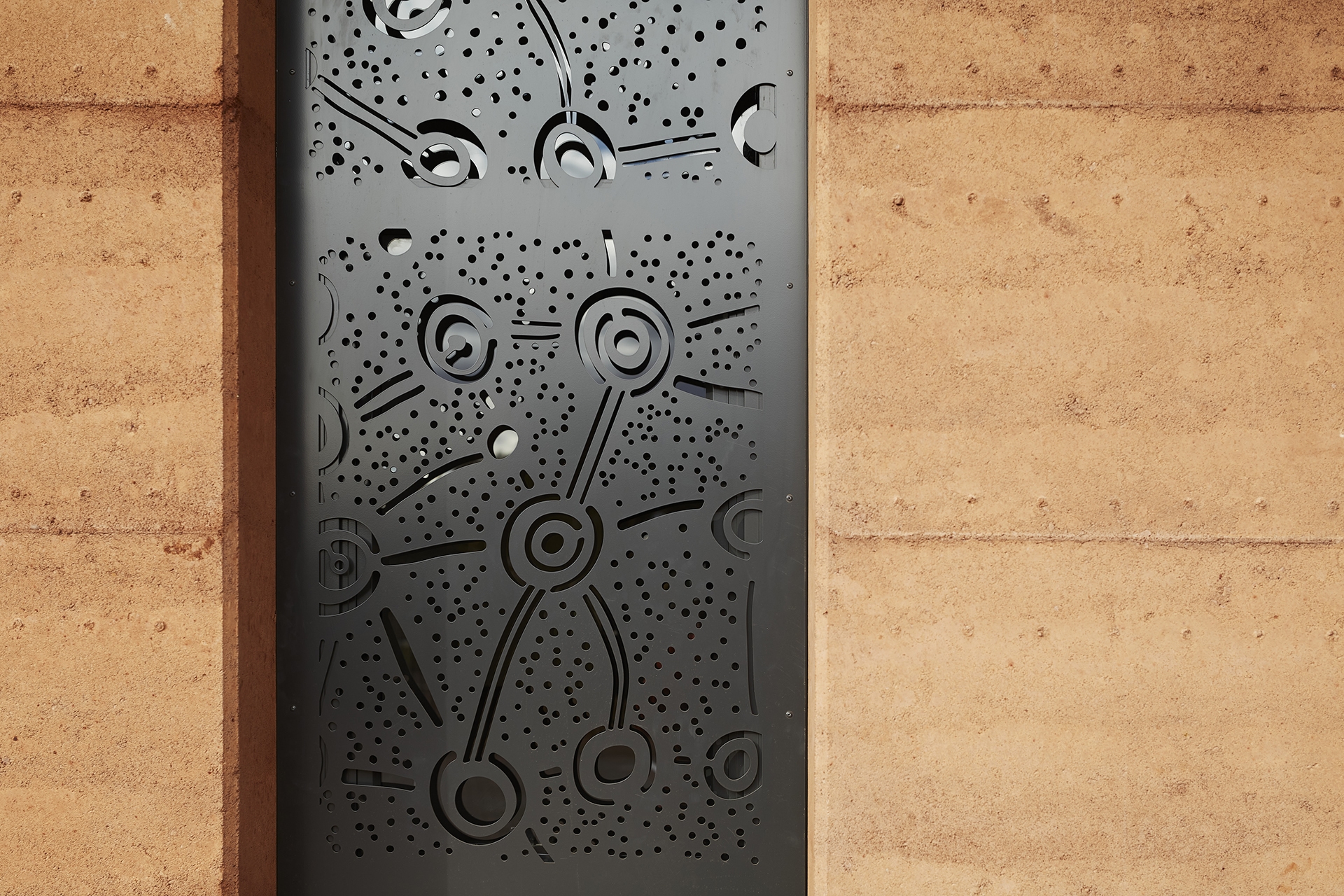
Nyul Nyul Community Packing Shed

2021 Good Design Award Winner: Social Impact

The Packing Shed is a purpose-built partially prefabricated timber structure installed at Twin Lakes on the Dampier Peninsula — near Broome in Western Australia — for the harvesting and processing of Indigenous foods on Country.

This project was a collaboration between The Orana Foundation, SJB and Bruno Dann a Nyul Nyul Elder of the Winawari people, Traditional Owner, and Founder of the Twin Lakes Cultural Park.

Bruno Dann’s partner, Marion Louise Manson, along with The Orana Foundation Founder and Board Director, Jock Zonfrillo, and SJB Director, Adam Haddow, share their insights into the design process and ongoing impact of this project.
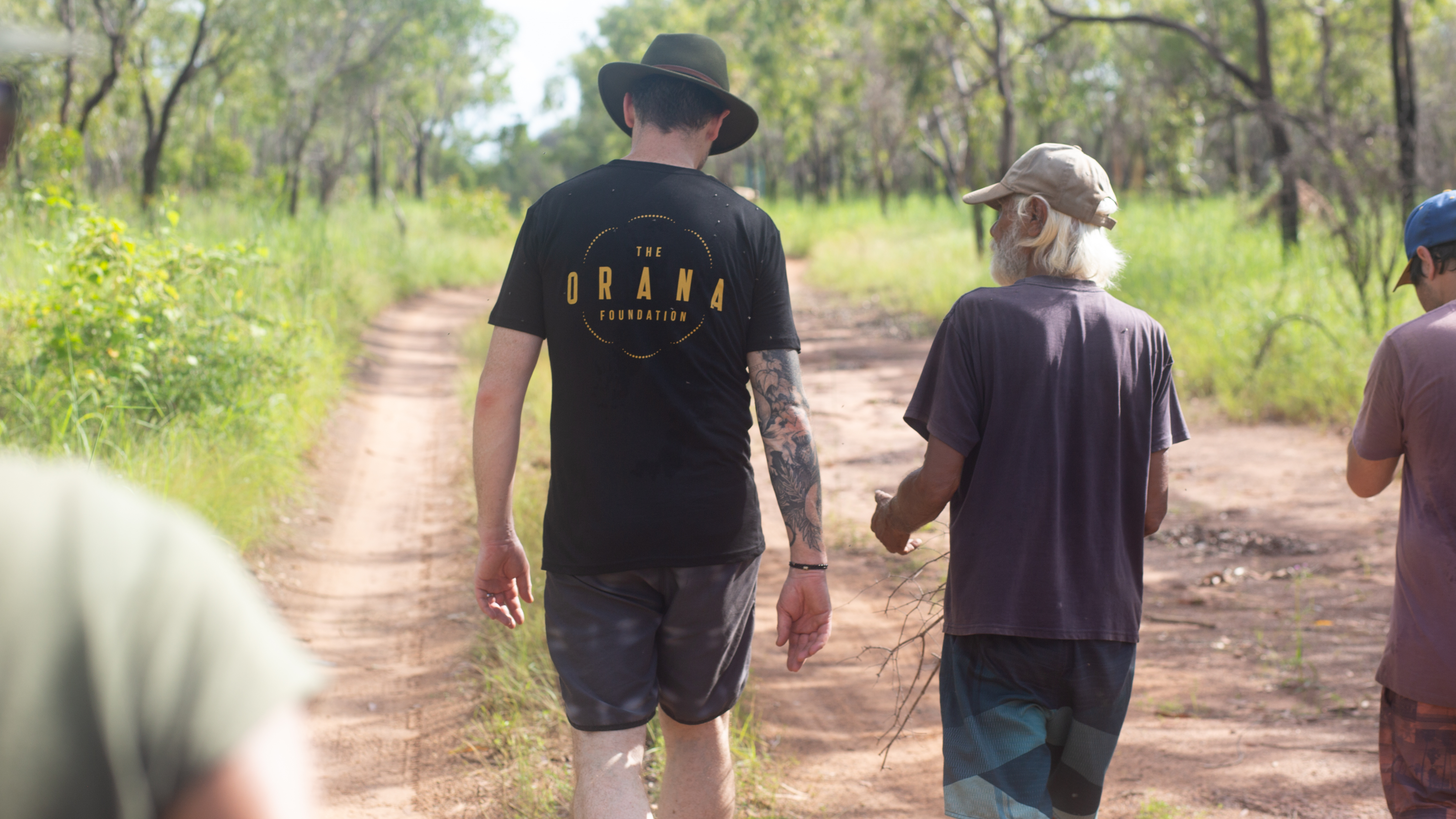
The Orana Foundation Founder and Board Director, Jock Zonfrillo, with Traditional Custodian, Bruno Dann, on Country.

Insights from Marion Louise Manson

“For Bruno Dann The Community Packing Shed enables him to stay on Nyul Nyul country so he can fulfil his obligations to his elders by passing on knowledge…”

“For all of us who assisted, it is a culmination of lots of experiences on country with Bruno and the dedication by everyone… Bruno shared his food culture and wisdom with us, taught us how his people lived off the land and sea landscapes.”

“Jock Zonfrillo was so moved by the complex food culture of the Nyul Nyul way of life it helped him on his pathway with Native Foods and this has greatly benefited us and other aboriginal enterprises… but we never expected it would go this far! Jock ended up doing more than we ever would have imagined!”

“’The Harvest Shed’ was able to be brought into reality, in the remote Kimberley, on aboriginal lands and for anyone who has experienced this country, it is a huge feat logistically. The roads are terrible alone but this was very expertly carried out by the team from SJB.”

“[Adam Haddow’s] shed design has amazed all who have the privilege to see it and enjoy it! The Community Packing Shed blends perfectly into the landscape and faces the sunrise and the sunset beautifully. It captures all the natural airflow from the Indian Ocean, nature’s air-conditioner as Bruno calls it and is cooler by far than any other site at Twin Lakes.”

“The bush food Industry was just being pioneered when we met Adam and Jock. It was a way forward for Twin Lakes to be independent and enter into business. Adam really did his research, staying on country spending time with Bruno out at Twin Lakes Cultural Park and then he set about designing The Community Packing Shed. We really had no idea how lucky we were to have Adam Haddow on board and SJB back then. They are so worthy of this Good Design Australia Award.”
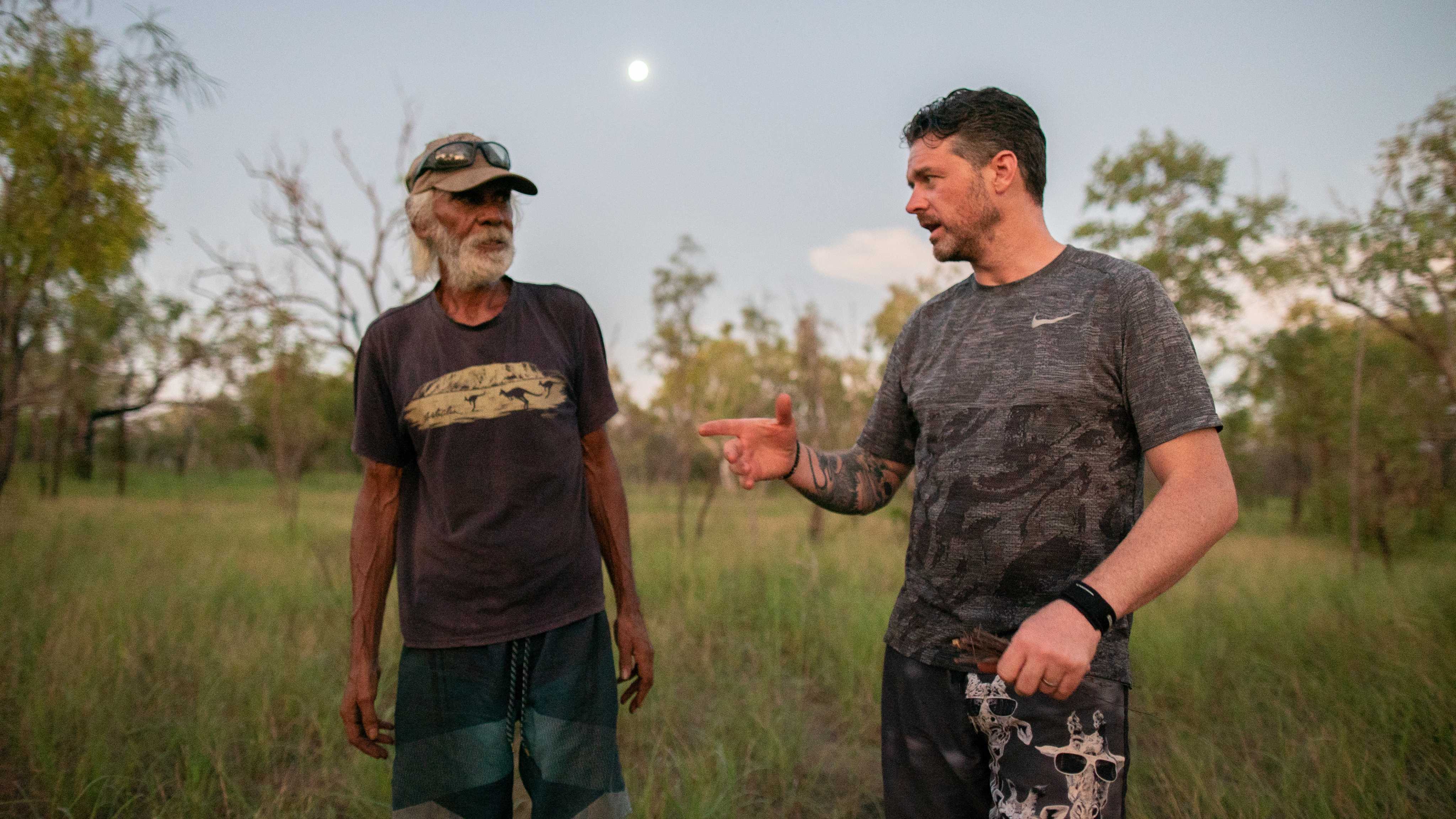
The Orana Foundation Founder and Board Director, Jock Zonfrillo, with Traditional Custodian, Bruno Dann, on Country.

Insights from Jock Zonfrillo

“The design process began with the requirements and wishes of Bruno & the Nyul Nyul people. Once Adam, Bruno and I had a chance to stand on country and really feel the earth, feel the importance of not just being on country but being responsible for adding a structure to it, it completely changed our collective thinking around design and how important it was to get this right.”

“Bear in mind this packing shed is miles away from anywhere, it needed to be cyclone proof, weather proof and termite proof. I think at that point Adam and I looked at each other and I just said ‘mate… I’m just a chef so I’m not gonna be able to answer these problems but it’s critical that we think them all through during the design phase’. Adam and the team at SJB immediately started workshopping Japanese joinery to eliminate as much metal as possible from the core of the structure. There are footings poured into the earth which can be removed and repaired, however, other than that the impact to Country is zero.”

“Everything was considered in the process right down to how locals rather sit on the earth while they sort the ingredients around the edge of the shed, shaded by the side doors that swing up. The Zero Mass system provided enough water to keep everyone hydrated with pure clean drinking water and the satellite keeps the project online not just to connect with buyers but now for the first time Bruno can track exactly where his best harvests are coming from, and which areas are in their landcare cycle.”

“The look and feel of the structure was very much born from Adam sitting on country and understanding what Bruno was visualising. It was an incredible experience to be a part of and I couldn’t have imagined a better team of people to bring it to life. If you don’t understand country, if you haven’t sat with elders and Traditional Owner’s on country, listened to the stories of the land, engaged with it, respect it, you simply cannot do a project like this justice.”

“Over two years on and the packing shed… is just as Bruno wished it to be. It’s a place where people come together, not just Nyul Nyul but the neighbouring communities too.”
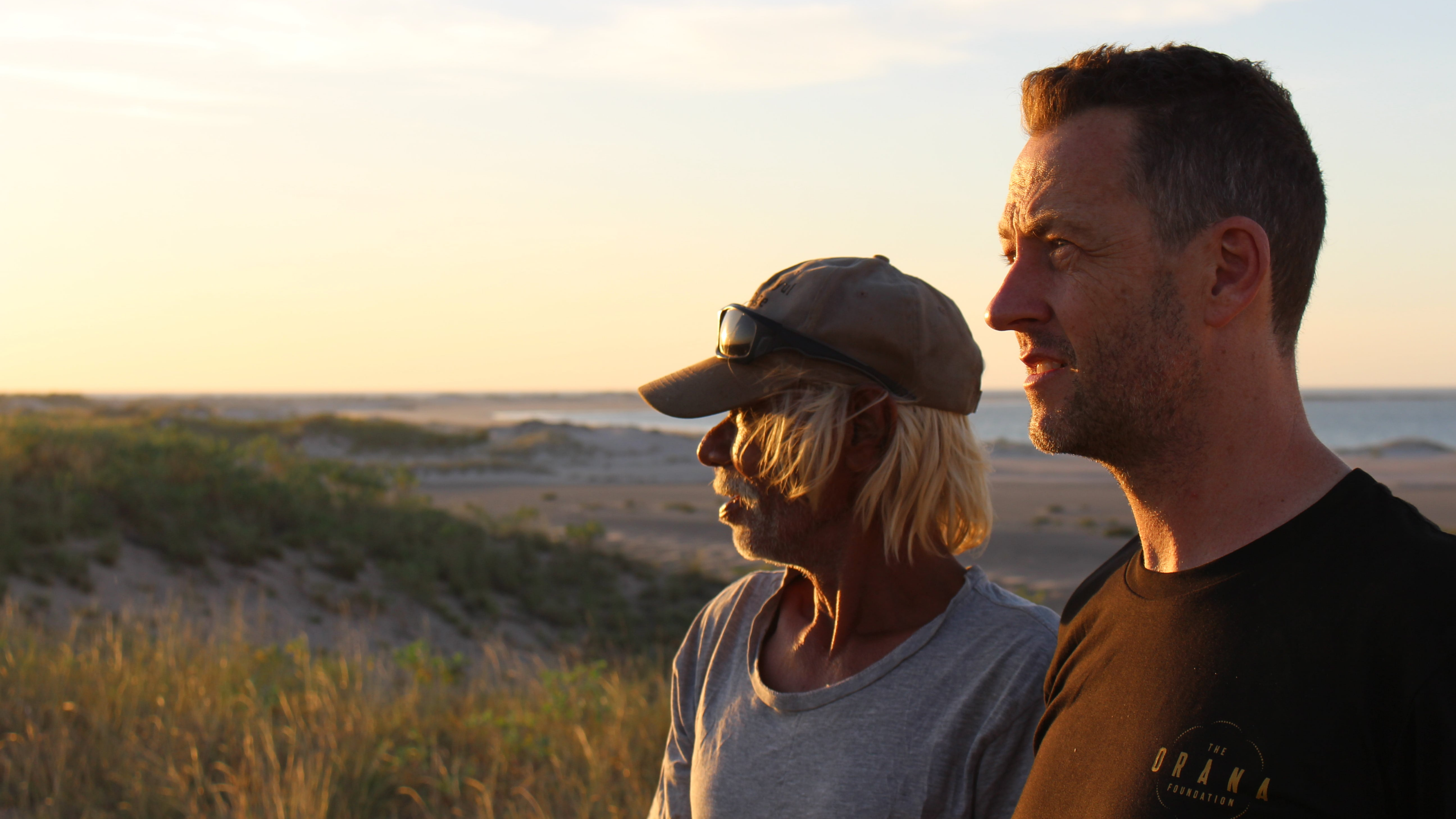
Architect Adam Haddow with Traditional Custodian, Bruno Dann, on Country during the on-site assembly of the packing shed.

Insights from Adam Haddow

“To support the future growth of their native harvest business, we (SJB) collaborated with the Traditional Elders of the Nyul Nyul Community on the Dampier Peninsula north of Broome to design a multi-purpose community packing shed that is entirely pre-fabricated and can be assembled on site within 7 working days.”

“Over ten years we have worked with and learnt from Elder Bruno Dann and his partner Marion about Country, the importance of place and what type of facility the community wanted. This discussion occurred over many trips to Country, learning a little more each trip ensuring that the design response would be respectful and reflective of the community’s ambitions.”

“By staying on Country with the traditional owners, the project team were able to develop an understanding of the environmental conditions the packing shed would need to withstand – from monsoonal wet seasons and cyclonic winds to heat and hungry termites. As the design developed, this engagement unearthed an important aspiration for the materiality: to protest the disruptive impact of the mining industry by keeping the use of any metals to a minimum, resulting in timber dowel connections for beams, columns and sheets.”

“A predominantly timber structure is achieved using native hardwood dowels in combination with termite resistant treated Laminated Veneer Lumber and Plywood. Where possible the innovative CNC machined elements are preassembled for streamlined construction. Responding to the site’s ever shifting environmental conditions, the shed is designed to leave no trace when disassembled.”
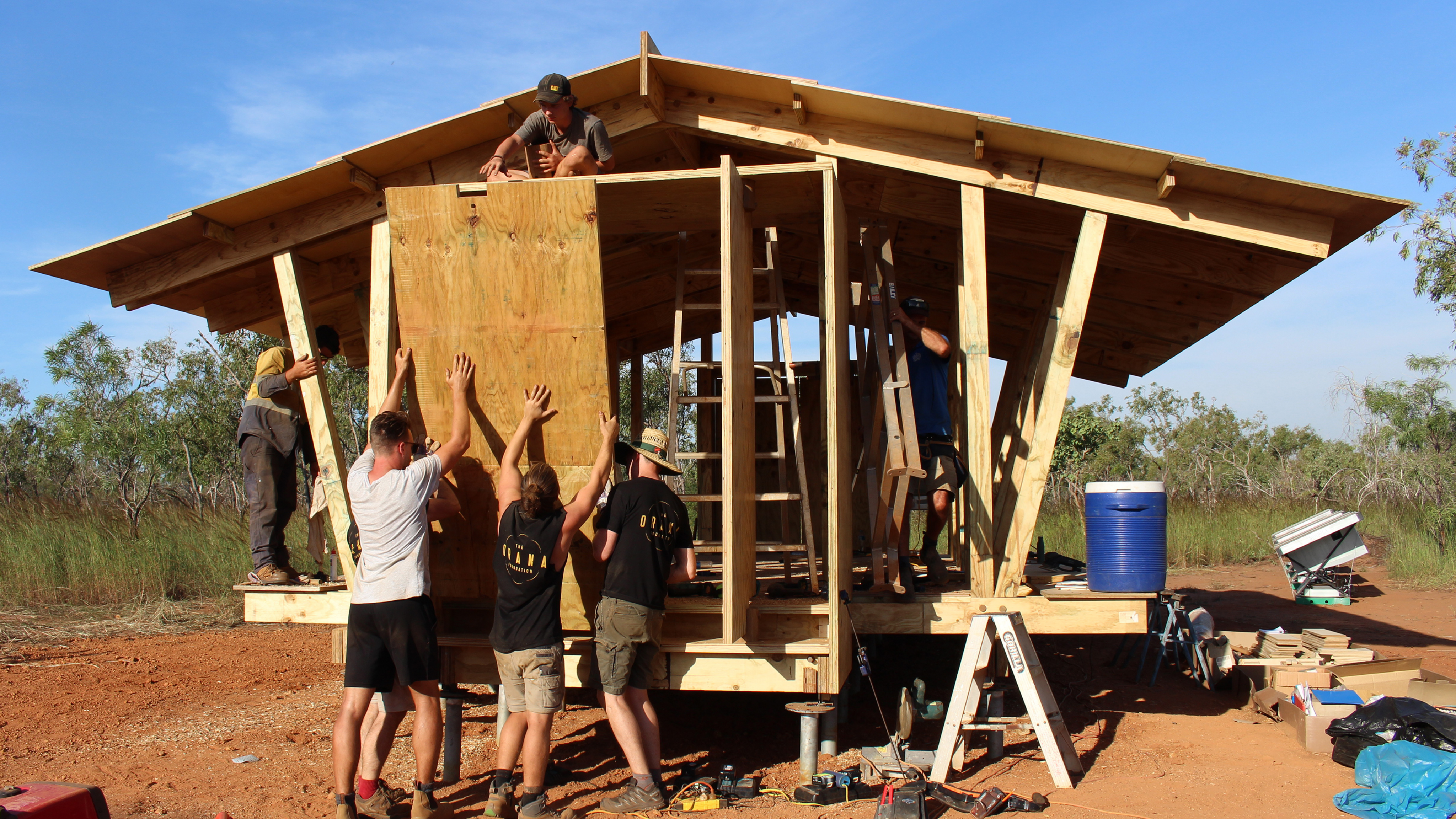
Constructing the packing shed installed at Twin Lakes, Dampier Peninsula, Western Australia.

Follow the link more information on Nyul Nyul Community Packing Shed.
2021 GOOD DESIGN AWARD FOR SUSTAINABILITY

Puntukurnu AMS Healthcare Hub wins coveted 2021 Australian Good Design Award for Sustainability and puts wellness at the heart of the community in Western Australia’s remote Pilbara.

Feature by Freya Lombardo

Imagine that you suffer from chronic kidney disease, with a high risk of kidney failure, among other complications. Now imagine that it’s a baking 50 degrees Celsius in the shade, and you’re more than 1200 kilometres from a major city hospital offering the haemodialysis you desperately need. You’re not a fan of flying and it’s a 14 hour trip by road. Even though you’re becoming increasingly unwell, the prospect of leaving home and family is unnerving at best and terrifying at worst.

This scenario would be daunting for most people to contemplate. Until recently, it has been a harsh reality for the seriously ill or injured amongst the Martu desert communities in Western Australia’s inland east Pilbara region for whom leaving Country and community can be deeply traumatic.

Puntukurnu AMS Healthcare Hub – 2021 Australian Good Design Award for Sustainability. Photo: Robert Frith, Acorn Photography

Trust is the foundation of healthcare and aboriginal communities have long had a distrust of clinics, hospitals and medical institutions as well as those who typically offer care. It’s hardly surprising that, amongst the Pilbara’s people, presentation rates for clinical care have been stubbornly low while potentially preventable hospitalisations run high. This makes Aboriginal controlled community health services vital for addressing the significant health and social issues that disproportionately affect Aboriginal people.

To remedy the situation, not-for-profit Puntukurnu Aboriginal Medical Service (PAMS) commissioned Sydney-based architecture practice Kaunitz Yeung Architecture to design an innovative Healthcare Hub in Newman, one of Australia’s most remote towns. This would be the first primary healthcare facility of any type to be constructed in the largest inland town of the southern Pilbara, offering general practice, immunisations, chronic disease management, acute care, dental, child / maternal care, rheumatic heart disease management and haemodialysis. Social and emotional wellbeing, sexual health advice and allied health are also available. For the first time, the people of Kunawarritji, Punmu, Parnngurr, Jigalong and Newman have on Country access to a broader range of community-aligned health services. 

Puntukurnu AMS Healthcare Hub – 2021 Australian Good Design Award for Sustainability. Photo: Robert Frith, Acorn Photography

A fundamental aspect in improving Indigenous health overall is exploring the relationship between land and wellbeing. Given this project is Kaunitz Yeung Architecture’s third collaboration with PAMS – and the Nyiyaparli, Nibali and Martu communities – meant the team already had a solid footing on which the architecture could challenge standard clinical design and champion sustainability to deliver a state-of-the-art facility for highly culturally appropriate healthcare.

For David Kaunitz Founder and Director of Kaunitz Yeung Architects, humanising the architecture and de-institutionalising the healthcare experience were foremost in conceptualising the design. Sustainable initiatives were embedded from the outset. In-depth community consultation and an iterative co-design process were the cornerstones of Kaunitz Yeung’s approach to the $8million purpose-built facility, which is funded by the Commonwealth Department of Health.

Puntukurnu AMS Healthcare Hub – 2021 Australian Good Design Award for Sustainability. Photo: Robert Frith, Acorn Photography

“Sustainability is the core value of this project and can be seen through the use of local materials, endemic landscaping, integrated art from country and the photovoltaics that almost solely power the building. These and other elements enable the building to be the physical embodiment of PAMS’ community centred approach to healthcare”, explains Kaunitz. “It is only through thorough and meaningful consultation that the connection to people, culture and Country can manifest in a communal place that puts wellness at the heart of the community”.    

“We spent a lot of time in the community not making assumptions, listening to local people and repeating the process, providing forums and both formal and informal opportunities for every voice to be heard,” said Kaunitz. “This fine tuning resonates with community and enriches the architecture, making it subtly more appropriate to people, place and culture.”

Puntukurnu AMS Healthcare Hub – 2021 Australian Good Design Award for Sustainability. Photo: Robert Frith, Acorn Photography

Minimizing the large costs and negative mental health impacts when Martu and Niaboli people leave Country and family for treatment in Perth was a major driver for the project. Conceived with the aim of increasing presentation rates – on Country – the Puntukurnu AMS Healthcare Hub has already become a place where Aboriginal people feel comfortable, connected, and respected.

“Central to this is keeping the community on or close to Country where they can maintain their family and cultural connections and avoid the dislocation that travelling 1200km to Perth can cause. It can not be overstated how important keeping individuals – and particularly elders – on country is to the wellbeing of the community as a whole,” explains Kaunitz.

Puntukurnu AMS Healthcare Hub – 2021 Australian Good Design Award for Sustainability. Photo: Robert Frith, Acorn Photography

The result is sustainable architecture so deeply rooted in place and imbued with humanity as to engender community ownership. Puntukurnu Aboriginal Medical Service Healthcare Hub Newman succeeds in shifting community perceptions around healthcare from treating sickness to promoting wellbeing. An outcome that has been achieved by involving Aboriginal people and respecting / reflecting their values, culture and Country.

It also opens a powerful and poetic dialogue on wellbeing and equality between Indigenous and non-Indigenous people, setting a new benchmark in reconciliation through the cross-cultural shared exchange of ideas, values and aspirations.

ARCHITECTURE

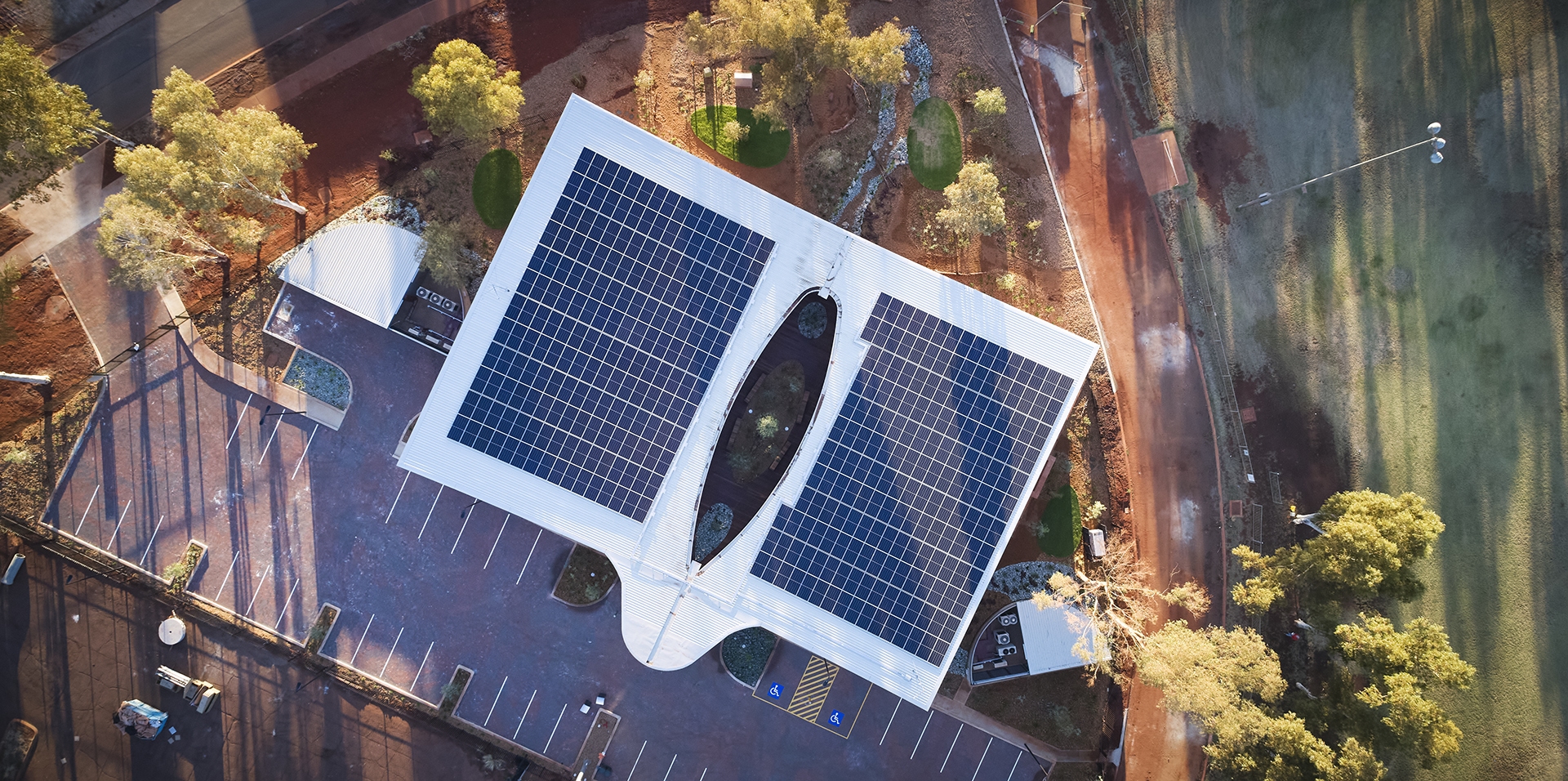
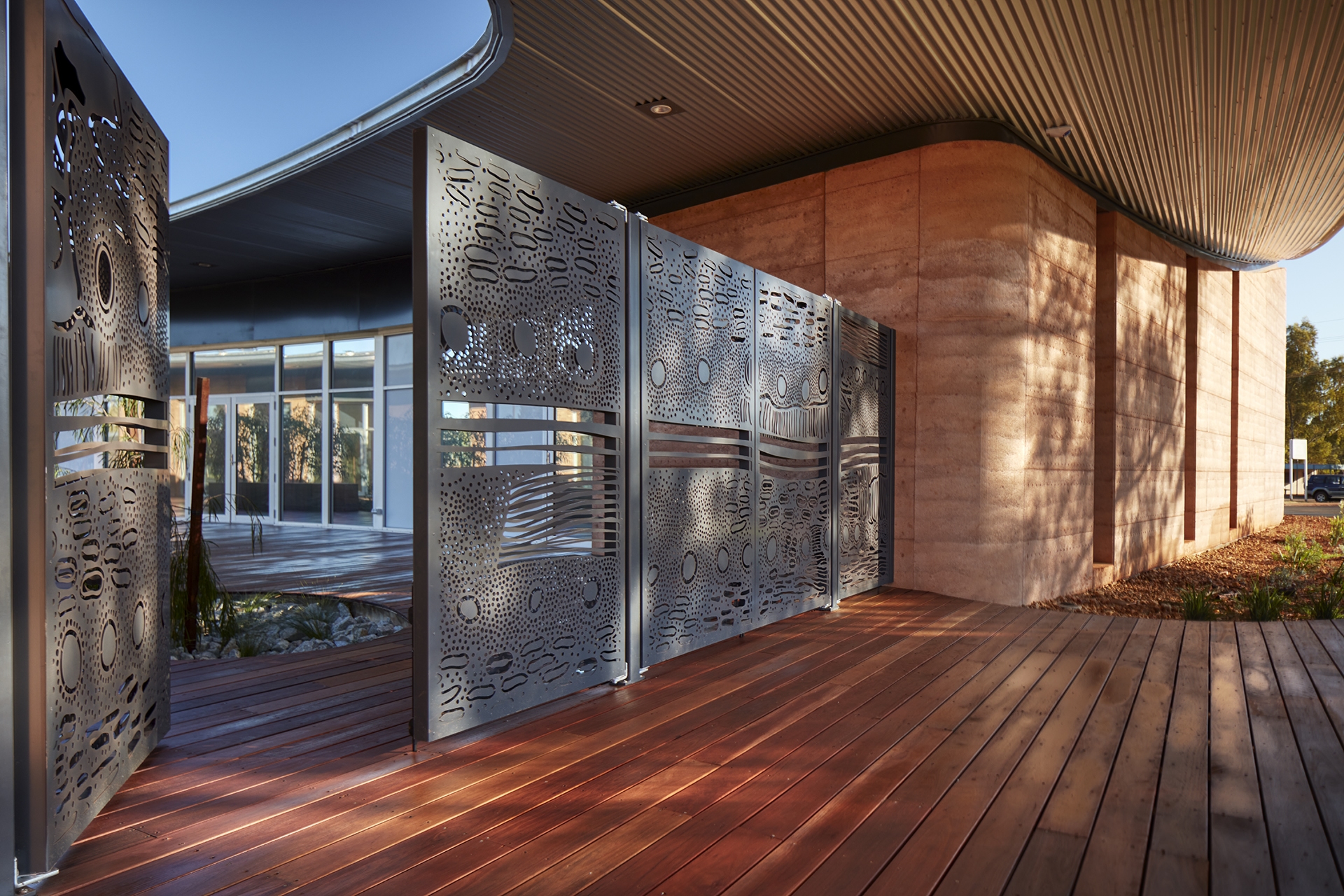
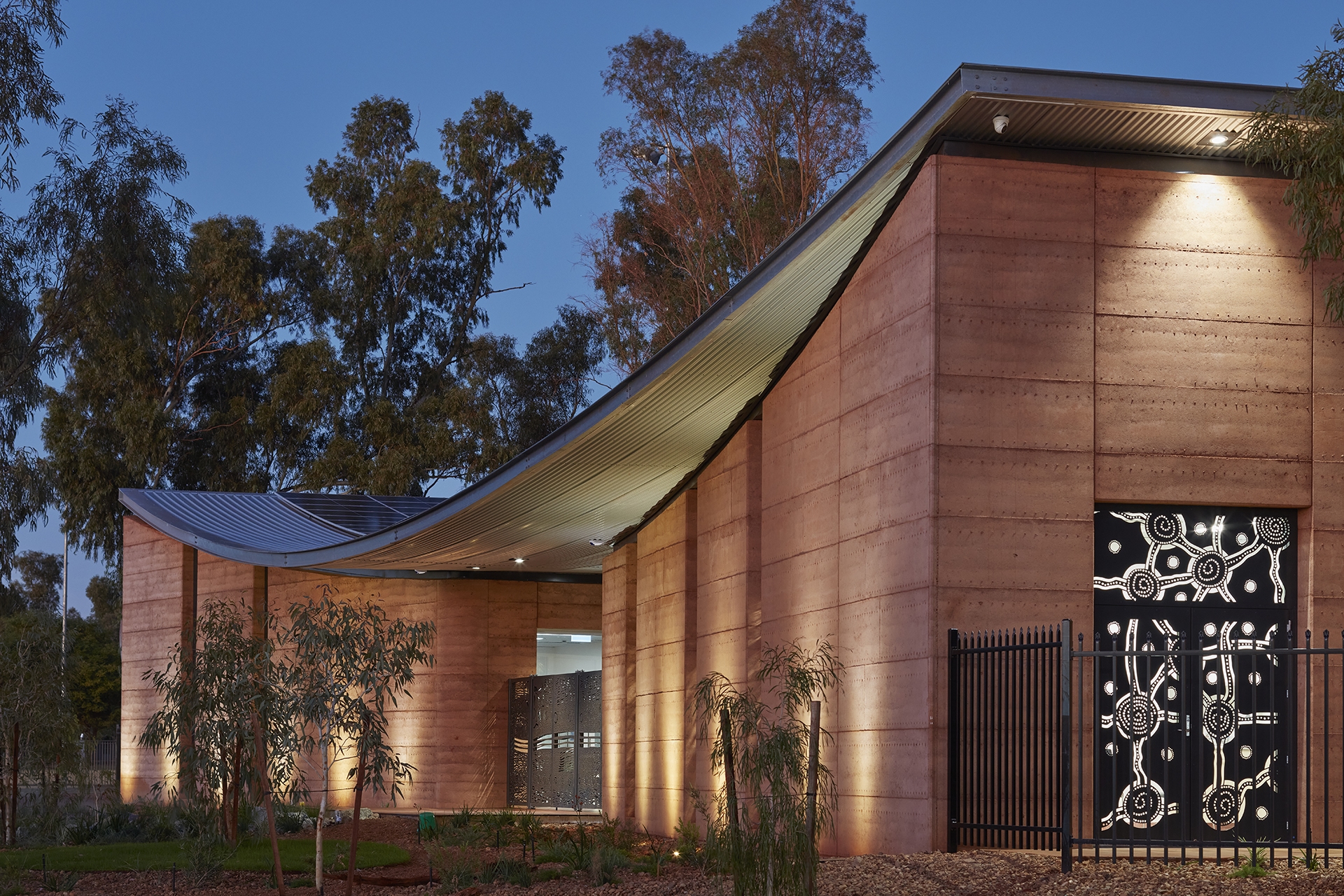
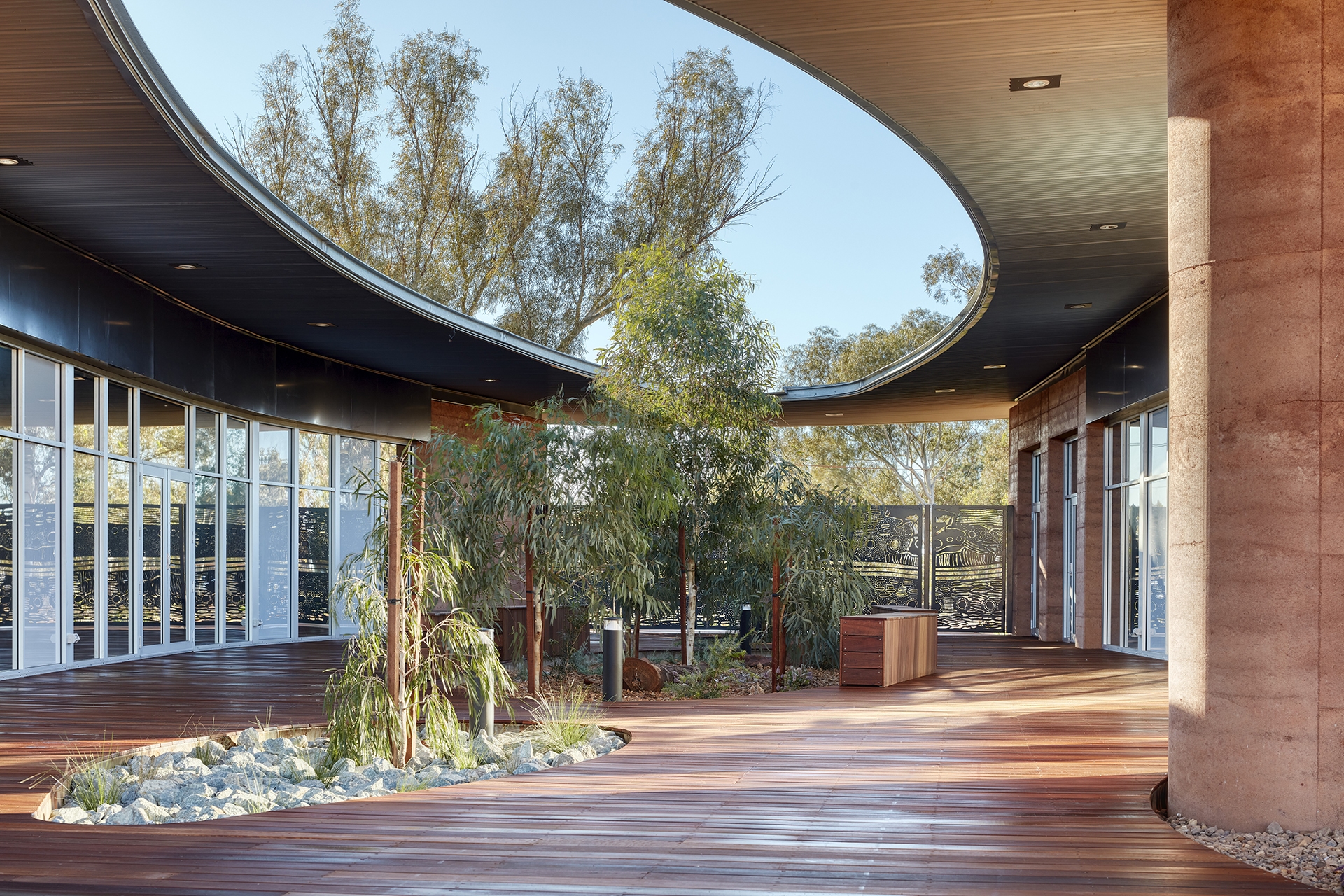
The building itself is organised around an open, central courtyard that is both welcoming and calming. Butterflied in plan, the two wings extending either side separate the health clinic and administration. Distinctive red, rammed earth clads the exteriors. The material is Country, which naturally signifies belonging for local people.

Puntukurnu AMS Healthcare Hub – 2021 Australian Good Design Award for Sustainability. Photo: Robert Frith, Acorn Photography

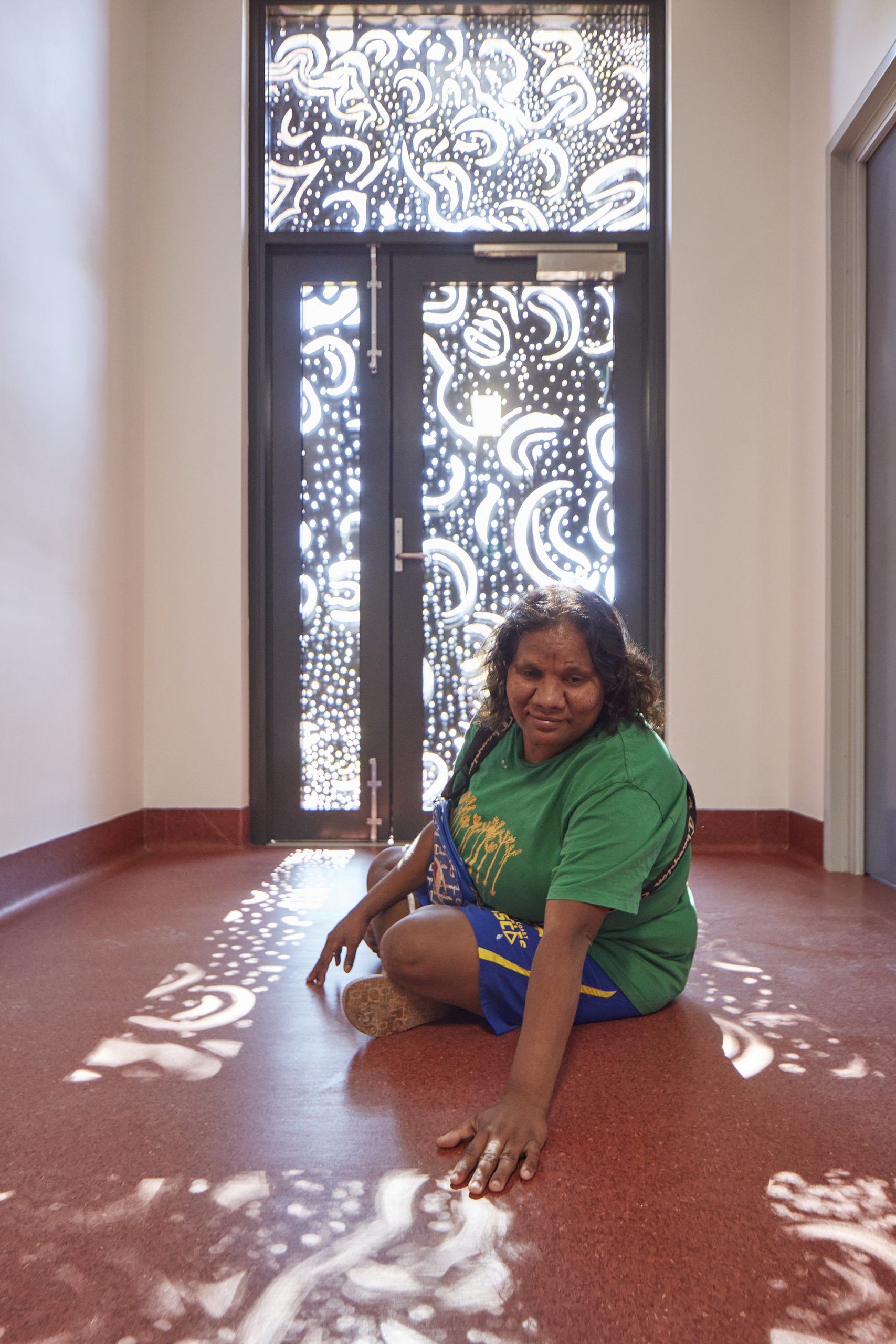
Artwork by 19 artists representing the five communities is integrated throughout the building, which engenders an intuitive connection for local people. Depicting cultural beliefs and dreaming, their ‘drawings’ are inscribed in art-screens that form window protection on most windows and the entry gates. By day, the screens filter light into the rooms causing changing projections humanise the building and its spaces within.

At night and lit from within, the screens become a beacon of culture into the community. A projection of ancient and complex cultures building a brighter future. With this, the architecture plays an important role in uniting diverse communities around the PAMS Healthcare Hub and creating a relevance for each of them.

SUSTAINABILITY

The materiality and landscaping, including mature trees, are key elements of the sustainable approach to the project. Rammed earth significantly reduces embodied energy and improves building performance. Sourcing all earth from site avoided importation and transportation of materials over long distances.

Puntukurnu AMS Healthcare Hub – 2021 Australian Good Design Award for Sustainability. Photo: Robert Frith, Acorn Photography

Sensitive landscaping ecologically repairs the degraded site with endemic species and shades the building.

As one of the driest places in Australia, Newman basks in over 330 days of sunshine a year.  The 150kW rooftop voltaic array provides 100% of the building’s electricity when the sun is shining and more than 85% of all its power needs.

ENVIRONMENT AND PUBLIC REALM

Landscaping is integral in contextualizing and connecting the building to Country. Over 2000 local endemic plants were used to create low maintenance, robust and relevant landscaping. Most importantly, the new unfenced public park formed in front of the building enables outdoor waiting, which can significantly ease anxiety and is preferred by many Indigenous people.  This is also the first time a public park has been created in Newman under the ownership of an Aboriginal organisation.

REFERENCES

https://www.abc.net.au/news/2020-08-01/remote-indigenous-health-centre-opens-in-newman/12499876

https://www.abc.net.au/religion/our-story-is-in-the-land-indigenous-sense-of-belonging/11159992

https://architectureau.com/articles/healthcare-on-country-in-the-remote-pilbara/#

https://archello.com/project/puntukurnu-aboriginal-medical-services-healthcare

https://worldarchitecture.org/architecture-projects/hgffv/puntukurnu-ams-healthcare-hub-project-pages.html